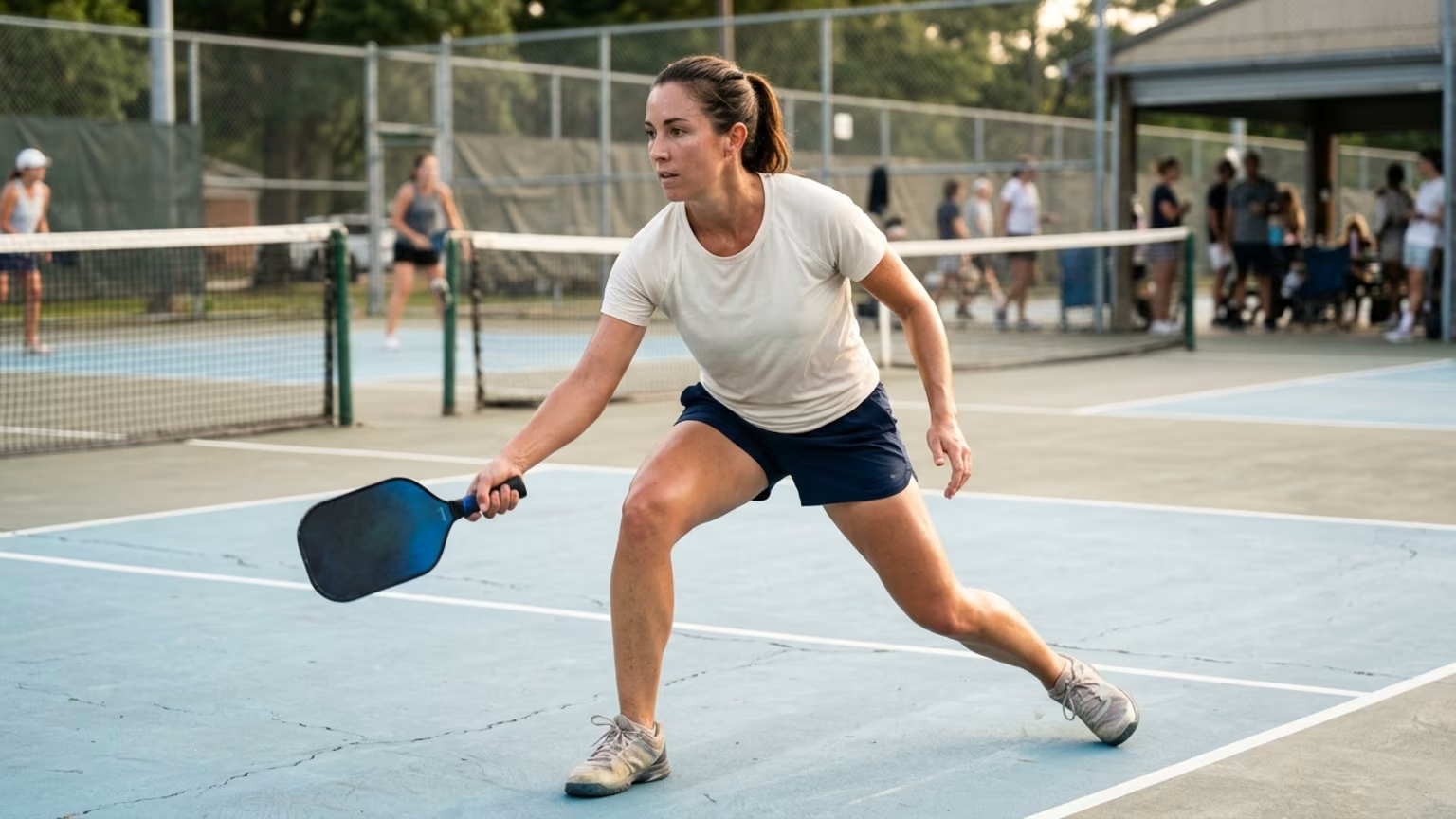

Build a practical racquet sport warm up focusing on the specific movements tennis, pickleball, and padel players actually use to maintain athletic longevity.




Players often arrive at the courts, drop their bags, and immediately start hitting groundstrokes at full speed. This familiar habit is facing new scrutiny. In early 2026, a meta-analysis of 13 randomized trials involving 1,476 participants reported a 55% lower ankle-injury incidence with neuromuscular training. This data highlights a major shift in how athletes should prepare for competition.
The traditional approach of touching your toes for a few seconds is no longer supported by modern sports science. A practical routine must progress from general movement to sport-specific rehearsal. You cannot simply walk onto a court and expect your body to handle rapid changes of direction without proper preparation.
Recent evidence challenges the old method of using long static holds before matches. A summary of 2026 UK guidance advises older adults to include muscle-strengthening, balance, and flexibility activities regularly. Rather than relying on passive stretching, tennis-specific guidance from the USTA recommends moving around the court without hitting first. Players should then gradually add strokes while ensuring that the shoulders, trunk, and legs are thoroughly prepared.
The consensus points strongly toward active rehearsal over static holds. Evidence summaries suggest that dynamic movements may modestly support acute performance. Conversely, longer static stretches are better reserved for flexibility work or after exercise. You should not treat static stretching as useless, but its role is entirely different from a pre-match warm-up.
Neuromuscular training goes beyond simple muscle stretching. It trains your nervous system and muscles to react together efficiently. This coordination is critical when you need to stop suddenly to return a drop shot. The 55% reduction in ankle injury incidence demonstrates the incredible value of this active approach.
Professional players spend hours preparing their bodies before they even step onto the court. Adult recreational players usually have limited time and need a routine that delivers practical results quickly. A warm-up should function as a low-risk rehearsal of the specific capabilities you want to preserve on the court. You need to practice getting into position, pushing laterally, stopping under control, and rotating through the trunk.
A few years ago, I realized my tennis serve speed was dropping, and my shoulder was constantly throbbing after matches. Instead of pushing through the pain, I took a month to rebuild my mechanics and focus on rotator cuff endurance. I stopped trying to hit flat aces, developed a much heavier kick serve, and my shoulder stopped hurting while my win rate actually went up. Sometimes longevity means outsmarting your own ego on the court.
Court sports demand complex movements that require targeted preparation. A recent pickleball study highlights important biomechanical demands like rapid directional changes. It also points to lunging, jumping, acceleration, deceleration and lateral movement. KCUR reported a ValuePenguin estimate of approximately 125,000 pickleball-related emergency department visits among adults aged 50 and older between 2018 and 2025.
However, players must adjust their routines to their specific game. A routine designed for tennis may be excessive for a recreational pickleball session. Conversely, a gentle pickleball sequence may not adequately prepare a tennis player for repeated serves or full court sprints. The intensity and movement amplitude should always match the session that follows. Building a sustainable strength program during the week is also vital for long-term health.
Tennis coaching guidance commonly proposes a 10 to 15 minute warm-up that progresses from light cardio to activation and shadow swings. The exact duration can vary based on weather conditions, advanced age, or recent injuries. This framework provides a solid starting point for most adult players.
One tennis protocol recommends roughly three to four minutes of easy continuous movement before progressing to mobility and hitting. You can walk briskly, jog easily, or use gentle forward and back shuffles. The primary goal is to move continuously and gradually raise your effort without creating fatigue.
After raising your heart rate, you should mobilize the specific ranges of motion you will use during play. Controlled leg swings, arm circles, and cross-body arm swings are highly effective. Protocols commonly include controlled trunk rotations and walking lunges with rotation before progressively faster swings. These movements prepare the hips, knees, and trunk for the low positions found in racquet sports.
A split step is incredibly useful to rehearse during this phase. It places the player in a ready position to react instantly to an opponent’s shot. Practical guidance specifically recommends teaching players to land in a movement ready position. Remaining flat footed leaves you vulnerable to fast attacks.
Next, you should rehearse reaction and direction changes. Adding small split steps followed by short lateral pushes helps prepare your lower body for the match. Progress from low-speed steps to sharper but controlled movements. You must emphasize quiet landings, stable knees, and braking through the hips rather than collapsing at the ankle. Developing these skills will help you move faster without hurrying on the court.
Finally, you can move into sport-specific rehearsal and overhead actions. You should use slow shadow groundstrokes, controlled torso rotations, shadow volleys, and gradual serve motions. A practical courtside sequence can include these slow shadow swings before transitioning to higher-speed play. Start with short court exchanges, move progressively farther back, and increase your pace gradually. Ensure that you have adequate upper back and thoracic strength to support these rotational demands.
As sports science continues to influence recreational play, we expect warm-up routines to become even more specialized. Players will likely abandon generic static stretching before matches entirely. Instead, they will focus on neuromuscular activation, balance, and lateral control. This proactive shift will help athletes maintain their physical capabilities and continue enjoying racquet sports for years.
The most effective preparation strategy involves building a repeatable system that respects your body. You should view your warm-up as the first phase of your match rather than a frustrating chore. Start moving with purpose, rehearse your shots carefully, and step onto the court fully ready to compete. Prepare smartly, move well, and play your best game.
Follow Evercourts for practical insights on tennis, pickleball and padel performance, movement, recovery and healthy ageing. Stay connected for new articles, research-led guidance and ideas to help you play well and keep playing for years.


Holger Rune withdrew from the European Open with a back problem. The facts behind his decision and a grounded perspective for recreational players.

The Dink’s October 17 guide emphasizes deep returns, ball-height decisions and positioning against faster pickleball opponents.

A new report outlines padel and tennis gear trends. Learn how to assess adjustable rackets, sensor feedback and smart-court claims.
Read practical guidance for better movement, smarter preparation and a game that keeps working for you.
explore the Blog
