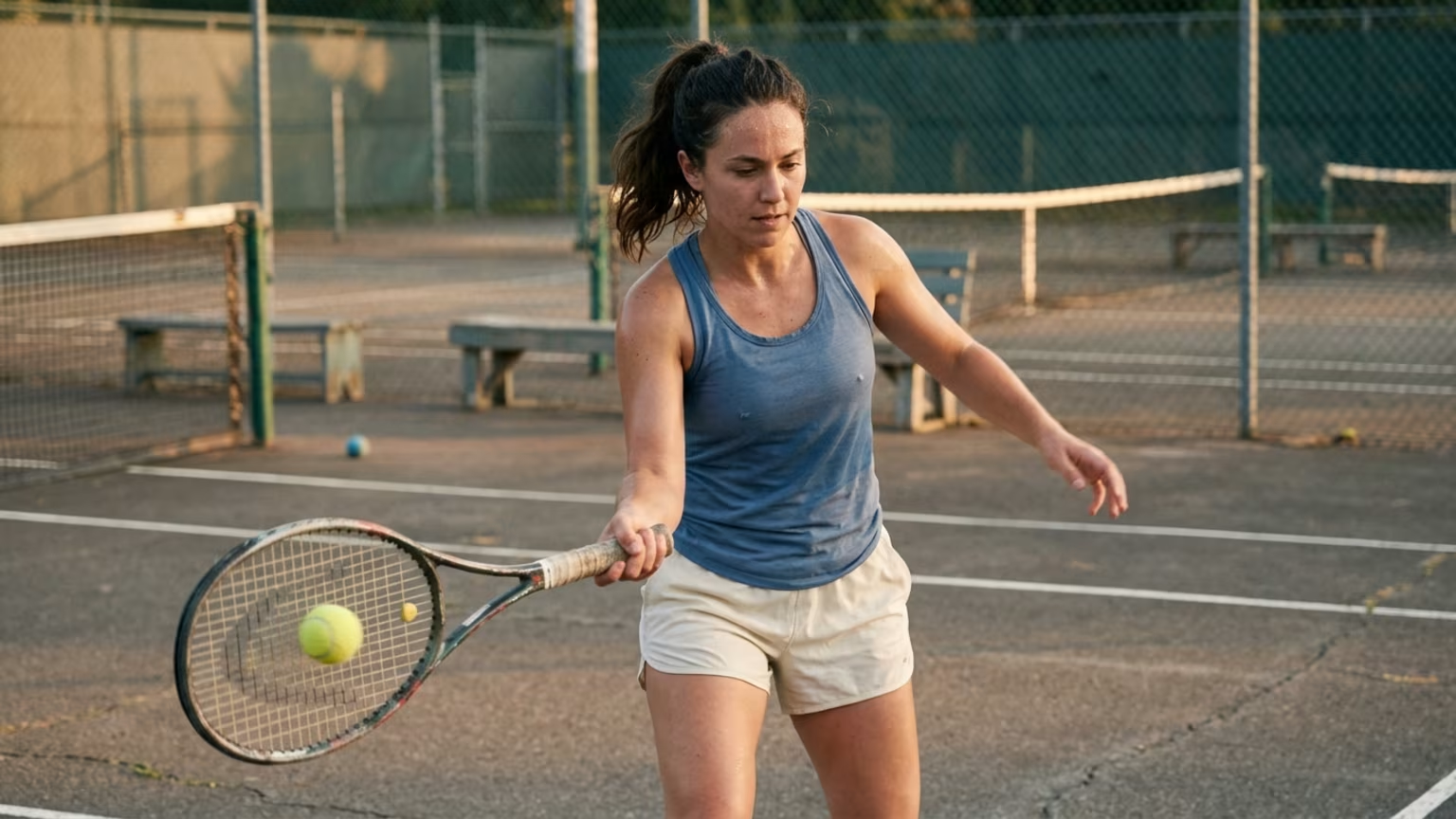

Learn when to maintain or replace your racquet sports gear. We outline how to track playing hours and evaluate equipment life for consistent court performance.




In 2025, pickleball participation in the United States reached 24.3 million players according to data reported by the Sports & Fitness Industry Association. This massive figure represented a fivefold climb from the 4.2 million players recorded in 2020. As courts filled up across the country over the last year, a growing population of adult players suddenly faced aggressive equipment replacement messaging. This surge in participation has made economical gear management a highly relevant topic for both new and veteran players.
Frequent and occasional players alike often wonder when they should replace their consumable gear or upgrade core equipment. However, the available evidence does not establish a universal replacement cycle for tennis racquets, pickleball paddles, shoes or strings based purely on calendar age. Instead, equipment wear varies drastically depending on playing frequency, impact history, court surface and storage conditions. The market context strongly supports a condition based lifecycle system rather than a constant upgrade message.
Elite professionals operate on strict equipment schedules, replacing strings daily and switching frames at the first sign of fatigue. For the adult recreational player, this rigid calendar approach is both wasteful and unnecessary. A practical framework involves establishing a personal equipment baseline and maintaining usable gear until specific problems emerge. Adult players can make more economical choices by tracking their actual playing hours and observing subtle changes in their equipment over time.
When I first started playing pickleball, I noticed how many people skipped warming up entirely. They would jump straight out of their cars and right up to the kitchen line. I tried doing that and immediately pulled a calf muscle. Pickleball requires just as much explosive lateral movement as tennis, just in a tighter space.
Since then, I always spend five minutes doing dynamic lunges and ankle rolls. It changes everything about how confident I feel pushing off the baseline. Just as we must physically prepare our bodies for explosive movement, we must also monitor our equipment to support athletic longevity. Worn out shoes and dead strings can alter mechanics and reduce control on the court.
To manage these variables, our team at evercourts recommends that players start a simple gear log. This personal log should record the date of purchase, session length, surface type and any noticeable changes in spin or comfort. By taking one minute to document these details, players can easily separate consumable wear from structural failure. Proper equipment tracking is a vital component of supporting healthy aging and athletic longevity on the court.
Various equipment components age at different rates. For pickleball paddles, a specialist guide lists dead spots and face texture loss as early warning signs. Cracks, rattles and delamination also indicate that a paddle may need replacement. This same guide offers broad practitioner estimates for paddle lifespan. These estimates range from more than a year for some casual players to three to six months for people playing most days.
Strings require particularly careful monitoring because they can lose elasticity well before breaking. One specialist guide gives approximate playable windows ranging from 10 to 20 hours for polyester to 30 to 50 hours for natural gut. The same guide lists 15 to 26 hours for hybrids, 20 to 35 hours for synthetic gut and 25 to 40 hours for multifilament strings. These figures serve as practical estimates rather than universal scientific limits.
A specialist string guide says polyester can become functionally dead before it breaks, with reduced snapback, spin and control among the warning signs. Players should not wait for a physical string break to consider a replacement. Instead, they should log how a fresh stringbed feels and replace the strings when performance becomes consistently unreliable.
Players who use polyester strings should be especially cautious about waiting for a physical break. Polyester offers excellent durability, but its playability degrades faster than other materials. A stiff stringbed that has lost its elasticity forces the player to swing harder to achieve the same depth. Establishing a fresh baseline helps players recognize when they need to string their racquet again.
When equipment feels uncomfortable, many players immediately look for a hardware solution to prevent joint pain. However, a study reported by ScienceDaily found no scientific basis for universal grip size recommendations and supported choosing a comfortable grip. Comfort remains highly subjective and can be influenced by fatigue, workload, technique and playing conditions. A change in comfort is a signal to investigate, but it does not automatically prove that the equipment caused an injury.
Similarly, a review of racquet vibration research reports that dampeners change string vibration and sound but do not meaningfully reduce the frame vibration or shock metrics associated with tennis elbow. One evidence review judged the evidence weak that any particular string change measurably reduces injury incidence. Pain should prompt professional assessment and load management rather than a simplistic gear purchase.
Racquet sports require reliable traction, but there is no clinically validated shoe replacement mileage specifically for tennis, pickleball or padel. Players should inspect whether the outsole still provides reliable grip and whether the shoe remains stable during lateral cuts. Outdoor hard courts, abrasive surfaces and wet conditions will alter how quickly shoes wear down. A calendar only replacement rule is unlikely to fit every player accurately.
The type of surface you play on significantly impacts shoe longevity. Hard courts generate intense friction that wears down rubber outsoles rapidly. Conversely, playing on softer surfaces might preserve the tread but can place different stresses on the shoe upper. Players should routinely check their midsoles for compression, as a collapsed foam layer reduces shock absorption and increases mechanical load on the legs.
For tennis and padel balls, players should compare bounce heights, fuzz condition and overall flight consistency. A ball that produces a noticeably different pace from the rest of the group should be removed from match play. While there is no scientifically established ball replacement schedule based on hours played, regular visual inspections offer a highly practical management method. We feature many similar better play articles focused on maintaining consistent court performance.
When inspecting a racquet or paddle, players should distinguish between serviceable wear and true structural failure. Surface dirt or minor cosmetic scuffing may justify a component replacement before a full equipment upgrade. However, players should thoroughly inspect their gear after accidental impacts with the ground or fence. An unexplained dead spot or a repeatable loss of control often points to internal damage that requires a complete replacement.
Before discarding a racquet or paddle, players should evaluate whether simple maintenance might resolve their performance issues. Replacing a slipping overgrip is a lower cost intervention that often restores secure handling. The pickleball guidance specifically warns that collisions and heat exposure can accelerate damage. Cleaning the paddle face with a damp cloth, using a protective cover and rotating paddles can help preserve equipment function.
Looking ahead to the next season, we expect recreational players to rely increasingly on condition based replacement strategies rather than fixed annual upgrades. As participation remains high across all racquet sports, players will likely focus more on maintaining components like grips and strings instead of discarding entire frames. Equipment logging will become a standard practice for adults prioritizing consistent performance and joint health. This shift toward practical maintenance will ultimately help more players stay on the court comfortably for years to come.
Follow Evercourts for practical insights on tennis, pickleball and padel performance, movement, recovery and healthy ageing. Stay connected for new articles, research-led guidance and ideas to help you play well and keep playing for years.


A recent live-play test of a silent pickleball highlights its value for practice, but standard balls still perform better for match play and power control.

An evidence check on sports supplements like tart cherry juice. Learn why racquet sports players should prioritize core nutrition over functional foods.
In late 2026, Oura analyzed wearable data to see how recreational tennis impacts heart health and recovery. Learn what this means for your athletic longevity.
Read practical guidance for better movement, smarter preparation and a game that keeps working for you.
explore the Blog
