

Understand calf and ankle demands in racquet sports, what injury research shows, and how gradual preparation can be scaled to current ability.




Calf and ankle capacity is your lower leg’s ability to handle the strength and movement demands of play. In racquet sports, those demands include repeated starts, lunges, stops and changes of direction. The useful question is whether your preparation matches the movements you ask your lower legs to tolerate.
Capacity is not a single exercise or a measure of how hard you can train. It is a way to think about strength work alongside actual court exposure. For adult players, that keeps the focus on maintaining useful physical capabilities rather than chasing the same routine as everyone else.
A clinical overview of pickleball foot and ankle injuries describes short bursts and repeated direction changes as demands on the feet and ankles. It identifies quick starts, lunges and abrupt stops as movements that load the calf and Achilles area.
The important detail is repetition. Lower-leg preparation needs to account for the repeated efforts involved in play rather than treating a quick first step as an isolated skill.
The practical emphasis differs across the sports:
This is why lower-leg preparation belongs within a broader view of court movement. Thinking about the full start-stop-recovery sequence keeps the discussion connected to play rather than to one exercise performed in isolation.
In a 2024 study summarized by the University of Arkansas, researchers used U.S. emergency-room data to examine pickleball injury mechanisms by age group. The abstract described different injury patterns among younger and middle-aged players and older players.
The authors recommended age-specific interventions while also saying pickleball should be encouraged as physical activity. That is an important balance: understanding injury patterns should support participation rather than make age itself a reason to avoid the court.
The clinical overview also reports a separate study involving 198 patients treated at four Boston-area hospitals. Pickleball-related foot-and-ankle injuries at those hospitals rose 6.5-fold between 2019 and 2023.
That figure needs the right denominator. It describes a change in injuries seen within a clinical sample. A count from those hospitals is not the same measurement as the chance that an individual player will be injured.
These reports do not establish exposure-adjusted personal risk or show that strengthening prevents injury. They also do not establish a universal calf-and-ankle program. The training framework below is practical interpretation of the training guidance rather than a tested sequence, and its application to tennis and padel is not a direct finding from the pickleball studies.
The useful conclusion is narrower than a headline about rising injuries: lower-leg demands deserve attention, and preparation should reflect the individual player.
For adult players, athletic longevity means maintaining the capabilities needed to keep participating. A capacity-based approach gives strength work and court exposure a place in that goal without turning preparation into a test against someone else’s standards.
A tennis strength-training resource describes calf and foot work alongside balance work within individually appropriate strength training. It recommends adjusting resistance work and change-of-direction practice to the player, their symptoms and overall training load.
That makes current ability the starting point. An exercise is not automatically appropriate because another player performs it or because it looks more athletic.
The practical framework is to build from controlled work toward more demanding strength and movement tasks:
These are categories of challenge rather than a fixed calendar. Progress is judged against current ability and symptoms, with overall training load kept in view.
There is no requirement here to make every exercise more complicated. The relevant question is whether a change serves the player’s preparation rather than simply making the session look harder.
A separate tennis fitness guide advises increasing court and gym hours gradually. That brings the discussion back to the whole week rather than the exercise session alone.
In practical terms, calf work should not be considered separately from the starts and stops already being practised on court. A more demanding strength variation is only one possible change in the overall workload. Additional court exposure is another.
For planning purposes, it helps to consider both together before deciding what to increase. This follows the training sources’ emphasis on individual ability and total load rather than treating strength work as a separate project.
The same perspective applies to how mobility shows up during pickleball play. General preparation and actual movement practice belong in the same conversation.
Healthy aging does not require pretending that every adult player has identical needs. The practical aim is to choose an appropriate challenge and keep preparation connected to continued participation.
The tennis fitness guidance gives a clear reason to stop and seek assessment: pain that changes how a player moves or hits. For this topic, that includes discomfort that alters footwork or makes a player change their stroke to avoid it.
That is a reason to consult a qualified physiotherapist or healthcare provider rather than simply selecting a different exercise. You do not need to identify the cause yourself before asking for help.
The framework above concerns general preparation. Once pain is changing play, decisions about what is appropriate become personal and belong with qualified care.
Today’s takeaway: If pain is changing your footwork or stroke, pause play and arrange an assessment with a qualified physiotherapist or healthcare provider.
Follow Evercourts for practical insights on tennis, pickleball and padel performance, movement, recovery and healthy ageing. Stay connected for new articles, research-led guidance and ideas to help you play well and keep playing for years.


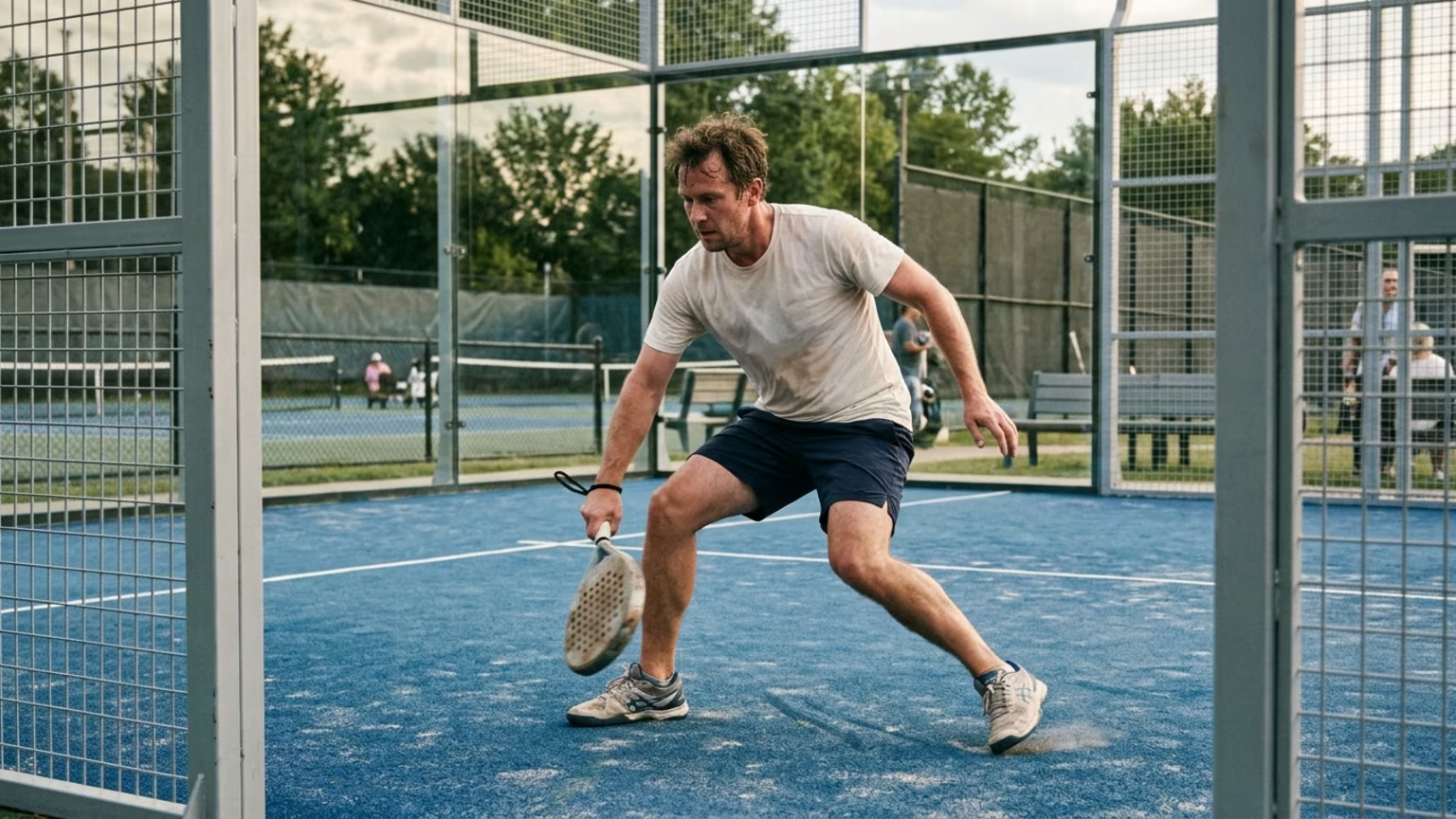
Understand padel’s movement demands and how practitioner guidance frames strength, balance and controlled direction changes alongside cardio.

How modest strength work can fit around tennis, pickleball and padel, with adaptable movement patterns and a clear look at the evidence.
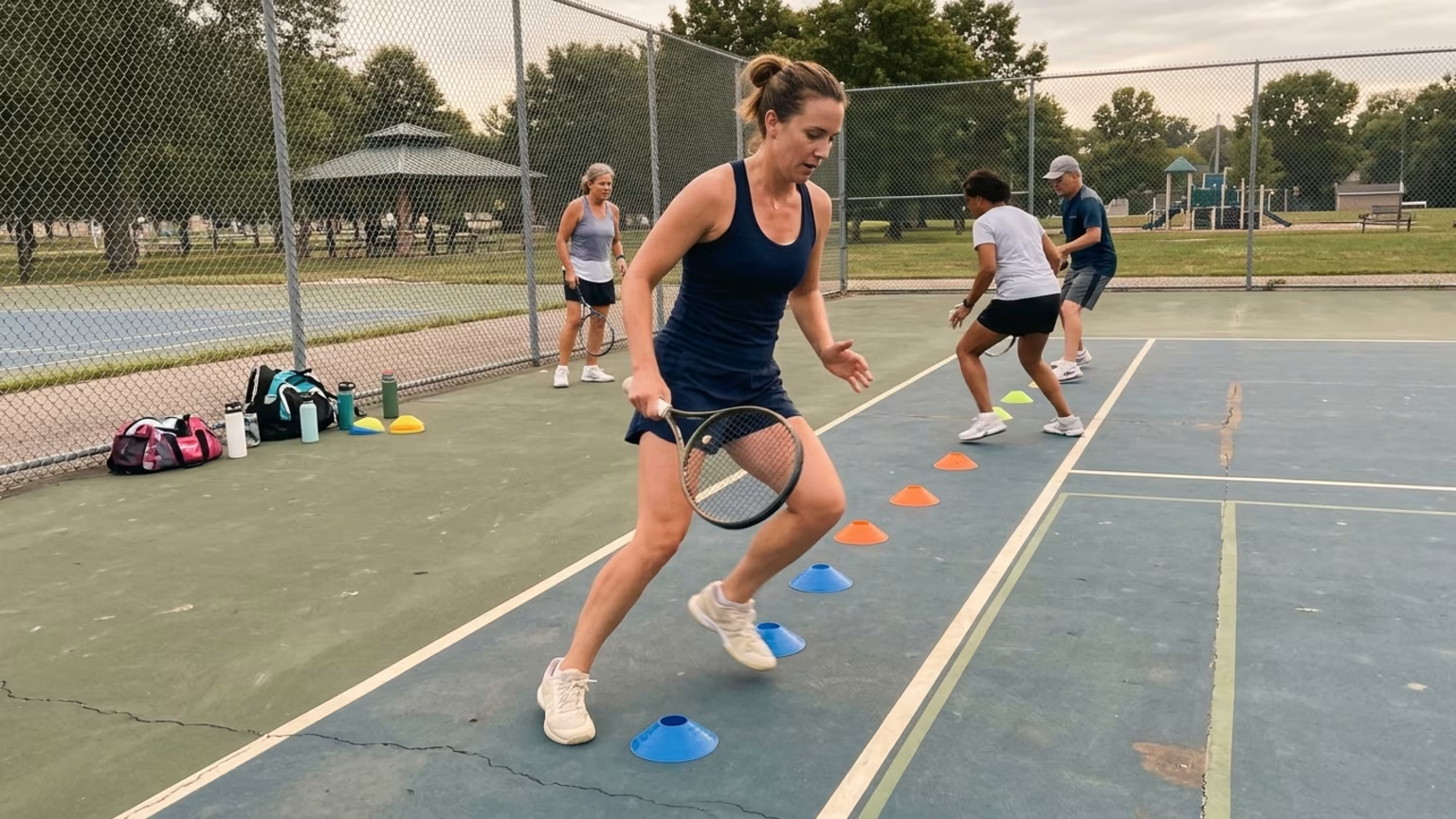
Build a warm-up from easy movement to court footwork and strokes, with clear evidence limits and guidance on when to seek professional advice.
Read practical guidance for better movement, smarter preparation and a game that keeps working for you.
explore the Blog
