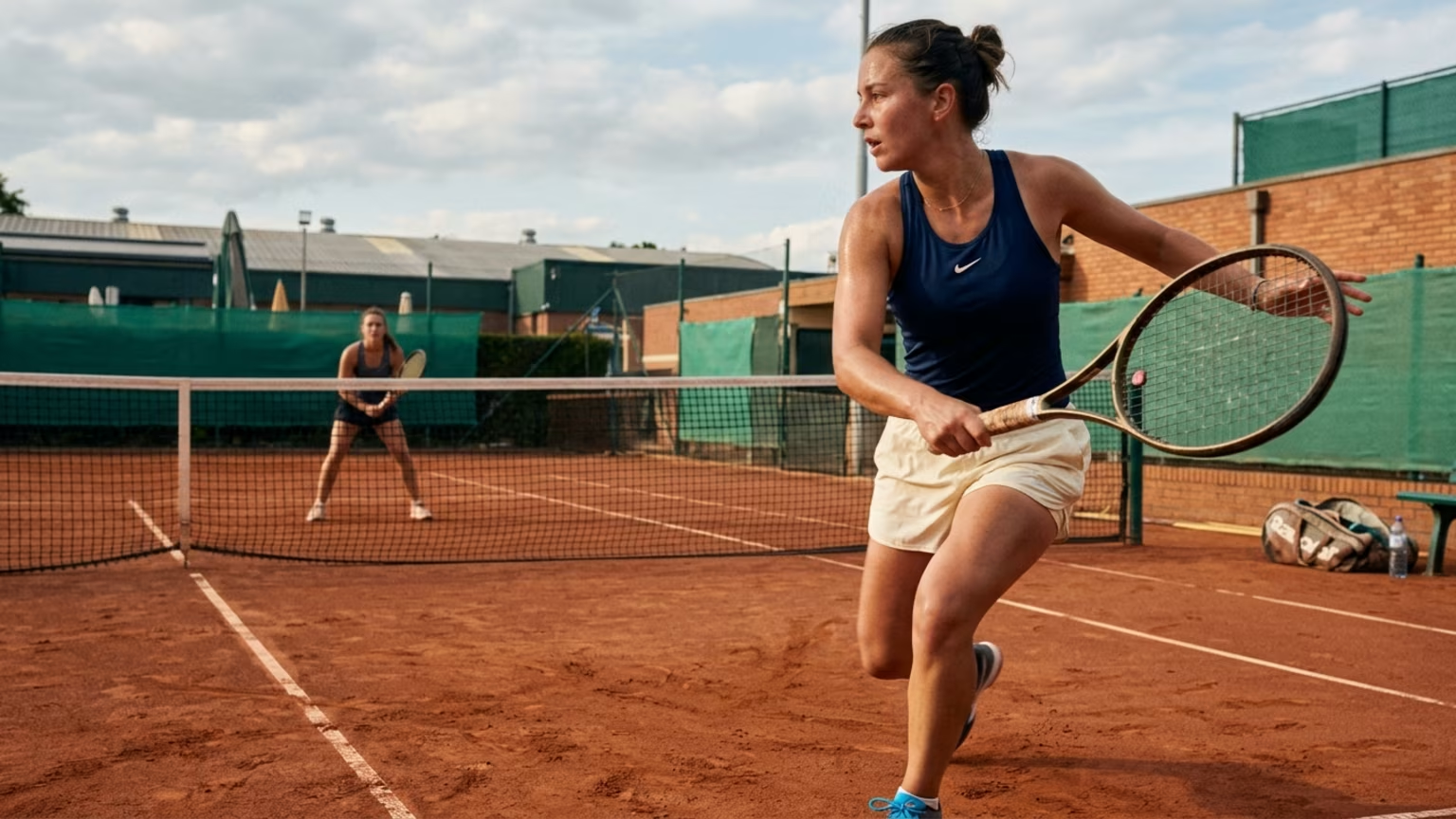

Learn how to build a reliable match-day routine for racquet sports, from personalized hydration strategies to heat management and progressive warm-ups.




The U.S. Tennis Association recommends starting the hydration process with 12 to 16 ounces of water. That specific volume sets the foundation for how your body regulates heat and manages fatigue during competition. Understanding these numbers helps players build routines that actually support their performance on the court.
You have heard it a million times: the key to winning your matches is following the exact, highly complex warm-up and hydration protocol of a touring professional. Here is why that is outdated. The most reliable performance comes from simple, flexible habits that adapt to your specific body and the actual conditions you face. A realistic match-day approach prioritizes steady, practical routines over rigid imitation.
Recreational athletes often feel pressure to perfectly optimize every minute before a tournament. They read articles prescribing a dozen different stretching sequences or highly specialized equipment requirements. This creates unnecessary anxiety when a court is not available, traffic delays an arrival, or a tournament schedule runs late. Real court readiness is about knowing how to pivot calmly when your perfect plan falls apart.
This pressure to perform elaborate rituals usually begins with television broadcasts. Viewers watch professionals arrive hours early, drink from meticulously prepared bottles, and run through detailed physical sequences. It makes sense that adult players assume they need that same level of complication to perform well. They want to respect their sport, maximize their ability, and prepare like the athletes they admire.
Over time, that assumption transformed into a belief that more complicated routines lead to better results. Players began packing bags with multiple supplements, rigid timing charts, and an endless array of recovery gear. They forgot that touring professionals have entire teams managing those logistics for them. Trying to juggle too many variables just adds unnecessary stress to a club tournament or local league match.
By focusing on minor details, many competitors lose sight of the fundamentals that actually matter. They might stress over the perfect grip wrap but completely forget to pack enough water for a hot afternoon. Our goal at evercourts is to clear away this clutter and focus on what moves the needle. We highlight evidence-based strategies that respect your time, your lifestyle, and your physical realities.
The body responds best to predictable, progressive preparation that matches the actual demands of tennis, padel, or pickleball. Instead of following one fixed script, hydration needs differ substantially between individuals. The available guidance recommends adjusting intake according to conditions, sweat rate, and body-mass changes rather than following one fixed volume. You cannot rely on a single, unchanging volume of liquid for every single match you play.
Rather than guessing, we can look at baseline recommendations from the U.S. Tennis Association to build a framework. They recommend starting the hydration process with 12 to 16 ounces of water. This is followed by another 12 to 16 ounces of water, an electrolyte drink, or juice 60 to 90 minutes before going on court. This staged approach gives your system time to absorb the fluid efficiently without causing discomfort.
As the match approaches, the timing of your fluid intake needs to become more precise. The U.S. Tennis Association also recommends approximately 8 ounces of water or sports drink 10 minutes before play. This final top-up ensures you step onto the court ready to handle the initial physical output of the first set. It provides a clear, easily measurable goal that any player can track before a match.
Once the first ball is struck, your fluid intake must match your actual sweat loss on the court. The USTA advises light-to-medium sweaters to drink roughly 4 to 8 ounces at each changeover. For heavier sweaters, they advise drinking approximately 8 to 16 ounces at each changeover, using water or a carbohydrate-electrolyte drink. Knowing what kind of sweater you are helps you pack the right amount of fluid in your bag.
If you extend those changeover numbers across an entire match, the totals become significant very quickly. The same guidance estimates that this can amount to approximately 32 to 60 ounces per hour. However, it explicitly notes that this is a broad range and should not be treated as a target for every player. Your goal is to stay responsive to how you feel, the humidity, and the temperature on the court.
Managing external temperatures is just as critical as managing your internal fluid intake. In hot conditions, the USTA also recommends external cooling options such as ice towels, cooling garments, or a cool shower before play. These tools help lower your core temperature, making the cardiovascular strain of a long match much more manageable. Proper heat management is a cornerstone of player health during summer tournaments.
You cannot build a durable, match-ready body solely in the brief moments before you step onto the court. Real athletic longevity requires consistent, off-court physical development throughout the week. Your match-day routine is simply the final layer on top of a solid, well-built fitness foundation. The stronger your base, the less you have to rely on a perfect warm-up to feel ready.
Scientific literature consistently highlights the importance of maintaining muscular strength as we age. Resistance training has also been associated in a meta-analysis with improvements in handgrip strength, lower-limb strength, balance, gait speed and stair-climbing ability among frail older adults. While competitive players are generally not frail, the underlying biomechanical principle remains identical across populations. Muscle strength and joint stability dictate how well you handle the sudden, forceful movements required in racquet sports.
A player who invests in their overall physical readiness will always have an easier time warming up. They can focus their pre-match routine on familiarizing themselves with the court surface and getting their timing right. This allows them to approach competition with confidence, rather than hoping a specific stretch will compensate for a lack of strength. We provide comprehensive court performance resources to help players develop this essential, year-round foundation.
To make these facts useful, you need to organize your bag and your schedule before leaving home. Arriving with plenty of time allows you to find the restrooms, locate a water source, and assess the conditions. This logistical calm is a crucial part of lowering your heart rate and focusing your mind before a match. A rushed, chaotic arrival almost always leads to a frantic, error-filled first set.
Your physical warm-up should gradually raise your body temperature and rehearse the specific movements of your sport. Start with light jogging, add some dynamic mobility work, and finish with a few short accelerations across the baseline. Avoid turning the warm-up into a grueling second workout that depletes your energy before the match even begins. The goal is focused physical readiness, not complete muscular exhaustion.
Between matches on a busy tournament day, prioritize getting out of wet clothes and finding a shaded area. Continue your personalized hydration strategy based on your sweat rate and the heat of the afternoon. Keeping your routine practical ensures you have the mental and physical energy to compete hard in your final match. You want your preparation to feel like an automatic, stress-free habit.
The New Golden Rule is to build a preparation checklist that adapts to you, rather than forcing yourself into a rigid mold. By understanding the basic parameters of hydration, heat management, and physical readiness, you take control of your performance. You stop relying on luck, complex rituals, or guesswork to get you through a physically demanding match.
A quiet confidence comes from knowing your preparation is grounded in sound, practical habits. When you trust your routine, the anxiety of competition simply fades into the background.
Follow Evercourts for practical insights on tennis, pickleball and padel performance, movement, recovery and healthy ageing. Stay connected for new articles, research-led guidance and ideas to help you play well and keep playing for years.


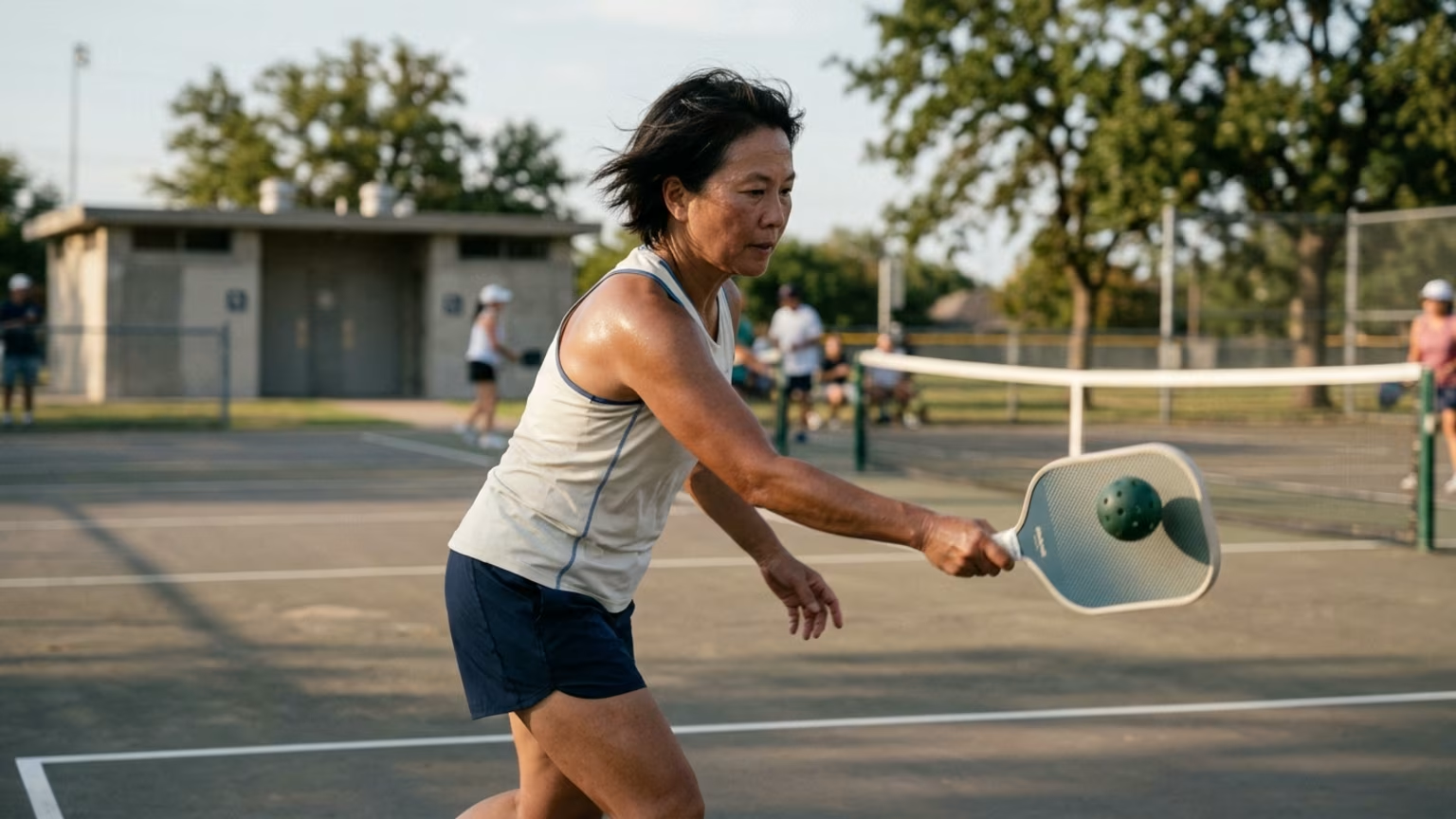
A recent live-play test of a silent pickleball highlights its value for practice, but standard balls still perform better for match play and power control.

An evidence check on sports supplements like tart cherry juice. Learn why racquet sports players should prioritize core nutrition over functional foods.
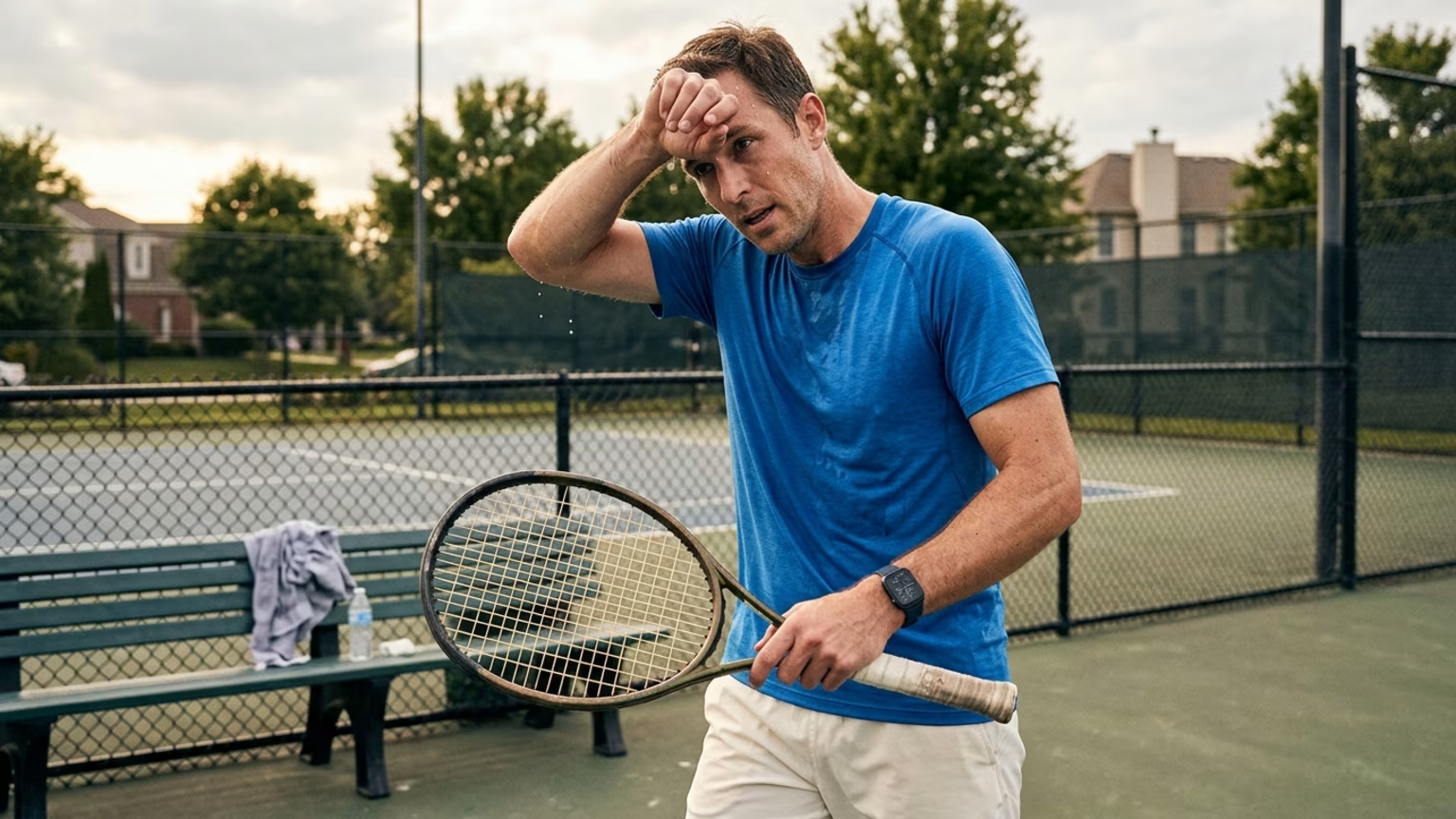
In late 2026, Oura analyzed wearable data to see how recreational tennis impacts heart health and recovery. Learn what this means for your athletic longevity.
Read practical guidance for better movement, smarter preparation and a game that keeps working for you.
explore the Blog
