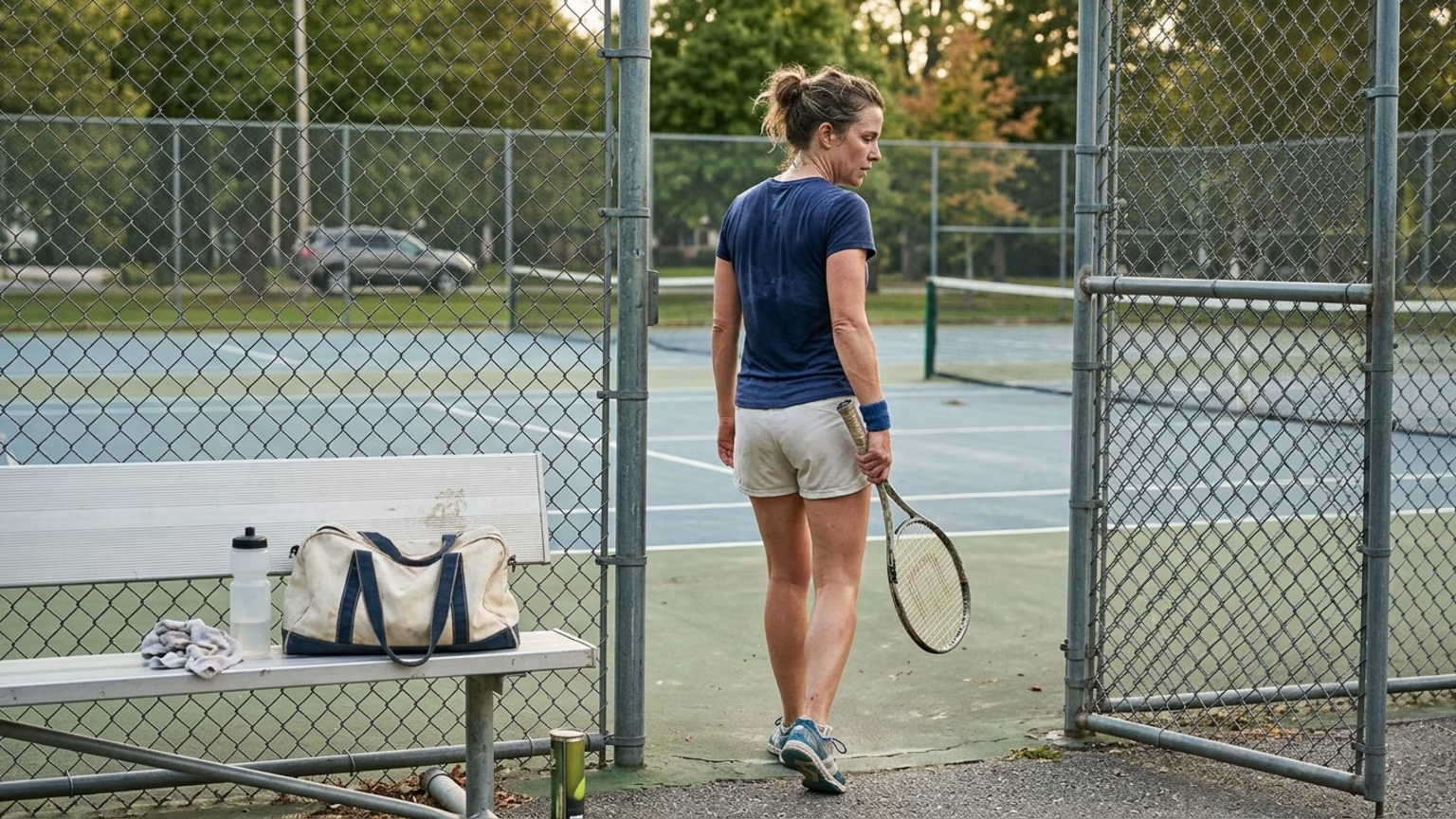

Feeling fitter is only part of returning to court. Learn how workload tolerance can guide gradual progress and when symptoms deserve professional advice.




Load tolerance is your body's ability to handle the demands of activity and recover from them. An easy rally can feel reassuring when you return after a break. But feeling comfortable during that rally is only part of the picture when deciding whether to add more play.
In an interview with South Carolina Public Radio, sports-medicine physician Dr. DeCastro explained that muscles, tendons and bones respond to training stress. That adaptation takes time. Problems can arise when activity increases faster than the body can keep up.
For returning players, the practical distinction is between feeling capable of doing more and tolerating the workload already being done. Renewed stamina and confidence matter. They should not be the only signals guiding your return.
In tennis, pickleball and padel, the workload question includes repeated explosive efforts and changes of direction. A return needs to account for those demands alongside time spent hitting. Simply being able to finish a session does not answer every question about readiness for more demanding play.
A tennis return-to-play article makes this distinction through its suggested progression. It describes easy movement and gentle hitting before progressively adding more demanding activity. Controlled hitting is therefore a starting point in its guidance, not a substitute for considering movement and match demands.
For pickleball, Dr. DeCastro gave the example of moving suddenly from occasional play to daily play. The concern was the abrupt increase in activity relative to adaptation. That is different from claiming that a particular playing frequency is unsuitable for everyone.
For padel players, the same practical question applies: what are you asking your body to handle now compared with your recent routine? Account for movement as well as hitting rather than judging the session only by whether you enjoyed it or completed it.
This is also a useful lens for thinking about movement across singles and doubles. Consider the activity you are returning to, not just the name of the sport.
The tennis article describes overuse problems as repeated loading that exceeds the body's ability to adapt and recover. Its advice after a break is to begin below the previous workload and rebuild. Dr. DeCastro's explanation supports the same broad principle: increases in activity need to leave room for adaptation.
The evidence does not establish a precise timeline separating fitness gains from tendon or joint adaptation. It also does not supply a universal weekly increase, recovery duration or session schedule. The tennis article makes its suggested progression conditional on the player's diagnosis and rehabilitation advice rather than presenting a standard return protocol.
That boundary matters. A promise that tissues will be ready after a particular interval would sound practical but would go beyond these sources. So would treating a fixed percentage increase as a reliable rule for every returning player.
The supported message is simpler: renewed fitness is an incomplete readiness test. Pay attention to how the current workload is being tolerated before assuming there is room for more.
The tennis guidance illustrates what progressively greater demands might involve. It describes modified activity and controlled hitting before added movement. Serving and points may follow, with a shorter match appearing later in the example. These are different demands to consider, not milestones to complete on a deadline.
For adult players, the value of understanding load tolerance is not that it promises an injury-free future. It provides a more useful basis for decisions than enthusiasm alone. The aim is to rebuild participation without treating every encouraging session as a reason to accelerate.
The tennis article's recommendation to start below the old workload is especially relevant here. Your previous routine is a reference point, not an obligation. Returning to it is a process rather than something the first comfortable session has to prove possible.
A practical interpretation of the guidance is to separate the changes you are considering:
These questions are not a scoring system. They make the workload change easier to recognize. Adding time while also increasing pace and frequency is a different decision from keeping most of the session familiar.
The sources support cautious changes rather than abrupt increases across the routine. In practice, that means leaving room to assess the current level instead of continually adding more because the last session felt encouraging. When the current activity is aggravating symptoms, holding steady does not mean pushing through the same problem unchanged; the guidance supports reducing the aggravating activity.
Our discussion of balancing playing volume with recovery offers related context for thinking about the overall routine. The important question remains whether the current workload is manageable, not whether it matches another player's schedule.
This approach keeps athletic longevity connected to everyday choices. Progress may mean adding a more demanding part of play. It may also mean giving the present routine more time rather than immediately extending it. Neither choice needs to become a judgment about motivation or commitment.
Dr. DeCastro advises against ignoring a worsening pain pattern. Pain that keeps increasing or symptoms that persist are reasons to consult a qualified physiotherapist or healthcare provider. Repeatedly testing the same aggravating activity is not a substitute for an assessment.
A return following injury also calls for individualized guidance. As the tennis article emphasizes, the order of progression and any restrictions should reflect the diagnosis and rehabilitation team's advice. A general editorial framework cannot make those decisions for an individual player.
It can help to distinguish the question of how you feel after play from the assumption that finishing a session means everything is ready for more. Bring persistent symptoms or a worsening pattern to a qualified professional rather than trying to fit them into a generic schedule.
That reassuring first rally still matters. Treat it as an encouraging part of the return, not the only evidence that your body is ready for the next demand.
Follow Evercourts for practical insights on tennis, pickleball and padel performance, movement, recovery and healthy ageing. Stay connected for new articles, research-led guidance and ideas to help you play well and keep playing for years.


Learn how to turn, track and recover for pickleball lobs with a gentle partner drill, plus what fall research says about balance and footwork.

Tennis match data explain why conditioning involves repeated bursts and recovery. Apply the pattern without treating research averages as personal targets.

A flexible pickleball warm-up progressing from easy movement to controlled lunges, side steps, shadow swings and dinking, with readiness-based adjustments.
Read practical guidance for better movement, smarter preparation and a game that keeps working for you.
explore the Blog
