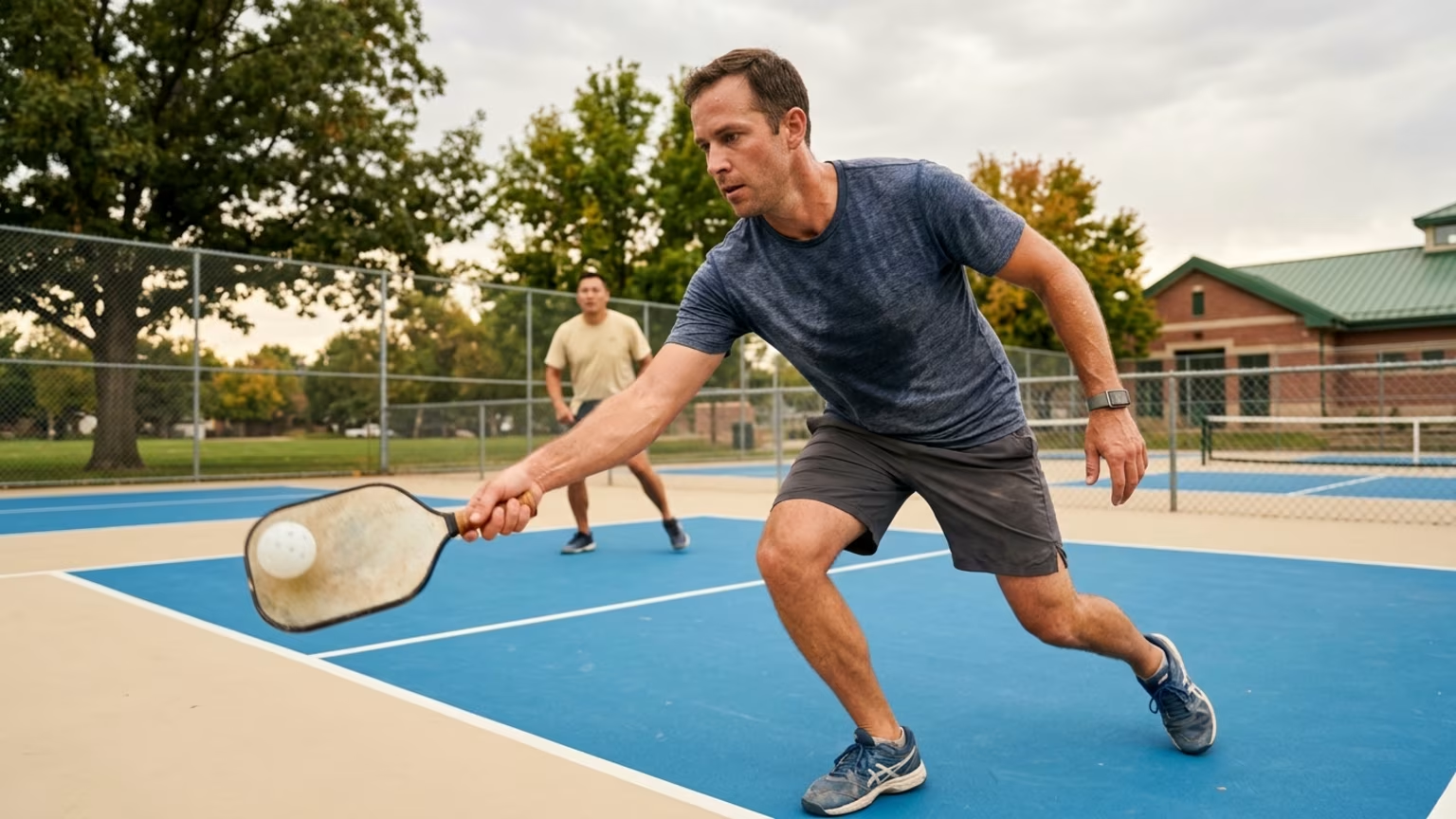

Learn why gradual progression and simple symptom tracking are more effective for managing your racquet sports playing load than unproven wearable technology.




Pushing through fatigue to build court endurance is the fastest way to ruin your season. The prevailing fitness narrative insists that playing more hours and grinding through soreness will toughen you up. For adult racquet sports players, this approach rarely builds stamina. It usually just guarantees a lingering injury.
The truth is that your body does not care about your grit or your willpower. It only responds to the precise amount of stress it can recover from before your next match. Many enthusiastic players believe that the absolute best way to improve is to push their limits daily. This mindset completely ignores the basic biological laws of human adaptation.
If you continuously overload your system without providing adequate recovery time, your performance will inevitably regress.
Social media feeds are filled with complex training blocks and fitness personalities demanding relentless daily activity. We are told that buying expensive wearable technology is the only way to manage physical stress and prevent athletic breakdown. The marketing suggests that if you just track enough data points, you can mathematically predict your physical limits. This creates a false sense of security for anyone trying to manage their tennis or pickleball schedule.
Players start trusting an algorithm on their wrist more than they trust their own physical sensations. The reality for adult recreational players is much less complicated and far less glamorous. You do not need a piece of technology to tell you when your body is overloaded. The physical demands of lateral movement and explosive sprinting require adequate rest, not just raw volume.
An adult player just wants to maintain their capabilities, stay competitive on the court, and avoid waking up with stiff joints. Chasing professional volume without professional recovery resources is a mathematical error, not a badge of honor. A sustainable routine relies on listening to obvious physical cues rather than striving for an arbitrary daily step count.
The belief that technology can flawlessly guide your workload is heavily overstated by modern marketing. A 2026 systematic review published in BMC Musculoskeletal Disorders examined wearable inertial sensor training load measures and musculoskeletal injuries. The researchers reviewed 11 studies involving 508 athletes from six different sports and a military cohort. The search for this comprehensive review covered published studies through June 2026.
This extensive look at the data reveals a stark contrast between scientific reality and commercial promises. The findings should make any data obsessed player pause and reconsider their approach. The review reported a possible association between elevated sensor derived load and injury, but it heavily qualified this statement. The researchers rated the evidence as very low certainty overall.
They explicitly described the results as hypothesis generating rather than causal or predictive. In other words, a blinking red light on your wrist cannot confidently foresee a calf strain or a shoulder impingement. The technology simply is not advanced enough to serve as an infallible medical guide.
The study concluded that current evidence does not support reliable load thresholds for injury prevention. Furthermore, the publication does not establish that the findings apply specifically to recreational tennis, pickleball, or padel players. These sports feature unpredictable lateral movements that are difficult to quantify with a simple step count. The abrupt starts and stops required at the net create unique physical stresses that most general fitness algorithms fail to capture.
Relying on an arbitrary tech threshold is not a substitute for paying attention to your own physical symptoms. Instead of seeking a perfect mathematical formula, we should look to practical workload management. If you are returning to the court after a break, pacing your entry is absolutely critical. You should focus on changing only one workload variable at a time.
This means increasing your session duration without adding more weekly sessions, or adding a third playing day while keeping all matches short. This deliberate approach is key to managing court workload to prevent racquet sports injuries.
The most common mistake adult players make is scaling up every aspect of their game simultaneously. They will join a new singles league, start playing twice as long, and increase their shot intensity all in the exact same week. This places an enormous, unmanageable burden on your tendons and ligaments. A safer strategy is to hold your intensity and frequency steady while only extending your match duration by fifteen minutes.
Once your body adapts to that specific change over a few weeks, you can then consider tweaking another variable. This calculated progression ensures that you build resilience without triggering acute inflammation.
You do not need a complicated spreadsheet to monitor your weekly workload effectively. A simple personal log of your sessions and your physical symptoms is often much more effective. Write down how often you play, the duration of each match, and how you feel the next morning. The goal is to notice personal patterns rather than trying to hit a clinically validated score.
If you experience unusual fatigue or notice your sprint speed dropping, you should schedule an easier day. This kind of basic symptom tracking is how you actually protect your athletic longevity. It requires honesty about how your body is handling the current volume of play.
Persistent pain is not a badge of honor, and it should always prompt you to seek professional assessment. Modifying your schedule based on these real world signals is much smarter than stubbornly finishing a predefined block of matches. This is especially true when structuring a competitive schedule around real match workload.
We know from our team's experience that managing your downtime is just as critical as managing your court time. I used to think a tough conditioning block was the only way to improve my court endurance. Then I started tracking my sleep. I noticed that on days I slept less than six hours, my reaction time at the net was noticeably sluggish, and I felt gassed by the second set.
Prioritizing consistent rest did more for my late match stamina than any extra sprints ever did. Recovery is the true foundation of performance. This shift in perspective completely changed how I approach my weekly schedule. Instead of forcing myself onto the court when I feel depleted, I focus on resting my nervous system.
Sometimes, the best way to prepare for a heavy tournament weekend is to simply do less in the days leading up to it. Adding an extra practice session when you are already fatigued will only degrade your movement quality. You should focus on proper hydration, good nutrition, and getting enough sleep.
These basic habits do more to protect your performance than any complex load management system. Taking a planned day off is a strategic decision that allows you to return to the court stronger, faster, and more capable. Understanding this balance is vital for choosing events without overplaying.
Building your playing load requires a patient approach that prioritises gradual workload progression and honest symptom tracking over rigid schedules and unproven technology.
Follow Evercourts for practical insights on tennis, pickleball and padel performance, movement, recovery and healthy ageing. Stay connected for new articles, research-led guidance and ideas to help you play well and keep playing for years.


An evidence check on sports supplements like tart cherry juice. Learn why racquet sports players should prioritize core nutrition over functional foods.
In late 2026, Oura analyzed wearable data to see how recreational tennis impacts heart health and recovery. Learn what this means for your athletic longevity.
Recent guidelines emphasize gradual progression, dynamic warm-ups, and scheduled recovery to help adult racquet sports players maintain athletic longevity.
Read practical guidance for better movement, smarter preparation and a game that keeps working for you.
explore the Blog
