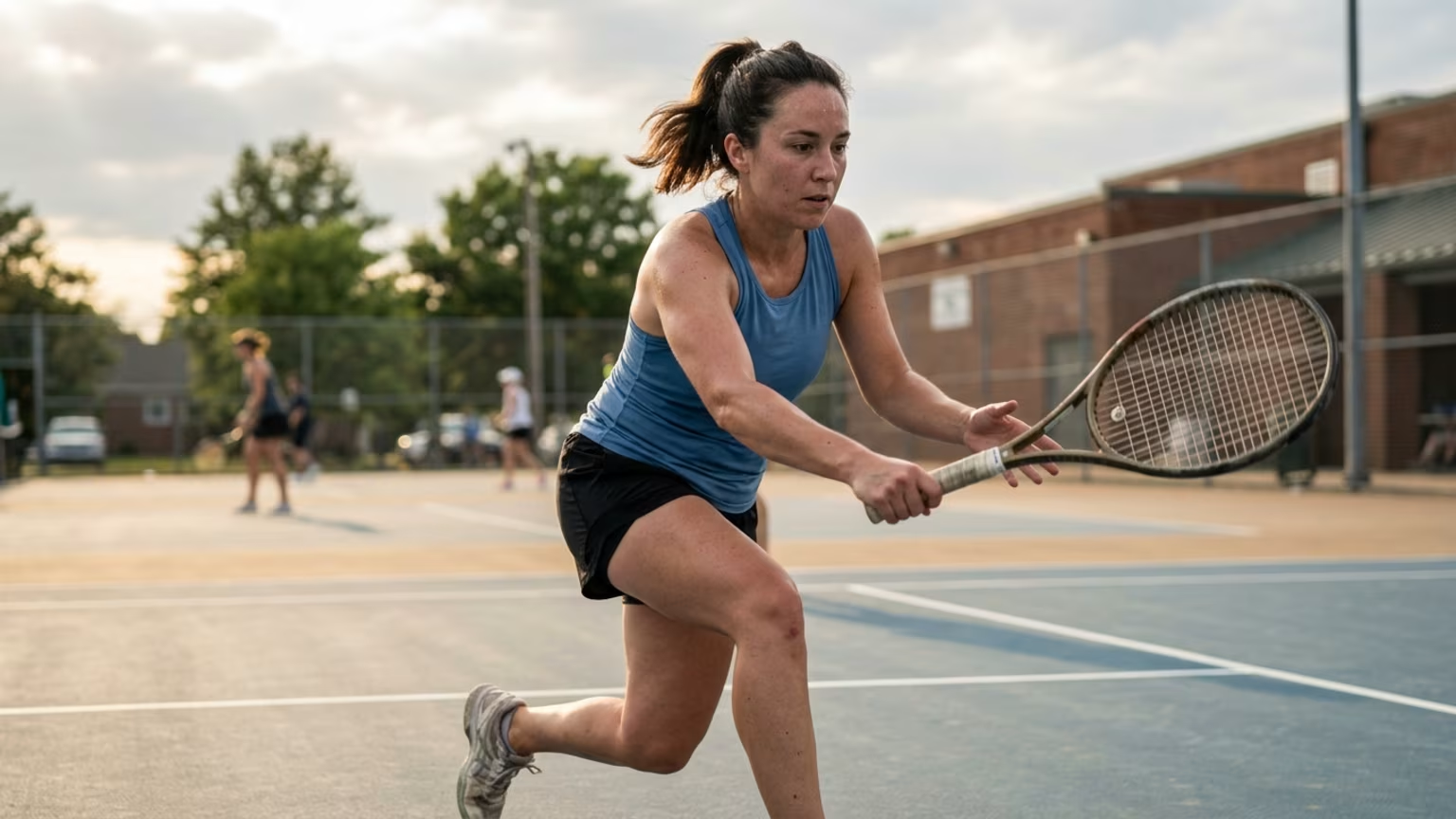

Build court-specific strength with this sustainable approach for tennis, pickleball, and padel players. Learn how to train for healthy athletic longevity.




You have heard it a million times: doubling your back squat will automatically make you faster to the ball. Here is why that is outdated. True court readiness requires complex movement rather than just pushing heavy weight in a straight line. Racquet sports demand multidirectional stability and rapid deceleration under pressure.
The traditional fitness industry often measures progress by absolute load. Players logically assume that adding plates to a barbell builds resilient joints. The team at evercourts completely understands why athletes follow this path. A stronger muscle seems like the obvious defense against athletic decline.
However, the court does not care about your maximum bilateral lift. It tests your ability to brake aggressively on one leg. It challenges your trunk to resist unwanted rotation during a wide volley. General gym advice rarely addresses the specific stresses of tennis or pickleball.
Court movement is chaotic and highly reactive. You must absorb force efficiently before you can redirect your momentum. Ankle strength plays a surprisingly critical role in this physical process. A 2026 review reported that greater ankle strength was positively correlated with vertical-jump height, sprint speed, change-of-direction ability and reactive-strength measures.
This same review found ankle strength inversely related to postural sway during static and dynamic balance tasks. However, the review also noted that only one included study examined ankle strength and deceleration directly. Therefore, the relationship should not be presented as conclusive proof of injury prevention or superior tennis performance. Ankle strength is clearly helpful, but it is just one piece of the puzzle.
Tennis covers a massive area and requires significant top speed alongside rapid braking. Padel involves unique rotational angles due to the surrounding glass walls. Pickleball demands relentless lateral agility and frequent low-stance dinking. Every racquet sport taxes the lower body in a distinct way.
Despite these differences, the underlying requirements for stability and control remain universal. You still need strong legs to decelerate safely. You still need a resilient shoulder to handle repetitive overhead motions. Recognizing these shared traits helps us design smarter conditioning programs for athletic longevity.
A sustainable strength program for racquet athletes should emphasize stability and controlled braking. You can organize your weekly training to cover pushing, pulling, carrying and rotation. Suitcase carries are excellent for challenging grip and trunk stiffness while moving. Controlled step-downs and reverse lunges are highly effective for building vital deceleration capacity.
A few years ago, I realized my tennis serve speed was dropping, and my shoulder was constantly throbbing after matches. Instead of pushing through the pain, I took a month to rebuild my mechanics and focus on rotator cuff endurance. I stopped trying to hit flat aces and developed a much heavier kick serve. My win rate actually went up, and my shoulder stopped hurting.
Sometimes longevity means outsmarting your own ego on the court. You have to match your physical training to the realities of your body. Building a sustainable weekly template means making space for adequate recovery. You should avoid placing your hardest lower-body strength session immediately before an important match.
Racquet sports are obviously demanding on the lower body, but the shoulder requires equal attention. Every forehand, backhand and serve relies on a stable trunk to anchor the arm. Pushing exercises like dumbbell presses develop necessary force through the chest and shoulders. Standing variations of these presses can better reflect the braced, staggered positions common in sport.
Your core does more than just twist during a powerful swing. It must also act as a strong braking system to stop your torso from over-rotating. Anti-rotation exercises train the trunk to resist unwanted forces perfectly. This specific physical quality helps protect your lower back when you are stretched out wide on defense.
You do not have to live in the gym to see real benefits on the court. Focus on short, focused sessions that prioritize movement quality over pure fatigue. A brief court-readiness routine before your match can also prime your nervous system. Visit our court performance resources for practical ideas on warming up properly.
When returning to play after time away, pacing your progress is absolutely vital. A sports-physiotherapy source recommends progressive movement, activation and rally-specific hitting before harder serving. This guidance also advises a gradual progression of serving, drilling and match volume after time away. You simply cannot expect your body to instantly handle peak match intensity.
This progression is consistent with clinical guidance that recommends graded exposure. Players should begin with controlled hitting and movement drills before progressing toward harder serves, wider court coverage and match-specific demands. Treat your first sessions back as gentle exposure rather than an athletic test. Building volume slowly ensures you can continue enjoying your sport safely.
Listening to your body is a highly trainable skill. The most useful monitoring tool is often the next-day response. Players should pay attention to persistent joint pain and worsening soreness. You must also monitor declining strength, altered technique or symptoms that do not settle between outings.
Minor muscle fatigue is normal, but structural joint pain requires professional attention. A physiotherapy source specifically notes that equipment and technique can contribute to recurring wrist, elbow and other symptoms. Changing your strings or racquet stiffness might be just as important as your gym routine. Read our player health articles for deeper insights into managing recurring issues.
The New Golden Rule is to train for deceleration and specific court demands rather than chasing arbitrary gym numbers. Healthy aging in racquet sports requires honoring the exact way your body moves during a rally. You do not need a perfect powerlifting total to dominate the tennis or padel court. You just need resilient brakes, a stable core and the wisdom to pace yourself.
Sustainable training is about building a body that can handle the unexpected. The court will always ask you to change direction at a moment's notice. Preparing for that reality is the truest form of respect for the game. We stay strong simply to keep playing the sports we love.
Follow Evercourts for practical insights on tennis, pickleball and padel performance, movement, recovery and healthy ageing. Stay connected for new articles, research-led guidance and ideas to help you play well and keep playing for years.


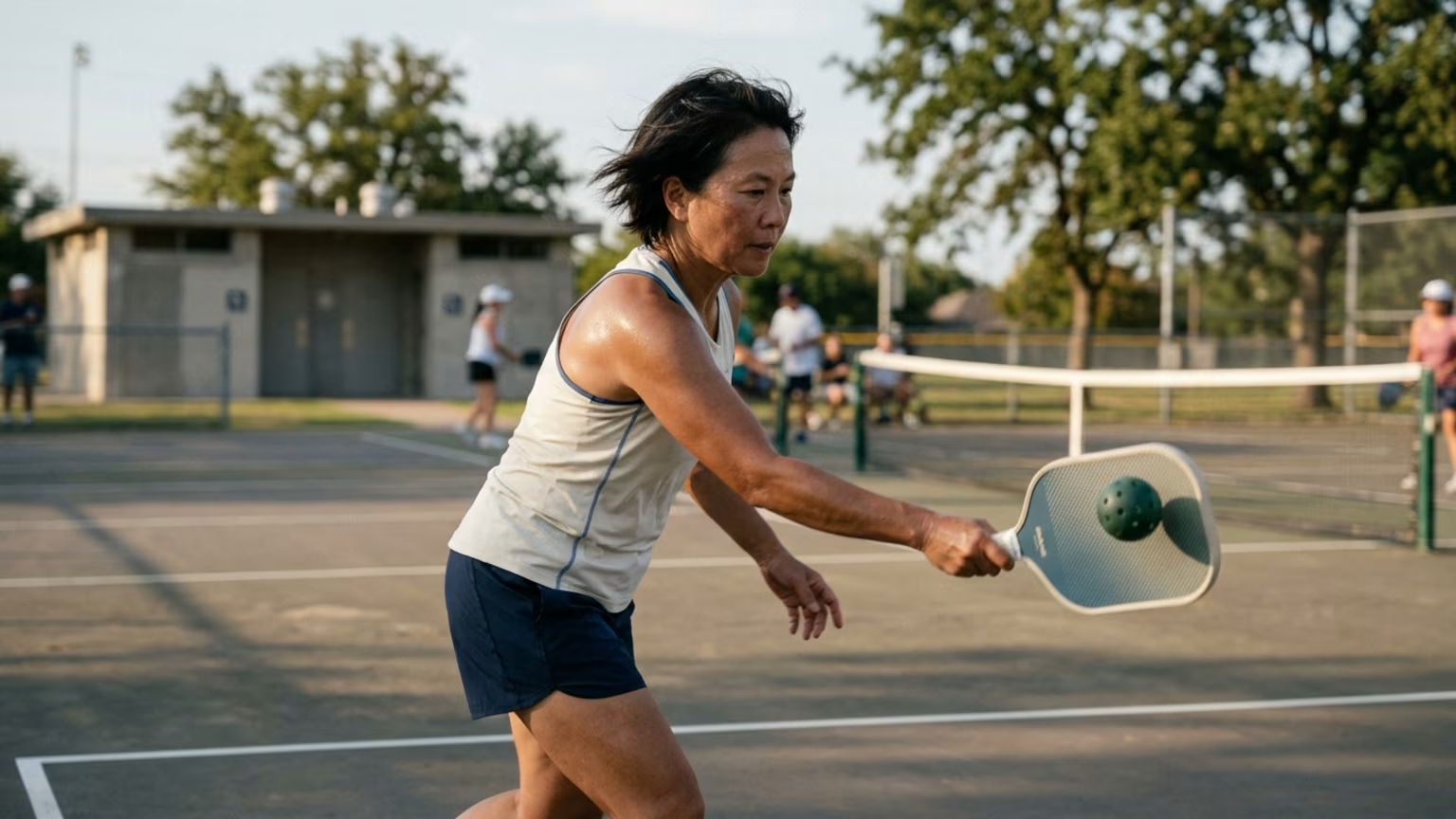
A recent live-play test of a silent pickleball highlights its value for practice, but standard balls still perform better for match play and power control.

An evidence check on sports supplements like tart cherry juice. Learn why racquet sports players should prioritize core nutrition over functional foods.
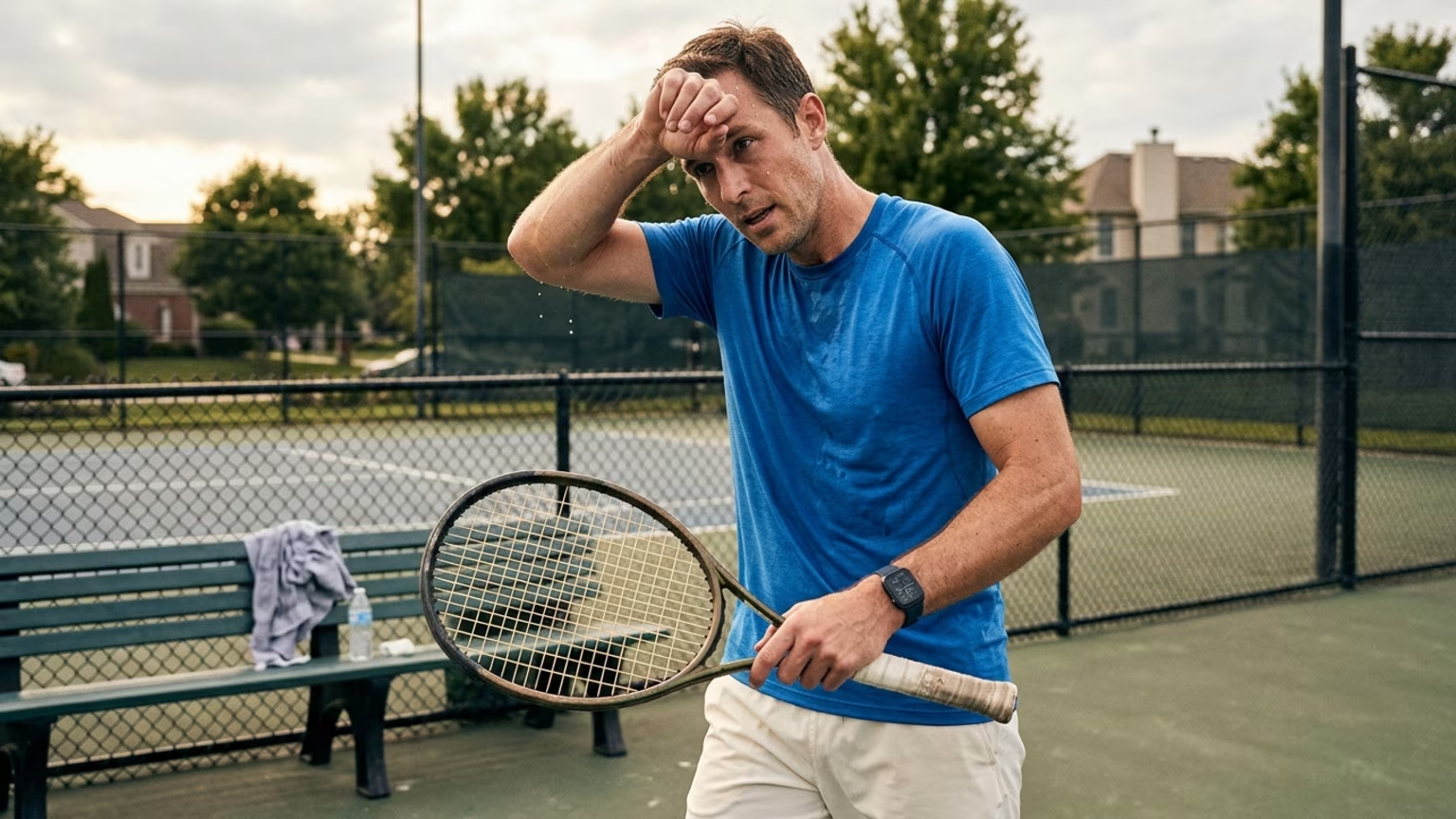
In late 2026, Oura analyzed wearable data to see how recreational tennis impacts heart health and recovery. Learn what this means for your athletic longevity.
Read practical guidance for better movement, smarter preparation and a game that keeps working for you.
explore the Blog
