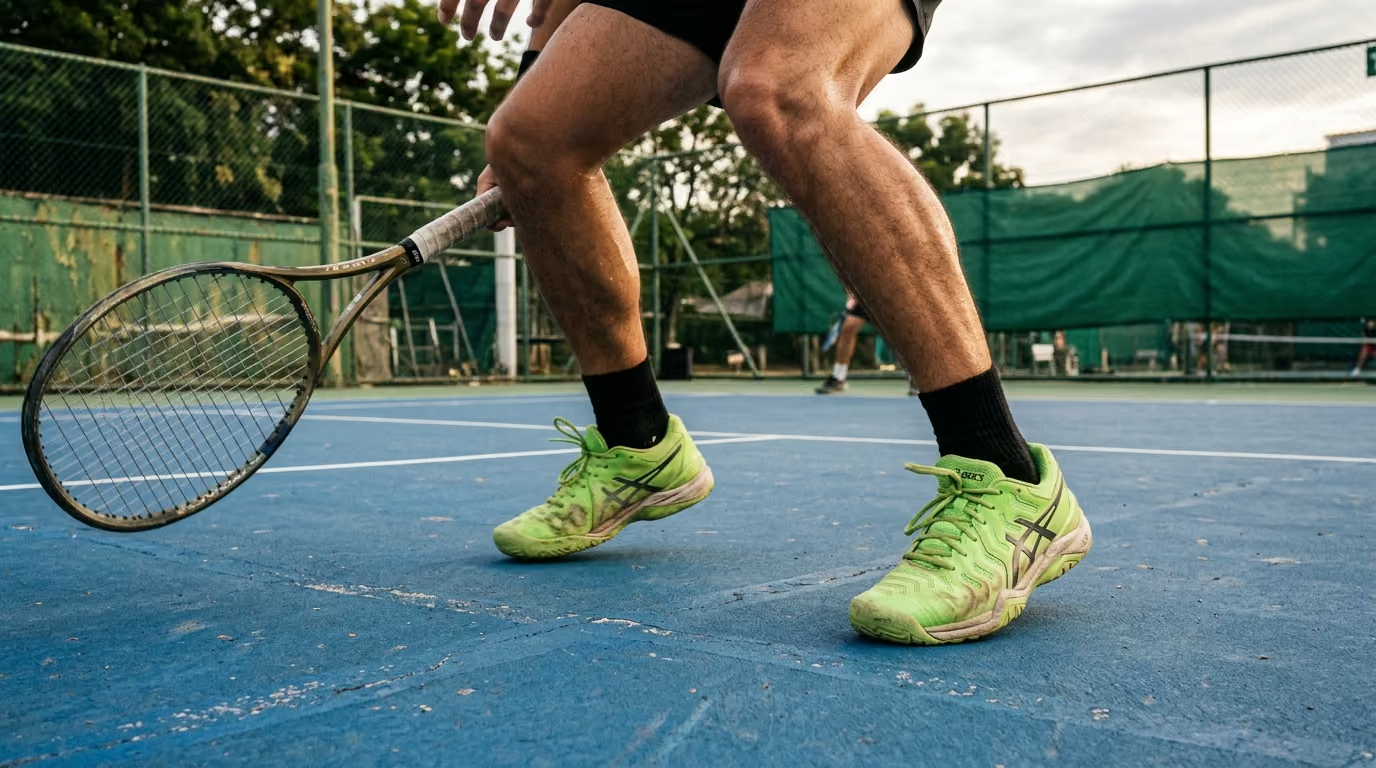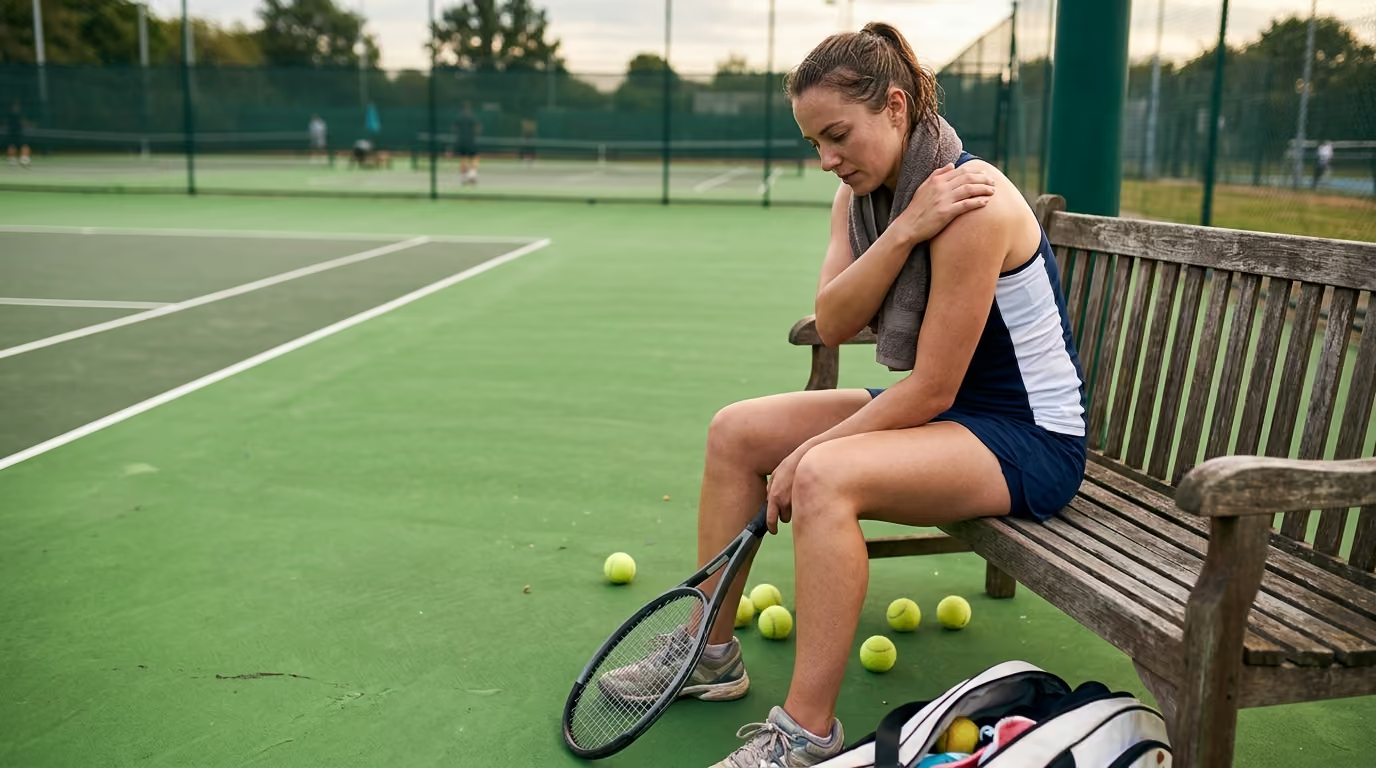

When your body feels heavy and resistant after a tough match, distinguishing normal stiffness from a significant movement restriction is crucial for racquet players.




Every racquet player knows the feeling of stepping out of bed the morning after a grueling three-set match. Your muscles feel heavy, your joints feel resistant, and your first few steps toward the kitchen are slow. This experience is a common part of playing court sports, but not all movement changes are created equal.
Distinguishing normal training stiffness from a significant movement restriction requires looking at timing, location, and functional ability. Expected stiffness is usually diffuse, delayed, and improves with gentle movement. A warning sign is typically sudden, sharp, localized, and accompanied by swelling, weakness, or a loss of function that does not improve.
Understanding these differences is the foundation of long-term athletic longevity. When you can accurately read your body's signals, you can make smarter training decisions. This guide will help you categorize your physical sensations, adapt your practice sessions, and recognize when it is time to seek professional care.
Stiffness is a subjective feeling of reduced ease, fluidity, or freedom of movement. Players often describe it as tightness, a feeling of heaviness, or difficulty reaching an end position. You might notice a reduced stride length during your warm-up, slower racquet preparation, or a general reluctance to rotate, extend, or decelerate.
It is important to understand that stiffness is not identical to a measured loss of joint range. A player can feel incredibly stiff while retaining near-normal passive range of motion. Conversely, a player might show a measurable joint restriction without describing the area as stiff.
To manage your body effectively, you must distinguish between different types of stiffness:
In the training world, "tight" is merely a description, not an explanation. A tight sensation may reflect normal soreness, fatigue, a muscle strain, tendon irritation, joint inflammation, or a neural symptom.
Range of motion is a dynamic concept that changes based on your physical state. It should be treated as one component of movement readiness rather than the sole determinant of whether you are fit to play. On the court, we must look at range of motion through several lenses.
Active range is how far you can move a joint under your own muscular control. Passive range is how far an external force, such as a physical therapist, can move your joint when you are relaxed. Both of these differ from functional range, which is the specific motion required to perform a sport-specific task.
Finally, you must consider dynamic range and pain-free range. Dynamic range is the movement available at high speed, under heavy loads, or while maintaining balance. Pain-free range is the motion you can access without reproducing your symptoms. You might have plenty of slow, unloaded range during a mobility test. However, you may still lack the control, strength, or confidence needed for a fast open-stance forehand or a wide defensive lunge. To improve these physical capabilities, players often benefit from targeted mobility and movement resources designed specifically for court athletes.
Movement quality encompasses far more than simple flexibility. When assessing how you move, you must look at your overall coordination and stability. A high-quality movement is symmetrical, well-timed, and balanced.
When your movement quality decreases, you will notice specific changes in your performance:
A player who can reach a physical position but repeatedly collapses, twists, or avoids loading may have a significant functional limitation. This player is at a higher risk of performance decline than a player who reports mild stiffness but moves with excellent control.
Pain is a complex protective experience, and its behavior provides vital clues about your joint health. To make smart decisions, you should record the location, onset, character, and intensity of any pain. You also need to track how irritable the symptom is and how long it lasts after you finish playing.
The trajectory of your symptoms is often more useful for decision-making than a single pain score. For example, some pain settles during a gradual warm-up but returns much more strongly afterward. This is not a positive response, and it suggests the underlying tissue is not tolerating the workload.
Understanding these patterns is a key focus of player health articles, which emphasize tracking symptoms over multiple days. A symptom that consistently worsens the morning after play requires a change in your training volume.
Fatigue commonly alters how you move on the court long before pain becomes prominent. In tennis literature, muscle fatigue, prolonged exposure, and altered shoulder mechanics are identified as potential upper-limb injury risk factors. To protect your body, you must distinguish between fatigue-related degradation and acute structural events.
Fatigue-related degradation is a bilateral or generalized reduction in speed, precision, and force production that improves with rest. Pain-related protection is different, as your nervous system actively avoids or alters a specific movement to protect an area.
You may also experience a capacity mismatch, where you can perform a movement once but cannot repeat it safely under fatigue. An acute structural event is an abrupt change associated with a specific action, such as a sudden pop, crack, or sharp pain during a sprint.
Delayed onset muscle soreness, commonly known as DOMS, is a normal physiological response to strenuous exercise. According to guidelines from the American College of Sports Medicine, DOMS commonly begins approximately 12 to 24 hours after exercise. These symptoms can continue for up to 72 hours before gradually resolving.
This soreness is primarily caused by microscopic tears in the muscle fibers, which occur during intense or unfamiliar activities. For racquet players, high-volume eccentric loading, such as braking during a split-step or lunging for a low ball, is the primary driver of DOMS.
Understanding this timeline helps you avoid unnecessary anxiety. If you feel generalized muscle soreness a day after an intense drill session, your body is simply recovering and adapting to the training load.
While DOMS is a benign condition, it does temporarily alter your physical capabilities. Research shows that DOMS can include muscle tenderness, localized swelling, temporary loss of joint range of motion, and temporary reductions in muscle strength.
On the court, this means you might feel slower when moving to the ball, and your shots may lack their usual power. Your joints may feel resistant to deep bending, and your overall coordination might feel slightly off.
These temporary reductions are normal, but they require you to adjust your expectations. Trying to hit maximum-effort serves or perform high-velocity sprints when your muscles are actively recovering from DOMS can place excessive stress on your tendons and joints.
When dealing with post-training soreness, players often look for ways to speed up their recovery. Foam rolling has been studied as a possible way to reduce muscle tenderness and minimize decrements in dynamic movement after DOMS.
It is best to view foam rolling as an optional symptom-management strategy rather than a cure or a test of physical readiness. Rolling can temporarily improve your comfort and make movement feel easier, but it does not instantly repair muscle tissue.
For a complete strategy, players should look to recovery science resources to learn about hydration, sleep, and active recovery. Gentle, low-intensity movement is often the most effective way to encourage blood flow and ease the sensation of stiffness.
A common misconception among court athletes is that if a restriction improves during a warm-up, the body is fully ready for high-intensity play. This is a potentially risky assumption. A warm-up increases tissue temperature, alters muscle tone, and temporarily dampens pain perception.
This temporary change in perception can mask underlying muscle fatigue or minor tissue irritation. You might feel great during your warm-up mini-tennis, only to experience a sudden setback when you attempt your first maximum-effort serve.
Warming up proves that your nervous system can temporarily adapt, but it does not prove your tissues have fully recovered. Always assess your physical response after the session and the following morning to truly judge your recovery.
To manage movement changes effectively, it helps to understand where injuries most commonly occur in racquet sports. Tennis injury surveillance literature consistently finds substantial lower-limb involvement across all levels of play.
A comprehensive 2018 epidemiological review reported lower-extremity injuries at 23.0 per 1,000 match exposures. In comparison, upper-extremity injuries occurred at 17.7 per 1,000 match exposures, and trunk injuries occurred at 6.12 per 1,000 match exposures.
These statistics highlight the immense physical demands placed on the feet, ankles, and knees during court play. Because the lower body absorbs the impact of every split-step and direction change, movement restrictions in these joints deserve careful attention.
The same 2018 review identified the specific areas where players are most likely to experience acute issues. The ankle was found to be the most common acute injury location, followed by the wrist, the knee, the foot, and the shoulder.
A newer 2025 epidemiological study supported these findings, reporting that lower-limb injuries made up 58.5% of all recorded injuries. Upper-limb injuries followed at 32.8%, with the knees and ankles remaining among the most frequently affected sites.
These figures can vary based on the study population, competition levels, and how researchers define an injury. However, the overall trend is clear: your lower joints take a significant beating, and maintaining their movement quality is essential.
Workload and exposure rates play a massive role in how your body adapts or breaks down. A systematic review of high-performance tennis players reported injury incidence ranges of 2.1 to 3.5 injuries per 1,000 hours of play in junior athletes.
For adult players, the range was incredibly broad, spanning from 1.25 to 56.6 injuries per 1,000 hours of play. This wide variation highlights how individual factors, such as training history, recovery habits, and playing style, influence physical durability.
The review also noted that lower-limb trauma accounted for 48% to 56% of injuries, lumbar conditions made up 12% to 39%, and shoulder overuse syndromes were another major category. These broad ranges demonstrate that every player's risk profile is highly individual.
It is common for fitness programs to promise absolute protection from injury, but the scientific literature is much more conservative. A systematic review found that the scientific literature on tennis-injury incidence varies considerably, and few longitudinal studies have established definitive causal relationships.
Furthermore, at the time of that review, there were no randomized controlled trials of tennis-specific injury prevention measures. This underscores the need for players to be skeptical of programs claiming to make their joints completely immune to injury.
Instead of searching for a magical cure, players should focus on realistic injury prevention resources that emphasize gradual workload progression and sensible movement modification. Managing your training load is the most proven way to keep playing safely.
Making a smart decision when your body feels different does not have to be complicated. You can use the SAGE framework to organize your observations and decide whether to play, modify your session, or rest. This framework is built around four simple questions.
The first step is to analyze the onset of your movement change. Did the stiffness or pain appear suddenly during one identifiable movement on the court? Did it follow a clear physical event, such as a collision, a slip, a twist, or an awkward reach for a wide ball?
Alternatively, did the sensation begin several hours after a demanding session, or did it develop gradually across several weeks of heavy play?
A delayed, generalized onset across multiple muscle groups is highly compatible with benign post-training soreness. On the other hand, an abrupt, localized loss of function during a specific sprint or swing is a classic sign of a sprain or strain. These acute soft-tissue injuries often include localized pain, weakness, immediate swelling, and difficulty using the affected limb.
Next, map the exact location of your symptoms. Is the sensation diffuse, spreading across multiple muscle groups on both sides of your body? Or is it highly specific, focusing on one single muscle, a specific tendon attachment, a single joint, or a pathway along your spine?
Knowing where injuries typically occur can help you put your symptoms in context. As we have seen, lower-limb issues are incredibly common, with the ankle and knee being frequent sites of trouble.
If your stiffness is localized to a single joint or tendon, it requires a more cautious approach than generalized muscle soreness. A single painful tendon that hurts every time you load it is a sign of localized tissue stress, not general training fatigue.
To assess your readiness, use low-risk, controlled movements rather than testing your absolute limits. Do not attempt a maximum-velocity sprint or a hard serve to see if you are hurt. Instead, ask yourself these basic functional questions:
The most important question is not simply whether you can physically perform the movement. You must ask if you can repeat the movement with normal control, proper technique, and without causing your symptoms to escalate.
Finally, track how your symptoms change over time. How does the area feel 24 hours after your last session, and is the sensation better, unchanged, or worse? Does the movement restriction shrink or expand as you go about your day?
Are you noticing any new weakness, localized swelling, visible bruising, numbness, or joint instability?
If your symptoms are steadily settling and your range of motion is returning, your body is successfully recovering. However, symptoms that continue to worsen, fail to improve after a period of relative rest, or limit your ability to perform everyday activities are clear signs that you need to change your approach.
When your movement is compromised, you do not always have to choose between playing through pain or resting completely. Instead, you can use a structured hierarchy of drill modifications to keep moving safely. This approach uses the minimum effective dose of modification to protect your tissue while maintaining your skills.
Use this modification when your symptoms are mild, your movement quality remains excellent, and you can move without compensating. You still perform your usual strokes and footwork, but you lower the physical stress.
In tennis, you might choose to rally at a comfortable 50% pace from the baseline rather than playing a competitive match. For pickleball players, this could mean focusing on controlled dinking drills rather than fast-paced singles games. Padel players can practice soft wall rebounds and defensive positioning without attempting high-velocity overheads. By reducing the speed and power, you allow your tissues to move without excessive strain.
If reaching a full physical position causes mild discomfort or guarding, you can modify the drill by shortening your range of motion. This keeps you on the court while avoiding the specific angles that irritate your body.
For example, if deep lateral lunges feel uncomfortable, you can perform partial lunges and focus on early racquet preparation. If a full service motion irritates your shoulder, you can use an abbreviated backswing or serve underhand. In padel or pickleball, you can shorten your follow-through and focus on compact, controlled strokes. This approach keeps your timing sharp while respecting your body's temporary structural limits.
When a specific movement repeatedly provokes your symptoms, you should temporarily remove that task and replace it with a comfortable alternative. This allows you to maintain your fitness without aggravating the sensitive area.
If sprinting and sudden braking irritate your knee, you can replace your court work with straight-line walking, stationary cycling, or swimming. If serving is limited by a shoulder issue, you can spend your session on footwork drills and low groundstrokes. This level of modification keeps you active and preserves your cardiovascular capacity while giving the irritated tissue a chance to calm down.
You must stop your practice or match immediately if your pain escalates, your technique deteriorates, or you can no longer use your limb normally. Continuing to play when you are limping or compensating heavily is a recipe for a more severe issue.
According to NHS guidelines, specific signs that indicate you should stop playing include worsening pain, rapid swelling, visible bruising, and an inability to bear weight. If you experience any of these symptoms, step off the court, sit down, and focus on basic recovery. Do not let competitive desire push you into a long-term injury.
If your movement restriction persists for more than a few days, repeatedly returns when you increase your training load, or interferes with your daily activities, it is time to seek professional help. Self-diagnosis is highly unreliable and can lead to inappropriate management.
A qualified healthcare professional, such as a physical therapist or sports medicine physician, can perform a comprehensive evaluation. They will help you identify the root cause of your restriction and create a personalized rehabilitation plan. This ensures you can return to the court with confidence and full physical capacity.
While all racquet sports share some physical characteristics, each sport places unique demands on your body. Understanding these sport-specific nuances helps you identify why certain movement changes occur.
Tennis is played on a large court, which requires players to cover significant distances at high speeds. This leads to explosive accelerations, heavy decelerations, and deep lunges outside your base of support.
Because of these demands, tennis players require excellent ankle dorsiflexion, hip rotation, and trunk control. If you have a restriction in your ankle or hip, your body will compensate by placing extra stress on your knees or lower back.
This kinetic-chain relationship is crucial to understand. A restriction in one joint does not guarantee an injury, but it does change how forces travel through your body during a fast open-stance groundstroke.
Pickleball is played on a much smaller court, which reduces the need for long, high-velocity sprints. However, the game requires players to spend a significant amount of time in a low, crouched athletic stance near the kitchen line.
This constant low positioning places unique demands on your quadriceps, glutes, and lower back. It also requires excellent hip flexion and ankle mobility to stay low without rounding your spine.
If your hips feel stiff, you may find yourself standing too upright, which reduces your reaction time and forces you to reach awkwardly for low balls. Pickleball players often need to focus on hip and ankle mobility to maintain their low stance comfortably.
Padel combines elements of tennis and squash, utilizing glass walls that create unpredictable ball rebounds. This environment requires rapid changes of direction, constant twisting, and quick defensive adjustments.
Padel players must be able to rotate their hips and torso quickly to play balls off the back and side walls. This constant rotational loading can place significant stress on the thoracic spine and the abdominal muscles.
Additionally, the frequent use of overhead shots, such as the bandeja and the smash, demands excellent shoulder mobility and thoracic extension. A restriction in your upper back will often show up as shoulder strain or lower back pinching during these overhead movements.
Across all three sports, the shoulder and upper limb are subjected to high repetitive forces. A systematic review of upper-limb tennis injuries found that upper-limb issues accounted for 23% to 28% of all injuries, with the shoulder being the most common site of trouble.
The review identified prolonged exposure, muscle fatigue, and scapular dyskinesis, which is altered movement of the shoulder blade, as potential risk factors. However, the evidence quality for these factors remains moderate to low, meaning we cannot rely on a single measurement to predict injury.
Rather than worrying about a slight asymmetry in your shoulder range of motion, focus on your overall strength and control. To build a resilient upper body, players should incorporate structured training, which they can find in strength and conditioning resources.
When dealing with stiffness or a sudden movement change, it is easy to make decisions based on common myths. Avoiding these frequent errors can save you weeks of frustration and keep you on the court.
When a muscle feels tight, the natural instinct for most players is to stretch it as hard as possible. However, aggressive static stretching can actually aggravate an acutely strained muscle or an inflamed tendon.
If your tightness is a protective response from your nervous system, forcing the joint into an extreme end-range position will only cause the muscle to guard more heavily.
Instead of aggressive stretching, favor gentle, symptom-free active movement. Perform slow arm circles, light hip rotations, or gentle walking to encourage blood flow without placing excessive tension on vulnerable tissues.
Another common mistake is repeatedly testing a painful movement to see if it still hurts. If you felt a sharp pain in your calf during a sprint, jogging a few steps every five minutes to check on it will only cause further irritation.
This constant testing turns what might have been a minor strain into a more significant issue by repeatedly overloading the healing tissue.
Once you identify a movement that provokes your symptoms, accept that the area is sensitive. Give it time to rest, use the SAGE framework to monitor its trend, and wait until the next day to perform a controlled, low-intensity test.
Many players believe that as long as they are not in pain, their bodies are perfectly fine. However, movement quality often deteriorates due to fatigue or muscle weakness long before pain actually begins.
If you notice that you are repeatedly losing your balance, struggling to decelerate, or compensating by using only your arm to hit shots, your body is showing signs of fatigue.
Continuing to play when your movement quality is compromised increases the mechanical stress on your joints and tendons. Pay attention to how you move, not just how much pain you feel, and modify your play when your coordination begins to slip.
On the other end of the spectrum, some players believe they must rest completely in bed until every ounce of stiffness is gone. While total rest is necessary for severe injuries, complete inactivity is rarely the best approach for minor stiffness.
Total rest can lead to muscle weakness, joint stiffness, and a decline in your cardiovascular fitness.
Instead, practice relative rest by removing the specific activities that aggravate your symptoms while maintaining comfortable, pain-free movement. This active recovery keeps your joints lubricated, maintains your physical conditioning, and supports the healing process.
When you play with a movement restriction, your body does not simply stop moving. Instead, your nervous system finds a way to accomplish the task by compensating with other muscles and joints.
For example, if your right hip lacks internal rotation, you may rotate your lower back excessively to complete your forehand follow-through. Over time, this constant compensation places abnormal mechanical stress on tissues that were not designed to absorb those forces.
While these compensations can get you through a single match, they can lead to secondary issues in other areas of your body over the long term. Addressing restrictions early helps prevent this chain reaction of physical compensations.
Every court session places a physical load on your muscles, tendons, and joints. When you are fully recovered, your tissues adapt and become stronger. However, if you play again before your body has recovered, fatigue begins to accumulate.
As fatigue builds up, your muscles lose their ability to absorb shock and support your joints. This shifts the physical load directly onto your tendons, ligaments, and joint cartilage, which can lead to overuse issues over time.
Monitoring your daily recovery and adjusting your playing frequency is essential for preventing this accumulation of fatigue. This balanced approach is what supports long-term athletic longevity on the court.
One of the hardest parts of managing a movement restriction is the fear of losing your hard-earned fitness. Fortunately, you can maintain your cardiovascular capacity without placing high impacts on your recovering joints.
If court play is temporarily limited, look for low-impact alternatives that do not aggravate your symptoms. Stationary cycling, elliptical training, rowing, and swimming are excellent ways to keep your heart rate up while resting your joints.
By maintaining your fitness off the court, you make the transition back to competitive play much smoother and safer when your movement restriction finally resolves.
There is a fine line between pushing your physical limits to improve your performance and pushing through a warning sign that requires rest. A good rule of thumb is to look at the trend of your physical recovery over a three-day period.
If you find that your stiffness is steadily increasing, your range of motion is shrinking, or you need more warm-up time each day just to feel normal, you are crossing the line into overtraining.
Listen to these trends and have the courage to take a step back when your body demands it. Taking a few days of modified training now is far better than being forced to take months off court due to an injury.
While most movement changes can be managed with sensible adjustments, certain warning signs require immediate clinical attention. These signs suggest a potential structural issue or a systemic concern that is beyond self-management.
According to medical guidelines from the National Institute for Health and Care Excellence, musculoskeletal red flags include:
If you experience any of these symptoms, do not attempt to stretch, roll, or exercise through the discomfort. Stop all court activities and seek an evaluation from a qualified medical professional immediately.
For acute issues, such as ankle sprains or sudden joint pain, the National Health Service provides clear criteria for when to seek urgent medical advice. You should visit an urgent care center or consult a doctor if you experience:
These symptoms suggest a potential fracture, severe ligament tear, or compromised blood flow, all of which require prompt professional diagnosis and care.
Not all medical concerns are acute emergencies. You should also consult a physical therapist or sports medicine specialist for persistent, low-grade issues that fail to improve over time.
If you have modified your training volume, practiced relative rest, and focused on gentle movement for two to three weeks, yet your range of motion remains restricted, you need an individualized assessment.
A professional can help you identify structural limitations, strength imbalances, or technique issues that are holding you back. This cooperative approach is the most effective way to address chronic restrictions and keep you playing for years to come.
When seeking professional care, look for providers who understand the unique physical demands of racquet sports. A sports-focused physical therapist or a sports medicine physician will be familiar with the rotational forces, rapid decelerations, and overhead demands of court play.
They can provide a precise diagnosis, guide your recovery step-by-step, and design a customized program to build your physical capacity. Partnering with the right professional ensures you get back to the court safely, efficiently, and with the confidence to move at your best.
No, you do not necessarily need to stop playing entirely. A shoulder restriction that occurs only during serves suggests a movement-specific issue rather than a generalized injury. You can practice relative rest by temporarily removing high-volume serves and overheads from your sessions.
In the meantime, you can continue playing groundstrokes, focusing on footwork, or performing low-impact drills that do not irritate your shoulder. This approach keeps you active while giving the shoulder tissue time to recover. If the stiffness persists during daily activities or groundstrokes, seek a professional physical assessment.
No, foam rolling is not a cure for delayed onset muscle soreness. DOMS is caused by microscopic structural changes in your muscle fibers, which require time, nutrition, and sleep to heal.
However, foam rolling can be a useful tool for temporary symptom management. Research suggests that foam rolling can reduce the sensation of muscle tenderness and temporarily improve your comfort during movement. Use it as an optional comfort strategy to help you stay mobile, but do not view it as a physical green light to perform high-intensity training.
An isolated feeling of tightness or a minor difference in range of motion between your hips is often a normal athletic adaptation. For example, research in professional tennis players has shown that side-to-side differences in hip rotation are common and do not automatically predict future injury.
To determine if your hip tightness is a true restriction, look at your overall movement quality on the court. If you can move symmetrically, balance during deceleration, and play without pain or physical compensation, your hip tightness is likely a benign adaptation. If the tightness limits your functional range or causes pain, it requires attention.
This difference is due to the varying forces placed on your joints during different activities. Walking on flat ground requires minimal force absorption and a limited range of motion.
A split-step, however, requires you to absorb your body weight rapidly, decelerate your momentum, and prepare for an explosive change of direction. This dynamic movement places significantly higher loads on your knee joints, patellar tendons, and quadriceps muscles.
If your knee feels stiff only during a split-step, it suggests the joint or surrounding tendons are struggling to tolerate these high, rapid loads. Use the SAGE framework to monitor the trend and consider reducing your playing intensity.
Follow Evercourts for practical insights on tennis, pickleball and padel performance, movement, recovery and healthy ageing. Stay connected for new articles, research-led guidance and ideas to help you play well and keep playing for years.


Read practical guidance for better movement, smarter preparation and a game that keeps working for you.
explore the Blog