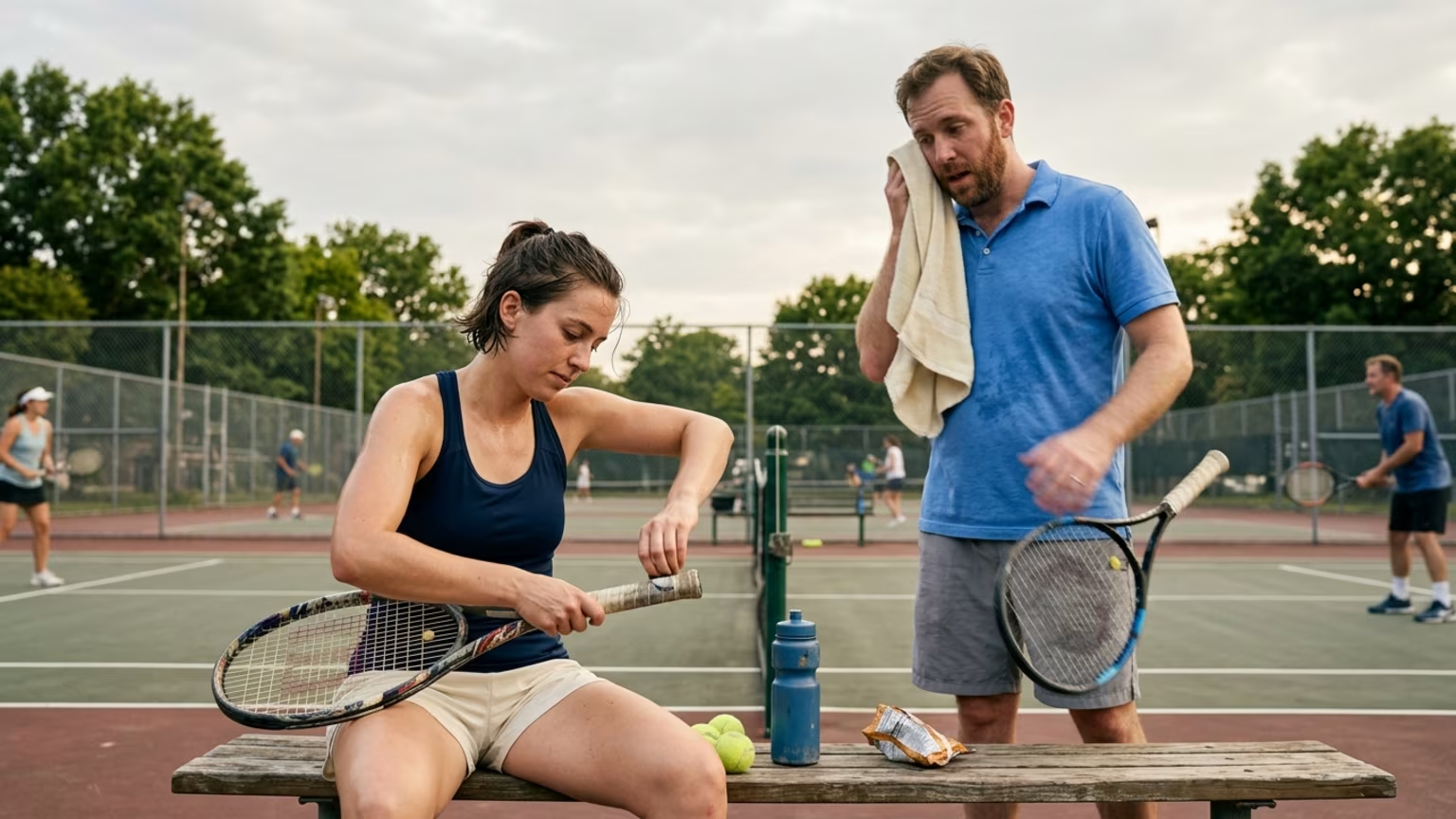

Discover how tennis, pickleball, and padel players can safely decide to play, adapt, or rest based on physical readiness and workload management.




Pushing through physical exhaustion does not automatically make you a better competitor. In reality, deciding whether to play, adapt or rest is a calculated measurement of your physical capacity against court demands. Load management simply means adjusting your scheduled activity to protect your body and preserve future performance. For adult players balancing busy lives, this daily decision dictates how long you can stay healthy.
Tennis, pickleball, and padel are inherently unpredictable sports. You rarely run in a straight line for very long during a point. Instead, you face constant explosive efforts and sudden changes of direction. Every split step requires your muscles to absorb massive force rapidly.
This start-and-stop nature taxes both your joints and your energy systems heavily. When you sprint for a wide ball, your lower body must brake aggressively to recover court positioning. The repetitive braking movements place immense stress on your connective tissues. Over consecutive days of play, this physical toll compounds significantly.
Players rely on brief anaerobic bursts to execute aggressive shots. Repeatedly tapping into these energy reserves without adequate recovery leads to delayed reactions. Your central nervous system eventually slows down your ability to coordinate complex kinetic chains. This fatigue directly compromises your form, court coverage, and overall mechanical efficiency.
A fatigued player often compensates by altering their natural swing mechanics. This subconscious adjustment forces secondary muscle groups to handle loads they are not designed to support. Understanding how to manage this physical decline is crucial for preventing overuse issues. Recognizing the true cost of court movement helps you make smarter scheduling choices.
Your cardiovascular system also works overtime during a tense match. Short rallies demand intense effort, while the brief pauses between points barely offer enough time to catch your breath. Managing this unique heart rate fluctuation requires exceptional conditioning and pacing skills. When you play through severe exhaustion, you lose the ability to regulate this pacing effectively.
Recent events in professional tennis highlight the importance of balancing physical readiness with workload management. Reuters reported that Wimbledon champion Jannik Sinner withdrew from the 2026 Canadian Open in Montreal to prioritize his health. Meanwhile, 24-time Grand Slam champion Novak Djokovic continued to manage his workload by skipping the same event. Canadian Open tournament director Valerie Tetreault said organizers were disappointed but acknowledged that player health must remain the priority.
Tetreault said the recurring late withdrawals raised a broader issue, and organizers were discussing possible adjustments with the ATP. The Professional Tennis Players Association said the withdrawals reflected concerns about a lengthy tennis calendar, reduced recovery time between tournaments, and injuries occurring earlier and becoming more serious. Because this is an advocacy organization's perspective, it highlights the growing tension between scheduling demands and player health.
Furthermore, Alexander Zverev criticized the structure of 12-day Masters 1000 tournaments. He suggested the extended formats could contribute to burnout and withdrawals before the U.S. Open. Sinner later withdrew from the Cincinnati Open because of a bothersome right knee. Sinner noted that he had to accept he was "not ready to compete yet." This scenario demonstrates that a player might passionately want to play but must still respect physical limitations.
Other professionals have modeled similar strategies for preserving future availability. Mirra Andreeva reportedly took 11 days completely away from tennis after Wimbledon to recharge before resuming training. Ajla Tomljanovic announced she was ending her 2026 season early after dealing with minor injuries, aiming to become healthy and ready for 2027.
Recreational players face different pressures but share similar biological constraints. A 2026 study of pickleball-related injuries in a Korean population found that greater weekly playing volume was independently associated with injury occurrence. A recent review of multidisciplinary issues in racket sports also argued that cognitive-load management should be considered in training design.
However, the Korean pickleball study recommended emphasizing load management rather than blanket activity restriction. The researchers advised using progressive increases in weekly playing time, scheduled recovery periods, and modifications to play volume. Treating fatigue with total rest is not always the best approach.
Understanding these workload principles directly supports healthy aging for adult recreational players. Instead of forcing a full match on a tired day, adapting your approach protects your future court time. A useful framework involves asking yourself four specific questions before you step onto the court. First, you must honestly ask if you are ready enough to move well.
Sinner differentiating between wanting to play and being unready to compete shows that motivation and physical readiness are distinct. Second, evaluate how important the scheduled session actually is. A casual hit offers far more flexibility than a structured league playoff match. If the stakes are low, you have more room to adjust the intensity without feeling guilty.
Third, consider what alternative playing options are available to you. You might pace your efforts strategically by reducing the match duration or focusing entirely on a slower technical session. Fourth, identify the future court time you are actively protecting. The goal is to preserve your ability to perform well later rather than exhausting yourself today.
Andreeva's deliberate break and Tomljanovic's early end to the season both illustrate the immense value of prioritizing future availability. You can maintain consistency by implementing a practical three-level decision model based on your daily assessment. Play normally when your energy is adequate, movement feels coordinated, and there is no concerning pain.
Adapt the session when you feel somewhat tired but can still safely manage a structured preparation routine with lower intensity. Rest or replace the session entirely when readiness is poor or your symptoms are worsening. Adapting the session helps you decelerate smoothly and recover efficiently by avoiding unnecessary overexertion.
You could play doubles instead of singles or restrict your serve volume during practice. A careful warm-up can also help you gauge whether your body is ready for competitive friction. Always match the session intensity to the physical readiness you actually possess on that given day. Reserve your absolute maximum effort for sessions that truly justify the energetic cost.
Incorporating active recovery days is another excellent way to maintain your weekly routine without adding mechanical stress. Spending thirty minutes on mobility work or light stretching keeps your joints moving while letting your central nervous system rest. This proactive approach ensures you return to the court feeling refreshed rather than depleted. Professional athletes use this strategy to sustain their rigorous tournament schedules.
General muscle fatigue is a completely normal part of regular racquet sports participation. However, sharp pain requires entirely different treatment from ordinary physical tiredness. If you experience persistent, worsening, or sharply localized pain, you should consult an appropriately qualified clinician. A sports physiotherapist or dedicated healthcare provider can properly assess these specific structural symptoms.
Modifying your court volume is an excellent daily strategy, but it cannot replace a proper medical diagnosis. Do not attempt to manage worsening joint pain solely through a modified practice schedule. The sources support health prioritization and careful workload management, but they do not provide a clinical diagnosis protocol for severe injuries.
True athletic readiness comes from knowing when to push, when to adapt, and when to ask for professional help. Treat your future availability as a valuable asset worth protecting. Sometimes the most effective move a player can make is simply choosing to rest.
Follow Evercourts for practical insights on tennis, pickleball and padel performance, movement, recovery and healthy ageing. Stay connected for new articles, research-led guidance and ideas to help you play well and keep playing for years.


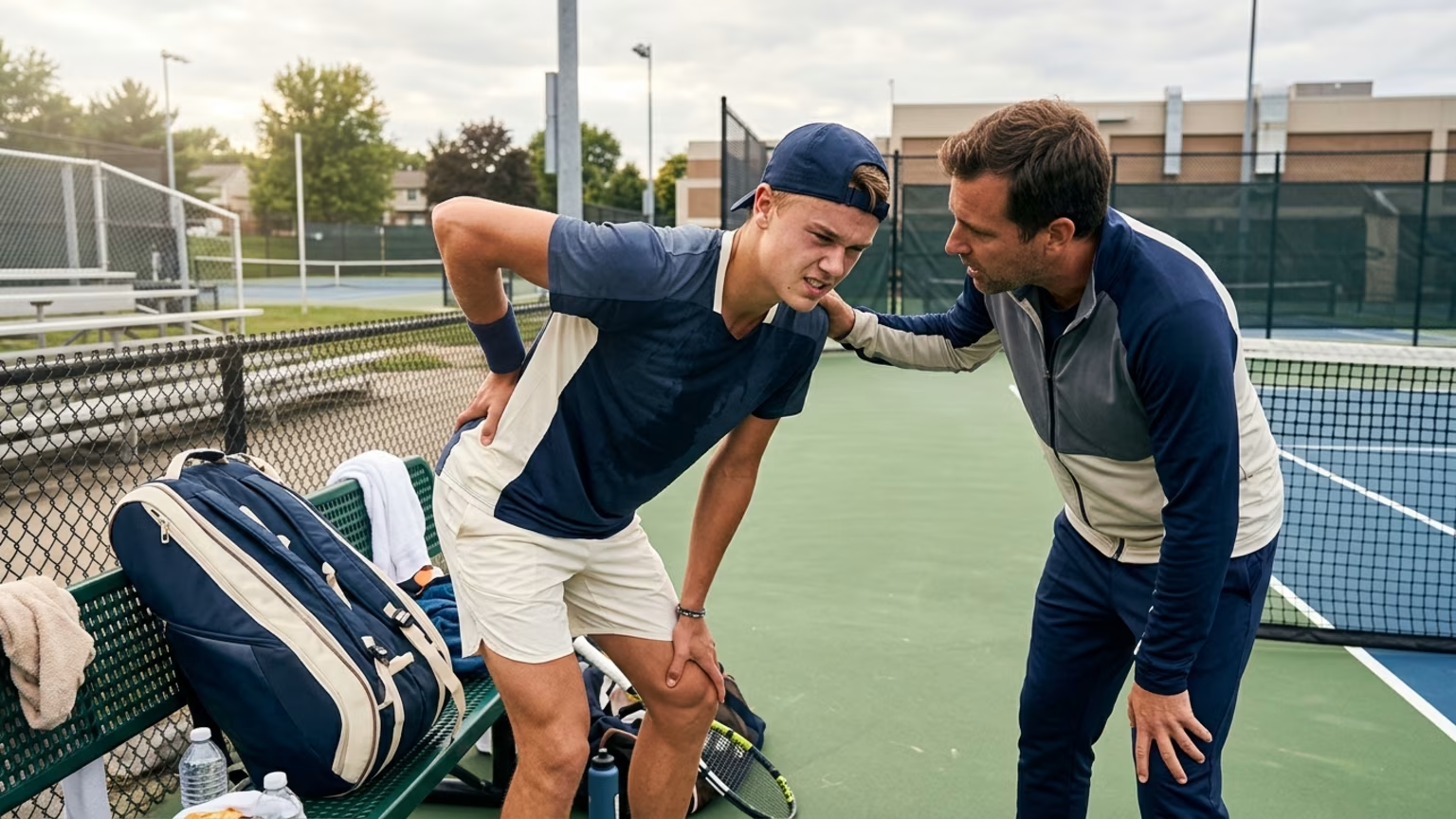
Holger Rune withdrew from the European Open with a back problem. The facts behind his decision and a grounded perspective for recreational players.

The Dink’s October 17 guide emphasizes deep returns, ball-height decisions and positioning against faster pickleball opponents.

A new report outlines padel and tennis gear trends. Learn how to assess adjustable rackets, sensor feedback and smart-court claims.
Read practical guidance for better movement, smarter preparation and a game that keeps working for you.
explore the Blog
