

Understand tennis's strength, power, balance and braking demands, with a cautious framework for off-court preparation and long-term play.




A tennis-ready body is one that can produce and control the movements the game asks for: accelerating, stopping, rotating and reaching.
Strength is part of that capacity. Power describes producing force quickly. Balance and movement control describe staying organised as you change position.
These qualities offer a way to organise off-court preparation rather than a pass-or-fail fitness test. The aim is to connect gym work with court demands, not replace tennis practice with a longer exercise list.
Seen this way, off-court conditioning is not about copying the most demanding drills. It is about identifying which qualities your preparation already covers and which deserve attention. A routine can be useful without looking like tennis, provided its place in the overall plan is clear.
World Tennis Magazine describes match play as repeated acceleration, deceleration and lateral movement. It also highlights the lower body's role in absorbing braking demands. Getting to the ball is only part of the physical task; controlling the stop matters too.
Serving and groundstrokes add another layer. Tennis-focused coaching guidance identifies trunk rotation alongside leg, core and shoulder strength as relevant training considerations.
For pickleball and padel players, apply that movement-based lens to your own sessions. Where play involves repeated explosive efforts and direction changes, preparation should account for both producing movement and controlling it. The useful question is which actions your game repeatedly asks of you, rather than whether one racquet sport is automatically easier than another.
The point is not to turn a gym session into a simulated match. It is to recognise that lifting, stopping and reacting are different training considerations, then give each an appropriate place in the wider plan.
A 2026 systematic review and network meta-analysis in European Review of Aging and Physical Activity examined racquet-sport interventions for adults aged 60 and older. The evidence was concentrated in table tennis. Its tennis evidence came from a single trial of 16 men without a non-exercise comparison group. The review could not support firm conclusions about tennis effects in older adults.
The training guidance discussed here does not directly test whether a conventional gym routine is inadequate for tennis or establish an ideal recreational-player programme. The framework below is practical interpretation of the movement demands, not a validated prescription. It should not be read as proof of injury prevention or longer playing careers.
Tennis-focused coaching guidance identifies leg, trunk and shoulder strength as useful targets. That supports considering controlled lower-body work for pushing off and managing position alongside upper-body work relevant to strokes. General strength and tennis practice have different roles; neither needs to be presented as a substitute for the other.
Reading an existing routine by purpose can make this clearer. Which parts address leg and trunk strength? Where is there controlled stopping or lateral movement? Is faster work coordinated with tennis rather than added without considering the rest of the week?
These are planning questions rather than a fitness test. They help distinguish a programme's ingredients from its claims. A familiar routine does not need to be discarded simply because it was not labelled for tennis.
The movement description in World Tennis Magazine makes braking worth considering alongside acceleration. A conservative progression starts with deliberate starts and controlled stops at lower speed before faster direction changes or reactive movement. Movement quality comes before added speed or fatigue.
Balance work can be framed around single-leg positions, stable landings and controlled reaches. Power work concerns faster efforts such as jumps or medicine-ball throws. In this framework, faster work follows comfortable control of the underlying movement rather than being the starting point.
Off-court work belongs within the same plan as practice and matches. Its amount should reflect current capacity and recovery rather than the assumption that more is always better. Our guide to putting recovery priorities in order offers a wider planning context.
For athletic longevity, the useful shift is from collecting exercises to matching preparation with the tennis you want to keep playing. A workable plan should account for symptoms, training history and the demands of the current court schedule. Experience can help organise that conversation without becoming a rigid ranking of what every player should do.
These categories describe a planning approach rather than an age-based ladder. A long playing history does not remove the need to consider current capacity. Equally, returning players do not need to judge their preparation against the most demanding version of someone else's programme.
For a broader view, connect these ideas with off-court strength and balance foundations and a competition calendar that leaves room for recovery. The common thread is a plan that supports the game you actually play, not a separate fitness project that competes with it.
A general training framework is not a way to interpret pain or decide which movements suit a personal health concern. If discomfort repeatedly changes how you stop, turn or reach, consult a qualified physiotherapist or healthcare provider.
Recurring aches or stiffness that are influencing your court movement also belong in that conversation. So do symptoms that make familiar strength or balance work difficult to control. The useful information is what you feel, which actions bring it on and how it affects play.
Personal decisions about progressing through symptoms need qualified input rather than a tougher drill or a generic exercise substitution.
If symptoms are affecting your play, make today's next step an appointment with a qualified physiotherapist or healthcare provider.
Follow Evercourts for practical insights on tennis, pickleball and padel performance, movement, recovery and healthy ageing. Stay connected for new articles, research-led guidance and ideas to help you play well and keep playing for years.


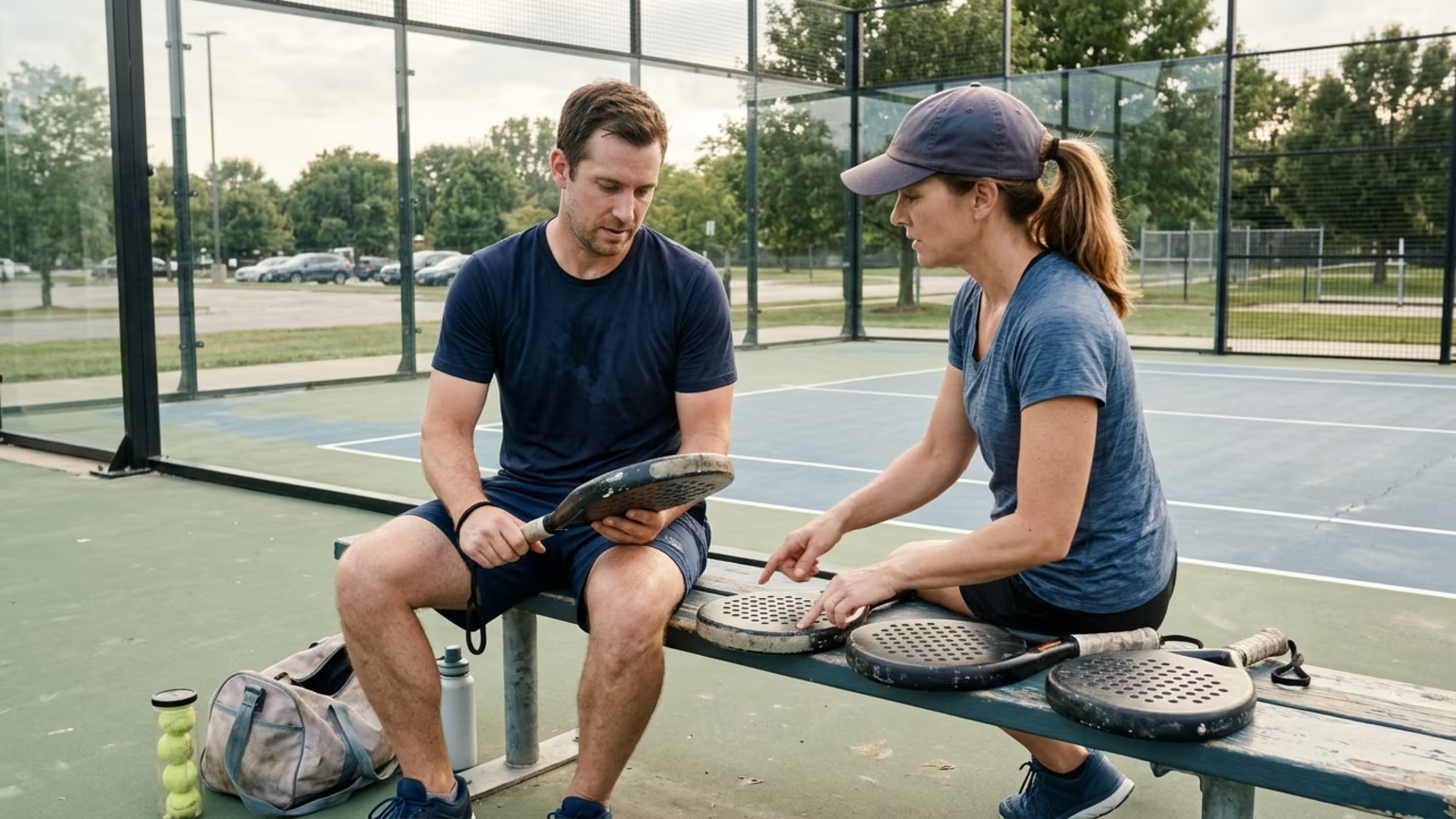
Answers to padel racket questions about weight, balance, shape and grip, with practical trial prompts and guidance on persistent discomfort.
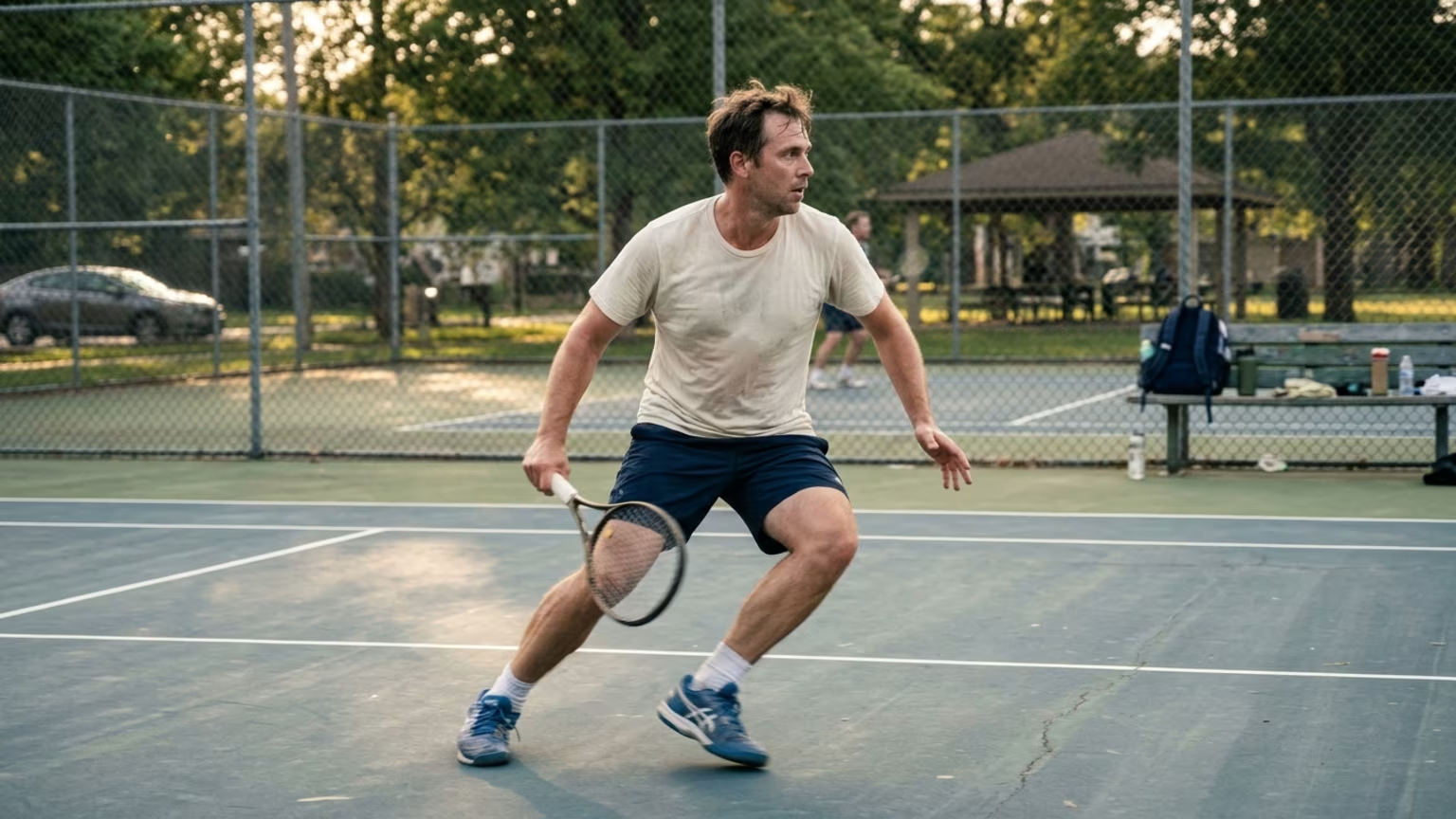
Understand split steps, controlled stops and recovery, with source-based coaching ideas and clear limits for adult racquet-sport players.

A grounded look at lower-body strength and balance for racquet sports, with simple supported examples and clear limits on injury-prevention claims.
Read practical guidance for better movement, smarter preparation and a game that keeps working for you.
explore the Blog
