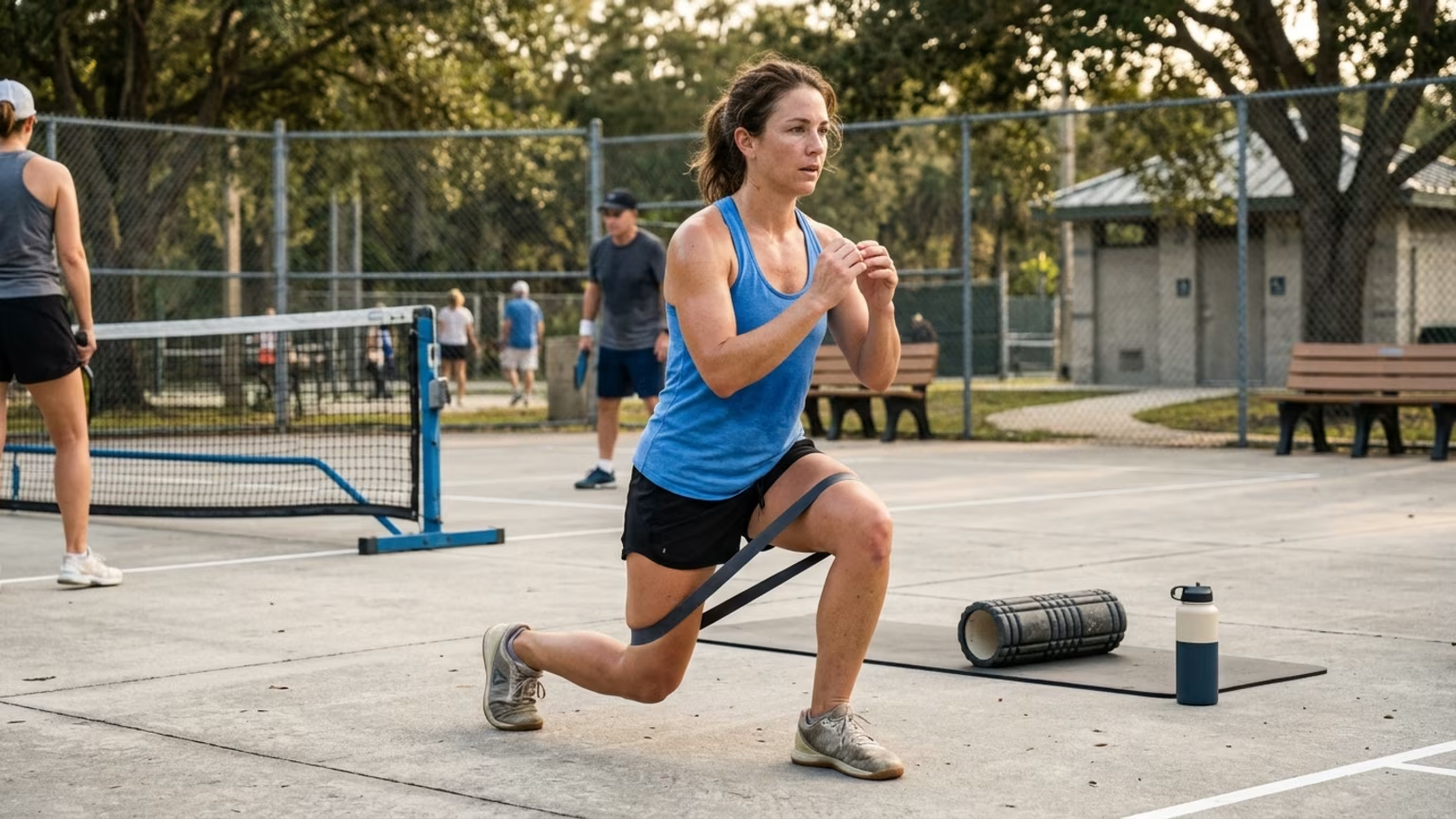

Learn how strength, balance, and mobility create a practical off-court foundation to support athletic longevity in tennis, pickleball, and padel.




Off-court conditioning is the structured combination of strength, balance, and mobility work that gives players the physical capacity to move well. Flexibility alone is not enough to support the dynamic, unpredictable movements required during a competitive match. Players need raw strength to absorb force, steady balance to maintain positional control, and adequate mobility to reach difficult shots comfortably. Together, these three elements form a complete physical system that helps adults keep playing racquet sports for years.
Many recreational players mistakenly focus entirely on static stretching when they feel stiff after a long weekend on the court. However, a tight muscle is often simply a weak muscle trying to protect a joint from instability or overload. True athletic longevity requires addressing the root cause of these movement limitations through active, resistance-based training. This means prioritizing targeted exercises that build stability rather than just stretching for short-term relief.
Strength provides the essential engine for your movement around the court. Balance acts as the steering wheel that keeps your momentum under control during rapid, chaotic transitions. Mobility serves as the suspension system that allows your joints to move through their full necessary ranges safely. When these three traits work in harmony, players experience better movement quality and much more reliable on-court performance.
Developing this foundation does not require hours of complicated daily gym work. It simply requires a consistent commitment to basic physical maintenance outside of your scheduled match times. By treating your off-court routine as an extension of your practice, you give your body the best chance to handle the rigors of the sport. Building this base is an ongoing process that pays dividends for your overall health.
Racquet sports are inherently unpredictable and require continuous physical adjustments from the first serve to the final point. Players must constantly accelerate, halt abruptly, and change direction rapidly to chase down the ball. Tennis Canada quotes Cleveland Clinic Canada experts on this topic. They state these demands can load the shoulders, elbows, knees, ankles and lower back.
Every sudden stop on a hard court asks your lower body to act as a rapid shock absorber. Your muscles require adequate strength to control that intense deceleration before you can confidently push off in a new direction. Understanding how to handle these forces is essential for anyone managing racquet sports training load over a long season. If the leg muscles cannot handle the braking force, that physical stress travels directly to the vulnerable tendons and joints.
The upper body faces similarly demanding tasks during every rally. Repeated swinging motions ask the core, shoulders, and arms to generate and absorb massive amounts of rotational force. A heavy tennis serve or a powerful padel smash forces the shoulder joint to move through extreme ranges of motion at high speeds. Without a solid off-court foundation, these localized physical demands can quickly overwhelm a player's baseline tissue capacity.
The varied nature of these sports means that the body is rarely moving in a straight, predictable line. You are often lunging laterally, reaching backward for a tough overhead, or crouching low for a delicate pickleball drop shot. These awkward, off-balance positions are precisely why players need physical reserves that go well beyond basic cardiovascular fitness. Preparing for these chaotic demands off the court is a practical requirement for maintaining your current playing level.
The available evidence supports viewing strength, balance, and mobility as complementary capacities rather than interchangeable athletic qualities. Stretching alone will not automatically make a player move better or stop all joint injuries from happening. Instead, practical interpretations of sports science show that strength and control are directly relevant to stopping and recovering balance. Mobility then steps in to help players comfortably reach the extended positions needed for tough, wide shots.
Players should view off-court conditioning as a practical framework for healthy aging in racquet sports. There is no single clinical workout or magical routine that guarantees you will remain perfectly healthy forever. Rather, building a base of strength helps the body better tolerate the physical stress of repeated sprinting and swinging. You can build this tolerance gradually by balancing strength training and court time throughout your normal week.
Research consistently emphasizes intelligent preparation and workload management over quick fixes or heavily marketed fitness trends. A sensible program respects the reality that adult bodies need time to adapt to the specific demands of court movement. You can improve your overall preparedness by learning about basic off-court mobility training for racquet sports players. Pragmatic conditioning focuses on consistency and gradual progression over weeks and months rather than immediate transformations.
It is also important to recognize that pickleball, padel, and tennis all share very similar core movement patterns. While the court sizes and specific equipment differ, the fundamental requirements of lateral agility and rotational power remain the same across disciplines. The science points toward general physical preparedness as the most reliable way to handle these shared court demands. A well-rounded body is simply better equipped to solve the movement problems presented by any racquet sport.
Maintaining your physical capabilities requires a sustainable weekly routine that appropriately balances physical effort with necessary recovery. A reasonable starting point includes spacing your court sessions evenly throughout the week rather than playing on consecutive days. You can complement these regular matches with two nonconsecutive strength sessions at a moderate intensity. Brief balance work can be incorporated directly into your pre-match warm-ups to save time and improve court readiness.
Always schedule at least one lighter day or full rest day to let your muscular system recover completely. This structured approach is highly adaptable to different experience levels and your current physical capacities. Newer or returning players might begin with shorter court sessions and simple supported balance exercises. Experienced players can often handle more frequent matches while maintaining their baseline strength and active recovery work.
The primary goal is to develop your balance and proprioception at a pace that closely matches your current fitness. Scaling your workload ensures that you are accumulating beneficial physical stress rather than constantly breaking your body down. If you feel sluggish or unusually stiff during your initial warm-up, it is often a clear sign to dial back the intensity. Paying attention to these subtle signals is a core component of athletic longevity.
Consistency in your weekly schedule matters much more than the peak intensity of any single gym workout. You do not need to push yourself to total exhaustion in the weight room to see meaningful benefits on the court. Focus on performing basic exercises with excellent control, moving through full ranges of motion, and resting adequately between sessions. This steady rhythm builds the resilient physical foundation needed to keep enjoying racquet sports well into the future.
Even with a carefully planned weekly schedule, players may eventually encounter physical issues that require outside, professional help. You should consult a qualified physiotherapist or healthcare provider if you experience sharp, localized pain during routine court movements. Ongoing joint swelling, a noticeable loss of range of motion, or lingering stiffness that fails to improve after rest also warrant professional assessment. Ignoring these clear warning signs can turn minor, temporary irritations into long-term physical limitations.
A trained expert can properly identify underlying structural problems and offer specific movement modifications tailored exactly to your body. They provide objective, evidence-based guidance that helps you navigate setbacks without relying on generic internet advice. Professional input is especially valuable when you are trying to return to the court after an extended period of rest. They can help you scale your re-entry safely, methodically, and confidently.
Managing your physical health is an active process that requires paying close attention to how your body responds to play. Take a moment today to review your upcoming schedule and ensure you have blocked out at least one full day for dedicated rest.
Follow Evercourts for practical insights on tennis, pickleball and padel performance, movement, recovery and healthy ageing. Stay connected for new articles, research-led guidance and ideas to help you play well and keep playing for years.


An evidence check on sports supplements like tart cherry juice. Learn why racquet sports players should prioritize core nutrition over functional foods.
In late 2026, Oura analyzed wearable data to see how recreational tennis impacts heart health and recovery. Learn what this means for your athletic longevity.
Recent guidelines emphasize gradual progression, dynamic warm-ups, and scheduled recovery to help adult racquet sports players maintain athletic longevity.
Read practical guidance for better movement, smarter preparation and a game that keeps working for you.
explore the Blog
