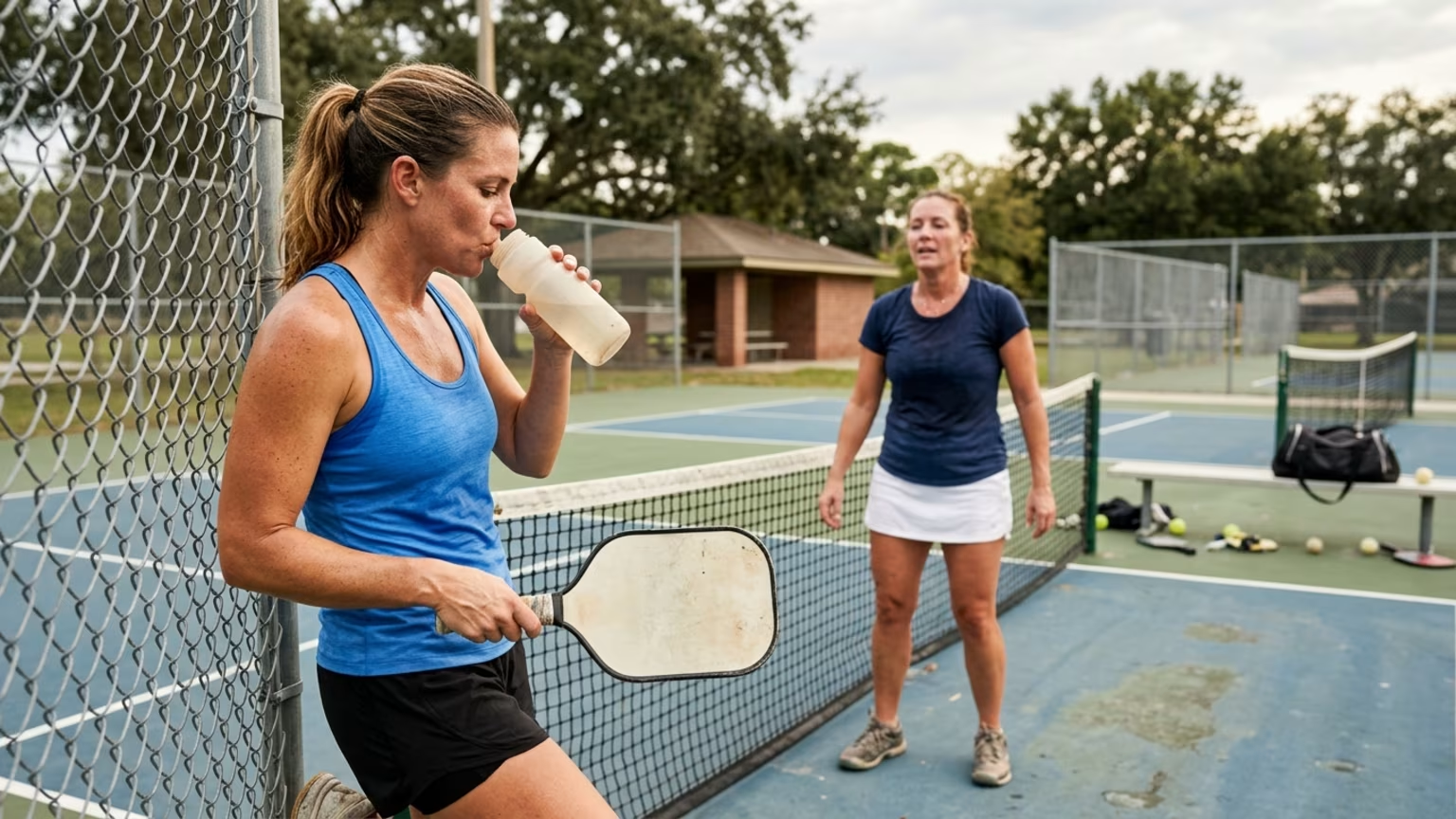

Explore the differences between casual court entry and sport-specific conditioning. Learn why rapid directional changes require targeted physical readiness.




The casual approach assumes that smaller courts mean easier physical requirements. Players arrive and walk straight onto the court without any preparation. This mindset directly impacts a player's physical capabilities by leaving joints tight. Unprepared muscles struggle to handle sudden stops and lateral shifts.
The consequences of this casual approach show up in recent medical data. Injury Epidemiology lists a new research article by Yue Meng, Aaron Chen, and Eugene Roh. This paper was published April 14, 2026. It is identified as open access article 39.
The journal listing confirms publication details, but the findings were not accessible in the material reviewed. We know the study investigates injuries treated at a tertiary academic medical center. Patients treated at such specialized centers may differ from community players in injury severity. This context is important when evaluating overall injury statistics.
We also know that injury volume is expanding alongside the sport. A ValuePenguin analysis estimated that emergency-room-treated pickleball injuries rose recently. Cases went from about 8,300 in 2018 to more than 31,000 in 2025. This metric measures total volume rather than individual risk.
This rising volume makes perfect sense given the sport's massive growth. GCN reports that U.S. pickleball participation grew from 4.2 million in 2020 to 24.3 million in 2025. A larger player base naturally produces more total injuries overall. This sheer volume highlights why treating the sport casually is a fundamental mistake.
The conditioning approach treats the sport as a serious change-of-direction activity. This proactive modality contrasts sharply with the casual mindset. Players utilizing this method actively prepare their joints for heavy loading. They understand that lateral movements require deliberate physical readiness.
HonorHealth physician Dr. Stevenson says lower-limb injuries are often related to rapid direction changes, fatigue, excessive volume, and inadequate recovery or warm-up. Building playing volume progressively is an essential part of this conditioning strategy. Proper physical preparation helps mitigate the risks associated with court fatigue. Recognizing the difference between normal soreness and real pain is also vital.
Our team has seen the results of poor preparation firsthand. "When I first started playing pickleball, I noticed how many people skipped warming up entirely. They would jump straight out of their cars and right up to the kitchen line. I tried doing that and immediately pulled a calf muscle."
"Pickleball requires just as much explosive lateral movement as tennis, just in a tighter space. Since then, I always spend five minutes doing dynamic lunges and ankle rolls. It changes everything about how confident I feel pushing off the baseline."
Specific conditioning helps players maintain balance during risky situations. UT Health San Antonio summarizes separate research indicating specific risks on the court. Their source notes that falls caused about seven out of 10 injuries. Furthermore, fractures made up about one-third of diagnoses in that separate dataset.
Using proper footwear is another critical component of the conditioning approach. Court shoes provide the necessary lateral stability to prevent slips. Running shoes lack the structural support needed for rapid directional changes. Wearing the correct gear works perfectly alongside a dynamic warm-up routine.
The conditioning approach offers clear advantages across different racquet sports. Tennis requires massive explosive power from the baseline. Players must execute sudden sprints and heavy rotational swings. Proper physical preparation primes the body for these explosive demands.
Without targeted readiness, tennis players risk severe muscle strains. A strong lower body provides the foundation for powerful groundstrokes. Managing your weekly court workload remains crucial for absorbing these heavy forces. Players who condition properly can maintain their power late into challenging matches.
Pickleball involves a relentless stop-start nature at the net. The smaller court forces players to react instantly to fast volleys. Dynamic preparation supports the rapid footwork required for this sport. Players who prepare properly can handle these quick transitions easily.
Incorporating ankle injury prevention routines builds essential joint stability for pickleball. These small positional adjustments dictate who controls the kitchen line. The conditioning approach ensures your calves can handle repeated lunging. This specific readiness directly translates to better and safer court coverage.
Padel demands complex multidirectional movement across the entire enclosed court. Players must track unpredictable rebounds off the glass walls constantly. This unique environment requires continuous pivoting and deep lunging motions. The conditioning approach ensures the lower body can absorb these unique forces safely.
Practicing dynamic warm-ups helps maintain critical range of motion during padel matches. Players frequently need to rotate quickly to return difficult wall shots. The conditioning method builds the rotational core strength necessary for these maneuvers. A well-prepared body adapts to unpredictable ball bounces with absolute ease.
The sport-specific conditioning approach is the definitive winner for healthy aging. Relying on a casual entry strategy leaves the body vulnerable to preventable setbacks. Expanding participation numbers prove that players must take their physical preparation seriously. The rising emergency room visits should serve as a clear wake-up call.
Treating your court time as a dedicated athletic event changes everything. Players who invest in their bodies experience fewer interruptions from lingering soreness. This proactive mindset allows you to focus entirely on enjoying the game. Avoiding major joint injuries requires a commitment to fundamental movement principles.
Committing to proper physical readiness guarantees you can keep enjoying these sports. Proper preparation replaces injury anxiety with true physical confidence on the court. Consistent dynamic movements build the structural resilience needed for decades of play. Play smart, prepare properly, and we will see you on the courts.
Follow Evercourts for practical insights on tennis, pickleball and padel performance, movement, recovery and healthy ageing. Stay connected for new articles, research-led guidance and ideas to help you play well and keep playing for years.


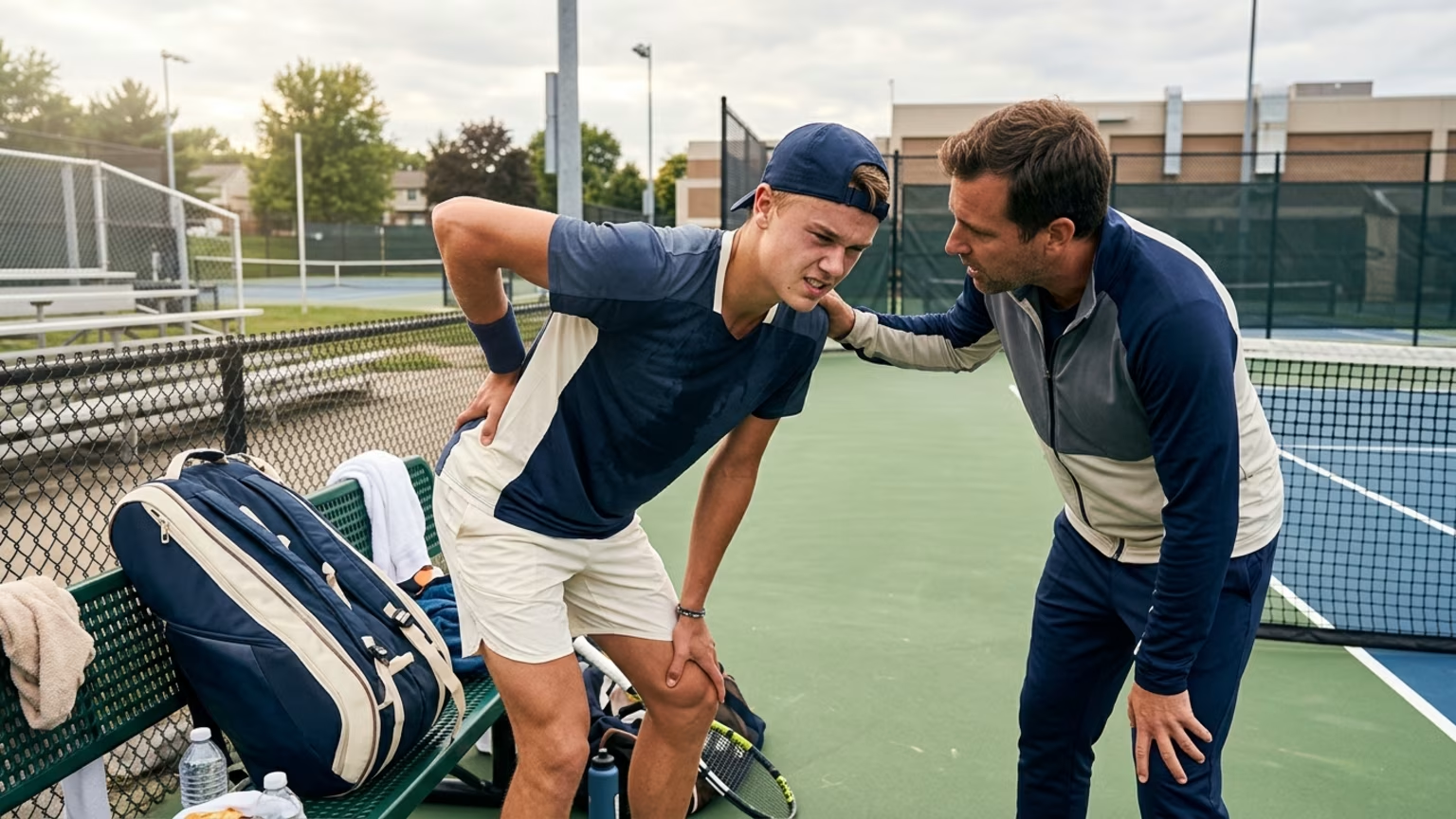
Holger Rune withdrew from the European Open with a back problem. The facts behind his decision and a grounded perspective for recreational players.

The Dink’s October 17 guide emphasizes deep returns, ball-height decisions and positioning against faster pickleball opponents.

A new report outlines padel and tennis gear trends. Learn how to assess adjustable rackets, sensor feedback and smart-court claims.
Read practical guidance for better movement, smarter preparation and a game that keeps working for you.
explore the Blog
