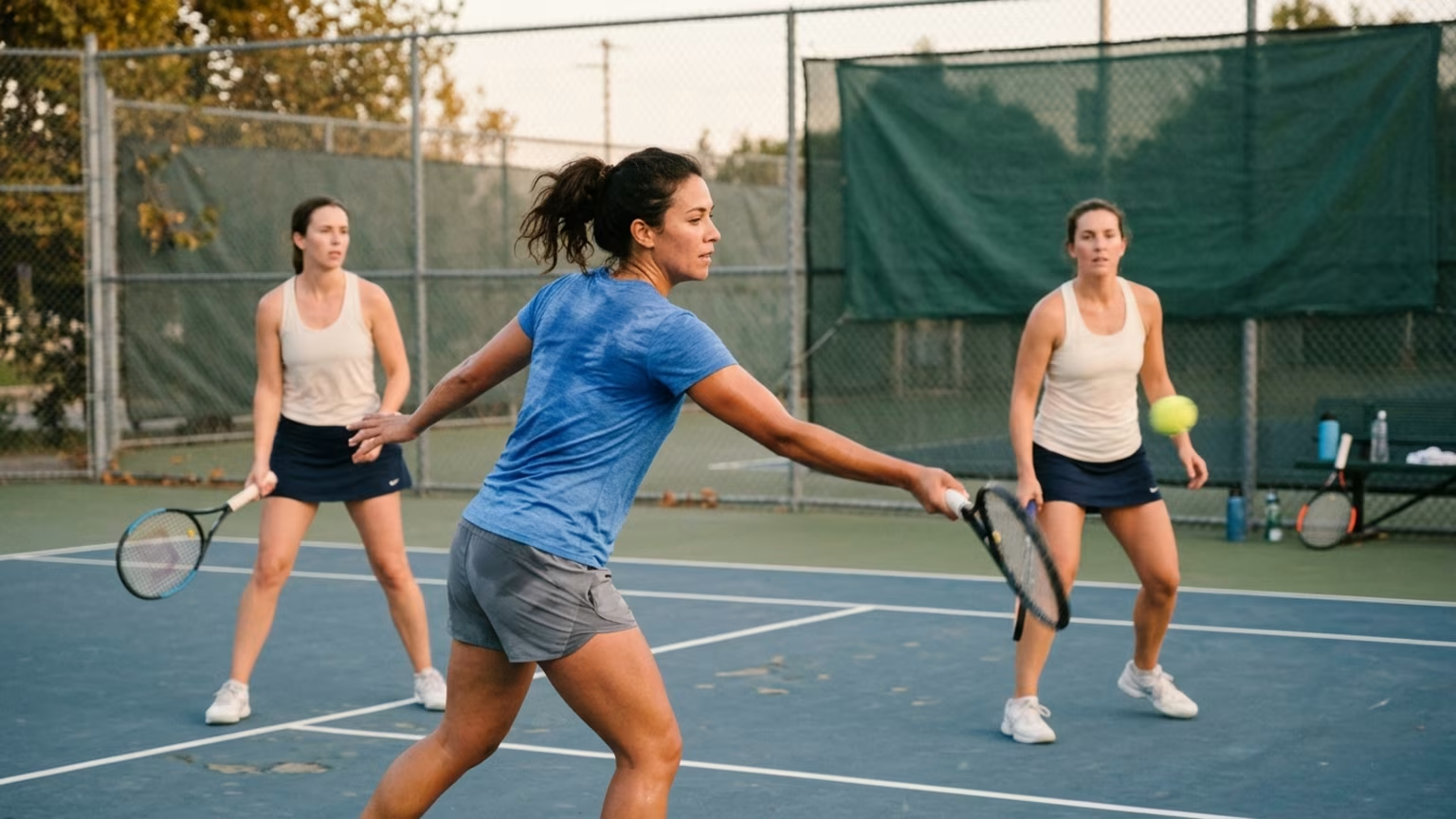

Build a sustainable weekly tennis, padel, or pickleball routine by managing workload, tracking physical fatigue, and avoiding sudden schedule spikes.




A 2026 systematic review found a small-to-moderate association between elevated acute-to-chronic workload ratios and injury risk, showing a pooled effect size of 0.35. This data illustrates that sudden jumps in physical activity often precede physical setbacks. It proves that unpredictable scheduling frequently hurts your body. Managing those sudden workload changes is the real key to long-term performance.
You have heard it a million times: the only way to improve your game is to play as hard as possible every single day. Here is why that is outdated. The best players prioritize recovery and avoid unpredictable spikes in court time. A rigid mindset often leads to physical burnout and joint stiffness.
A sustainable routine requires players to build a reliable pre-match routine and actively monitor their total weekly fatigue. Monitoring fatigue ensures that you step onto the court fully prepared. It allows you to focus on strategy rather than worrying about a nagging physical issue. This proactive approach separates smart athletes from those who constantly battle setbacks.
Competitive players have always equated more court time with better athletic results. Coaches historically praised athletes who pushed through exhaustion without complaining. This old mindset made sense when sports science was less developed. Players naturally assumed that a grueling schedule simply proved their dedication to the sport.
Recently, athletes began tracking metrics like the acute-to-chronic workload ratio to find a mathematical advantage. One load-management source defines this ratio as your recent seven-day load divided by the average load of your previous four weeks. Players hoped this calculation would act as a perfect shield against physical breakdown. They wanted a simple formula that could tell them exactly when to rest.
The desire for a guaranteed safeguard is completely understandable for recreational players. When you love playing tennis, pickleball or padel, being forced off the court is incredibly frustrating. We want a clear rule that allows us to play as much as possible safely. However, treating a single metric as absolute truth creates a false sense of security.
The scientific consensus presents a much more complicated picture of human physiology. The 2026 systematic review noted very high heterogeneity between studies, showing an I² value of 95.8 percent. This high heterogeneity means that workload ratios should be treated as a rough monitoring tool. They are not a precise individual injury predictor for any specific athlete.
Current evidence does not support treating a fixed acute-to-chronic workload ratio as a universal safe zone. A separate summary of the International Olympic Committee load-management position states that injury risk is multidimensional. It may be influenced by training load, rapid changes in load and congested schedules. Other internal and external factors also play a massive role in how you feel.
The so-called sweet spot in load management is definitely not a law. Human bodies do not operate like simple machines with predictable mileage limits. Your capacity to handle a tough padel match depends heavily on your daily stress levels. Recognizing this nuance is essential for protecting your long-term athletic longevity.
A few years ago, I realized my tennis serve speed was dropping, and my shoulder was constantly throbbing after matches. Instead of pushing through the pain, I took a month to rebuild my mechanics and focus on rotator cuff endurance. I stopped trying to hit flat aces and developed a much heavier kick serve. My win rate actually went up, and my shoulder stopped hurting.
Sometimes longevity means outsmarting your own ego on the court. You can achieve this by logically spacing out your most demanding physical sessions. The available masters-athlete commentary recommends allowing roughly 48 to 72 hours between hard sessions for older athletes. This is a practitioner framework rather than a universal prescription, making it a highly adaptable starting point.
You must adjust this spacing according to your age, training history, previous injuries and sleep quality. If you sleep poorly, a heavy pickleball match will feel significantly more taxing. You must monitor how your body responds and logically adjust your court schedule accordingly. This flexibility ensures you can build a sustainable weekly racquet sports schedule that matches your actual readiness.
Players should track all demanding activities instead of merely counting their weekly racquet sessions. This means paying close attention to another sport, travel-related fatigue and unusually strenuous work. A long flight or a stressful week at the office quietly drains your physical reserves. You have to account for those external stressors when planning your next competitive match.
Tracking your total fatigue requires honest self-reflection every single week. If you face a congested tournament schedule, you must deliberately scale back your practice intensity. The International Olympic Committee guidelines emphasize that injury risk is influenced by congested schedules and load changes. You cannot seamlessly transition from a quiet week of resting into a grueling weekend tournament.
Developing true movement resilience takes patience and a willingness to modify your plans. If you wake up with joint stiffness, you might need to swap a competitive match for a light technical session. Hitting cooperative drills still improves your timing without forcing your body to its absolute limits. Social matches can also provide a lower-stress environment for maintaining your competitive rhythm.
Recovery is an active process that requires just as much attention as your footwork. Learning how to keep a recovery log can rapidly help you identify patterns in your daily fatigue. You will start to notice which types of matches leave you physically drained for days. That knowledge allows you to space out your most intense competitions highly effectively.
Remember that healthy aging in racquet sports is fundamentally a marathon. Every decision you make about your schedule should directly support your ability to play next month. Refusing to rest will inevitably force you into a longer rehabilitation period down the road. Prioritize your physical health over the immediate desire to win a casual Tuesday night league game.
The New Golden Rule is to view recovery and careful scheduling as the absolute foundation of your performance. You must adapt your weekly court time to your total life stress to maintain your competitive edge. Spacing out intense sessions by 48 to 72 hours protects your joints and preserves your energy. This adaptable framework prevents physical burnout and keeps you engaged with the sport.
When you manage your physical load properly, you will feel fresher and move better on the court. This thoughtful approach ensures that you can keep playing the sports you love for decades. You will quickly replace the anxiety of impending injuries with the quiet confidence of a well-rested athlete. Consistency always outweighs occasional bursts of extreme physical intensity.
We began by looking at the 0.35 effect size that links rapid workload spikes to increased injury risk. That number is more than just a dry statistic from a clinical medical review. It is a clear mathematical reminder that pacing yourself is the smartest strategy you can deploy. True athletic resilience comes from knowing exactly when to step back so you can play stronger tomorrow.
Follow Evercourts for practical insights on tennis, pickleball and padel performance, movement, recovery and healthy ageing. Stay connected for new articles, research-led guidance and ideas to help you play well and keep playing for years.


Holger Rune withdrew from the European Open with a back problem. The facts behind his decision and a grounded perspective for recreational players.

The Dink’s October 17 guide emphasizes deep returns, ball-height decisions and positioning against faster pickleball opponents.

A new report outlines padel and tennis gear trends. Learn how to assess adjustable rackets, sensor feedback and smart-court claims.
Read practical guidance for better movement, smarter preparation and a game that keeps working for you.
explore the Blog
