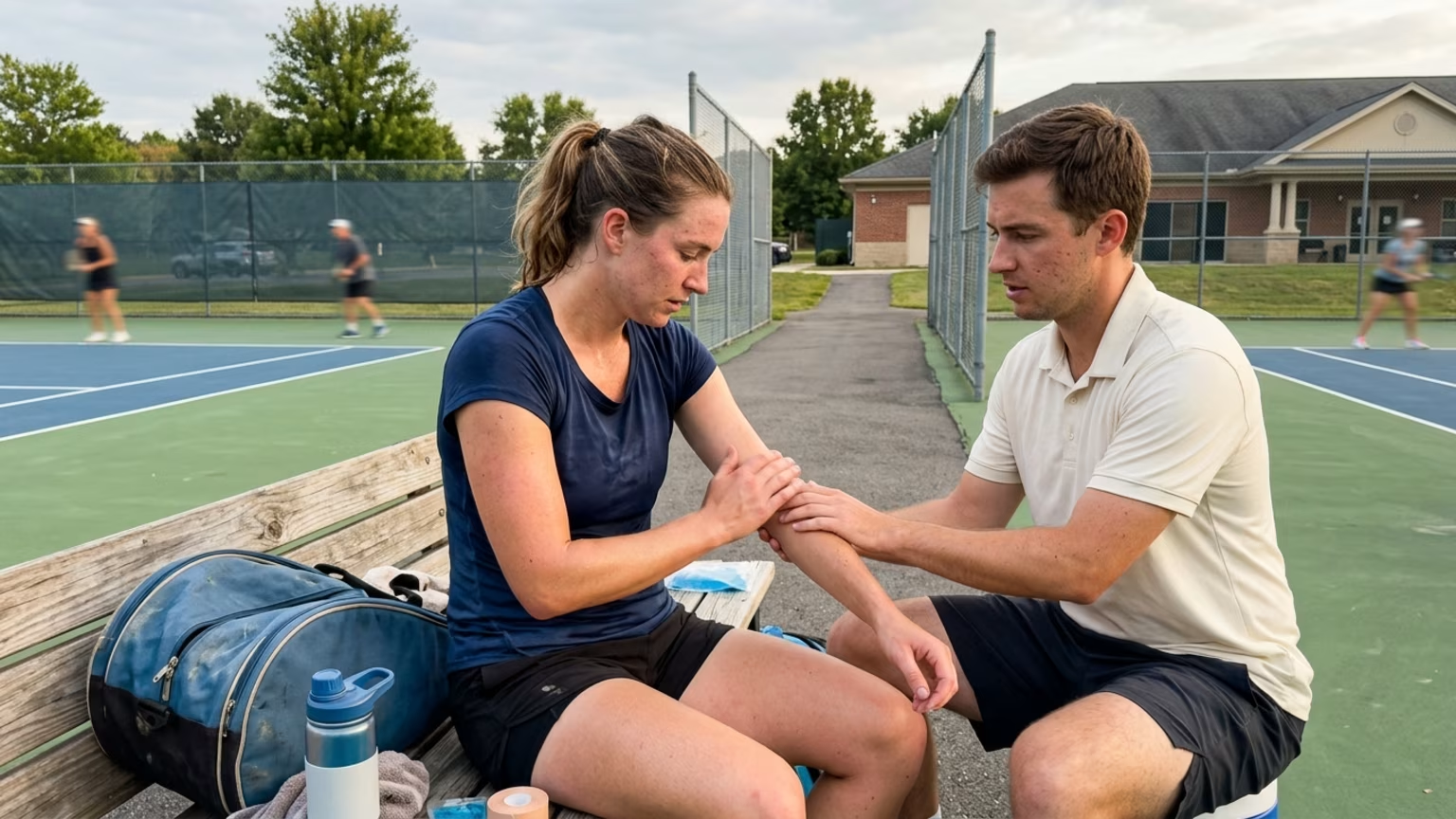

Alexander Blockx received courtside medical treatment at the 2026 US Open. Learn why adult recreational players should avoid copying elite pain management.




On September 7 2026 Alexander Blockx defeated Francisco Cerúndolo at the US Open. The match ended with set scores of 6 to 3 and 4 to 6 followed by two 7 to 5 sets. The victory made Blockx the first Belgian man to reach the US Open quarter-finals. The contest lasted three hours and 16 minutes and featured significant courtside medical intervention.
The ATP Tour reported that Blockx received medical treatment at 3 to 2 in the opening set. The official report described the problem as an issue involving his left leg. However other media coverage presented a conflicting picture of the injury location. ESPN Deportes reported that medical treatment was applied around the hip area.
Blockx provided his own account of the situation after the match concluded. He told reporters that he experienced sharp rib pain that was especially troublesome when serving. The player admitted that he was very close to retiring during the contest. His post-match comments revealed that he was already using medication before the event began.
He received additional medication during the match to help manage the escalating pain. Blockx characterized the treatment as a magic medication that began helping late in the third set. This improvement allowed him to serve more normally throughout the final fourth set. The specific identity and dosage of the medication were not publicly identified in the available coverage.
The public reporting does not establish a definitive medical diagnosis for the athlete. Descriptions varied widely between rib pain, a left leg issue, and treatment applied near the hip. No independently quoted sports-medicine specialist confirmed a structural injury like a labral tear or an adductor strain. The medical response focused on immediate pain relief rather than a comprehensive structural diagnosis.
This incident provides an important case study for adult tennis, pickleball, and padel players. A professional finishing a match under medical supervision is not a template for recreational play. Professionals have immediate access to tournament physicians and dedicated physiotherapists. They can receive real-time assessments and targeted medication that amateur players simply do not have.
Understanding this divide is crucial for athletes prioritizing healthy aging on the court. Attempting to copy a professional athlete by pushing through sharp discomfort often backfires. It can easily turn a temporary soft-tissue strain into a recurring injury. Recognizing why elite comeback timelines do not apply to recreational athletes is essential for maintaining realistic recovery expectations.
The central lesson for recreational athletes involves careful load awareness and symptom management. Sudden pain that alters your baseline movement or weight-bearing ability requires immediate attention. If a new discomfort changes your service motion or prevents a standard lunge, you should stop playing. Pushing through severe pain often compromises long-term athletic longevity.
Recreational players must avoid self diagnosing painful areas during a match. The conflicting reports surrounding this US Open match demonstrate a crucial medical reality. The apparent location of pain does not always identify the injured physical structure. Treatment applied to the hip area might relate to a broader movement issue rather than localized damage.
The mechanical demands of racquet sports vary, but the risk of playing through pain remains universal. Tennis requires explosive lateral movement and repetitive overhead serving that stresses the core and ribs. Padel involves frequent directional changes and rapid lunges on a smaller enclosed court. Pickleball demands rapid weight transfers and quick rotational movements at the non-volley zone. All three sports require healthy joint mobility to execute shots safely.
Players should treat sudden or escalating pain as critical information rather than an obstacle. You should seek evaluation from a qualified clinician when pain is severe or worsening. A professional can provide proper guidance when symptoms do not settle with ordinary rest. This proactive approach helps prevent minor soft tissue strains from becoming long term functional problems.
Using medication to finish a match masks the body's natural warning system. Pain serves as a biological signal that a joint or muscle cannot safely handle the current load. Silencing that signal allows an athlete to keep moving, but it does not stabilize a strained muscle or repair a damaged ligament. For amateurs, relying on pain relief to finish a weekend tournament often leads to weeks of forced rest afterward.
Building physical resilience requires a structured approach to daily conditioning. Players should focus on progressive strength and controlled rotation rather than relying solely on pre-match stretching. Proper physical preparation is essential for managing the rigorous demands of tournament play. Implementing a consistent 12 minute warm up routine before playing can help establish a safe physical baseline.
Returning to competition after an acute problem requires a highly progressive strategy. A player should first establish comfortable daily movement before attempting any easy hitting. The next phase involves controlled changes of direction on the court. Full intensity points should only resume after all previous stages are completed without any lingering pain.
Amateur competitors frequently play multiple matches in a single weekend tournament. This compressed schedule requires careful attention to recovery and cumulative physical fatigue. A recreational player experiencing new joint pain in a morning match should not rely on generic pain relievers to play an afternoon final. Over the counter medication might mask symptoms without addressing the underlying mechanical cause.
Elite players have their annual schedules carefully managed by coaching staffs to peak at specific times. Recreational players often play year-round without any built-in off-season. This constant play limits the body's natural ability to recover from minor strains and tissue microtrauma. Recognizing when to take a scheduled rest week is a powerful tool for healthy aging in racquet sports.
Furthermore, professional tennis players undergo extensive physical therapy between matches to accelerate healing. A recreational player usually returns to a desk job or daily life activities after a weekend match. Sitting for extended periods after a grueling court session can exacerbate hip and lower back stiffness. This lifestyle difference means amateurs must prioritize active recovery and mobility work even on their rest days.
The physical toll of this specific match highlights the extreme load of Grand Slam tennis. The contest required four competitive sets and lasted three hours and 16 minutes. Blockx entered the tournament as the number 28 seed. Coverage of the match reported Cerúndolo as the number 24 seed.
Competing at a high level across more than three hours places immense stress on soft tissues. Managing acute pain while serving and moving under pressure significantly amplifies that physical demand. The final match outcome reflects the extraordinary endurance required at the highest level of the sport. Professional athletes condition their bodies for years to withstand these exact load parameters.
The medical management of acute in-match pain will remain a significant topic for tournament officials. The inconsistency in public reporting highlights the challenges of real-time sports injury communication. Medical teams face complex decisions when balancing a player's immediate competitive goals with their physical safety. Observers will monitor how professional tours handle medical interventions for severe pain throughout the upcoming season.
Future tournaments may see increased scrutiny regarding the protocols for courtside medication. The focus will likely remain on ensuring athletes can compete safely without risking severe structural damage. We will watch how the balance between performance demands and player health evolves over the next competitive year. Proper workload management will remain central to these ongoing professional discussions.
Understanding these workload dynamics is just as critical for competitive amateur players. Scheduling proper recovery between matches is vital for maintaining peak physical condition. It is important to avoid abruptly adding volume to your weekly playing schedule. Our analysis of how strategic rest periods benefit long term performance offers further insights into proper scheduling.
Follow Evercourts for practical insights on tennis, pickleball and padel performance, movement, recovery and healthy ageing. Stay connected for new articles, research-led guidance and ideas to help you play well and keep playing for years.


A grounded look at lower-body strength and balance for racquet sports, with simple supported examples and clear limits on injury-prevention claims.

The Dink reported a warning about suspected fake Life Time pickleballs. Here’s the practical takeaway for recreational players and bulk buyers.

Understand how coverage, playing format and wall rebounds shape tennis, pickleball and padel movement, with research context for long-term play.
Read practical guidance for better movement, smarter preparation and a game that keeps working for you.
explore the Blog
