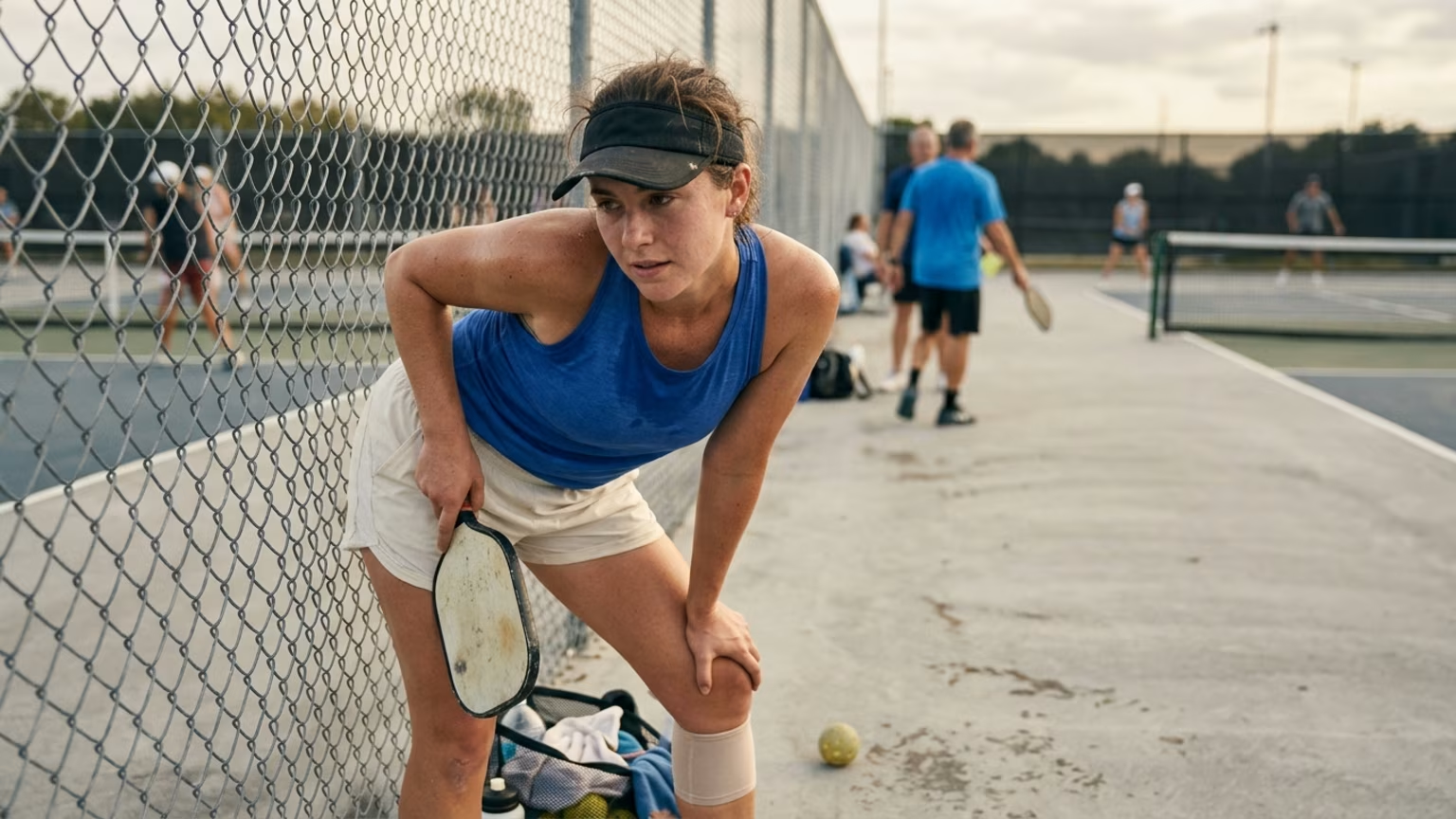

Learn how Major League Pickleball lineup adjustments reveal practical workload management strategies for adult players returning from court injuries.




Total rest is rarely the smartest response to a nagging court injury. Most players assume they must choose between full tournament schedules and complete inactivity. On August 19, 2026, The Kitchen released a playoff analysis that challenged this exact assumption. The report detailed the Major League Pickleball semifinal weekend scheduled for August 28 through August 30 in New York City.
The upcoming semifinals feature the top four teams in the league. The New Jersey 5s entered the weekend as the number one overall seed. The St. Louis Shock secured the second seed for the playoff event. The Brooklyn Pickleball Team took the third seed, and the Dallas Flash claimed the fourth spot.
As the top seed, New Jersey faced a strategic choice between Brooklyn and Dallas. New Jersey ultimately selected Brooklyn as its semifinal opponent for the weekend. The New Jersey team previously defeated Brooklyn 3-0 in their only regular-season meeting. That specific match took place on June 28 at MLP New York.
During that June 28 event, Brooklyn player Rachel Rohrabacher reportedly suffered an injury. She completely sat out women's doubles against New Jersey, but she still competed in mixed doubles. The Kitchen reported this lineup adjustment as a targeted response to her physical condition. The analysis noted that she was not fully healthy during her mixed doubles appearance.
The report did not identify a specific medical diagnosis or detail a rehabilitation timeline. It also did not quantify the exact workload limitation placed on the player. However, the situation demonstrates how professional teams manage competitive minutes during important matches. Lineups can be fluid, and health status directly impacts which teammate combinations take the court.
Adult recreational competitors often struggle with the transition back to competitive play. Returning from an injury does not require an immediate jump back into heavy match volume. HonorHealth sports-medicine physician Dr. Stevenson notes that lower-limb pickleball injuries often relate to rapid changes of direction. This risk increases significantly when players are fatigued or play too long without sufficient recovery.
Dr. Stevenson advises athletes returning to play to increase session length and intensity gradually. Players must ensure they allow enough recovery time between their matches. For recreational competitors, this means managing court workload by modifying specific match variables. HonorHealth lists format modifications like playing doubles instead of singles to reduce physical strain.
Players can also shorten overall sessions and emphasize technique rather than absolute speed or power. These sensible adjustments help an athlete remain active while reducing the risk of reinjury. Modifying just one variable at a time provides a clearer picture of physical readiness. A player might reduce their total matches for the weekend while keeping intensity the same.
When I first started playing pickleball, I noticed how many people skipped warming up entirely. They would jump straight out of their cars and right up to the kitchen line. I tried doing that and immediately pulled a calf muscle. Pickleball requires just as much explosive lateral movement as tennis, just in a tighter space.
Since then, I always spend five minutes doing dynamic lunges and ankle rolls. It changes everything about how confident I feel pushing off the baseline. Proper preparation makes format modifications and gradual returns much more effective. Planning structured recovery between playing days is another essential step for adult competitors.
Rest days, sleep, and proper hydration support the gradual-return approach described by HonorHealth. Using symptoms and physical function as return criteria is much safer than simply watching the calendar. HonorHealth cautions that pain limiting a player's ability to play should never be ignored. Early evaluation can help athletes return to activity much more safely.
Dr. Stevenson advises obtaining a pre-participation evaluation from a sports-medicine doctor when returning to the sport. This medical evaluation is critical for anyone dealing with an injury or limited mobility. Competitive players should also communicate clearly with their partners before an event begins. Agreeing on match limits and format changes in advance prevents misunderstandings on the court.
For adult players focused on healthy aging, the primary goal should be durable participation. A temporarily reduced schedule preserves court continuity while allowing conditioning to rebuild naturally. Players should view partial participation as a strategic tool rather than a competitive setback. Managing workload effectively ensures that a minor issue does not become a season-ending injury.
The Brooklyn Pickleball Team relied heavily on highly effective combinations throughout the regular season. The Kitchen stated that lineup statistics were supplied by PickleKey.com for the playoff preview. The projected Brooklyn lineup featured Jackie Kawamoto and Rachel Rohrabacher in women's doubles. That specific partnership held a 12-5 record and maintained a 71 percent winning percentage.
The team's mixed doubles options also featured incredibly strong statistical foundations. The pairing of Christian Alshon and Rohrabacher carried a 20-5 record with an 80 percent win rate. Meanwhile, the mixed duo of Riley Newman and Kawamoto recorded a 13-8 mark and a 62 percent success rate. The men's doubles team of Alshon and Newman posted a dominant 22-4 record and an 85 percent win rate.
These figures serve as excellent performance indicators for the Brooklyn roster. The team also prepared a projected DreamBreaker lineup for the semifinal matches in New York. That specific lineup featured Chris Haworth, Christian Alshon, Hannah Blatt, and Jackie Kawamoto. While these statistics highlight team potential, they do not serve as independent medical evidence about player readiness.
The other semifinal matchup featured the St. Louis Shock against the Dallas Flash. The New Jersey 5s advanced to this final event after a strong quarterfinal performance. Coverage from Pickleball.com reported that New Jersey defeated the Palm Beach Royals in Newport Beach. This critical victory secured their spot at the Central Park Wollman Rink for the championship weekend.
The strategy of selective event participation will likely become standard practice in professional racquet sports. Teams will increasingly prioritize player health over fielding static lineups for every single match. This approach offers a clear blueprint for adult players managing their own poor workload habits. Partial participation serves as a highly effective bridge back to full competitive play.
Players do not have to choose between a full tournament schedule and sitting on the couch. By modifying formats and reducing session lengths, competitors can maintain their rhythm on the court. Total rest is rarely the best way to return from a minor injury. Strategic participation keeps you moving, protects your mechanics, and ensures you can compete effectively.
Follow Evercourts for practical insights on tennis, pickleball and padel performance, movement, recovery and healthy ageing. Stay connected for new articles, research-led guidance and ideas to help you play well and keep playing for years.


Holger Rune withdrew from the European Open with a back problem. The facts behind his decision and a grounded perspective for recreational players.

The Dink’s October 17 guide emphasizes deep returns, ball-height decisions and positioning against faster pickleball opponents.

A new report outlines padel and tennis gear trends. Learn how to assess adjustable rackets, sensor feedback and smart-court claims.
Read practical guidance for better movement, smarter preparation and a game that keeps working for you.
explore the Blog
