

Understand how coverage, playing format and wall rebounds shape tennis, pickleball and padel movement, with research context for long-term play.




Court movement demands are the ways a game asks you to cover space, change direction and get ready for the next shot. Understanding them starts with the movement problem in front of you rather than a sport's reputation for being easy or hard.
Tennis puts broader court coverage into focus. Pickleball changes your coverage responsibility through its playing format. Padel adds walls and rebounds to the positioning problem.
For adult players switching between these games, those distinctions provide a useful way to think about preparation. The question is not simply how much you move. It is what the session repeatedly asks you to do.
Repeated explosive efforts and changes of direction make court movement more than a matter of covering ground. Reaching the ball is only part of the task. Players also need to stop or redirect their movement and prepare for what follows.
A practical way to read these demands is to separate three questions: Where must you go? How much coverage is your responsibility? What might the ball do next?
For tennis, the useful starting point is tracking the ball across a broader playing area and recovering between shots. Think about the relationship between reaching the current ball and preparing for the next one.
That turns movement into a sequence rather than an isolated run. A player may reach a shot but still need to change direction or reposition before the next exchange develops.
As a practical observation, notice whether reaching the ball or recovering afterward feels like the greater challenge. These are different movement problems. Evercourts' guidance on adjusting movement between singles and doubles adds another lens for considering your coverage role.
In pickleball, singles leaves one player responsible for more court coverage. Doubles shares that responsibility between partners, as described in an exercise overview summarizing pickleball research.
The useful distinction is responsibility rather than court size alone. A compact playing environment still asks players to respond to the ball and change position. Sharing coverage changes the movement problem without removing it.
For a crossover player, “I played pickleball” is therefore only the beginning of a useful session description. Whether the game was singles or doubles helps explain what you were being asked to cover.
A padel rules explainer describes an enclosed court with solid back walls and a mixture of side panels and mesh. Walls are part of the playing environment rather than just its boundary.
That makes ball response part of positioning and anticipation. The practical task includes reading the rebound as well as reading the incoming shot.
When moving into padel from another racquet sport, a useful question is whether the wall changes where you expect the ball to arrive. Treat that as a distinct positioning problem. It is another reason to consider movement in several directions rather than thinking only about distance covered.
The pickleball exercise overview reports findings from a recreational study that compared singles and doubles. Its reported averages were:
The same summary reports moderate-intensity activity during 80.5% of singles playing time and 50.4% of doubles playing time. These findings illustrate why playing format belongs in a discussion of movement demands.
A separate 2026 systematic review of racket-sport interventions in older adults found favorable effects on some functional outcomes. That gives the wider conversation about racquet sports and healthy aging a research foundation.
The evidence has clear limits. The pickleball figures come through a secondary summary and reflect particular player groups. The older-adult review draws mainly on table tennis, while the available research does not provide a reliable comparison of recreational tennis, pickleball and padel. It therefore does not establish a ranking by total workload, difficulty or healthy-aging benefit.
The practical reading is straightforward: identify the game and format before interpreting the session. A pickleball singles finding belongs to that setting. It should not become a prediction for a doubles session or a comparison with someone else's tennis match.
Likewise, a smaller playing area is not a sufficient basis for calling a session less demanding. Court coverage and ball response are more useful starting points for understanding what happened during play.
For athletic longevity, the useful goal is maintaining the capacity to meet the demands of the sessions you actually play. Understanding those demands gives that goal a clearer focus without promising a particular health outcome.
Instead of asking only whether a sport feels strenuous, consider which movement task keeps returning:
These are observations rather than fitness tests. Their purpose is to describe the session well enough to make sensible choices about effort and to explain any concerns clearly.
This also makes switching sports easier to discuss. Moving from doubles pickleball to tennis changes the coverage question. Moving into padel adds the wall response to the picture. Familiarity with one game does not need to become an expectation that every game should feel the same.
Evercourts' guidance on balancing session intensity across different courts provides related context. The central principle is to match effort to current capacity rather than choosing effort from the sport's reputation.
Understanding movement demands is valuable because it makes the conversation more specific. “Changing direction is troubling me” gives a clearer starting point than “this sport is too hard.” That specificity matters when deciding what to discuss with a qualified professional.
Recurring aches or stiffness that change your movement are a reason to seek individual guidance. The same applies when those concerns interfere with playing or leave you unsure what level of effort fits your current capacity.
A qualified physiotherapist or healthcare provider is the appropriate person to discuss those concerns and personal decisions about participation. Court dimensions and study averages should not decide what is suitable for an individual player.
You do not need to identify a diagnosis before asking for help. Describing the movement that troubles you and how it affects play provides a starting point for that conversation.
If an ache or stiffness is changing your court movement today, contact a qualified physio or healthcare provider to discuss it.
Follow Evercourts for practical insights on tennis, pickleball and padel performance, movement, recovery and healthy ageing. Stay connected for new articles, research-led guidance and ideas to help you play well and keep playing for years.


Plan the move from league night to tournament weekend with practical answers on practice, recovery, travel, meals and match-day arrangements.

Put tennis point timings in context, track court and strength work, and compare your activity without borrowing workload targets from other sports.
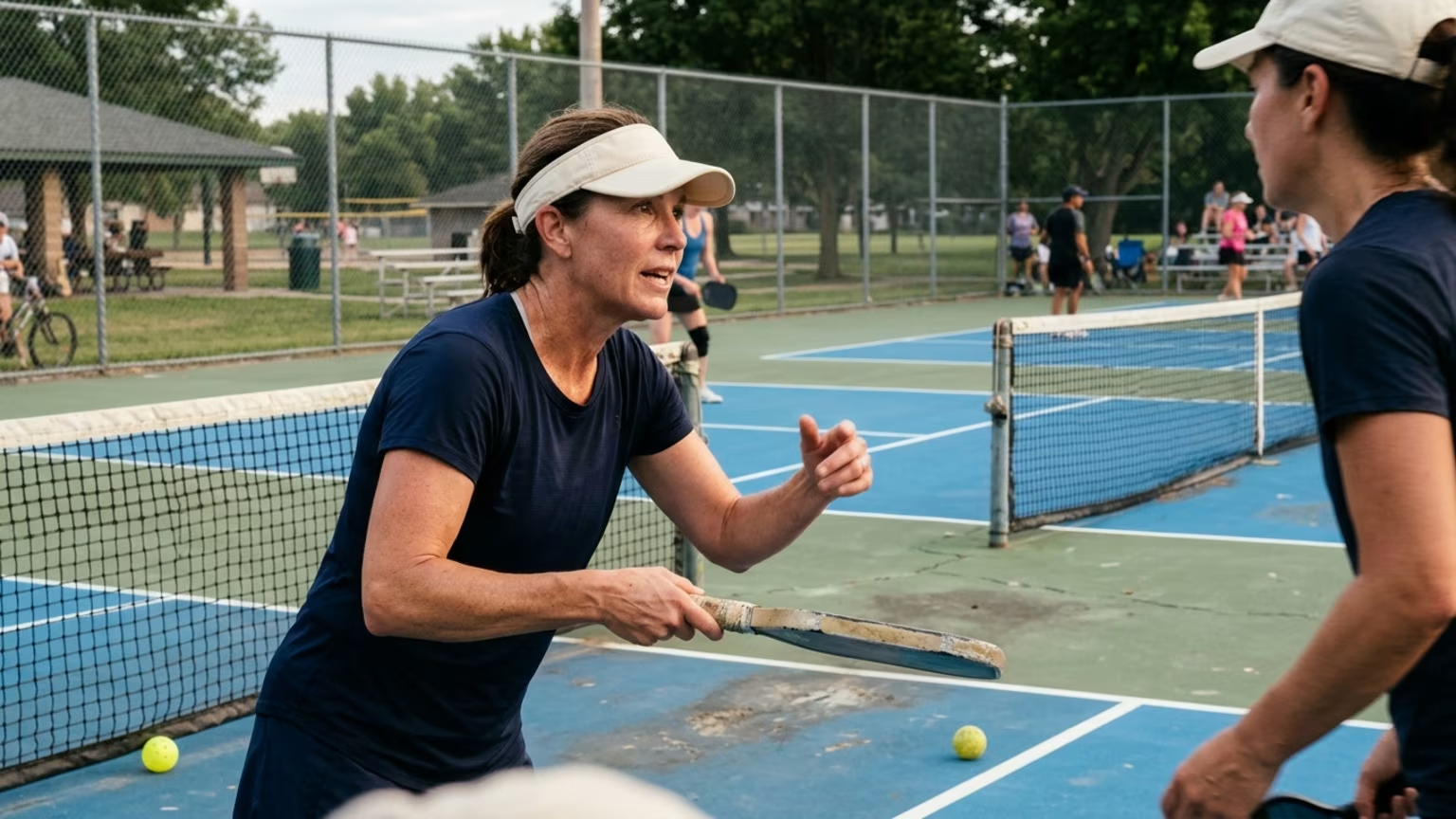
Jilly B challenges five pickleball rules of thumb, with a focus on ball pace, reaction space, paddle readiness and purposeful positioning.
Read practical guidance for better movement, smarter preparation and a game that keeps working for you.
explore the Blog
