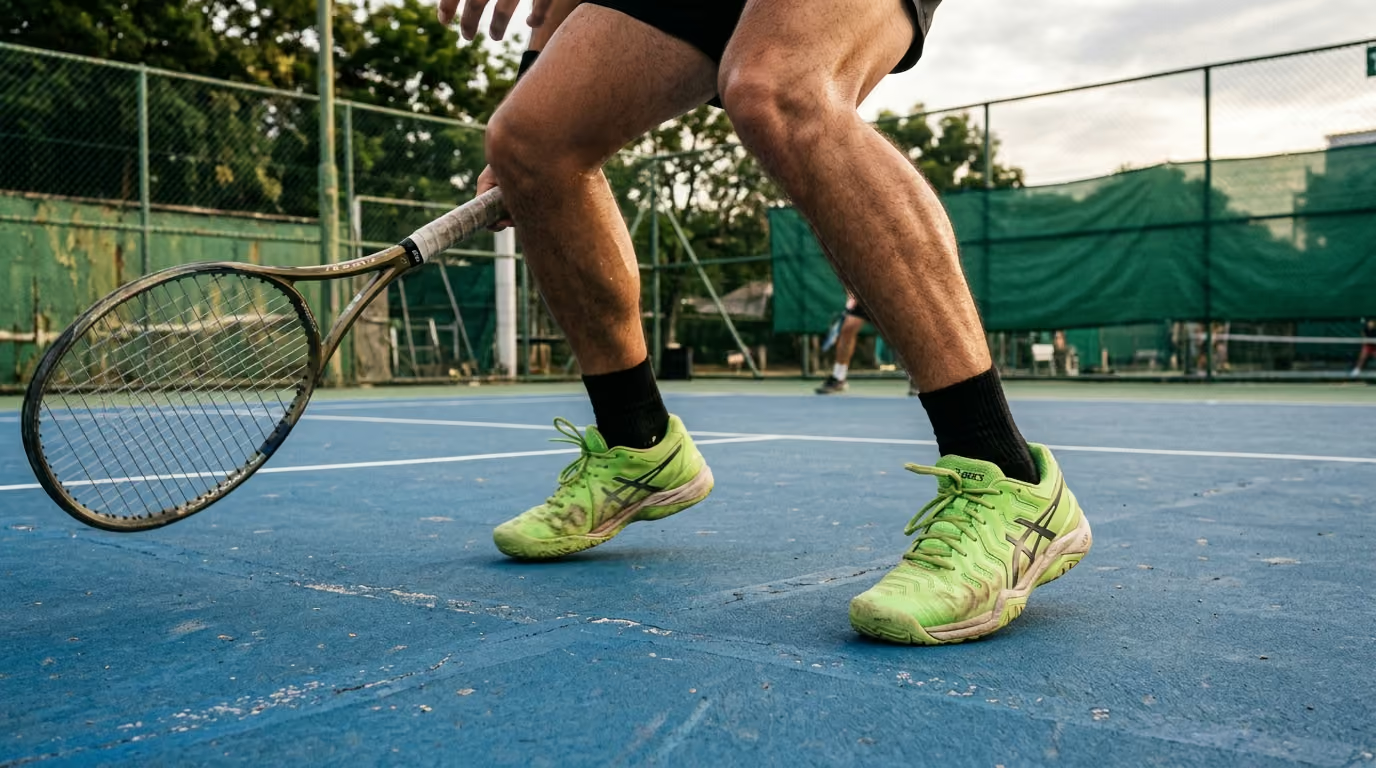
Racquet sports demand dynamic mobility routines to prepare the body for explosive movements and protect joints from the unique stresses of court play.




You arrive at the court after a long drive or a full day at your desk. Your knees feel slightly stiff, your lower back feels tight, and your first few warm-up swings feel awkward and restricted. To play your best and protect your joints, you need a systematic way to prepare your body for the unique demands of racquet sports.
Preparing your body for racquet sports requires dynamic mobility routines that match the actual speeds and directions of court play. A structured five, ten, or twenty minute routine ensures your joints are warm, your muscles are active, and your nervous system is ready for explosive movement. Rather than static stretching, these routines prioritize controlled ranges of motion and sport-specific actions to help you play better and support your long-term athletic longevity.
Many players use the terms mobility and flexibility interchangeably, but they represent different physical attributes. Flexibility refers to the passive length of your muscles and connective tissues, which is often measured by how far you can stretch with assistance. Mobility is your ability to actively control and move a joint through its entire usable range of motion. On the court, having flexible hamstrings is of little use if your nervous system cannot stabilize your hips during a sudden, deep lunge.
To move efficiently, court athletes need a combination of mobility, stability, and active muscle coordination. Stability is the ability to control a joint or body segment while other parts of the body are moving. When you reach for a wide volley, your lead hip requires mobility, while your core and trailing leg require stability to keep you balanced. Without this balance of qualities, your body cannot transfer power efficiently from your legs through your torso and into your racquet.
Dynamic preparation focuses on joint control under speed and load rather than simply making tissues longer. This approach prepares your body for the rapid transitions between open and closed stances. It also helps you manage the sudden deceleration forces that occur when you stop to hit a ball. By focusing on active range of motion, you build better movement patterns that support your mobility and movement training objectives.
Developing active control also supports your goals for healthy aging and athletic longevity. As players age, joint cartilage and soft tissues naturally change, which can lead to stiffness and a reduced range of motion. Active mobility routines help maintain joint fluid circulation and reinforce healthy movement patterns. This consistent practice allows you to continue playing the sports you love without feeling like your movement is restricted.
Racquet sports are highly demanding because they require constant changes of direction under strict time limits. In an analysis of professional tennis play at the Australian Open, researchers found that players averaged approximately 1.6 changes of direction per point. During these movements, players covered about 4.8 meters per change of direction, making adjustments every 2.7 to 3.1 seconds. These frequent transitions require excellent eccentric strength, stable joints, and rapid coordination.
The same study revealed that roughly two-thirds of the recorded changes of direction involved more than 105 degrees of angular change. Sharp cutting actions were highly correlated with maximum physical effort and required significant braking force. Because court movement is multidirectional and sudden, your warm-up must prepare your ankles, knees, and hips for these heavy angular loads. Static stretching on a mat cannot replicate these dynamic forces.
Different sports within the racquet family place unique physical demands on the human body. For example, badminton and squash require deep forward and diagonal lunging patterns. A systematic review of badminton lunge biomechanics highlighted the extreme forces placed on the front knee and ankle during recovery. The study emphasized that single-leg loading, ankle mobility, and trunk control are critical for safe, efficient play.
When selecting exercises, sports science strongly favors dynamic movement over long static holds immediately before competition. A systematic review and network meta-analysis demonstrated that dynamic stretching lasting seven to ten minutes produced the greatest improvements in explosive lower-limb performance. Conversely, intense static stretching immediately before explosive play can temporarily reduce muscle power and vertical jump height. While static stretching has its place in a post-match routine, your pre-play focus should always be active and progressive.
It is also important to understand what a mobility routine can and cannot do. While dynamic preparation improves movement quality, a systematic review in the British Journal of Sports Medicine found that stretching alone does not prevent injury. The analysis showed that strength training has a much stronger protective association, reducing injury risk significantly. Therefore, view your mobility routine as a way to prepare your body for movement quality, which works alongside strength training for proactive injury prevention.
The five-minute routine is a compressed preparation template designed for players who are short on time. It is highly effective when you are transitioning directly from work, travel, or a long drive to the court. This is a dynamic readiness routine rather than a complete flexibility session. The goal is to quickly raise your core temperature, prepare your primary joints, and rehearse basic movement patterns.
Beginner players should perform this routine at a conversational pace. Use shallow lunges, keep your shuffles light, and focus on smooth, balanced movements. The goal is to feel slightly warmer and more coordinated without inducing any physical fatigue.
Intermediate players can add a distinct split-step before each lateral shuffle. You can also drop into a slightly deeper lunge position, provided your front knee tracks in a straight line over your foot.
Advanced players can increase the speed of their shadow swings and include two or three short, controlled accelerations. However, even advanced players should avoid maximal sprinting or aggressive end-range stretching during this short preparation window.
While this five-minute sequence is highly useful, it is a minimum effective template. It may not provide sufficient preparation in cold weather, after prolonged sitting, or for players returning from a joint injury. United States Tennis Association guidelines recommend a more thorough ten-minute general warm-up before entering highly intense play. Use this routine when time is limited, but understand its constraints.
The ten-minute routine is the ideal preparation standard for most recreational and competitive racquet sports players. It provides ample time to raise your body temperature, address specific joint restrictions, activate stabilizing muscles, and rehearse court-specific movement. This routine ensures you enter the first game with your body fully prepared for high-intensity movement.
This structured routine is an excellent way to maintain your overall player health. Spending ten minutes on your movement quality before every session helps build consistent movement habits. Over time, this consistency can lead to smoother footwork and reduced joint irritation during long matches.
Begin with an easy jog around the court to raise your heart rate and body temperature. Mix in forward and backward jogging, along with light lateral shuffling. Keep your breathing relaxed and focus on staying light on the balls of your feet.
Perform six to ten controlled repetitions per side for each of the following movements. Focus on exploring a comfortable range of motion rather than forcing your joints into tight positions.
These exercises prepare your lower body for the deep reaching and recovery positions common in all racquet sports.
Transition from joint preparation to active court movement. Perform two or three rounds of this sequence at a progressive intensity.
Complete your preparation by integrating your equipment. Perform shadow swings at a progressive speed, including volleys, groundstrokes, and overheads. If you have a partner, spend these final two minutes playing mini-tennis or taking controlled, half-speed warm-up hits.
The twenty-minute routine is a comprehensive movement session that can be used in two distinct ways. It can serve as a thorough, complete warm-up before a highly demanding match or tournament. Alternatively, it can be used on non-play days as a dedicated recovery and athletic longevity practice to maintain joint health.
This version is designed to prepare your nervous system and muscles for maximum physical effort. It incorporates structured neuromuscular warm-up elements, similar to those used in professional sports, to build coordination and stability.
This post-play routine shifts your focus from high-performance preparation to physical down-regulation and tissue recovery. It is designed to calm your nervous system, restore resting muscle length, and address joint restrictions.
I remember finishing a tough two hour padel match on a cold Tuesday night and waking up the next morning feeling like my lower back was locked in concrete. For a long time, I just accepted this as the price of playing hard in my forties. But once I started spending just ten minutes on targeted hip mobility before heading to the club, the stiffness almost completely vanished. It taught me that we do not have to accept pain as a default state of aging. In our experience, dedicated recovery time pays massive dividends for athletic longevity.
Using a structured recovery routine is a key component of modern recovery science. It helps clear metabolic waste from your muscles and reduces the post-match stiffness that can accumulate after competitive sessions.
This directory provides the mechanical details and sport-specific rationale for key mobility movements. Use these descriptions to refine your technique during your weekly routines.
While all racquet sports share basic movement patterns, each sport has unique physical requirements. Adjusting your mobility routine to match your specific sport ensures you are prepared for its unique physical challenges.
Tennis matches often feature long baseline rallies, high-velocity serves, and wide lateral runs. Your dynamic preparation should place extra emphasis on thoracic rotation to support your forehand and backhand swings. You also need to prepare your shoulder girdle for the repetitive overhead demands of serving.
Pickleball is played on a smaller court, requiring rapid, short-distance reactions and a consistently low body posture. The primary physical challenge is maintaining a deep squat or hinge at the non-volley zone, often referred to as the kitchen line.
Padel involves playing balls off walls, which requires constant turning, backpedaling, and rapid changes of direction. It also features a high volume of overhead strokes, such as the bandeja and vibora, which place unique rotational demands on your torso and shoulders.
Even well-meaning players can make critical mistakes when trying to improve their court mobility. Identifying and correcting these errors can save you time and protect your joints from unnecessary irritation.
One of the most common errors is performing long, passive static stretches before hitting. Holding a muscle in a stretched position for 45 seconds or longer can temporarily reduce its ability to contract quickly and powerfully. Save your long, relaxing stretches for your post-match recovery session or your evening wind-down. Before you play, keep your movements active, dynamic, and progressive.
Many players believe that simply breaking a sweat means their body is fully prepared to play. While a light sweat indicates your core temperature has risen, it does not mean your joints have explored the ranges of motion required on the court. A proper warm-up must include specific joint movements, landing control, and sport-specific coordination drills. Do not skip your mobility exercises just because the weather is warm and you are already sweating.
Mobility training should never cause sharp pain, joint catching, or pinching sensations. Some players aggressively push through deep discomfort, believing that more range is always better. This approach can cause microtrauma to your joint capsules and tendons, leading to chronic inflammation and protective muscle guarding. Always move within a comfortable, pain-free range, and let your body loosen up naturally.
While a consistent mobility routine is highly beneficial, it is not a cure for structural injuries or severe joint pathology. Understanding when to stop your routine and seek qualified medical advice is essential for your long-term health and athletic longevity.
If you experience sharp, localized joint pain during any of these movements, stop immediately and consult a professional. Other warning signs include joint clicking accompanied by pain, a feeling of instability or giving way, numbness, or tingling down your limbs. These symptoms often indicate a structural issue, such as a ligament sprain, tendon tear, or nerve compression, which cannot be solved by stretching.
Additionally, if you notice a significant, sudden loss of range of motion on one side of your body compared to the other, seek a professional evaluation. A physical therapist, athletic trainer, or sports medicine physician can perform a comprehensive movement assessment. They can help identify the root cause of your restriction and design a targeted rehab protocol to get you back on the court safely.
To get the most benefit from these routines, you should integrate them into your regular playing schedule. Consistency is far more valuable than occasional, long sessions. Use this simple template to structure your weekly movement preparation.
For casual, low-intensity hitting sessions or when you are pressed for time, use the five-minute routine. It provides the minimum preparation your nervous system needs to move safely. Make this your default choice rather than stepping onto the court completely cold.
For competitive matches, league play, or intense practice sessions, commit to the ten-minute routine. This extra time allows you to properly activate your stabilizer muscles and rehearse your lateral court footwork. Most players find that this ten-minute investment significantly improves their performance in the first few games of a match.
On non-play days, or after an exceptionally tough match, set aside twenty minutes for the post-play recovery routine. This session focuses on gentle tissue length, deep breathing, and down-regulating your nervous system. Performing this recovery work twice a week is an excellent strategy to maintain your joint health and support your athletic longevity.
When to revisit this resource: Review this guide at the start of a new playing season, after taking a break from the court, or whenever you notice persistent joint stiffness during your matches.
Developing a consistent, active mobility practice is one of the most effective steps you can take to support your movement quality and protect your joints. By spending just a few minutes preparing your body before you play, you can move more freely, perform better, and enjoy your favorite racquet sports for years to come.
Follow Evercourts for practical insights on tennis, pickleball and padel performance, movement, recovery and healthy ageing. Stay connected for new articles, research-led guidance and ideas to help you play well and keep playing for years.


Read practical guidance for better movement, smarter preparation and a game that keeps working for you.
explore the Blog