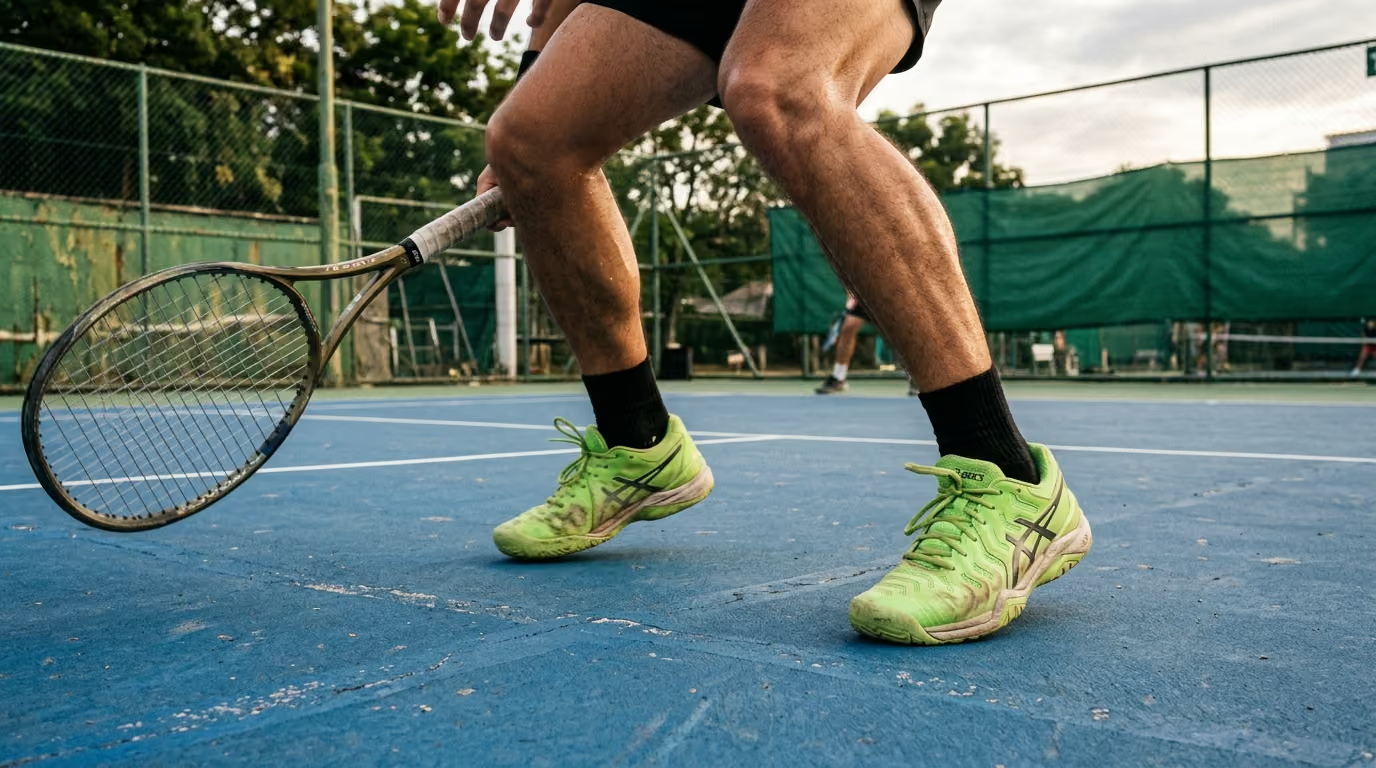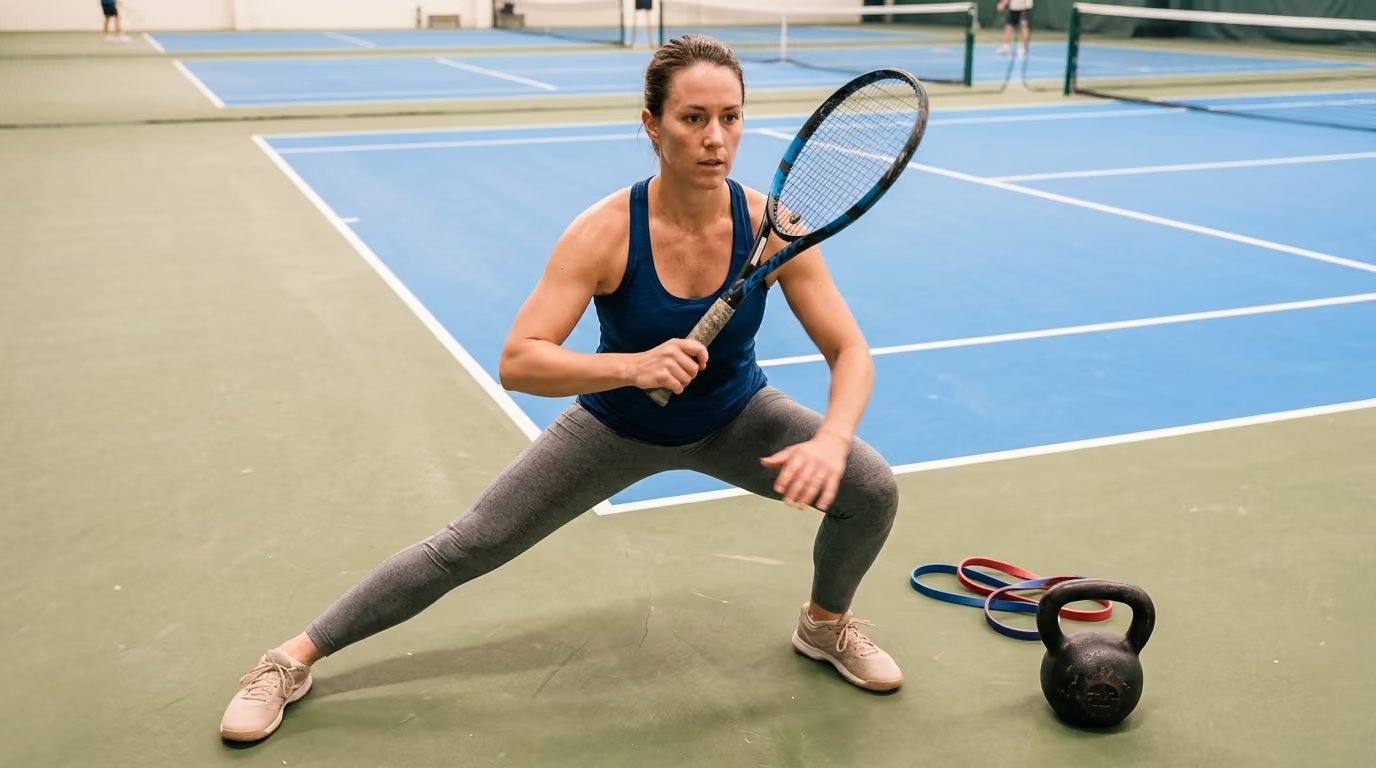

Active mobility, stretching, and loaded range of motion each serve distinct purposes in improving movement and preventing injury for athletes.




If you have ever searched for the best way to get lower on court, you have likely run into confusing advice about stretching. Some resources say static stretching is dead, while others claim dynamic movement is all you need. Finding the right approach can be frustrating when your goal is simply to move well, stay healthy, and play racquet sports for years to come.
Choosing between passive stretching, active mobility, loaded range of motion, and dynamic movement depends entirely on your immediate physical goal. Passive stretching temporarily increases raw tissue length, while active and loaded movements teach your nervous system to control and strengthen that range during play. To perform your best on the court, you must progress from simply having joint access to possessing functional, loaded capacity.
Range of motion represents the amount of movement available at a joint or body segment during a specified action. In resistance training research, this capacity is operationally defined as the degree of movement occurring at a particular joint during an exercise. To understand how your body moves on the court, you must evaluate movement quality. You have to consider which joint is moving, the plane of motion, the testing position, the speed, and the overall quality of control.
Passive range of motion is achieved when an external force moves a joint. This force can come from a training partner, a stretching strap, gravity, or your own opposite limb. Passive stretching is highly useful for temporarily increasing available joint range and developing long-term flexibility when practiced consistently. However, a passive test only shows that your tissues can tolerate a position. It does not establish that you can actively reach, stabilize, or safely use that position during a fast lateral lunge.
Active range of motion is the range you can reach using your own muscular effort without external assistance. Active mobility drills involve moving slowly through a joint's available range, using the muscles that produce the movement, and pausing to control the end position. Examples include controlled hip airplanes, active straight-leg raises, and controlled thoracic rotations from a split stance. Active mobility occupies the critical space between passive flexibility and sport-specific movement. It tests whether you can access your available range voluntarily.
The difference between your passive and active limits is known as the passive-active gap. A large passive-active gap indicates that you possess sufficient tissue length but lack the strength, motor control, or stability to use it. If both your active and passive ranges are small, your movement may be restricted by joint structure, chronic tissue tightness, or neural guarding. Managing this gap is a primary focus of modern athletic training.
Loaded range of motion involves performing movement through a meaningful joint excursion while resisting an external load. This load may come from dumbbells, barbells, cables, resistance bands, or your own body weight. Loaded mobility combines joint excursion, muscular force production, coordination, and tissue tolerance under mechanical demand. This method builds strength at long muscle lengths, preparing your body for the physical demands of hard deceleration.
Dynamic movement uses repeated, active muscle contractions to take a joint through a range without holding a prolonged end position. Dynamic movement includes locomotion, coordination, acceleration, deceleration, and sport-specific patterns. Walking lunges, leg swings, and progressive shadow swings are common examples of this approach. This method is the most directly relevant warm-up option because it raises muscle temperature, improves coordination, and prepares you for high-speed action.
The effects of static stretching on athletic performance depend substantially on the duration of the stretch. A comprehensive systematic review reported that static stretching of less than 60 seconds per muscle group produced an average performance change of approximately minus 1.1 percent. In contrast, stretching for 60 seconds or more produced a larger average decrease of approximately minus 4.6 percent. Short-duration static stretching generally does not impair maximal muscle performance.
A review of acute static stretching concluded that short stretching bouts of 60 seconds or less produce only trivial reductions in subsequent strength and power. These small reductions, measuring around 1 to 2 percent, generally disappear when the stretches are integrated into a complete warm-up. These findings indicate that long, isolated static stretching immediately before a match is a poor default choice if your priority is explosive power. A recent expert consensus specifically advised against static stretches exceeding 60 seconds per muscle group before explosive activities.
Dynamic stretching has shown clear benefits for explosive performance when compared to static options. A network meta-analysis found that dynamic stretching improved explosive performance relative to static stretching. In that analysis, a dynamic-stretching duration of approximately 7 to 10 minutes produced the best performance results. A separate review of dynamic warm-ups reported that they are best performed immediately before athletic activity to maximize coordination.
The scientific consensus indicates that stretching is not the only way to improve flexibility. A systematic review found that resistance training with external loads can improve joint range of motion. The authors concluded that stretching before or after resistance training may not be necessary solely to enhance flexibility. If you perform weight training through a full range of motion, you can achieve flexibility improvements comparable to static stretching.
A direct comparison study confirmed that full-range resistance training was as effective as static stretching for improving sit-and-reach flexibility. Additionally, the resistance-training group achieved greater improvements in hip and lower-back extensor strength. Another systematic review and meta-analysis reported that full-range resistance training was more effective than partial-range training for maximizing strength and muscle hypertrophy. This means that full-range strength work is a highly efficient way to build both mobility and force.
Stretching should not be framed as an all-purpose injury-prevention solution. A landmark expert consensus reported that stretch training does not serve as an all-encompassing injury-prevention strategy. While stretching improves range of motion and reduces muscle stiffness, injury risk is influenced by many other factors. Training load, deceleration mechanics, overall strength, and recovery play much larger roles in court longevity.
Research shows that a single session of stretching produces small, temporary improvements in joint range. One systematic review found that these acute improvements are not significantly affected by stretch intensity, training status, or sex. This means that forcing a stretch into a painful range does not yield better results. Consistently monitoring your physical response is the most reliable way to guide your mobility training.
To organize your mobility training logically, you can use a simple four-step framework. This system consists of four distinct stages: access, control, capacity, and transfer. Each stage addresses a specific movement quality, helping you avoid common training errors. By progressing through these stages, you ensure that your flexibility actually translates to better court movement.
The first stage of the framework asks a simple question: Can you reach the required physical position at all? This is the domain of passive flexibility and joint structure. If your hip joints cannot physically rotate, you will struggle to rotate your trunk during a stroke. Passive stretching is highly useful during this stage to assess your baseline limits and temporarily increase your available range.
The second stage asks whether you can reach and hold that position actively without any outside assistance. This stage represents active mobility and neuromuscular coordination. A player may have the passive flexibility to be pushed into a deep lunge. However, if they cannot actively lift their leg into that same position, they lack control. Active mobility drills teach your nervous system to coordinate the muscles around the target joint.
The third stage asks if you can produce and absorb force in that extended position. This is the domain of loaded range of motion, isometric training, and full-range strength exercises. On the court, your joints must handle high deceleration forces when you change direction. Building capacity through loaded movements ensures that your muscles, tendons, and ligaments can tolerate these sudden loads. This stage is essential for long-term athletic longevity and healthy aging.
The final stage asks if you can use your mobility at the speed, timing, and coordination demanded by your sport. This is where dynamic stretching and sport-specific movement drills are essential. A slow, controlled lunge in the gym must be translated into a rapid lunge on the court. Using progressive shadow swings, reactive footwork, and light movement drills bridges the gap between training and play.
Moving efficiently on the court requires specific joint ranges and muscle capacities. By understanding the mechanics of common racquet movements, you can select the best training method. This practical approach ensures that your gym work directly supports your performance during matches.
A wide defensive shot requires significant lateral movement, requiring you to lower your center of mass and project your body sideways. Your lead leg must plant firmly to absorb massive braking forces, and your hip adductors must stretch under tension. Passive adductor stretching can increase your raw lateral range, but it does not teach your muscles to decelerate. To build true capability, you must progress to active lateral lunges and loaded lateral steps.
For a comprehensive approach to preparing your body for these lateral demands, check out our mobility & movement resources. These guides show how to build joint control for lateral movement.
Retrieving low balls requires significant ankle dorsiflexion, deep hip flexion, and unilateral balance. If your ankles are tight, your heels will lift off the court, forcing your knees to collapse inward. While passive calf stretching can temporarily ease tightness, it does not build the strength needed to recover from a deep position. You must train your hips and ankles to produce force when fully flexed.
Serving and hitting overheads require coordinated rotation through your hips, thoracic spine, and shoulder girdle. You must also have sufficient shoulder external rotation to reach the trophy position. Passive shoulder stretching can increase your shoulder range, but it does not teach your scapula to stabilize the joint during a fast swing. Without active control, your shoulder may suffer from repetitive strain.
The split step is a rapid, elastic action that requires your calf tendons to act like springs. Prior to this movement, long static stretching can be counterproductive. It temporarily reduces the stiffness of your Achilles tendon, making your movement feel sluggish. Dynamic movement and progressive hops are far more effective for preparing your lower body for explosive reactions.
Tennis, pickleball, and padel share many movement qualities, but each sport places unique demands on your body. Understanding these differences allows you to tailor your training. By focusing on the specific joint ranges required by your sport, you can improve your on-court efficiency.
To learn more about structural training for these court demands, browse our strength & conditioning guides.
Tennis is played on a large court, requiring long sprints, high-velocity decelerations, and sliding on clay surfaces. This sport demands significant eccentric strength in your quadriceps and glutes to absorb the forces of sudden stopping. Because the court is large, you must often lunge at extreme lateral angles. This requires deep hip abduction and excellent pelvic control.
The tennis serve is the most physically demanding stroke, requiring high overhead reach and rapid shoulder internal rotation. To prevent shoulder strain, you must possess excellent thoracic rotation and extension. Without this upper-back mobility, your shoulder joint will face excessive stress during the acceleration phase. Tennis players must also build robust rotational capacity in their hips to transfer power from the ground to the racquet.
For more insights on managing the demands of court sports, check the Evercourts blog.
Pickleball is played on a much smaller court, but it requires continuous, rapid reactions in a low-squat stance. At the non-volley zone line, you must maintain a low center of gravity for extended periods. This places high isometric demands on your quadriceps, glutes, and hips. Rather than long sprints, pickleball requires rapid, short-range lateral steps and sudden lunges.
Because of the low kitchen line, your ankles must tolerate deep dorsiflexion angles for long periods. Tight calves can cause your knees to collapse inward during quick dinking rallies. Additionally, pickleball requires rapid paddle work, which can strain your wrists and elbows. Training for pickleball should emphasize ankle endurance, hip internal rotation, and wrist stabilization.
To find more articles on optimizing your play, visit our section on pickleball performance.
Padel combines elements of tennis and squash, requiring you to play in an enclosed court with glass walls. This environment demands constant rotation, multi-directional lunging, and overhead adjustments. Padel players must frequently turn their bodies to chase balls off the back wall, placing high demands on thoracic rotation. The game is highly dynamic, with frequent transition movements from defense to offense.
The overhead strokes in padel, such as the bandeja and vibora, are hit with a bent arm. This action requires excellent scapular control and shoulder stability rather than raw external rotation. Players must also perform frequent low lunges to defend low-rebounding balls near the glass. This demands deep hip flexion and pelvic stability to maintain balance during quick turnarounds.
While mobility training is highly beneficial, players often make common mistakes that limit their progress. Recognizing these pitfalls can help you train more safely and efficiently. By avoiding these errors, you can protect your joints and improve your court coverage.
To learn how to protect your joints from common training mistakes, visit our injury prevention resources.
Many players spend hours performing passive floor stretches, expecting this to translate to faster footwork. While passive stretching increases your raw joint range, it does not teach your muscles to control that range. On the court, an uncontrolled joint is highly unstable, which can lead to compensations. You must always follow passive stretching with active or loaded movements to teach your brain how to use your new range.
Holding static stretches for more than 60 seconds per muscle group before a match can temporarily reduce your explosive power. This practice decreases tendon stiffness and desensitizes your nervous system, leaving you feeling slow. A warm-up should focus on raising your body temperature and preparing your muscles for rapid movement. Save long static stretches for your evening recovery sessions.
Loaded mobility is highly effective, but lifting heavy weights through an excessive range can cause irritation. If you force a squat or lunge deeper than your joints can handle, your posture will suffer. Your body will compensate by arching your lower back or collapsing your knees. Always prioritize movement quality over the weight on the bar, and only load ranges you can control.
Dynamic stretching is excellent for warming up, but it must be performed with proper control. Throwing your limbs into extreme ranges with excessive speed can strain cold muscles. Your dynamic movements should start small and slowly increase in amplitude and speed as your body warms up. Avoid ballistic, jerky movements that cause your muscles to guard or tense up.
A racquet player needs sufficient mobility for the demands of their sport, but excessive laxity can be counterproductive. If your joints are naturally hypermobile, you do not need more stretching. Instead, you need stability, strength, and motor control to protect those loose joints. Focus on building capacity and strength rather than endlessly chasing extreme, unused flexibility.
Mobility training plays a significant role in how your body recovers between sessions. Different stretching methods have distinct physiological effects on your muscles and tendons. Understanding these processes helps you select the best approach for post-match recovery.
Passive stretching helps reduce muscle-tendon stiffness, which can temporarily relieve the feeling of tightness after a hard match. However, research indicates that static stretching does not reduce post-exercise muscle soreness or accelerate tissue repair. Forcing a tight, sore muscle into a deep static stretch can actually cause minor micro-tears in the fibers. After a demanding match, gentle, active recovery is a safer option.
To learn more about the science behind post-match tissue repair, examine our recovery science resources.
Dynamic movement increases local blood circulation, raising muscle temperature and delivering oxygen to fatigued tissues. This increased blood flow helps flush out metabolic waste products and promotes healing. Performing a light, active recovery session the day after a match is highly effective for reducing stiffness. This approach keeps your joints moving without placing excessive stress on your nervous system.
Full-range resistance training also has positive chronic effects on your connective tissues. Loading your muscles through a complete range stimulates collagen synthesis in your tendons and ligaments. This process makes your tissues more resilient and better able to handle the high forces of play. Over time, loaded mobility strengthens your entire musculoskeletal system, supporting athletic longevity.
While self-guided mobility work is excellent for performance, some physical limitations require professional evaluation. Trying to stretch your way through a structural injury can delay your recovery and worsen the condition. Recognizing the warning signs of a deeper issue is essential for your long-term health.
If you experience sharp, catching, or radiating pain during or after mobility exercises, stop immediately. Healthy mobility training may feel like a deep stretch, but it should never cause pain. Persistent discomfort that lasts for more than 48 hours after a session is a clear sign that you should consult a professional. Do not try to push through pain, as this can lead to chronic tissue irritation.
Significant asymmetries between your left and right sides also warrant a professional assessment. While minor differences are normal, a major restriction on one side can lead to compensation. A physical therapist can identify whether your restriction is due to muscle tightness, joint capsule limitations, or nerve tension. They can provide a personalized program to address your specific needs safely.
Joint instability is another warning sign that requires professional guidance. If a joint feels loose, weak, or prone to giving way, stretching is the wrong approach. You need targeted stabilization and strength exercises to protect the joint from injury. Consulting a qualified healthcare provider ensures that you receive the correct diagnosis and a safe, effective recovery plan.
To help you apply this knowledge immediately, here is a practical checklist you can use this week. This progressive plan is designed to organize your training and improve your court movement.
Choose one key joint, such as your hip or shoulder, and test its movement limits. First, measure your passive range by gently pulling your joint into a comfortable stretch. Next, try to reach that same position using only your muscle strength. Note if there is a large difference between your passive and active limits.
Before your next match, replace all long static stretches with a dynamic routine. Spend 5 minutes on light locomotion, such as jogging, side shuffles, and skipping. Follow this with 5 minutes of dynamic stretching, including walking lunges, leg swings, and shadow swings. Ensure that your movements start small and gradually increase in speed.
During your next strength workout, focus on moving through a complete, controlled range of motion. Incorporate exercises like split squats, Romanian deadlifts, and controlled overhead presses. Focus on maintaining a slow, controlled descent and a solid posture at the bottom of each movement. Do not use weights that are too heavy to control.
On a rest day or the evening after a hard match, spend 15 minutes on gentle recovery work. Use comfortable passive stretches for your calves, hips, and chest, holding each stretch for 30 seconds. Focus on slow, deep breathing to help calm your nervous system. Follow these stretches with a few light, active mobility movements to maintain joint control.
Follow Evercourts for practical insights on tennis, pickleball and padel performance, movement, recovery and healthy ageing. Stay connected for new articles, research-led guidance and ideas to help you play well and keep playing for years.


Read practical guidance for better movement, smarter preparation and a game that keeps working for you.
explore the Blog