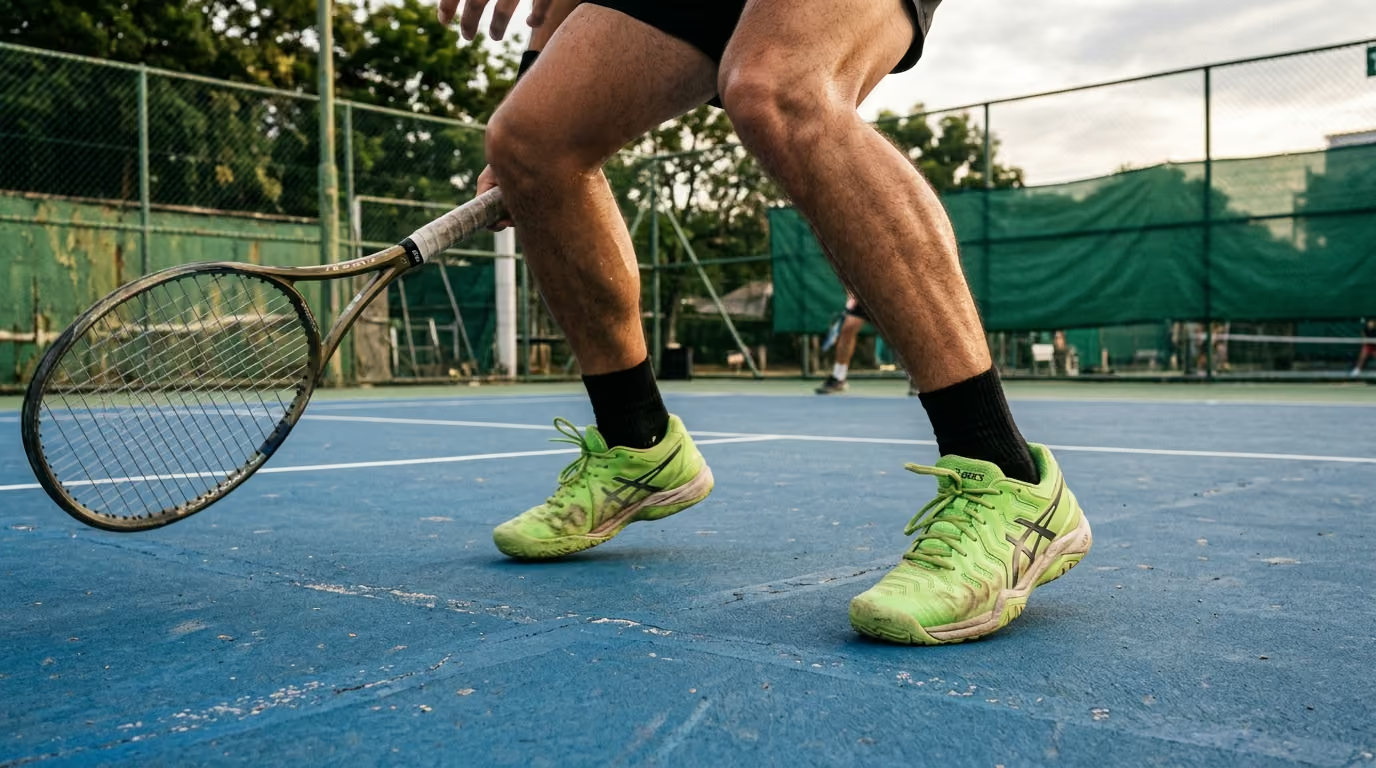

Autoregulation, a system of training that reacts to your daily physiological and psychological reality, helps athletes maintain high-quality practice and manage fatigue.




What you do on the court should not be dictated by a rigid calendar page. A pre-written training plan cannot foresee a poor night of sleep, a stressful week at work, or a lingering ache in your shoulder.
Autoregulation is the process of adjusting your training intensity, volume, or focus based on your current physical and mental state. Instead of rigidly following a set schedule, you modify your court time and gym work to match what your body can handle on any given day. This approach helps you maintain high-quality practice, manage your fatigue, and support your long-term athletic longevity.
This guide provides a practical blueprint for assessing your daily physical state. It offers clear decision rules for choosing when to push hard, when to scale back, and when to rest. By applying these concepts, you can continue playing the sports you love for many years to come.
Autoregulation is not a complicated scientific theory, nor is it an excuse to skip training when you feel slightly unmotivated. Instead, it is a structured system of training that reacts to your daily physiological and psychological reality. Your body does not experience stress in isolation. It processes court sessions, gym workouts, professional demands, and emotional stress as a single, combined burden.
A traditional training plan assumes that your recovery is perfectly predictable. It schedules a hard singles match or a heavy leg workout on a specific day, regardless of how you slept the night before. Autoregulation accepts that your capacity to train fluctuates constantly. It uses simple daily markers to help you decide how to express your training priorities safely.
This approach is highly relevant for court athletes because of the complex nature of racquet sports. A ninety-minute tennis, pickleball, or padel session is not a uniform dose of exercise. The physical strain of that session changes based on your partner, the weather, the court surface, and your personal stress levels. Autoregulation helps you measure this strain and adapt your weekly schedule accordingly.
The ultimate goal of this system is to protect your health while maximizing your performance. You do not avoid demanding workouts entirely. You simply schedule them for the days when your body is fully prepared to absorb the stress. This sustainable approach to preparation is a core element of healthy aging and athletic longevity resources that help players stay active over many decades.
Sports science has spent decades trying to quantify how athletes react to physical stress. Researchers split training stress into two main categories, which are external load and internal load. External load refers to the physical work you perform on the court or in the gym. This includes your total minutes of play, the number of balls hit, or the distance you ran during a match.
Internal load represents the actual physiological and psychological cost of that work to your specific body. For example, a ninety-minute singles match might feel relatively easy when you are well-rested and relaxed. The same match can feel incredibly draining if you are sleep-deprived and stressed. Researchers often measure internal load using a method called Session Rating of Perceived Exertion, or Session RPE.
To calculate Session RPE, you rate the overall intensity of your workout on a scale from one to ten. You then multiply that number by the total duration of the session in minutes. According to a review published in the journal Sports Medicine, this simple calculation correlates well with complex physiological markers like heart rate and blood lactate. It offers a reliable way to monitor the true impact of your play without expensive lab equipment.
Scientists also look at the relationship between your recent training and your long-term habits. The acute-to-chronic workload ratio compares the training load of your most recent week to the rolling average of the past three to six weeks. A consensus statement from the International Olympic Committee highlights that large, sudden increases in this ratio are often associated with an increased risk of injury and illness.
However, the consensus also notes that no single formula can predict injuries with absolute certainty. Your body is a complex system, and physical preparation is influenced by many factors. Autoregulation uses these scientific principles to create a flexible, daily framework rather than relying on a rigid, mathematical equation.
You do not need a team of sports scientists to measure your daily readiness. You can track your physical state using a simple, four-layer model. This model combines historical context, subjective feelings, objective data, and physical confirmation. By looking at these four layers together, you get a clear picture of your capacity to perform.
The first layer requires you to look at your recent schedule. Consider how many hours you have spent on the court over the past seven days. Think about any external factors like travel, late nights, or demanding work projects. These contextual factors create the baseline for your daily physical capacity.
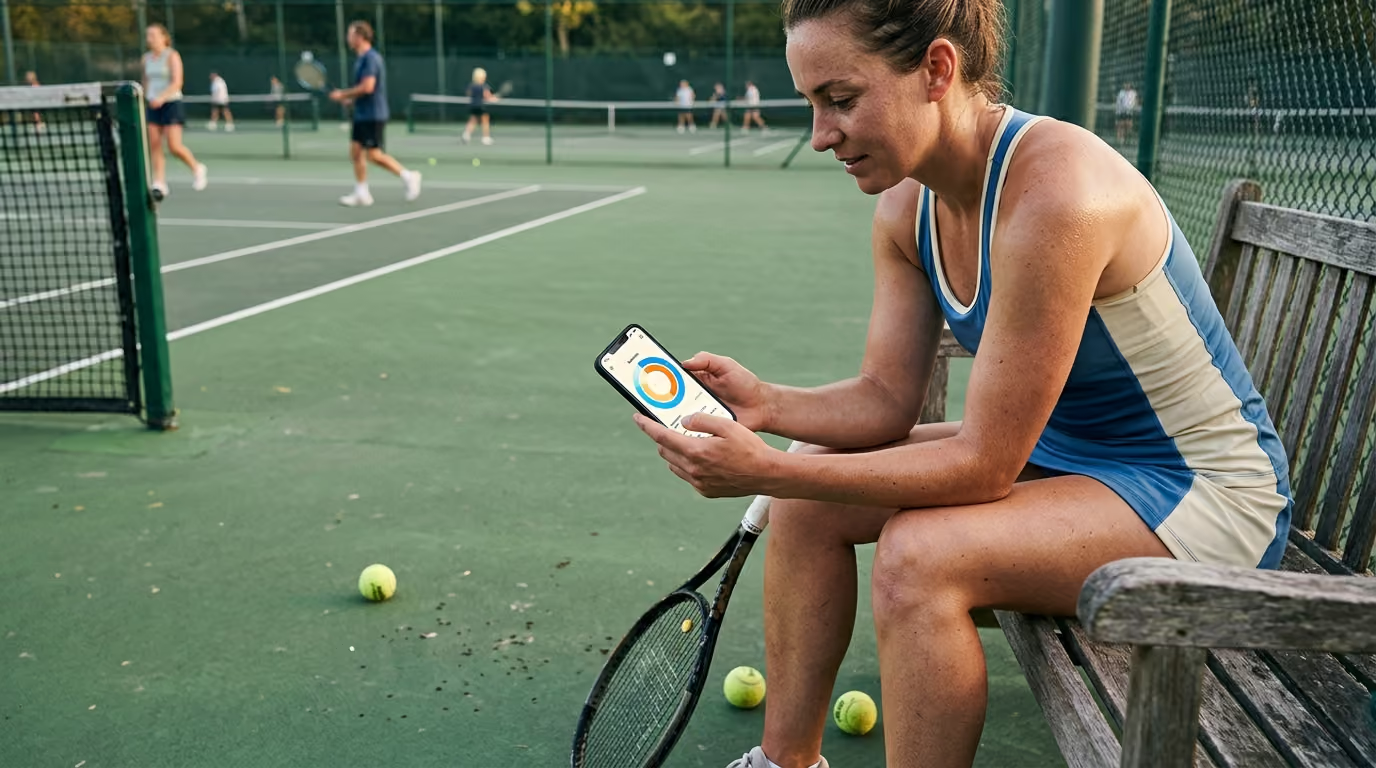
The second layer relies on your own perception of your body. Every morning, take sixty seconds to rate your sleep quality, muscle soreness, and mental fatigue on a scale from one to five. Research indicates that these simple subjective wellness questionnaires are often more sensitive to training stress than complex heart-rate metrics. Do not dismiss your feelings as unscientific, as they represent the integrated response of your entire nervous system.
If you use a wearable device, you can include objective metrics in your assessment. Track your resting heart rate and your heart-rate variability, which is often measured as the root mean square of successive differences, or RMSSD. Look for trends over several days rather than reacting to a single, isolated reading. If your heart-rate variability is declining while your resting heart rate is rising, your autonomic nervous system may be struggling to keep up with your schedule.
The final layer of the model occurs during your warm-up on the court. Pay close attention to how your body moves during your initial light hitting and lateral movement. Are you stepping cleanly, or do your legs feel heavy and slow? If your warm-up feels unusually difficult at a low intensity, your body is telling you that a hard training session is not appropriate today.
To learn more about the scientific principles behind these measurements, you can review recovery science research. Understanding these mechanisms helps you make better decisions about when to push your limits on the court.
Applying autoregulation in your daily routine requires clear, actionable decision rules. You can think of these rules as a traffic light system. Every day, your assessment will place you in a green, yellow, or red light category.
A green light indicates that your body is fully prepared to handle a high-intensity training session. This status is appropriate when your sleep was near your normal average and your muscle soreness is minimal. Your warm-up feels crisp, your movement is fluid, and your heart-rate variability is stable.
On green light days, you should focus on demanding, sport-specific challenges:
A yellow light means your body is showing mild signs of fatigue, but you are still capable of productive work. This often happens after one poor night of sleep, during times of moderate stress, or when you are carrying mild muscle soreness. Your warm-up feels acceptable, but you lack your usual spark of energy.
On yellow light days, you should modify your session to focus on quality rather than sheer volume:
A red light is a clear signal that your body is overwhelmed by stress, fatigue, or localized joint pain. This status occurs when multiple warning signs converge, such as consecutive poor nights of sleep, elevated resting heart rate, or persistent joint discomfort. Your warm-up feels heavy, clumsy, or painful.
On red light days, you should choose a recovery-focused alternative:
These decisions should be guided by established strength and conditioning guidelines. Using a structured framework prevents you from making emotional decisions about your training.
The physical demands of racquet sports are not identical. While all three sports require agility and hand-eye coordination, they stress your muscles and joints in different ways. Understanding these sport-specific nuances helps you apply autoregulation more effectively.
Tennis is played on a much larger court, which requires longer sprint distances and high-speed decelerations. The heavy yellow ball and the long frame of a tennis racket place exceptional stress on your shoulder, elbow, and wrist. If your shoulder feels irritated or weak, you are not ready for a high-volume serving session.
On yellow light days, a tennis player should replace live point play with controlled ball machine drills. This allows you to practice your stroke mechanics without the unpredictable movement of a match.
Padel is played in an enclosed glass court, which leads to long, highly tactical rallies. The sport involves constant turning, pivoting, and overhead play, such as the bandeja and vibora strokes. This repetitive overhead hitting can quickly fatigue the muscles of your rotator cuff.
If your thoracic mobility is limited or your back feels stiff, you should avoid heavy padel matches. Instead, use your court time for low-intensity volley patterns or defensive wall-rebound drills.
Pickleball is played on a smaller court, which reduces your total running distance but increases your deceleration frequency. The game requires you to spend a significant amount of time in deep knee flexion at the non-volley line, commonly known as the kitchen. This position places a high mechanical demand on your patellar tendons and your lower back.
If your knees or lower back are sore and stiff, a fast-paced pickleball game can make these issues worse. A yellow-light pickleball session should focus on soft dinking drills that do not require explosive, lateral lunging.
By recognizing these differences, you can design smarter injury prevention strategies that match your sport. Adapting your play to your physical state protects the specific joints that are most vulnerable in your game.
Many players treat sleep and lifestyle stress as factors that are separate from their sports performance. However, clinical research shows that these variables have a direct, measurable impact on how your body moves and recovers.
According to a systematic review published in the journal Sports Medicine, athletic cohorts frequently fail to achieve recommended sleep guidelines. The study found that athletes often sleep less than seven hours per night during training periods. Sleep is especially disrupted after evening competitions, which are common in local racquet sport leagues.
This lack of sleep is particularly damaging for court athletes. Racquet sports require high levels of reaction speed, visual anticipation, and rapid decision-making. Research indicates that motor skills and cognitive processing are highly sensitive to sleep loss. When you are sleep-deprived, your spatial awareness declines, your coordination suffers, and your risk of making a late, awkward movement increases.
Psychological stress from your career or family lives also acts as a physical drain. High mental stress increases the level of cortisol in your body, which can impair muscle repair and reduce your immunity. When your life is exceptionally stressful, your body has fewer physiological resources to dedicate to recovering from a hard singles match or a heavy gym workout. Autoregulation ensures that you account for these invisible strains on your system.
Transitioning to a flexible training model can be challenging for players who are used to rigid schedules. Avoiding these common mistakes will help you implement the system more successfully.
Many modern players wear smartwatches or rings that provide a daily readiness score. While these devices offer helpful data, they are not perfect. A wearable device cannot feel the local tendon pain in your elbow or the stiffness in your Achilles tendon. If your watch gives you a high readiness score but your shoulder hurts when you swing, you must listen to your body rather than the technology.
When work or family obligations force you to miss a couple of training sessions, the temptation is to make up for lost time. A player might try to combine tennis drill sessions, a gym workout, and a competitive match into a single, massive day. This approach creates a sharp workload spike.
Research shows that these sudden increases in volume are a primary cause of shoulder and lower-limb injuries. If you miss a workout, simply resume your training at your normal, gradual pace.
Some players struggle to distinguish between normal, mild lethargy and true physical exhaustion. If you are simply unmotivated but your body feels healthy and moving, a structured warm-up will often resolve the mental fog. Autoregulation is not about avoiding hard work. It is about aligning that hard work with your actual physiological capacity to adapt to it.
To improve your movement quality on yellow light days, you can utilize mobility and movement practices. These routines keep your joints moving smoothly without adding excessive cardiovascular strain.
Every time you step onto the court, you are applying stress to your muscles, bones, and connective tissues. If you allow your body sufficient time to recover, those tissues adapt and become stronger. If you constantly apply stress without adequate rest, your tissues begin to break down, leading to chronic overuse injuries.
This relationship is particularly important as we get older. A professional study of tennis players published in the American Journal of Sports Medicine analyzed thirty-eight years of competitive data. The researchers found that high cumulative competition load significantly increased the risk of time-loss injuries, and this effect was magnified in older players. This does not mean you should stop competing as you age. It simply highlights the importance of managing your weekly playing volume and intensity.
By using autoregulation, you protect the health of your tendons and joints. Tendons have a limited blood supply compared to muscles, which means they take longer to adapt and recover from intense stress. If you convert a planned hard hitting session into a light technical workout on a day when your joints are sore, you give your tendons the extra recovery time they need.
This patient approach to training keeps you on the court consistently over many years. A player who manages their load through daily adjustments will accumulate far more playing hours over a decade than a player who constantly pushes through pain, becomes injured, and is forced to take weeks of complete rest.
Autoregulation is an excellent tool for managing normal athletic fatigue and routine training stress. However, it is not a medical treatment plan. You must be able to recognize the signs that indicate your physical issues require the attention of a qualified healthcare provider.
You should seek professional medical advice if you experience any of the following symptoms:
Working with a physical therapist or sports medicine specialist can help you address underlying movement limitations. Once you have a clear clinical diagnosis, you can use the principles of autoregulation to modify your training safely under their professional guidance.
If you must play a scheduled league match on a red-light day, you should modify your tactical approach to protect your body. Since your reaction time and movement speed will likely be compromised, avoid playing an aggressive, high-risk physical game. Focus on high-margin shot placement, deep defensive lobs, and conservative positioning to minimize the need for sudden, explosive recoveries.
To get accurate and consistent heart-rate variability data, you should measure it at the same time every day. The most reliable method is to take a two-minute reading immediately after waking up in the morning, while you are still lying flat in bed. Measuring at this time minimizes the influence of daily variables like caffeine, work stress, and physical movement on your autonomic nervous system.
To find your Session RPE, wait approximately ten to fifteen minutes after your workout has finished. Rate the overall difficulty of the entire session on a scale of one to ten, where one is sitting on a chair and ten is a maximal, exhaustive effort. Multiply that rating by the total duration of the workout in minutes to find your score. For example, a sixty-minute padel match with an intensity rating of six yields a Session RPE score of three hundred and sixty arbitrary units.
You do not need to stop training completely because of normal, generalized muscle soreness, which is often called delayed onset muscle soreness. Light movement actually helps increase blood flow to your muscles and can temporarily reduce the feeling of stiffness. If your soreness is mild and does not alter your movement patterns, you can proceed with a yellow-light session focused on technical skills and mobility.
Follow Evercourts for practical insights on tennis, pickleball and padel performance, movement, recovery and healthy ageing. Stay connected for new articles, research-led guidance and ideas to help you play well and keep playing for years.


Read practical guidance for better movement, smarter preparation and a game that keeps working for you.
explore the Blog