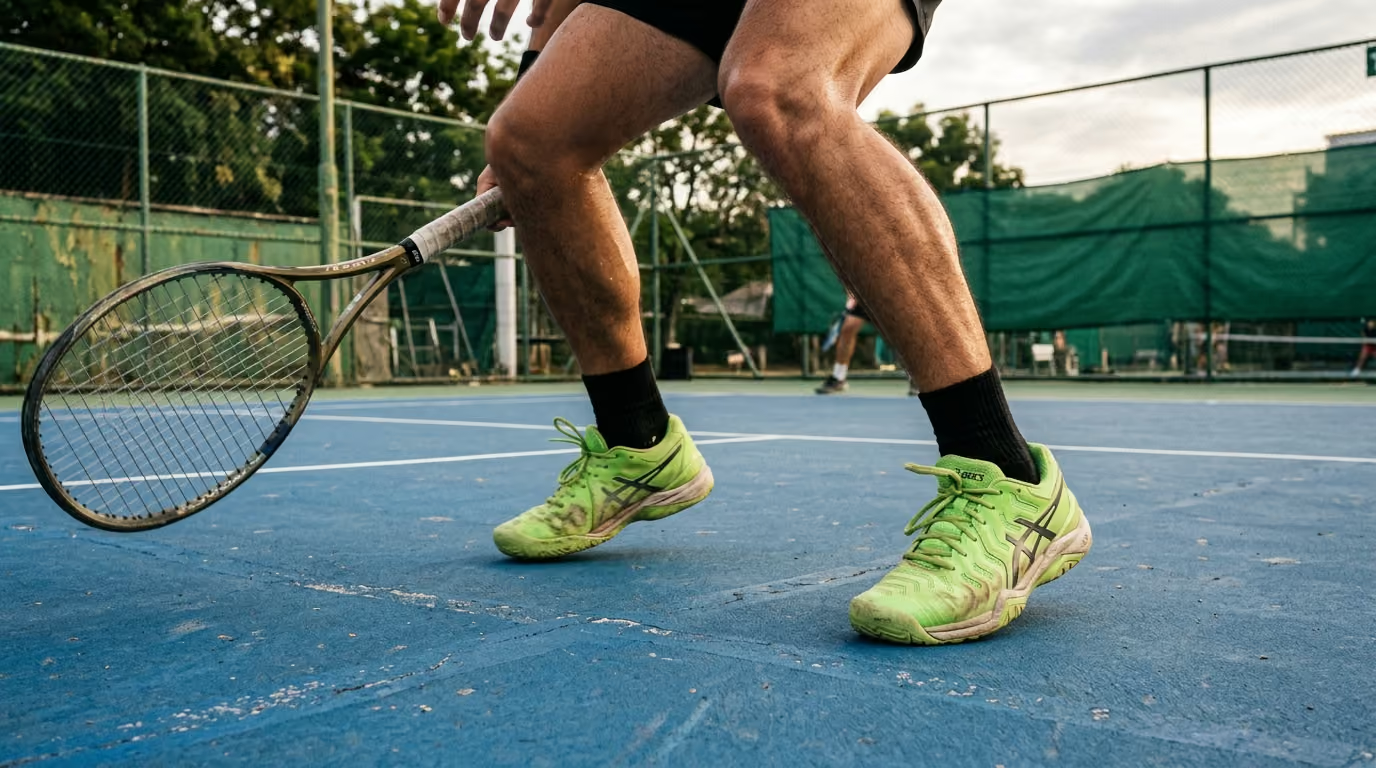
Over 3 distinct types of balance are crucial for racquet sports, including static, dynamic, and reactive balance, all contributing to injury prevention.




Many players believe that standing on a balance board for several minutes is the path to stable court movement. However, balancing on a highly unstable plastic disk does not prepare your feet for the rapid forces of a hard-court sprint. Court balance is not about holding still. True athletic balance is the ability to maintain dynamic control during sudden direction changes, defensive reaches, and rapid recovery steps.
Stable dynamic movement on the court relies on a highly trained connection between your brain, muscles, and joints. True athletic balance is the ability to maintain dynamic control during sudden direction changes, defensive reaches, and recovery steps. By incorporating progressive balance and sensory training into your routine, you can build movement control that helps protect your joints. This systematic approach allows you to move with greater confidence, recover faster from wide shots, and support long-term athletic longevity on the court.
To build a more resilient movement system, you must first understand the differences between the systems that govern body control. These systems work together during every point you play.
Static balance is the ability to maintain a controlled posture while your body is relatively stationary. On the court, you use this when holding a low defensive split stance before a serve. It is also active when you maintain trunk alignment while preparing to hit a baseline groundstroke. While static balance provides a useful foundation for movement, training it in isolation does not match the active demands of a fast rally.
Dynamic balance is the ability to control your body while your center of mass is moving. This occurs when you decelerate into a deep backhand lunge or brake after a lateral shuffle. It is active when you land from a split step, reach outside your base of support, or push back toward the middle of the court.
Dynamic balance tests are commonly used to assess movement control and side-to-side asymmetries. In a study of professional tennis players, injured athletes demonstrated significantly worse dynamic balance and greater postural sway than their non-injured peers.
Reactive balance is the ability to recover from an unexpected disruption in your movement. This happens when your opponent hits a disguised drop shot, or when your shoe slips slightly on a dusty court. It is also required when a ball clips the net cord and forces you to change direction instantly. Because you cannot plan every foot contact in advance, reactive balance is your primary defense against sudden joint strains.
Anticipatory postural control refers to the muscular preparation that occurs just before you make a voluntary movement. Before you reach, lunge, or rotate, your nervous system adjusts your trunk, pelvis, and lower-limb muscles. This pre-activation keeps your center of mass manageable.
A clear example of this is the difference between reaching for a ball and collapsing afterward, versus pre-loading your hip and ankle to reach with total control. The second approach keeps you stable and allows for an immediate recovery step.
While people often use these terms interchangeably, they represent distinct sensory functions:
Your nervous system gathers this information from muscle spindles, Golgi tendon organs, cutaneous skin receptors, and joint mechanoreceptors. These specialized sensors allow you to navigate the court without constantly looking at your feet.
Your center of mass is the point that represents your body's total mass distribution. Your base of support is the physical area beneath and between your feet on the court.
Balance becomes highly demanding when your base of support is narrow, asymmetrical, or moving. During a deep lunge, you must project your center of mass toward the ball while keeping your foot-ground interaction organized. A progressive training program moves your center of mass to the limit of stability and teaches you to pull it back efficiently over a recovering base of support.
The physical demands of racquet sports put constant pressure on your balance systems. Every shot requires you to manage high forces while changing directions.
Racquet sport footwork is a continuous cycle of acceleration and sudden braking. You must produce high force to reach the ball and absorb that same force to stop and swing.
Research shows that elite badminton players demonstrate exceptional impact-absorption strategies and highly active knee and ankle control. They manage medial plantar loading much better than amateur players. Good balance is not a rigid posture. It is the capacity to accept high forces, control joint motion, and redirect your body without losing your posture.
Lowering your body to defend a low shot places high demands on your ankle dorsiflexion, knee flexion, and hip flexion. It also requires excellent isometric endurance in your lower limbs and constant trunk control.
An excessively wide stance or poor hip mobility can make you slow and increase the mechanical stress on your joints. The goal of a low position is not to squat as low as possible. Instead, you want to find a depth that allows you to move immediately in any direction.
A lunge is a braking task followed immediately by a recovery task. You must place your foot accurately, absorb the impact, stabilize your trunk, and produce a strong return push.
Fatigue can rapidly degrade your postural control during these movements. Studies have found that fatigue significantly increases postural sway and alters braking mechanics within ten minutes of intense activity. This loss of control is particularly evident in the side-to-side direction, which increases the risk of ankle and knee strain.
Many court injuries do not happen during your first movement to the ball. Instead, they occur during the transition back to the center of the court.
An athlete may reach a wide shot but push off from a poorly aligned foot or rotate over a planted leg. They might stand up too quickly or take an excessively long recovery step. Treating the recovery step as an active, trainable skill is essential for maintaining player health guides over years of play.
As we age, our balance and proprioceptive systems undergo natural structural changes. Understanding these shifts allows you to adapt your training to maintain athletic longevity.
Age-related changes in your nervous system can gradually reduce the sensitivity of your joint receptors and skin nerves. This change is sometimes referred to as presbypropria.
Older adults may experience a reduction in vibration sense and lower-extremity joint position awareness. This means an older player may not always feel when their ankle, knee, or hip has drifted into an awkward position. Recognizing this natural change is the first step toward managing it through deliberate practice.
When joint sensations become less precise, the brain naturally relies more on your eyes to maintain balance. On the court, this visual compensation can lead to performance challenges.
Your visual attention must track the ball, monitor your opponent, and judge court boundaries. If your brain is also using your vision to keep you upright, your reaction times will slow down. Training your balance under varied sensory conditions helps restore your body's reliance on joint and foot sensations.
Balance does not operate in a vacuum. It relies heavily on lower-limb strength, rapid force production, and ankle joint stiffness.
If you lose muscle power as you age, it becomes harder to arrest a sudden slip or correct a misplaced step. For this reason, balance drills should always be paired with targeted strength and conditioning programs to support the muscles that stabilize your joints.
There is highly encouraging news for active court players. Research shows that physically active older adults maintain their joint position sense and force control much better than sedentary individuals.
While aging naturally changes your sensory systems, consistent training preserves a high level of physical function. Aging increases your need for balance training, but it does not prevent you from making meaningful athletic gains.
The scientific literature provides clear evidence supporting the role of balance and neuromuscular training in sports injury prevention.
A comprehensive systematic review of neuromuscular training programs demonstrated substantial reductions in sports injuries:
Additionally, programs that focused solely on balance training reduced ankle sprain risk by 36 percent. This data supports the use of targeted coordination drills as a primary tool within injury prevention resources for court athletes.
A systematic review published in 2024 examined sensorimotor and proprioceptive exercise interventions in older populations. The researchers noted significant improvements in dynamic balance, postural stability, and walking coordination.
While some studies use inconsistent terminology, the overall evidence points to positive adaptations in balance capacity. Consistent proprioceptive training over twelve weeks has been shown to improve functional mobility and reduce fall risks in older cohorts.
According to data from the Centers for Disease Control and Prevention, approximately three million older adults are treated in emergency departments for falls each year. This population-wide statistic highlights how crucial balance preservation is for general health.
While these figures reflect the broader public, they emphasize that maintaining a highly responsive balance system is vital for your physical independence outside of sports.
Research consistently shows a link between poor balance metrics and active joint pain. In a study of male badminton players, those with chronic knee pain demonstrated significantly reduced reach distances and more movement errors than healthy players.
Injured players also showed reduced trunk movement and less hip-shoulder separation during lunges. These movement adaptations indicate that pain and poor balance can create a cycle of altered mechanics that requires targeted training to correct.
To train your balance safely, you should follow a systematic progression. Always master the simpler, slower movements before moving on to faster, more complex drills.
The American College of Sports Medicine recommends neuromotor training two to three days per week for optimal physical function.
The goal of this phase is to establish a repeatable ready position and improve your awareness of foot pressure against the floor. You should focus on keeping a quiet, stable trunk while bending through your ankles, knees, and hips.
This phase develops your unilateral strength and improves pelvic stability when you are supported by only one limb. You should master these holds before introducing dynamic movement.
In this phase, you will practice moving your center of mass toward your limit of stability. This prepares your body for the reaching demands of defensive court saves.
This phase bridges the gap between basic balance drills and the high-speed movements of a real match. Focus on maintaining a stable head and trunk during these movements.
This final phase prepares your nervous system to handle unexpected court disruptions. Use these drills to build reactive balance under changing conditions.
Executing a low defensive position correctly is a fundamental skill for racquet sports. A stable low position allows you to change direction quickly and protects your lower back from excessive strain.
To build an efficient low position, focus on these alignment targets:
Use these cues to refine your movement or guide a practice partner:
Avoid these common training pitfalls to ensure your balance work translates directly to better performance on the court.
A common mistake is performing all balance training on foam pads, wobble boards, or half-dome balance trainers. While these tools have a place in early-stage rehabilitation, they can limit your ability to produce force.
Court sports are played on hard, stable surfaces. Training primarily on soft, compliant surfaces can reduce your ankle stiffness and make your movements slower. Always transition your dynamic balance work to a firm floor as soon as you can perform the drills with control.
Closing your eyes is a highly effective way to challenge your joint receptors, but it dramatically increases your risk of falling.
Never perform complex movements, like lunges or jumps, with your eyes closed. Only use eyes-closed training for simple, static holds while standing near a wall or railing that you can grab for safety.
Some players believe that a drill is only beneficial if they are shaking or struggling to stay upright. This is a misconception.
If you are constantly wobbling, you are likely practicing poor movement habits, like gripping with your toes or twisting your pelvis. Progress your exercises only when you can perform them with smooth, quiet control.
Being able to stand on one leg for a full minute is a great starting point, but it does not guarantee injury resistance during a match.
You must transition your training to dynamic and reactive movements. Your balance program must include deceleration, direction changes, and quick recovery steps to prepare your body for the physical realities of play.
While the underlying physiology of balance is the same for everyone, the specific movement patterns differ significantly across the three major racquet sports.
Tennis requires you to cover a large court area, which demands high running speeds and intense braking forces.
To support these movements, incorporate mobility and movement patterns that focus on deep hip internal rotation and lateral ankle strength.
Pickleball is played on a smaller court, but it requires rapid reactions and an exceptionally low, sustained stance at the kitchen line.
Pickleball players should focus on building endurance in their quadriceps and glutes to maintain a stable, low posture during long dink rallies.
Padel involves rapid rotations, wall transitions, and frequent overhead plays within a confined space.
Padel players need exceptional thoracic mobility and pelvic control to manage these rotational forces without straining their knees or lower back.
Certain physical conditions and fatigue levels require you to modify your balance and coordination drills to ensure safety.
If you have a history of ankle sprains, your joint receptors may have reduced sensitivity. This can make you more prone to re-injury.
Knee discomfort can cause your brain to alter how you move, often leading to a rigid, shortened lunge that puts more stress on other joints.
If you are returning to the court after a long break, start with simple exercises and prioritize safety.
Fatigue reduces your brain's ability to process sensory information, which can lead to poor foot placement and joint instability late in a match.
Use these common case patterns to identify balance issues in your own play and apply the appropriate training adjustments.
The Scenario: You can easily hold a single-leg stance for a minute in the gym, but you routinely lose your balance and struggle to get back into position after hitting a wide forehand.
The Issue: You have developed good static balance, but you lack the dynamic braking power and recovery coordination needed for court play.
The Fix:
The Scenario: You feel stable when looking at a fixed spot on the wall, but you experience a sudden wave of instability when turning your head to track an overhead smash.
The Issue: Your brain has become overly dependent on your eyes for balance, making you unstable when your vision is occupied by the ball.
The Fix:
The Scenario: Your early-match movement is crisp and controlled, but during the third set, your lunges become heavy, your knees bow inward, and you struggle to push back to the center of the court.
The Issue: Your postural control is highly sensitive to fatigue, and your lower-limb muscles are losing the ability to stabilize your joints as you tire.
The Fix:
The Scenario: After a previous knee injury, you move stiffly on the court, avoiding any deep knee bending and taking short, choppy steps that make you slow to reach wide balls.
The Issue: Your brain is using a protective movement strategy, keeping your knee rigid to avoid potential pain or instability.
The Fix:
You do not need expensive laboratory equipment to track your balance and coordination. Use these simple, repeatable tests to monitor your progress over time.
Stand on one leg with your hands on your hips and lift your other foot off the floor. Time how long you can hold this position without moving your standing foot, dropping your hips, or touching your lifted foot to the ground. Aim for a quiet, stable hold of at least 30 seconds on each leg.
Stand on the edge of an standard step. Slowly lower one heel to lightly touch the floor, then push back up using only your standing leg. Perform five repetitions on each side while watching your movement in a mirror or recording a quick video. Check if your standing knee stays aligned with your foot or bows inward.
Step forward into a deep lunge as if hitting a low volley. Hold the bottom position for three seconds before pushing back to your starting point. You should be able to land softly, hold the position without any shaking or side-to-side trunk sway, and recover in a single, controlled step.
While these assessments are highly useful for tracking your personal progress, they are not perfect predictors of injury. A single low score simply indicates an area that could benefit from more targeted training.
Combine these tests with your injury history, active symptoms, and overall physical comfort to build a well-rounded approach to your joint health.
Your balance systems are highly sensitive to physical fatigue. When your muscles are tired, your sensory nerves receive fewer resources, which can compromise your coordination on the court.
Intense play causes microscopic fatigue in your muscles and tendons. This physical stress reduces the accuracy of your muscle spindles and joint receptors, which can impair your brain's ability to sense your joint positions.
Giving your body adequate recovery time between hard matches is essential for maintaining highly responsive balance reflexes. Additionally, focusing on proper hydration and nutrition helps preserve the cognitive energy required to process sensory information during fast rallies.
While balance training improves your coordination, your physical tissues must be strong enough to handle court forces. Combining your balance work with target strength training helps build resilient tendons and muscles.
This dual approach ensures that when your balance system detects a sudden slip, your muscles have the strength and power required to arrest the movement and protect your joints.
While a progressive balance routine is excellent for general court preparation, certain physical signs require professional medical evaluation.
Consult a physical therapist, sports physician, or qualified healthcare professional if you experience any of the following:
A physical therapist can perform a comprehensive movement assessment to identify specific strength deficits, joint restrictions, or sensory issues. They can design a highly targeted rehabilitation program to help you recover safely from injury and return to the court with complete confidence.
By committing to a progressive balance and coordination program, you can build a highly resilient movement system that supports your performance and keeps you playing the sports you love for years to come.
Follow Evercourts for practical insights on tennis, pickleball and padel performance, movement, recovery and healthy ageing. Stay connected for new articles, research-led guidance and ideas to help you play well and keep playing for years.


Read practical guidance for better movement, smarter preparation and a game that keeps working for you.
explore the Blog