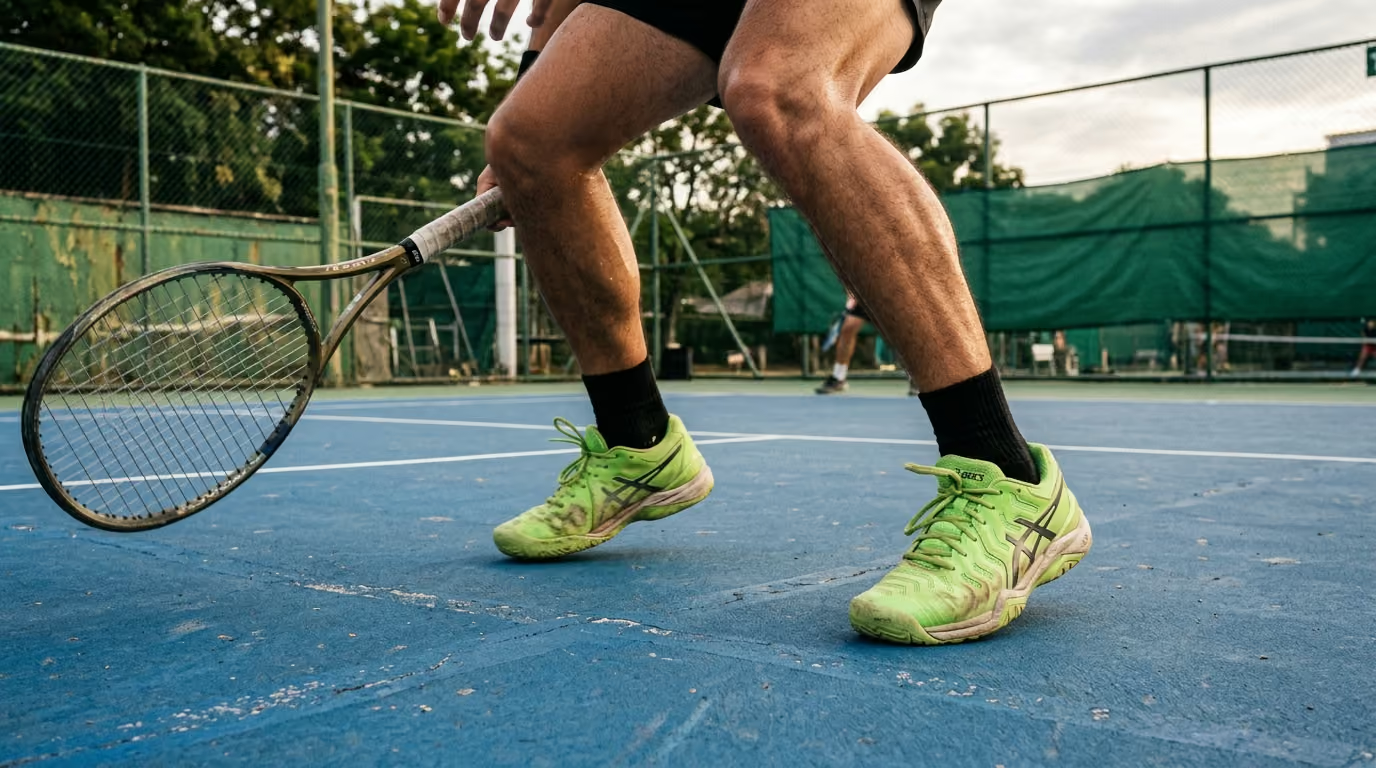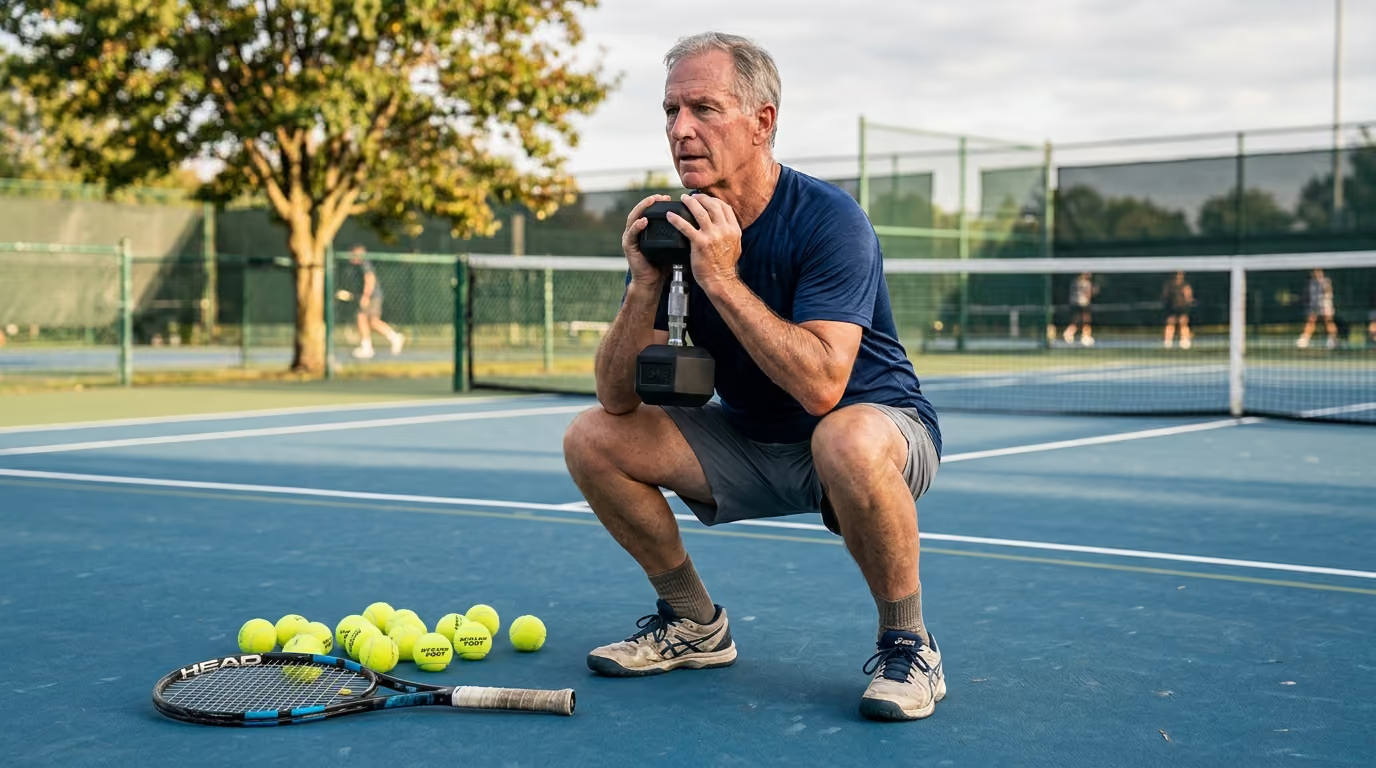

While many believe playing racquet sports alone guarantees strong bones, true long-term skeletal health for court athletes requires a comprehensive training approach.




When you sprint backward to track down a deep lob, your feet strike the hard court, sending rapid forces upward through your shins, knees, and hips. This sudden impact might feel like a routine part of play, but it triggers a complex biological response within your skeletal system. For adult court athletes, understanding this response is key to maintaining physical independence and staying active on the court for decades.
Racquet sports serve as highly effective weight-bearing activities that expose your skeleton to multi-directional forces, rapid accelerations, and balanced impact loads. However, playing matches alone does not constitute a complete skeletal support program. To build true, long-term bone resilience, court players must combine active play with progressive resistance training, structured balance drills, and targeted impact exercises.
Skeletal health is a foundational pillar of athletic longevity. By learning how bone tissue responds to the unique physical demands of tennis, pickleball, and padel, you can build a personalized training strategy that protects your frame both on and off the court.
To understand how court sports affect your skeleton, you must first understand that bone is dynamic, living tissue. Your bones are constantly undergoing a dual process of breakdown and reconstruction. This process is known as remodeling. Specialist cells called osteoclasts remove older or damaged bone tissue, while osteoblasts lay down new mineral matrices to reinforce the structure.
This remodeling system is highly sensitive to physical forces. When a muscle contracts, it pulls on the bone via its tendon attachment, creating a localized mechanical stress. Similarly, when your foot strikes the ground, the impact sends a stress wave through your lower body. Bone cells called osteocytes sense these physical pressures and signal the remodeling system to reinforce the targeted areas.
To measure the state of this tissue, medical professionals look at several distinct values. The most common metric is bone mineral density, which represents the mass of mineral tissue within a specific area of bone. Doctors typically measure this value using a dual-energy X-ray absorptiometry scan, commonly known as a DXA scan.
While density is a vital clinical predictor of skeletal strength, it does not tell the whole story. Total bone strength is also determined by bone geometry, the thickness of the outer cortical layer, and the internal architecture of the spongy trabecular bone. Another metric is bone mineral content, which measures the total weight of minerals in a specific skeletal region. This value is particularly helpful when tracking localized skeletal changes.
Throughout your life, the baseline capacity of your skeleton changes. Peak bone mass refers to the maximum volume of bone density and strength you achieve during your development, which typically occurs by your late twenties. This early period establishes a critical skeletal reserve. As you move into middle age and beyond, your body naturally begins to lose more bone tissue than it creates.
For older players, the goal of training shifts from building peak mass to preserving existing density, maintaining muscular force, and training balance. Progressive physical loading remains the primary non-pharmaceutical tool for signaling your body to retain this tissue. Without adequate physical stress, the remodeling process tilts toward bone loss, which can eventually lead to clinical vulnerability.
When bone mineral density falls below the average young-adult level but remains above the threshold for severe weakness, the condition is called osteopenia. If bone density drops even further, it is classified as osteoporosis. The World Health Organization defines osteoporosis as a femoral-neck bone mineral density T-score of -2.5 or lower. This condition increases the likelihood of a fragility fracture, which is a break resulting from a minor fall or low-impact force.
However, low bone density is not a simple guarantee of injury, nor is it a sign that you must stop playing court sports. By using tailored movement strategies, many players with low density continue to play safely. The key lies in understanding exactly how much load your tissues can handle and progressing your training with care.
A major body of sports science research has looked at how racquet sports influence bone tissue. Because these games require players to sprint, stop, jump, and change directions, they naturally deliver high levels of mechanical loading. These forces are highly dynamic, meaning they occur at varied angles and high speeds, which is the exact type of stimulus that bone cells prefer.
A clear demonstration of how bone adapts to localized physical force comes from studies on tennis players. Research shows that players often have significantly higher bone mineral content in their dominant hitting arm than in their non-dominant arm. A systematic review published in the journal archives of physical medicine and rehabilitation examined fifteen studies on this phenomenon. The researchers found a very strong difference in bone mineral content between the dominant and non-dominant upper limbs of tennis players.
This difference illustrates the site-specific nature of bone adaptation. The bone only strengthens in the exact areas where it experiences sufficient mechanical stress. This means that while your hitting arm may become exceptionally strong from thousands of impacts, your spine, hips, and opposite arm will not automatically receive the same benefit from court play alone.
To address this imbalance, you can learn more about full-body physical preparation by exploring strength and conditioning resources designed for racquet athletes. Balanced training ensures that your entire skeleton, rather than just your playing arm, receives the stimulus needed to remain resilient.
Furthermore, a separate review of tennis research in young adults confirmed that playing the sport is associated with higher site-specific bone density. However, this review also identified lean body mass as the single strongest predictor of bone density. This finding suggests that having robust, active muscle tissue is highly protective for your skeletal system. Muscles apply massive structural forces to bones during movement, which stimulates ongoing bone preservation.
While racquet play offers clear skeletal benefits, we must also examine the relationship between physical activity and fracture rates. A large-scale study on physical activity and fracture risk revealed complex, non-linear patterns. The study showed that while moderate activity was associated with a lower risk of hip fractures, highly active individuals sometimes experienced a slightly higher rate of forearm and wrist fractures.
This finding is highly relevant to court athletes. When you play a fast-moving game, you run the risk of tripping, slipping, or falling. If you fall and instinctively put your hand out to break your fall, the impact can fracture your wrist or arm, even if your lower-body bones are exceptionally dense. Therefore, a complete skeletal health plan must focus as much on fall prevention and balance training as it does on building bone density.
Skeletal weakness represents a major health issue for mature adults globally. For example, epidemiological data indicates that approximately 10 million Americans over the age of 50 have osteoporosis, while another 34 million are at risk of developing the condition. In Canada, public health data shows that over 2.2 million adults live with diagnosed osteoporosis, contributing to thousands of forearm, hip, and spinal fractures each year.
The widely cited estimate is that one in two women and one in four men over the age of 50 will sustain an osteoporosis-related fracture in their lifetime. These statistics highlight the importance of proactive training. For court players, the priority is to maintain athletic longevity, keep enjoying matches, and reduce the risk of structural injuries on and off the court.
To organize your training effectively, you can use a systematic approach called the Court Plus Four framework. This model divides your physical preparation into five clear, manageable pillars. By incorporating each of these elements, you ensure that your skeletal system receives a balanced, safe, and highly effective training stimulus.
Your actual time on the court provides the foundation of your weight-bearing movement. Every time you move to strike a ball, your skeletal system experiences multi-directional forces. Lunging for a low ball loads your hips, while executing a split step delivers a brief, moderate-impact force to your lower limbs.
To get the most out of this court time, focus on moving with deliberate intent. Practice clean footwork, use small recovery steps, and avoid lunging with a rounded, unsupported spine. This structured movement pattern helps distribute forces evenly across your joints and bones.
If you want to read more about maintaining a healthy lifestyle around your sport, you can browse through various court life articles for inspiration and practical tips.
Progressive resistance training is the most reliable way to apply controlled, heavy loads to your skeletal frame. While court play involves rapid, unpredictable forces, weight training allows you to target specific muscle groups and bones under highly controlled conditions. This training stimulates bone preservation and builds the muscular power needed to move safely on the court.
Your strength routine should focus on compound, multi-joint movements that load the major bones of the hips, spine, and upper body. You can perform these exercises using dumbbells, barbells, resistance bands, or your own body weight.
Consider incorporating this balanced resistance menu into your weekly routine:
To stimulate bone remodeling, your skeleton needs exposure to brief, high-rate forces. However, jumping immediately into intense plyometrics can overload unprepared tissues. An impact progression should start with very low-level forces and gradually increase in intensity over several weeks or months.
This progressive sequence allows your tissues to adapt safely:
Improving your balance is the most effective way to reduce your risk of falling and sustaining a fracture on the court. Balance is not a fixed trait; it is a physical skill that you can improve with consistent practice. Effective balance training must challenge your stability and force your brain to coordinate rapid muscle corrections.
Try this progressive balance sequence during your warm-ups:
The final pillar of the framework focuses on giving your bones and joints time to adapt to these physical stresses. Bone tissue takes longer to remodel and repair than muscle tissue. If you increase your training volume, frequency, or intensity too quickly, you risk developing stress reactions or overuse injuries.
Listen to your body and look out for localized, persistent bone pain that does not resolve with rest. Pair your active sessions with proper nutrition, adequate sleep, and targeted recovery strategies.
To deepen your understanding of how your body recovers from intensive physical training, check out our comprehensive recovery science resources.
To help you organize these training elements, let us look at a balanced weekly schedule for a healthy, active recreational player. This sample layout ensures that you get sufficient court time while still dedicating space to strength, impact, and balance training. It also includes dedicated recovery time to allow your tissues to adapt.
This schedule is highly adaptable. You can adjust the days, times, and specific exercises based on your personal commitments, physical capacity, and recovery rate. The key is to maintain a consistent routine that balances active court play with structured, supportive physical preparation.
To read more about managing your weekly physical volume and preventing overuse issues, explore our injury prevention resources for court athletes.
While tennis, pickleball, and padel share many basic physical requirements, each sport places distinct physical demands on your musculoskeletal system. Understanding these sport-specific nuances allows you to tailor your training and recovery to match the exact physical challenges of your preferred game.
Tennis is played on a large court, which requires players to perform longer sprints, deep lunges, and high-velocity groundstrokes. The sheer size of the court means that players must frequently sprint over longer distances, decelerate rapidly, and slide or brake on hard surfaces. These long, high-speed decelerations place massive eccentric loads on your hips, knees, and lower spine.
Additionally, the heavy yellow tennis ball and the larger racquet require substantial upper-body force to control. This can lead to significant physical asymmetry, as your dominant hitting arm absorbs the brunt of these high-velocity impacts.
If you are a dedicated tennis player looking to improve your performance and physical longevity, check out our specialized tennis articles for in-depth, sport-specific guidance.
Pickleball is played on a much smaller court, which dramatically changes the movement pattern. Rather than long, high-velocity sprints, pickleball features rapid, short-distance shuffles, quick split steps, and frequent lateral lunges near the non-volley zone line. These quick, repetitive directional changes require excellent ankle stability and rapid reaction times.
Because the paddle is light and the plastic ball is hollow, the upper-body impact forces are generally lower than in tennis. However, the constant low-crouching stance required to play near the kitchen line places continuous structural demands on your knees, hips, and lower back.
For more insights on how to stay healthy and move efficiently on the pickleball court, browse our dedicated pickleball articles.
Padel is an indoor or outdoor game played within an enclosed glass court, combining elements of tennis and squash. Padel players must deal with frequent wall rebounds, sudden turning movements, and an exceptionally high number of overhead smash shots. The constant turning to track balls off the glass walls requires excellent thoracic spine mobility and core rotational stability.
The solid, heavy padel racquet also transmits distinct vibrations to the arm and shoulder. The frequent overhead smashes place unique, high-velocity extension demands on your shoulder girdle, upper back, and thoracic spine.
If you are passionate about this fast-growing court sport, explore our curated selection of padel articles to learn more about movement mechanics and recovery.
Even highly motivated players can fall into training habits that compromise their long-term skeletal health. By recognizing these common pitfalls, you can refine your training routine, avoid unnecessary physical stress, and continue to play safely.
Many recreational players assume that playing two or three matches a week is all they need to keep their bones and muscles strong. While court play provides valuable weight-bearing movement, it is not a structured or balanced program. Court sports are highly unpredictable, and the forces they apply are often asymmetrical, as demonstrated by the dominant-arm bone density differences seen in tennis players.
Without progressive resistance training, your non-dominant side, core, and spine may not receive enough loading to maintain their strength. Furthermore, playing matches when your muscles are weak can place excessive stress on your joints and bones, which can increase your risk of overuse injuries over time.
Another common mistake is assuming that to strengthen your bones, you must perform aggressive, high-impact jump training. While impact forces do stimulate bone remodeling, excessive or poorly managed impact can lead to joint pain, stress reactions, and tendon issues. This is especially true for players returning to the sport after a long break, or those with existing joint degeneration.
Your bones respond best to a progressive, moderate physical stimulus that is matched to your current capacity. Starting with low-impact options, such as heel drops and controlled step-ups, allows your tissues to adapt safely before you progress to more demanding jumps.
Skeletal adaptation operates on a much slower timeline than muscular adaptation. While your muscles can recover and adapt to a strenuous workout within a few days, bone tissue requires several weeks or even months to structurally remodel and reinforce itself. This slow timeline means that you must manage your weekly training volume and recovery periods with care.
When you expose your bones to mechanical stress, the remodeling process begins with a brief phase of bone resorption, where old bone is cleared away. This is followed by a longer phase of bone formation, where new mineral tissue is deposited. During the initial resorption phase, the bone is temporarily slightly weaker. If you do not allow sufficient recovery time between intensive sessions, this breakdown phase can outpace the rebuilding phase, potentially leading to stress reactions or stress fractures.
Fatigue also plays a major role in your overall fall risk. When you are physically tired, your reaction times slow down, your coordination declines, and your balance becomes less stable. A tired player is much more likely to trip over their own feet, misjudge a ball, or land awkwardly during a rapid deceleration.
To protect your skeleton, you must prioritize sleep, proper nutrition, and active recovery. Ensure you are consuming adequate calcium and vitamin D to support bone mineralization, and avoid playing through persistent, localized bone discomfort.
If you are interested in learning more about how to support your body's natural healing and adaptation processes, you can read our specialized player health articles for expert advice.
While physical exercise is highly beneficial for your skeleton, certain physical signs indicate that you should pause training and seek professional medical guidance. Working with a qualified healthcare provider ensures that your training program remains safe and effective for your specific physical profile.
You should consult a physician, physiotherapist, or clinical exercise specialist if you experience any of the following:
A professional assessment can help you identify your specific skeletal strengths and vulnerabilities, allowing you to modify your court play and training with confidence.
To help you apply these principles to your own life, let us examine five distinct case patterns. These practical scenarios illustrate how different players can adapt their training, court play, and recovery to support their long-term skeletal health.
Consider a 52-year-old tennis player who plays doubles twice a week, does no regular strength training, and has no history of bone issues or fractures. This player has good baseline fitness but is at risk of age-related muscle and bone loss due to a lack of progressive loading. Their physical asymmetry is also likely increasing due to the repetitive, one-sided nature of tennis play.
For this individual, the primary focus should be on adding two full-body resistance training sessions per week. They should prioritize bilateral exercises, such as squats, deadlifts, and chest presses, to ensure that both sides of their body are loaded evenly. They can also integrate five minutes of standing balance work into their pre-match warm-up.
Now consider a 68-year-old pickleball player who is highly active but recently sustained a wrist fracture from a minor fall on the court. This player has recovered from the initial injury but now feels anxious about falling again. Their primary objective is to improve their balance, coordination, and fall-recovery mechanics to reduce their future fracture risk.
This player's routine should place a strong emphasis on dynamic balance and stepping drills. They should practice rapid lateral steps, turning exercises, and catching drills to improve their coordination on the court. Additionally, they should work on safe landing strategies and lower-body strength to ensure they can brake safely during rapid movements.
Let us look at a 70-year-old padel enthusiast who was recently diagnosed with osteoporosis following a routine DXA scan. They have no history of fractures, have good general mobility, and want to continue playing padel safely. Their goal is to maintain their bone density and protect their spine while continuing to enjoy their sport.
This player should work closely with their doctor or physical therapist to design a safe, moderate-load program. They can continue playing padel but should focus on moving with an upright, supportive spine, avoiding extreme twisting movements under heavy load. Their training should include supervised, moderate-resistance training and progressive, low-level impact work like heel drops and light marching.
If you want to discover more about exercise adaptations for mature athletes, explore our athletic longevity resources.
Consider a 74-year-old former squash player who has a history of spinal compression fractures and experiences occasional lower back discomfort. They want to return to court play but must protect their spine from excessive physical stress. For this individual, traditional high-impact play and explosive twisting movements are highly risky.
This player's primary focus must be on spinal stability, posture, and back-extensor strength. They should perform gentle, controlled exercises like bird-dogs, bridges, and wall sits to build a supportive muscular corset around their spine. Instead of fast-paced competitive singles play, they should focus on light, cooperative doubles rallying, ensuring they maintain an upright, neutral spine at all times.
Finally, consider a 60-year-old former competitive tennis player who is returning to the court after a ten-year period of physical inactivity. While this player may still have the mental skills and coordination of an experienced athlete, their bones, muscles, and tendons have adapted to a sedentary lifestyle. If they immediately jump into intense competitive play, they run a high risk of sustaining an overuse injury or stress reaction.
This returning player should undergo a six- to twelve-week conditioning phase before playing competitive matches. They should focus on rebuilding their baseline lower-body strength, practicing controlled landings, and slowly reintroducing low-level impact forces. This gradual approach allows their skeletal system to adapt safely to the physical demands of the court.
You can refer back to this guide whenever you are planning to modify your training volume, recovering from a minor physical setback, or looking to adjust your weekly exercise routine. As your fitness improves and your physical needs change, you can use these principles to ensure your skeletal system remains strong and resilient.
Skeletal health is a long-term investment in your athletic longevity. By combining active court play with progressive loading, structured balance work, and proper recovery, you can protect your frame and enjoy your favorite racquet sports for years to come.
To learn more about our editorial standards, our research-led approach, and our commitment to helping court athletes move well and perform better, please visit our about page or use our contact page to get in touch.
Follow Evercourts for practical insights on tennis, pickleball and padel performance, movement, recovery and healthy ageing. Stay connected for new articles, research-led guidance and ideas to help you play well and keep playing for years.


Read practical guidance for better movement, smarter preparation and a game that keeps working for you.
explore the Blog