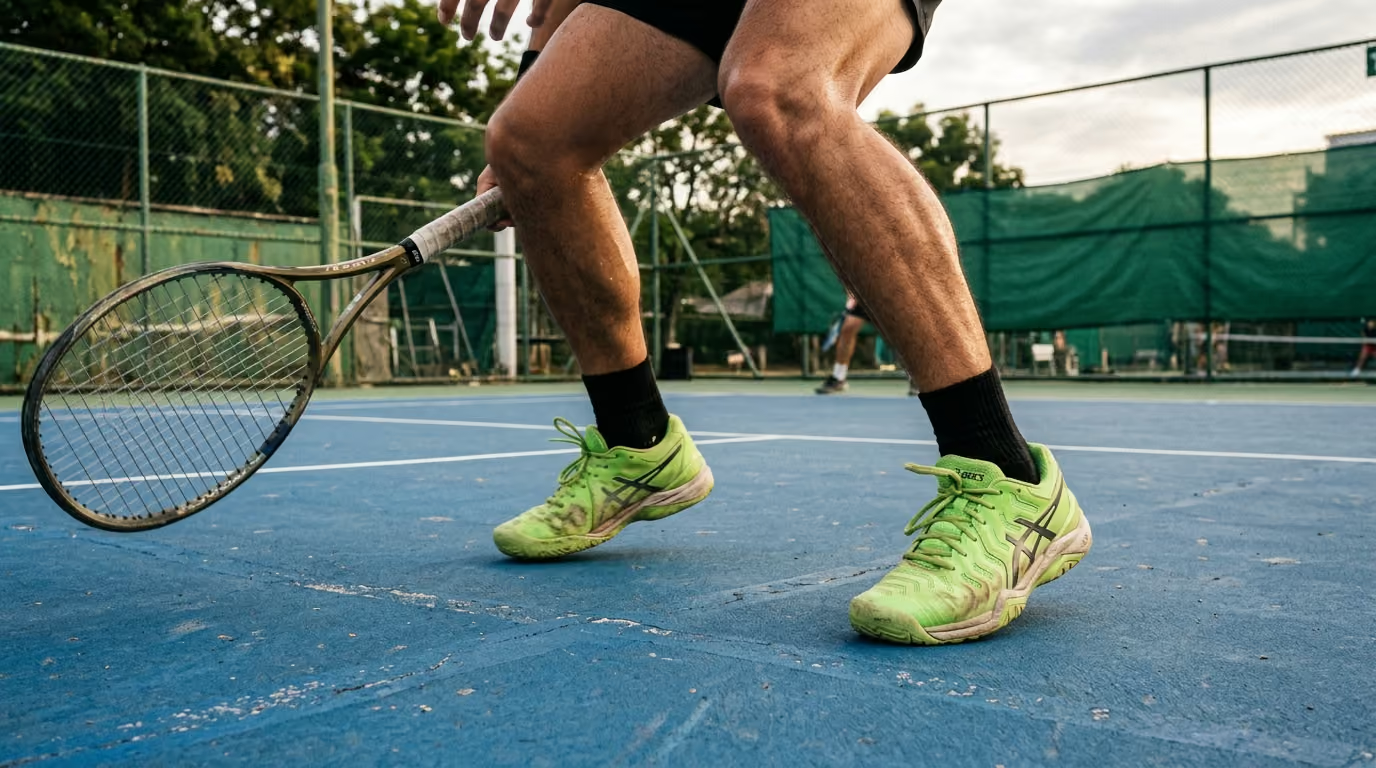
Forty-eight to fifty-six percent of reported tennis injuries involve the lower limbs due to sudden training load spikes and unconditioned joint structures.




Many court athletes believe that complete rest is the best cure for a stubborn injury, but prolonged inactivity often weakens your tissues and invites the injury back. To break a cycle of recurring pain, you must systematically build your body's physical capacity while carefully managing your playing volume. This comprehensive resource explains how to balance your training loads, adjust your equipment, and refine your movement patterns so you can stay on the court for years to come.
Scientific studies reveal that recurring court injuries are rarely simple accidents. Instead, they represent a chronic mismatch between the structural strength of your body and the physical demands of play. When a player resumes full-intensity match play immediately after a period of rest, the sudden increase in forces often overwhelms vulnerable tendons and muscles. This rapid change is known as a load spike, and it is a primary trigger for reinjury across all racket and paddle sports.
A comprehensive systematic review analyzed data from eight clinical studies involving over two thousand padel players. The researchers identified an injury rate of approximately three injuries for every one thousand hours of training. This rate rose significantly during competitive play, reaching eight injuries per one thousand match hours. The review also revealed that overall injury prevalence in the padel community ranges from forty percent to ninety-five percent. This wide variation highlights how common physical setbacks are for players of all levels.
The elbow is the most frequently affected region in padel, closely followed by the knee, shoulder, and lower back. Tendon and muscle tissues are the most common structures damaged during regular play. A separate scoping review confirmed these findings, noting that repetitive overhead actions often strain the joint complexes of the upper body. In another study focusing specifically on recreational padel, researchers found that lower-leg and Achilles tendon injuries made up over seventeen percent of all cases. Elbow issues accounted for nearly fourteen percent, while tendinopathies in general represented over thirty-three percent of all reported conditions.
This recreational study also identified clear associations between weekly playing time and injury risk. Players who spent between three and a half to five hours on the court each week faced a higher probability of physical issues. Certain racket weights and shapes also demonstrated links to increased discomfort. However, we must view these findings as general associations rather than rigid equipment rules. Every player has a unique physical makeup that determines how their joints handle specific weights.
Tennis epidemiology shows a similarly complex pattern of physical demands and injury risks. A recent systematic review of tennis literature reported adult injury rates ranging from one point two five to fifty-six point six injuries per one thousand hours of play. This massive range reflects how much injury definitions and player levels vary between studies. It also highlights the vast difference in physical stress between casual weekend doubles and high-intensity singles tournaments.
The tennis review revealed that lower-limb injuries represent forty-eight to fifty-six percent of all reported issues. Lumbar spine problems and chronic shoulder overuse syndromes make up the majority of the remaining cases. These patterns suggest that tennis places an immense physical demand on the lower body during quick directional changes. The lumbar spine also bears a heavy burden as it rotates to transfer power from the legs to the upper body.
To help manage these physical demands, researchers often use the acute-to-chronic workload ratio as a monitoring tool. This ratio compares your current weekly playing volume to your average playing volume over the past four weeks. The tennis systematic review identified abrupt workload increases as a major predictor of physical breakdown. It highlighted workload ratio thresholds of approximately one point three for junior players and one point five for adults. However, these ratios should serve as helpful guidelines rather than precise biological switches.
A ratio above one point five does not guarantee an injury will happen tomorrow. Similarly, staying below this threshold does not make you immune to physical issues. The ratio is simply a tool to help you identify sudden shifts in physical demand. If your playing hours spike dramatically, your tissues may not have time to adapt.
Pickleball is often perceived as a gentle sport, but emergency department data reveals a different reality. This is particularly true for older adults who represent a large portion of the playing population. One major study found that the vast majority of pickleball injuries seen in emergency departments occurred in players aged sixty to seventy-nine. This age group showed a significantly increased risk of wrist fractures, hand injuries, and severe sprains.
Falls were the leading cause of emergency visits among these older players. A ten-year analysis of national injury data confirmed that sudden falls on the court represent the single greatest safety hazard in pickleball. In a separate study of older participants, thirty-two percent of players reported experiencing an injury during the previous year. Lower-extremity injuries accounted for nearly fifty-eight percent of these issues, while muscle and tendon strains made up over sixty-one percent.
This research also showed that tournament players faced a five point eight percent incidence rate of new injuries. Players with higher weekly court time were far more likely to experience physical setbacks. These numbers prove that pickleball challenges the body in intense and unpredictable ways. The small court size forces players to make rapid stops, deep lunges, and sudden reaching movements that can easily compromise balance.
Fortunately, sports science has identified highly effective ways to protect your body from these recurring issues. Neuromuscular training has shown remarkable preventive effects across many athletic populations. A systematic review found that multi-intervention training programs reduced overall lower-limb injury risk by thirty-nine percent. These structured programs were especially effective at reducing acute knee injuries and painful ankle sprains.
Another meta-analysis reported a thirty-six percent reduction in lower-extremity injuries among athletes using neuromuscular preparation programs. These statistics show that specific physical preparation is far more effective than passive rest. Indeed, a systematic review of exercise-based prevention programs found that strength training reduced sports injuries to less than one-third of their original rates. By contrast, stretching programs alone showed no consistent preventive benefits.
These scientific findings suggest that building physical strength and coordination is the most reliable way to ensure athletic longevity. You can read more about these protective exercise strategies in our guide to injury prevention resources.
To stop a cycle of chronic injury, you must understand the difference between symptom control and risk reduction. Many players mistake the absence of pain for the return of physical capability. When you rest for a week, your local inflammation may subside and your pain may vanish. However, that period of inactivity does nothing to restore the strength, endurance, or coordination your tissues lost during your time away.
If you return to full-intensity play without rebuilding your capacity, you are entering the court with weaker tissues than before. The same physical loads that caused your initial injury will now act on a less prepared body. This is the classic load-capacity mismatch. Your physical capacity is the maximum amount of work your joints, muscles, and tendons can tolerate. Your training load is the total volume and intensity of physical work you perform during matches and practice.
To break this cycle, you must implement a structured diagnostic model. First, identify the exact pattern of your physical setbacks. Do they occur during the same stroke, after a specific duration of play, or on a particular court surface? Next, quantify your exposure by tracking your playing hours, serving volumes, and high-intensity match sessions. This baseline data will help you spot the sudden workload spikes that trigger your symptoms.
Once you understand your exposure, you must assess your movement capacity. Look for weakness, limited mobility, or poor balance that might force your body to compensate. After identifying these issues, modify the contributors by adjusting your schedule, technique, or equipment. Then, rebuild your physical capacity through progressive resistance training before testing your body under realistic match conditions.
Workload errors are the most common trigger for physical setbacks on the court. Many players focus solely on their total weekly hours, but this number does not tell the whole story. You must also consider the suddenness of your workload changes. A player who averages two hours of weekly doubles and suddenly plays a four-hour singles tournament is highly vulnerable to a load spike.
To help you visualize these patterns, we recommend keeping a simple training diary. Your diary should track your match hours, practice time, stroke volume, and physical response. It does not need to be complicated, but it must be consistent. Below is a practical example of how to track these variables over a typical weekly cycle:
This simple tracking format helps you see exactly when your body begins to protest. In this example, the elbow discomfort clearly correlates with consecutive high-volume hitting sessions. By identifying this relationship, you can adjust your schedule before a minor strain becomes a debilitating injury.
Incomplete rehabilitation is another major driver of recurring physical setbacks. When pain fades, many players assume they are ready for match play. However, a tendon must be challenged with heavy, slow loads before it can handle the explosive forces of a competitive stroke. If you jump directly from complete rest to match play, you are skipping the vital middle stages of tissue adaptation.
Your rehabilitation should follow a logical path that prepares your body for the chaos of the court. Start with isolated strength work to build local tissue tolerance. Next, introduce slow, controlled multi-joint movements that mimic sport-specific positions. As your strength improves, add faster contractions, repeated effort drills, and unpredictable movement patterns. Finally, test your body under realistic match-like fatigue before returning to unrestricted tournament play.
Your choice of gear can significantly alter the mechanical loads applied to your body. However, equipment modifications should always be tailored to your individual physical needs. An abrupt change in racket weight, string tension, or shoe style can introduce unfamiliar forces that stress your joints in unexpected ways.
In tennis, racket mass and string setup play a massive role in elbow and shoulder health. Heavy rackets provide more stability and absorb more ball shock, but they require greater muscular strength to swing. If your racket is too light, your forearm muscles must work harder to stabilize the frame against the ball. String type and tension are also critical factors. Stiff polyester strings at high tensions transfer intense vibrations directly into your elbow joint, so players with recurring forearm pain should consider softer multifilament strings strung at a lower tension.
Pickleball equipment considerations often center on paddle design and footwear. Extremely stiff carbon fiber paddles can transfer high-frequency vibrations to your wrist and elbow, especially during off-center hits. Using a paddle with a slightly softer core and a larger sweet spot can help mitigate these vibrations. Additionally, many pickleball players make the mistake of wearing running shoes on the court. Running shoes are designed for forward motion and lack the lateral stability required for rapid side-to-side shuffling, which increases your risk of ankle rolling and falls. Proper court shoes provide a wide, stable base and reinforced sidewalls to support these quick lateral movements.
Padel players must also select their gear with care to avoid physical setbacks. Research has shown clear associations between padel racket characteristics and the risk of physical discomfort. Rackets with a high balance point, where the weight is concentrated in the head, can create a powerful lever arm that strains your shoulder and wrist during overhead shots. If you have a history of upper-body issues, a lighter, round-shaped racket with a lower balance point may be a safer option. Always test new equipment during brief, low-intensity hitting sessions to give your body time to adapt to the new physical demands.
Returning to competitive play is a structured process rather than a single calendar date. The clinical consensus on return-to-sport decision-making emphasizes a multidimensional approach. You should base your progression on physical readiness, performance markers, and psychological confidence rather than a pre-determined timeline.
To help you navigate this process safely, we have outlined a nine-phase return-to-play framework. You should only advance to the next phase when you can complete your current activities without any increase in pain during or after the session.
The first three phases focus on establishing baseline comfort and basic physical preparation. Phase 1 requires you to perform all ordinary daily tasks, such as carrying groceries or climbing stairs, without any physical discomfort. Once you achieve this baseline, you can transition to Phase 2, which involves general strength and mobility exercises. During this phase, you should focus on restoring full range of motion and building general muscular endurance in a controlled environment.
Phase 3 introduces controlled sport-specific movements without a ball or racket. For court athletes, this means practicing the split-step, light lateral shuffling, and gentle shadow swings in your backyard. These movements help your nervous system re-learn the basic coordination patterns required for your sport. They also allow you to assess how your joints respond to light dynamic loading before you face the unpredictable demands of a flying ball.
Once you can complete shadow swings comfortably, you are ready for Phase 4, which involves low-intensity hitting. Step onto the court with a partner and hit soft, cooperative groundstrokes directly to each other. Keep your feet relatively stationary and focus on clean, relaxed contact with the ball. Limit this first session to fifteen or twenty minutes, and monitor how your body feels over the next twenty-four hours.
Phase 5 expands your court movement by introducing moderate lateral retrieval. Your partner should feed balls a few steps to your left and right, forcing you to move, plant your feet, hit, and recover. This phase challenges your hip abductors, core stabilizers, and ankle joints in a controlled, predictable manner. If your body tolerates this movement, you can progress to Phase 6, which involves higher-speed and higher-volume drills. During this phase, you will perform deep lunges, overhead reaches, and rapid changes of direction under the guidance of a coach or drilling partner.
Phase 7 marks your entry into simulated match play. You will play friendly practice sets where the score is kept, but the competitive pressure remains low. This environment introduces the element of unpredictability, as you cannot always anticipate where your opponent will hit the ball. However, you should still feel free to let difficult balls go if you feel your movement mechanics starting to slip.
Phase 8 is a return to formal competitive play, but with strict volume limits. You might play one competitive match per week and replace your other playing sessions with structured strength training. This approach ensures you do not overwhelm your tissues with a sudden spike in high-intensity match hours. Finally, Phase 9 represents a full return to your normal weekly schedule, where you can play multiple matches, attend lessons, and participate in tournaments without any lingering physical limitations.
You can learn more about tailoring these movement patterns for long-term health in our guide to targeted movement patterns.
While all racquet sports share some mechanical similarities, they place highly distinct physical demands on your body. Understanding these sport-specific differences is essential for designing an effective prevention strategy. A training plan that protects a tennis player may leave a pickleball or padel player highly vulnerable to recurring physical issues.
Tennis is characterized by high-velocity impacts, a long kinetic chain, and expansive court coverage. The tennis stroke relies heavily on rotational energy transferred from the ground up through the legs, hips, torso, shoulder, and finally the arm. If any link in this kinetic chain is weak or restricted, the adjacent joints must work harder to generate ball speed. For example, restricted hip internal rotation often forces the lower back to twist excessively, leading to chronic lumbar strain.
The tennis serve is another highly demanding movement that places extreme stress on the shoulder and elbow. During the serving motion, your shoulder must undergo rapid external rotation followed by explosive internal rotation. This action puts a tremendous burden on your rotator cuff muscles, which must contract eccentrically to decelerate your arm after contact. Additionally, tennis players must navigate various court surfaces, from high-friction hard courts that require abrupt deceleration to slippery clay courts that require controlled sliding mechanics.
Pickleball features a smaller court, a lighter ball, and rapid, short-range exchanges. Because the court is compact, players spend a significant amount of time in a low, loaded athletic stance near the non-volley zone, commonly known as the kitchen line. This constant crouching places a heavy, sustained demand on your quadriceps, patellar tendons, and lower back muscles. Additionally, the fast-paced nature of kitchen-line rallies requires exceptional wrist stability and rapid forearm contractions to redirect the hard plastic ball.
The primary safety concern in pickleball, especially for mature players, is the risk of falls during backward movement. When opponents hit deep lobs, many players make the dangerous mistake of backpedaling straight backward. This movement pattern can easily cause you to lose your balance, trip, and fall backward onto an outstretched hand, resulting in severe wrist or hip fractures. To prevent these accidents, pickleball players must learn to turn their hips and run backward diagonally rather than backpedaling blindly. Building single-leg balance and lower-body strength is critical for maintaining stability during these sudden, awkward movements.
For more helpful advice on optimizing your movement and equipment for this popular sport, you can browse our collection of pickleball articles.
Padel is played in an enclosed glass cage, which creates a highly dynamic game filled with rebounds, sudden turns, and frequent overhead play. Because the walls keep the ball in play longer, padel rallies are typically much longer than those in tennis or pickleball. This extended play increases the cardiovascular demand and leads to cumulative muscular fatigue as the match progresses.
The most unique physical demand of padel is the sheer volume of overhead strokes, such as the bandeja and the smash. The sport’s tactical structure forces opponents to hit frequent lobs, requiring you to constantly elevate your arm above ninety degrees. This repetitive shoulder abduction and external rotation can easily cause subacromial compression and tendon discomfort if your rotator cuff muscles lack adequate endurance. Furthermore, the hard concrete court surface and the need to quickly turn and chase balls off the back glass place intense pressure on your Achilles tendons and knees.
If you want to read more about protecting your joints while mastering this fast-paced game, you can check out our dedicated padel players guide.
To successfully break your injury cycle, you must identify and eliminate several common training and rehabilitation misconceptions. These mistakes often stem from outdated advice or a natural desire to return to the court as quickly as possible. Recognizing these pitfalls will save you months of frustration and help you build a more resilient body.
The most common mistake court athletes make is assuming that the absence of pain means their injury is completely healed. Pain is simply a warning signal from your nervous system; it is not a direct measure of tissue strength or structural integrity. When you rest, your local inflammation subsides, which often causes your pain to disappear within a few days. However, the underlying tissue remains weak, unconditioned, and unprepared for the explosive forces of competitive play.
Returning to full-intensity matches based solely on the absence of pain is a guaranteed recipe for reinjury. Instead, you should use functional milestones to guide your return. Can you perform a single-leg calf raise thirty times without discomfort? Can you swing your racket at full speed without any hesitation? These objective measures of strength and confidence are far more reliable indicators of readiness than the simple absence of pain.
While acute injuries may require a brief period of relative rest, prolonged inactivity is highly detrimental to your long-term recovery. Complete rest causes your muscles to atrophy, your tendons to lose their stiffness, and your cardiovascular fitness to decline. When you finally return to the court, your overall physical capacity will be significantly lower than it was before your injury, making you even more vulnerable to future setbacks.
The modern sports science consensus advocates for active recovery and progressive loading rather than passive rest. Instead of doing nothing, you should find movements and exercises that you can perform without aggravating your symptoms. If you have an elbow injury, you can still perform lower-body strength work and cardiovascular conditioning. This approach maintains your overall physical preparation and ensures that your entire body is ready to support your injured joint when you return to play.
You can read more about how active recovery can support your joint health in our guide to athletic longevity strategies.
Many recreational players believe that a quick stretching routine before a match is the best way to prevent injuries. However, extensive systematic reviews have shown that static stretching does not consistently reduce overall injury rates or prevent recurring muscle strains. While stretching can be useful for addressing specific, localized mobility restrictions, it does nothing to build the muscular strength or dynamic stability required to tolerate high-speed court movements.
To protect your joints under match conditions, you must replace passive stretching with active, resistance-based training. Strength training builds the physical capacity of your muscles and tendons, allowing them to absorb and transfer forces more efficiently. It also improves your coordination, balance, and deceleration mechanics, which are critical for preventing acute knee sprains and ankle rolls. A comprehensive prevention program should focus on building a strong, resilient body rather than simply chasing temporary flexibility.
To discover how to design an effective strength program for court athletes, you can explore our resources on strength and conditioning tips.
Your physical preparation on the court is only as good as your recovery off the court. When you play a demanding match, you introduce micro-damage to your muscles, tendons, and joints. This damage is a normal part of the athletic process, and it actually serves as the stimulus for your tissues to adapt and grow stronger. However, this positive adaptation can only occur if you allow your body sufficient time to repair itself between sessions.
If you play again before your tissues have fully recovered, you are loading a compromised system. Over time, this cumulative fatigue leads to a steady decline in your movement quality and physical capacity, eventually triggering a recurring injury. Managing your recovery is especially critical as you age, as older tissues naturally take longer to repair and have a lower tolerance for sudden load spikes.
Different tissues in your body recover at vastly different rates. Muscles have an abundant blood supply and typically repair themselves within twenty-four to forty-eight hours after intense exercise. Tendons and ligaments, however, have a much scarcer blood supply and require significantly longer to adapt and heal. When you load a tendon during play, the rate of collagen synthesis increases, but so does the rate of collagen degradation.
In the first twenty-four hours after exercise, the net balance of collagen synthesis is actually negative, meaning your tendons are temporarily more vulnerable to strain. If you play high-volume matches on consecutive days, you are loading your tendons while they are in a compromised state. This is why many tendinopathies develop when players suddenly increase their consecutive playing days without scheduling dedicated rest. To support healthy tendon adaptation, you must structure your training week to include at least forty-eight hours between high-intensity hitting or serving sessions.
In our experience, a small investment in pre-match movement preparation can make a profound difference in how your body responds to the physical demands of play. I remember finishing a tough two hour padel match on a cold Tuesday night and waking up the next morning feeling like my lower back was locked in concrete. For a long time, I just accepted this as the price of playing hard in my forties. But once I started spending just ten minutes on targeted hip mobility before heading to the club, the stiffness almost completely vanished. It taught me that we do not have to accept pain as a default state of aging.
This personal experience highlights how local joint restrictions can force other areas of your body to compensate. When your hips are tight, your lower back must twist and flex excessively to help you reach low balls or turn to chase rebounds. By restoring mobility to your hips and thoracic spine, you distribute the forces of play across your entire kinetic chain, reducing local stress and accelerating your recovery.
For deeper insights into the physiological mechanisms of athletic recovery, you can refer to our guide on recovery science methodologies.
While sensible load management and progressive exercise can resolve many recurring court injuries, some physical symptoms require professional medical evaluation. Ignoring serious warning signs can lead to permanent structural damage and long-term athletic limitations. You should consult a qualified physical therapist, sports physician, or orthopedist if you experience any of the following red flag symptoms.
First, any acute injury accompanied by significant trauma, an audible pop, or immediate deformity requires immediate medical attention. If you cannot bear weight on your injured leg, or if your joint rapidly becomes severely swollen, you should seek an urgent professional assessment. These signs often point to acute ligament tears, tendon ruptures, or bone fractures that cannot be managed with simple rest and exercise.
You should also seek professional guidance if you experience symptoms that suggest nerve involvement or structural instability. Progressive loss of muscle strength, muscle wasting, persistent numbness, or shooting pain that travels down your arm or leg are clear signs of nerve compression. Similarly, if your knee, ankle, or shoulder repeatedly locks, catches, or feels like it is giving way during movement, you may have a structural joint issue that needs expert evaluation.
Finally, severe pain that wakes you up at night, unexplained weight loss, or joint pain accompanied by a fever or systemic illness are important red flags that require prompt medical investigation. Older adults, individuals with a history of osteoporosis, and players taking medications that affect bone density or blood clotting should have a very low threshold for seeking professional care. If your symptoms continue to worsen despite several weeks of sensible load modification and dedicated rest, it is time to partner with a healthcare professional to design a targeted recovery plan.
Before you step back onto the court for unrestricted competitive matches, you should ensure that your body meets a clear set of physical and psychological criteria. This checklist is designed to help you objectively assess your readiness and prevent premature returns that could restart your injury cycle. If you cannot check off every item on this list, you should continue to focus on your progressive rehabilitation and load management.
By focusing on structural preparation, intelligent loading, and sport-specific mechanics, you can break the frustrating cycle of recurring injury and enjoy your favorite court sports for decades to come.
Follow Evercourts for practical insights on tennis, pickleball and padel performance, movement, recovery and healthy ageing. Stay connected for new articles, research-led guidance and ideas to help you play well and keep playing for years.


Read practical guidance for better movement, smarter preparation and a game that keeps working for you.
explore the Blog