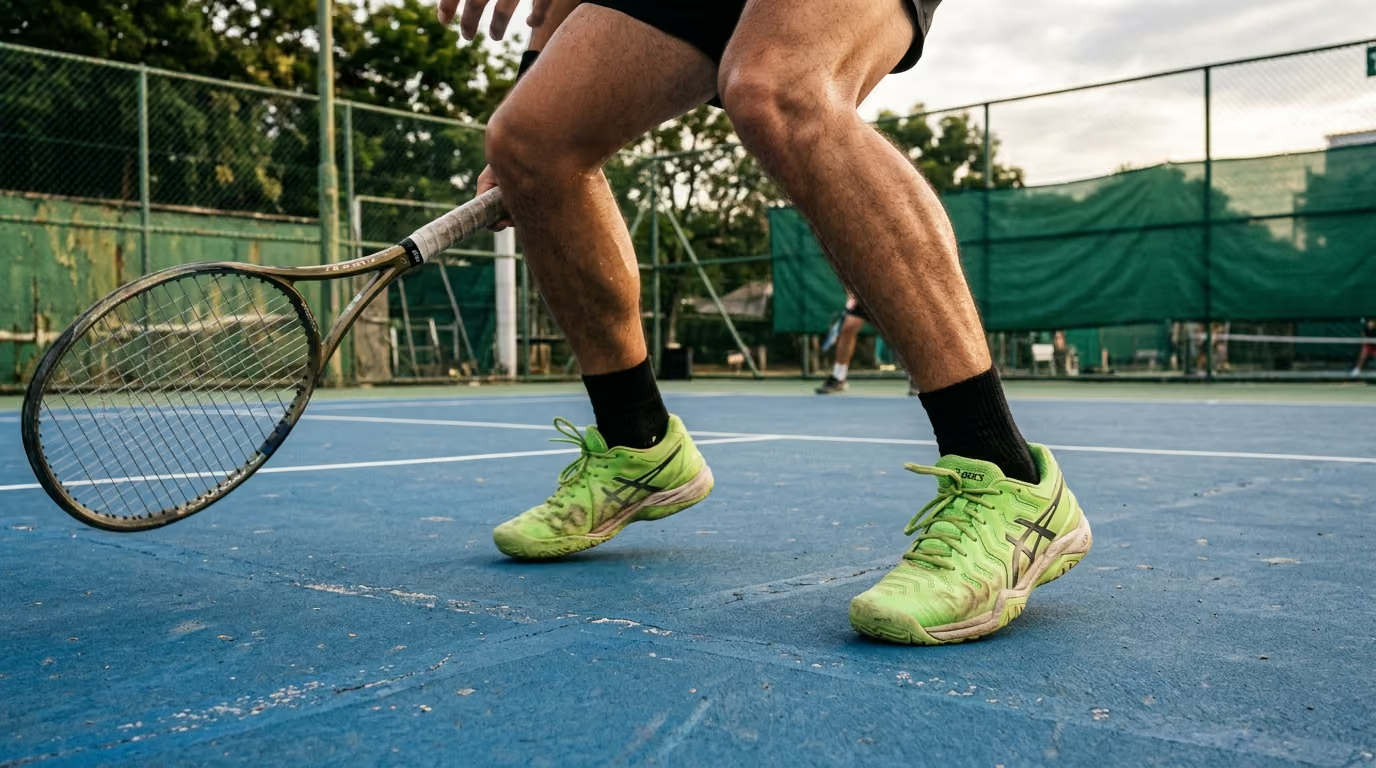
Players can safely adapt to different court surfaces and conditions in racquet sports by progressively increasing movement loads, which helps prevent injuries.




Imagine stepping onto a crisp outdoor court after playing all winter on predictable indoor acrylic. Your first steps feel different, the ball bounces lower, and your shoes grip the ground with an unfamiliar bite. Within forty-eight hours, an annoying stiffness creeps into your Achilles tendon and your lower back feels unusually tight.
Transitioning between different court surfaces and playing environments safely requires a structured, progressive increase in movement load over several weeks. By managing these surface transitions deliberately, players can help their tendons and muscles adapt to changing friction levels and impact forces. This proactive approach significantly reduces the likelihood of developing sudden joint sprains or cumulative overuse wear.
Different court surfaces are not just visual backdrops. They act as direct load modifiers that alter how forces travel up your body during play. Research on tennis biomechanics shows that the friction and hardness of a court dictate your movement mechanics, muscle recruitment, and plantar loading.
For example, a study published in the British Journal of Sports Medicine analyzed plantar pressure on different surfaces. The researchers found that hard courts produce higher maximum forces and greater heel pressure during common lateral movements. In contrast, clay courts distribute pressure differently, showing higher loading in the toe regions as players slide into shots.
This difference in pressure distribution means your feet, ankles, and calves must work in entirely new ways when you switch courts. Hard courts offer minimal shock absorption, which demands more deceleration work from your quadriceps and patellar tendons. Clay courts allow players to slide, which reduces sudden braking forces but requires greater lateral stability and eccentric hip control.
Even artificial turf and natural grass present unique friction characteristics. A systematic review in the International Tennis Federation Coaching and Sport Science Review found that while no single surface is universally safer, sudden switches between surfaces increase the risk of injury. The problem is not the court itself, but how rapidly you force your tissues to adapt to a new traction profile.
When you play on a high-friction surface, your foot stops instantly when you plant it. This instant stop requires your muscles to absorb the momentum of your entire body in a fraction of a second. On a lower-friction surface like clay, that deceleration occurs over a longer distance and time. This subtle difference changes the mechanical demand on your joints, tendons, and connective tissues.
To protect your joints during a transition, you must understand how your body handles physical stress. An acute injury has a sudden, obvious start, such as an ankle sprain from catching a dry patch on a court. Overuse injuries develop slowly over time when repeated stress exceeds the ability of your tissues to repair themselves.
According to epidemiological research, lower-limb injuries account for thirty-one to sixty-seven percent of all tennis complaints, while upper-limb issues represent twenty to forty-nine percent. The kinetic chain connects these regions, meaning that a change in foot traction immediately alters how force travels through your knee, hip, spine, and shoulder. If your shoes grip too firmly on a hard court, the sudden stop sends a shockwave up your leg, forcing your hip and trunk to work harder to stabilize your torso.
This chain reaction explains why a surface change can lead to shoulder or elbow issues. If your movement is sluggish on a slow clay court, you may hit the ball late. This timing delay forces your wrist and forearm muscles to compensate, which often triggers lateral elbow tendinopathy. This tendon issue is particularly common among recreational players who lack the physical preparation of professionals.
To avoid overloading your tissues, you must monitor your total workload. Workload is not just the number of minutes you spend on the court. It includes your sprint intensity, the number of serves you hit, and your physical fatigue. Progressive training ensures that your body stays within a manageable workload envelope as you adapt to new playing conditions. You can check out more guidance on this by visiting the Evercourts Blog.
Our bodies are highly adaptable, but this adaptation takes time. When you introduce a new court surface, your brain and muscles must learn how to coordinate new braking patterns. If you increase your playing volume before this coordination is established, your movement quality will suffer. This decline in movement quality is often the root cause of early-season joint pain.
To manage a court transition safely, you can use a systematic framework on the court. This approach prevents you from exposing your muscles to too many new physical stressors at the same time.
Before you hit your first ball, take a moment to evaluate the new setting. Consider the surface hardness, the expected traction level, and the outdoor climate conditions. Note if you are using different shoes or if the court has patchy, inconsistent spots. This simple mental check prepares you to adjust your movement intensity.
If you are playing outdoors, look for dusty areas or damp spots on the court. These small variations can create sudden changes in traction that increase your risk of slipping. Knowing these trouble spots beforehand allows you to adjust your movement patterns around them. This awareness is your first line of defense against acute joint sprains.
Look back at your playing history over the past three weeks. Note how many hours you played, how many competitive sets you completed, and how your joints felt the next day. This baseline helps you design a realistic starting point on the new surface. If you have only played once a week, do not schedule four sessions on a new court.
A common mistake is assuming your body can handle more load just because you are enthusiastic about a new season. Your tendons do not care about your enthusiasm. They respond only to the physical stress they have been trained to tolerate. Use your recent playing history as a strict guide for your initial court time.
Your first session on a new court surface should be short and controlled. Focus on cooperative rallying down the middle of the court rather than running corner to corner. Avoid making maximum-effort slides or sudden emergency stops during this introduction. Keep the session to thirty or forty minutes to allow your tissues to feel the surface.
This low-complexity introduction serves as a physical screening process. It allows your nervous system to map the traction of the court without high-stress demands. Think of this as a sensory integration session rather than a conditioning workout. Your primary goal is to teach your feet how the surface responds to light movement.
When you feel ready to progress, adjust only one variable per week. You can increase your session length, add lateral movement drills, or introduce high-speed serves. Do not change your court surface, put on brand new shoes, and play a three-hour match all on the same day. For structured physical prep tips, view our strength and conditioning resources.
If you decide to increase your playing time, keep your movement intensity moderate. If you want to play a high-intensity practice set, keep the total session duration short. This single-variable rule isolates physical stressors so your body can adapt systematically. It also makes it much easier to identify the cause of any sudden joint soreness.
The most important indicator of court tolerance is how your body feels the next morning. Check for morning stiffness in your heels, deep calf tightness, or localized joint swelling. If you feel fine during play but wake up stiff, your training volume was too high. Reduce your next session length by twenty percent to let your body catch up.
Tendons have a delayed response to physical stress because of their limited blood supply. You may not feel tendon irritation until several hours after your session is complete. This delayed feedback is why next-day monitoring is so critical. Never assume a session was safe just because you felt good while your body was warm.
Competitive matches should be the final stage of your transition plan. In a match, your emotional drive will cause you to ignore early fatigue and make risky movements. Only play a full competitive match after you have completed three successful, pain-free practice sessions on the new surface.
Competition removes your ability to control your movement speed and direction. You must run wherever your opponent hits the ball, which forces sudden, unpredictable joint loading. Saving competitive play for the end of your transition ensures your muscles have the mechanical coordination to handle these forces. This patience pays massive dividends for your long-term athletic longevity.
Transitioning between specific court environments requires distinct physical adjustments. Each scenario places unique demands on your muscles, ligaments, and visual tracking systems.
When you move from an indoor hard court to outdoor clay, your primary challenge is learning to control your slide. Clay courts have lower friction, which can feel unstable if you are used to the immediate grip of acrylic. If you try to stop suddenly on clay, your foot may slide unexpectedly, which can stress your groin and inner thighs.
Begin by practicing low-speed slides during warm-up hits. Keep your weight centered over your hips and avoid reaching for the ball while your feet are still sliding. Remember that clay rallies tend to be longer, which increases your overall endurance demands. To prepare for this cardiovascular shift, pace yourself and take longer rests between games.
Additionally, pay attention to the consistency of the clay. Wet clay can become heavy and slow, which increases the physical effort required to lift your feet. Dry, dusty clay offers very little traction, which requires a wider, more stable athletic stance. Adjust your movement speed based on these changing surface conditions to avoid catching an edge.
Moving from clay to a hard court requires your body to handle much higher impact forces. Your feet will stop instantly, which increases the load on your Achilles tendons, plantar fascia, and patellar tendons. Players often report heel soreness and shin tightness during this transition because they try to slide as they did on clay.
To protect your lower limbs, focus on taking smaller, lighter adjustment steps as you approach the ball. Avoid leaping into wide, open-stance groundstrokes during your first week back on hard courts. Give your joints several days to adapt to the firm, unyielding surface before you attempt deep defensive lunges.
You should also check the wear on your shoe treads. Hard courts require shoes with excellent lateral support and durable outsoles to absorb the constant friction. If your outsoles are worn smooth, your feet may slip, which can lead to sudden ankle-inversion injuries. Investing in a hard-court-specific shoe is a highly effective way to manage these high-impact forces.
Outdoor courts expose you to wind, direct sunlight, and varying temperatures. Wind forces you to make constant, micro-adjustments to your footwork because the ball drifts in the air. This continuous stutter-stepping can tire your calf muscles much faster than playing in a windless indoor facility.
Direct sunlight also impacts your overhead serves, as looking up into the glare can disrupt your timing and stroke mechanics. To manage these factors, shorten your outdoor sessions by fifteen minutes initially. Wear polarized sunglasses, stay hydrated, and use the wind to practice slower, more deliberate spin shots instead of raw power.
Be aware of how outdoor temperatures affect your court surface. Extremely hot days can soften asphalt-based hard courts, which actually increases their traction and grip. This extra grip can make sudden stops feel even more abrupt and jarring. In contrast, cold temperatures can make court surfaces harder and more slippery, requiring a more cautious movement strategy.
While all racquet sports share some physical requirements, tennis, pickleball, and padel apply forces to your body in very different ways. Understanding these differences helps you tailor your injury-prevention strategies.
Tennis involves a large playing area, which requires long, high-speed sprints and heavy deceleration. Players must cover significant distances, leading to massive forces on the hips, knees, and ankles during wide defensive runs. The tennis serve also places a high mechanical load on the shoulder, lower back, and abdominal muscles. Because tennis balls are heavier and the court is large, players must generate substantial rotational power through their trunk and shoulders. For comprehensive movement support, check out our injury prevention resources.
The physical footprint of a tennis court means that players must transition from linear sprinting to lateral braking constantly. This combination places high demands on the eccentric strength of the quadriceps and the lateral stability of the ankle. If you transition to a new surface, these high-velocity movements become even more physically demanding. Tennis players must prioritize gradual exposure to wide-ball drilling to avoid muscle strains.
Pickleball is played on a much smaller court, which reduces long-distance sprinting but increases the frequency of rapid, short-distance reactions. Players spend a significant amount of time in a low, crouched position near the non-volley zone line. This constant bent-knee posture places high, continuous tension on the quadriceps tendons and the lower back. The quick, lateral movements required to defend against dinks demand excellent ankle stability and reactive footwork. Because pickleball paddles are short and the ball is light, players often use excessive wrist action, which can irritate the elbow tendons.
The primary hazard in pickleball transitions is the rapid pace of direction changes. Because the court is compact, players must make split-second decisions and sudden weight shifts. If the court surface is damp or dusty, these quick movements can easily lead to slips or awkward falls. Pickleball players should focus on maintaining a strong athletic base and avoiding over-reaching for low balls.
Padel is played in an enclosed glass cage on a synthetic turf surface that is typically filled with sand. This surface offers a unique combination of slide and grip that can be highly unpredictable for beginners. Padel players must contend with frequent overhead shots, lobs, and off-the-wall rebounds that require rapid, multi-directional turning. This constant twisting and turning can stress the knees and the rotational stabilizers of the spine. The enclosed space also requires players to maintain high situational awareness to avoid colliding with the glass walls or the metal mesh.
The sanded turf surface of a padel court requires a distinct footwork style. Players must feel comfortable with a controlled slide while remaining balanced enough to change direction quickly. If the sand distribution on the court is uneven, the traction can change from step to step. This inconsistency requires excellent reactive ankle strength and a willingness to shorten your strides in the corners.
A well-structured warm-up and a targeted strength routine are excellent ways to prepare your body for changing court conditions. Rather than thinking of a warm-up as a way to prevent all injuries, view it as a tool to prepare your tissues for the mechanical demands of play.
According to guidance from the International Tennis Federation, your warm-up should progress from general movement to sport-specific rehearsal. Static stretching can be part of your routine, but holding deep stretches for long periods before play may actually decrease your muscle power. Use this structured approach instead:
This dynamic routine prepares your heart, lungs, and muscles for high-intensity activity. It also serves as a final check on how your joints are feeling before you start hitting. If you feel any unusual stiffness during these movements, you can adjust your playing intensity accordingly.
To build a resilient body that can handle surface transitions, your strength training should focus on load absorption. Your muscles must be strong enough to brake your body weight smoothly on high-traction courts. Include these targeted exercises in your weekly routine:
Building strength in these key areas provides a buffer against the physical demands of different surfaces. Stronger muscles can absorb more of the impact force from a hard court, which protects your joints and cartilage. To read more about maintaining your physical capabilities as you age, explore our healthy aging and athletic longevity resources.
Avoiding common pitfalls can save you from weeks of frustrating rehab. Many players make assumptions about court safety that do not align with sports science research.
A widespread misconception among recreational players is that clay courts are universally safer than hard courts. While clay reduces direct impact forces, it does not automatically lower your overall risk of injury. A six-month study of recreational tennis players found no statistically significant difference in overall injury rates between hard courts and clay.
In fact, clay courts present their own unique hazards. The slippery surface requires complex motor control to slide and recover smoothly without catching an edge. If you slide with poor technique or in worn-out shoes, you can easily strain your knee ligaments or roll your ankle. Additionally, the slower bounce of clay leads to longer rallies, which increases your overall muscular fatigue and cardiovascular load.
Another frequent error is assuming that general physical fitness allows you to switch surfaces without a transition period. A player may have excellent cardiovascular endurance from running or cycling, but these linear activities do not prepare the tendons for lateral shear forces.
Your tendons and ligaments adapt specifically to the unique traction of a given court surface. If you are highly fit but have not played on a high-traction hard court in months, your joint tissues are still unconditioned for that specific stress. Moving too quickly into a high-intensity match will overload these unprepared tissues, regardless of your aerobic fitness level.
Buying new shoes and playing on a new surface simultaneously is a recipe for diagnostic confusion. If you develop foot or joint pain, you will not know if the issue is the court or the shoes. New shoes often have a stiffer feel and a different traction profile than your broken-in pairs.
To avoid this problem, transition your footwear and your court surfaces separately. Break in your new shoes on your familiar, accustomed court surface first. Once your shoes feel comfortable and your feet are used to them, you can begin your transition to the new court surface. This simple separation of variables protects your feet and simplifies your injury prevention.
When you change your playing environment, your recovery time between sessions will naturally change. Understanding this shift in tissue fatigue helps you schedule your practices more effectively.
An unfamiliar court surface forces your muscles to work harder to maintain your balance and control your movements. This extra muscular effort increases micro-damage in your muscle fibers, which leads to delayed onset muscle soreness. If you transition from clay to a hard court, your calves and feet absorb more direct impact, which can leave your lower legs feeling heavy and stiff for several days.
This local fatigue reduces your joint position sense, which is your brain's ability to sense where your foot is in space. When your muscles are tired, your reaction times slow down, and your movement quality declines. Playing through this fatigue increases the risk of acute sprains, as your tired muscles cannot stabilize your joints during sudden lateral cuts.
To support your tissue health during a transition, you must prioritize active rest and sleep. Give your tendons at least forty-eight hours of recovery between sessions on a new surface. For deeper insights into managing tissue fatigue and optimizing your rest periods, review our recovery science resources.
Active recovery, such as light walking or swimming, can help flush metabolic waste from your muscles without adding joint impact. Avoid the temptation to push through deep muscle soreness with high-intensity hitting sessions. Listening to your body's early fatigue signals is a highly effective way to prevent minor tightness from becoming a major strain.
While some muscle soreness is normal during a transition, you should never ignore persistent joint discomfort or sharp pain. Knowing when to consult a healthcare provider can prevent a minor strain from becoming a chronic issue.
You should schedule an appointment with a qualified sports medicine doctor or physical therapist if you experience any of the following warning signs:
A qualified clinician can help diagnose the root cause of your pain and design a structured rehabilitation plan. They can also analyze your movement patterns to identify any strength imbalances that might be contributing to your injury. Early intervention is key to preserving your long-term mobility and keeping you on the court for years to come.
You should bookmark and review this guide whenever you are preparing for a seasonal court change, buying new footwear, or planning a competitive tournament. Returning to these core principles will keep your transition safe and predictable.
By managing your playing environment with patience and structure, you can protect your body and enjoy your favorite racquet sports for years to come.
Follow Evercourts for practical insights on tennis, pickleball and padel performance, movement, recovery and healthy ageing. Stay connected for new articles, research-led guidance and ideas to help you play well and keep playing for years.


Read practical guidance for better movement, smarter preparation and a game that keeps working for you.
explore the Blog