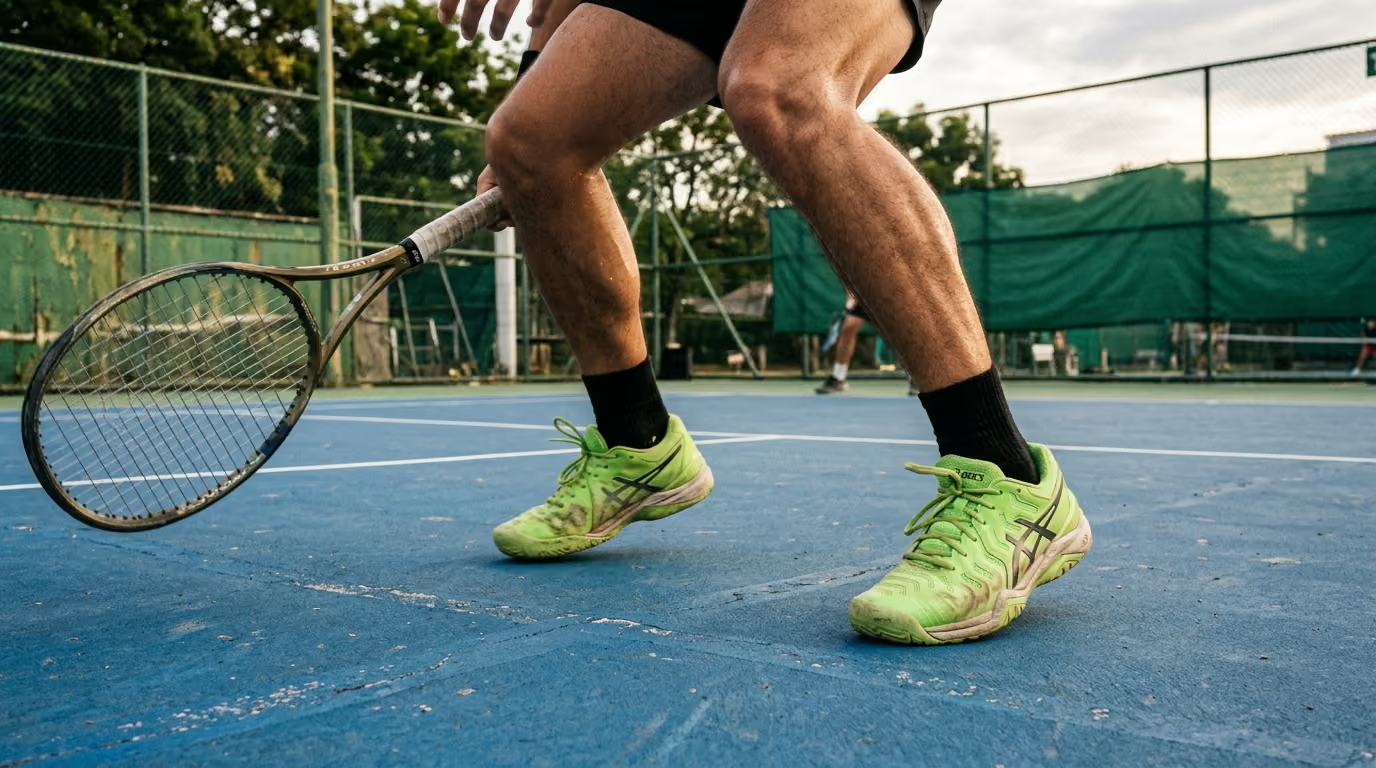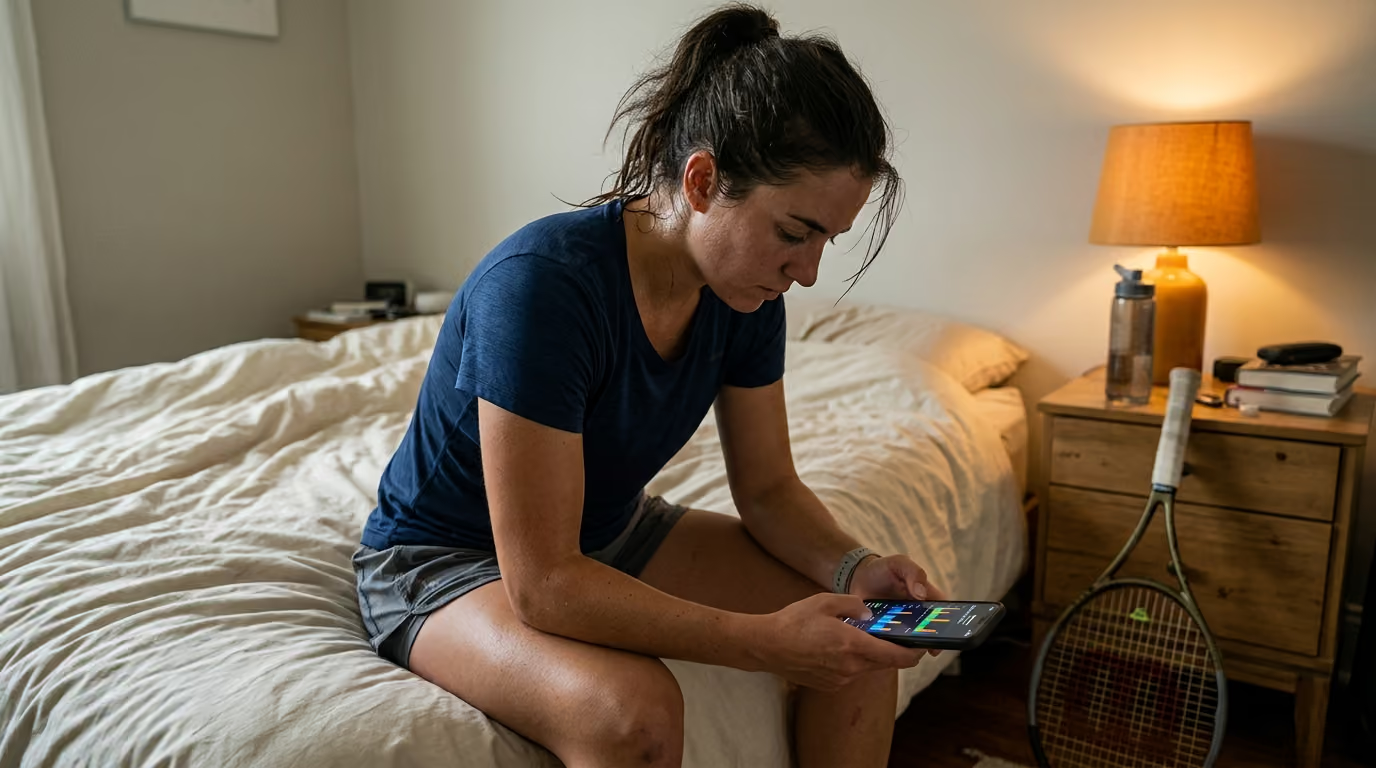

After a grueling late-night match, aligning sleep, light exposure, and training with your body's internal clock is crucial for optimal recovery and performance.




You step off the court at ten in the evening after a grueling three-set match. Your muscles are warm, your heart is pounding, and your mind is still racing through every missed volley. You head home, shower, eat a quick meal, and lie in bed staring at the ceiling for hours. The next morning, your alarm rings early, leaving you feeling sluggish, stiff, and completely unrefreshed.
This frustrating experience is common for players who balance early mornings, late matches, and changing schedules. Managing your body clock is just as critical as your physical training on the court. Circadian recovery is the deliberate alignment of sleep, light exposure, exercise, meals, temperature, and daily schedules with your internal biological clock.
Understanding how to align these elements can transform how your body recovers between sessions. Rather than treating rest as a passive event, you can use environmental cues to optimize your recovery time. A helpful framework to remember is that circadian recovery quality equals your total sleep opportunity, combined with body clock alignment, environmental timing, and training-load management. While this is a practical framework rather than a strict mathematical formula, it highlights how light, temperature, and timing interact to support your physical health.
For adult players focused on long-term athletic longevity, mastering these variables is essential. Protecting your sleep schedule is always the first priority. Once that foundation is set, timing signals like morning sunlight, structured meals, and post-match cooling routines can help you wake up feeling ready for the next challenge.
Every cell in your body contains a tiny clock, but the master control center sits in your brain. This central pacemaker, known as the suprachiasmatic nucleus, is located in the hypothalamus. It receives light signals directly from your eyes and uses this information to coordinate peripheral clocks located in your muscles, liver, and digestive system. For a racquet athlete, this means that your body does not just adapt to exercise on a physical level. Your metabolic rate, coordination, and tissue repair are all governed by these internal timing systems.
A major element of this biological timing is your chronotype. Your chronotype is your natural genetic tendency to sleep and feel active at specific times of the day. Some players are natural morning types who perform exceptionally well during early matches. Others are evening types who feel most alert and powerful under evening floodlights. Research published in the journal Chronobiology International shows that morning chronotypes generally perceive early exercise as less effortful than evening types do.
A 2024 review in the Journal of Science in Medicine and Sport indicates that morning chronotypes tend to reach peak physical performance in the middle of the day. Intermediate types peak in the afternoon, while evening types reach their peak performance much later. Chronotype is not a fixed excuse for poor play, but it is a valuable tool for organizing your training. Recognizing your natural tendencies allows you to tailor your warm-ups and recovery schedules to match your biology.
To understand why you might feel wired but tired after a late-night match, you must look at how sleep is regulated. Sleep is controlled by two distinct mechanisms working together. The first is homeostatic sleep pressure, which is the biological drive to sleep that builds up every hour you are awake. The second is the circadian alerting signal, which acts as an internal wakefulness booster that fluctuates throughout the 24-hour cycle.
When you play a high-intensity match late in the evening, your homeostatic sleep pressure is exceptionally high. However, the bright lights of the court, the stress of competition, and your elevated body temperature keep your circadian alerting signal active. This conflict prevents you from falling asleep, even though your muscles are exhausted and desperately need rest. Balancing these two forces is the secret to waking up refreshed.
Light is the most powerful environmental signal for setting your biological clock. Scientists call these environmental time cues zeitgebers, which is a German word meaning time-givers. The specific wavelength of light is highly influential. Short-wavelength blue light, which is abundant in sunlight and digital screens, is highly effective at stimulating the alerting pathways in your brain.
When blue light hits the specialized cells in your eyes, it immediately suppresses the production of melatonin. Melatonin is the hormone responsible for signaling to your body that it is time to rest. A study highlighted in a major chronobiology review showed that two hours of late-evening exposure to 460-nanometer blue light significantly suppressed melatonin compared to longer-wavelength green light. This means the intense floodlights on indoor courts and your smartphone screen can easily delay your body clock.
Conversely, you can use light strategically to boost your alertness and stabilize your schedule. Getting bright, natural sunlight in your eyes shortly after waking up is incredibly beneficial. For athletes, higher morning light exposure is directly linked to longer sleep duration at night. A study on professional team-sport athletes found that daytime light exposure also significantly improved subjective sleep quality.
If you are trying to prepare for an early morning match, morning light helps shift your internal clock earlier. If you are recovering from a late-night tournament, stepping outside into the sun the next morning helps anchor your system. This strategy is highly valuable for players who train indoors, as indoor lighting is rarely bright enough to signal daytime to the brain. Combining morning light with a light walk and hydration creates a powerful wake-up signal.
Your physical capabilities on the court are not static throughout the day. Many key athletic metrics, including reaction speed, serve velocity, and repeated-sprint ability, vary depending on the clock. On average, athletic performance peaks in the late afternoon and early evening. This window of high performance aligns closely with the daily peak in your core body temperature.
However, this average trend does not mean you should always schedule your hardest matches for five in the afternoon. Your ideal performance window is heavily influenced by your personal chronotype, your habitual training schedule, and your sleep history. If you always play at eight in the morning, your body will gradually adapt to perform better at that hour. This adaptation is a practical coaching strategy known as training specificity.
If you have a major tournament with early morning matches, you should schedule some of your hardest training sessions at that exact time. This helps your nervous system and metabolic pathways adapt to high demands when your body temperature is still rising. Conversely, if you must play late-night league matches, training occasionally at night helps you practice your pre-game nutrition and post-game wind-down routines.
Early morning training sessions carry specific risks that you must manage carefully. A 2025 study on elite athletes found that early morning preseason training shifted their first bright-light exposure earlier. It also advanced their biological clocks and sleep times. However, the study also revealed that these early sessions reduced total sleep time by an average of 17 minutes per night.
This finding is a vital warning for recreational and competitive players alike. Early morning sessions are only beneficial if you adjust your bedtime to preserve your total sleep opportunity. If you simply wake up earlier without going to bed earlier, you will build up a chronic sleep debt. This debt can quickly impair your reaction times and increase your risk of injury on the court. To learn more about optimizing your physical preparation, check out our mobility and movement resources.
Your core body temperature naturally follows a clear circadian rhythm. It begins to rise in the early morning, peaks in the late afternoon, and steadily declines as bedtime approaches. This evening drop in core temperature is a critical signal that helps initiate sleep. When you play a vigorous racquet sport late at night, you disrupt this natural cooling process.
High-intensity court movement raises your core temperature, elevates your heart rate, and keeps your sympathetic nervous system highly active. A study tracking trained athletes who performed high-intensity exercise at nine in the evening showed significant physiological changes. The athletes experienced altered sleep architecture, higher nocturnal heart rates, and elevated core body temperatures during the first half of the night.
To counteract this delay, you need a structured thermal transition after evening matches. This process helps your body switch from a state of high arousal to a state of recovery. The transition should begin immediately after your match ends rather than hours later when you get home.
A practical thermal transition routine involves five distinct steps:
Just as light sets the master clock in your brain, the timing of your food intake acts as a key signal for your peripheral clocks. Your digestive system, liver, and fat tissues rely on regular meal patterns to stay synchronized. When you eat at highly erratic times, you can cause a mismatch between your central sleep-wake cycle and your internal metabolic timing.
It is helpful to distinguish between nutrient adequacy and nutrient timing. Nutrient adequacy is simply consuming enough total carbohydrates, proteins, and healthy fats to support your training volume. Nutrient timing is the strategic distribution of these nutrients across the day to optimize digestion, energy levels, and recovery.
For early morning training, finding the right metabolic balance is crucial. Many players struggle to digest a full breakfast before a six-thirty morning session. In this scenario, forcing a large meal is counterproductive. Instead, consume a small, easily digestible snack, like a banana or a slice of toast, fifteen to thirty minutes before playing. Once your match or practice is complete, you can consume a larger, protein-rich breakfast to kickstart muscle recovery.
Late-night matches present a different challenge. If you delay your recovery meal until you get home late, you may end up eating a large, heavy dinner right before sleep. Digesting high-fat or highly spiced foods can cause gastrointestinal discomfort, increase your heart rate, and disrupt your sleep quality.
A better approach is to eat your main, balanced meal three to four hours before your match. If the match is long, use small, easily digestible carbohydrates during play. Immediately afterward, consume a light recovery snack containing carbohydrates and protein, such as a low-fat recovery shake or a turkey wrap. This approach provides your muscles with essential amino acids and glycogen-building nutrients without overloading your digestive tract before bed. To read more about protecting your physical health, explore our player health articles.
Racquet players who travel for tournaments often confuse travel fatigue with true jet lag. While they feel similar, they are caused by completely different issues, and they require different solutions. Travel fatigue is the general physical and mental tiredness caused by dehydration, cramped seating, noise, and disrupted schedules. Jet lag is a state of biological confusion that occurs when you cross multiple time zones and your internal clock is no longer aligned with the local sun.
Travel fatigue can be managed through simple, practical habits. Prioritizing hydration, taking short walks during long trips, and ensuring you get adequate sleep before you travel are highly effective. Managing true jet lag requires a more deliberate, scientific approach.
When you cross more than three time zones, the direction of travel determines how you must adjust. Eastward travel requires you to shift your schedule earlier, which is generally more difficult for the body clock to manage. Westward travel requires you to shift your schedule later, which is typically easier to accommodate.
For short trips lasting only one or two days, attempting to adapt your internal clock to the destination is not recommended. Your body cannot adjust that quickly, and trying to force the shift will only leave you exhausted. Instead, try to keep your meals, light exposure, and sleep times as close to your home time zone as possible.
If your trip lasts longer than three days, you should actively work to align your body clock with the new location. A helpful strategy is to shift your sleep schedule by one to two hours toward the destination time zone in the days leading up to your flight. Once you arrive, use destination-specific light exposure and avoidance windows to accelerate the shift.
It is important to remember that athlete travel science is still evolving. A systematic review published in the British Journal of Sports Medicine found that the scientific evidence for managing travel fatigue in athletes is limited. Most jet-lag interventions were graded as low quality by researchers. This means you should treat generic travel advice with caution. Focus on the basics of sleep preservation, systematic hydration, and gradual schedule adjustments rather than complex, unproven travel protocols.
Because court availability and match play vary so widely, one single schedule will not work for everyone. Applying these principles to your specific playing habits is the best way to see consistent benefits. Review the following five distinct player patterns to find the routine that matches your current lifestyle.
This pattern represents players who regularly book courts at six-thirty or seven in the morning. While early sessions are excellent for starting the day, they carry a high risk of chronic sleep restriction.
This pattern fits players who participate in evening leagues or tournaments where matches begin after eight at night.
I remember finishing a tough two hour padel match on a cold Tuesday night and waking up the next morning feeling like my lower back was locked in concrete. For a long time, I just accepted this as the price of playing hard in my forties. But once I started spending just ten minutes on targeted hip mobility before heading to the club, the stiffness almost completely vanished. It taught me that we do not have to accept pain as a default state of aging. Combining targeted physical preparation with a deliberate wind-down process makes a profound difference in how your tissues recover.
This pattern applies to tournament players who must play at nine in the morning on Friday, two in the afternoon on Saturday, and eight at night on Sunday.
This pattern represents natural night owls who must perform in an early morning tournament match.
This pattern is for competitive players who frequently travel across multiple time zones for regional or national events.
While all racquet sports share some physical demands, the environmental and structural differences between tennis, pickleball, and padel shape your recovery needs in unique ways. Understanding these differences allows you to customize your circadian habits to your sport.
Tennis is characterized by its high unpredictability. A match can last forty-five minutes or stretch over three hours, making it incredibly difficult to plan your meals, hydration, and sleep times. Furthermore, professional and amateur tennis tournaments often experience rain delays, pushing daytime matches into the late evening.
Because of this uncertainty, tennis players must become experts at managing their energy buffers. If you play tennis, you should always pack portable, easily digestible recovery snacks in your bag. If you find yourself waiting through a long match delay under bright venue lights, wearing blue-light blocking glasses can help preserve your natural melatonin levels for later. You can learn more about managing these variables in our tennis articles.
Pickleball is famous for its intensive tournament formats. Players often play multiple matches in a single afternoon, requiring rapid physical turnarounds. Furthermore, many pickleball tournaments start exceptionally early in the morning to maximize court utilization.
For pickleball players, the primary circadian challenge is managing early morning stiffness and rapid arousal transitions. Because the game relies heavily on fast reaction times and hand-eye coordination, being awake enough to perform is critical. Pickleball players should prioritize early morning light exposure to sharpen their visual tracking and reaction speeds before they step onto the court. Explore our pickleball articles to optimize your playing schedule.
Padel is highly social and often played on indoor courts under intense fluorescent or LED lighting. Many amateur padel clubs experience their peak bookings between eight and eleven at night. The combination of high-intensity, explosive wall play, loud indoor environments, and bright artificial lighting creates a perfect storm for sleep disruption.
If you are a padel player, your primary recovery focus should be on post-match downregulation. Because indoor courts do not offer natural daylight, you must actively seek out sunlight during the day. After a late indoor padel session, prioritizing a structured cooling routine and minimizing screen exposure is essential for protecting your sleep quality. Read more about managing these demands in our padel articles.
Even highly dedicated athletes can fall into common habits that unintentionally disrupt their biological timing. Recognizing these common pitfalls can help you avoid unnecessary fatigue.
While core body temperature and general athletic performance often peak in the late afternoon, this is not a universal rule. If you are a natural morning chronotype, pushing yourself through high-intensity training late at night can severely disrupt your sleep. Conversely, if you are an evening chronotype, forcing yourself into intense morning matches without preparation can lead to poor performance and increased injury risk. Customize your training times to align with your natural genetics and your competition schedule.
Blue light is not inherently harmful. During the day, blue light from the sun is highly beneficial for boosting your mood, increasing your reaction speeds, and stabilizing your circadian rhythm. The issue is not the light itself, but the timing of your exposure. Using blue light strategically in the morning can help you wake up and prepare for competition, while reducing blue light in the evening helps you transition into deep, restorative sleep.
While getting morning sunlight is an excellent habit, it is not a substitute for adequate sleep. If you are only sleeping five hours a night, stepping into the sun will not erase the systemic inflammation and cognitive decline caused by sleep restriction. Morning light helps align your clock, but you must still prioritize an adequate sleep window to allow your tissues to repair.
Research shows that moderate evening exercise does not automatically ruin your sleep. The primary concern is vigorous, high-intensity competition that ends within one hour of your intended bedtime. If you can keep a two-hour buffer between your match and your sleep, and if you follow a structured wind-down routine, you can still enjoy evening matches without sacrificing your recovery.
Melatonin is a powerful hormone that regulates the timing of your sleep, but it should not be treated as a general recovery supplement. Taking melatonin too close to physical activity can cause daytime sleepiness and reduce your performance. Additionally, taking it at the wrong biological time can shift your internal clock in an undesirable direction. Melatonin should be used carefully, preferably under the guidance of a qualified healthcare professional.
Your biological clock does not just regulate when you feel awake; it also directly influences how your muscles, tendons, and joints recover from physical stress. During deep, high-quality sleep, your body enters an anabolic state, releasing key hormones like human growth hormone. This hormone is essential for repairing the microscopic tissue damage that occurs during intense court movement.
If your circadian rhythm is chronically disrupted, your body struggles to enter these deep, restorative sleep phases. This disruption can lead to elevated levels of systemic inflammation and a slower rate of muscle protein synthesis. Over time, poor sleep alignment can degrade your tissue health, making you more susceptible to chronic issues like tendonitis or joint stiffness.
Furthermore, sleep extension has been shown to have a profound positive impact on athletic performance. Extending your sleep opportunity to nine or ten hours during periods of heavy training can improve your reaction times, enhance your mood, and reduce your overall perception of effort on the court.
A study published in the Journal of Strength and Conditioning Research investigated the effects of low-dose melatonin on athlete recovery after exhaustive exercise. The researchers found that while low-dose melatonin improved total sleep duration and resting heart rates, it did not significantly alter several key biomarkers of muscle damage or inflammation. This finding highlights that while sleep aids can support rest, they cannot replace the natural, comprehensive recovery processes that occur during organic, well-aligned sleep. Protecting your natural circadian rhythm is always the most effective way to support your physical longevity. For more guidance on protecting your joints and muscles, visit our injury prevention resources.
While optimizing your sleep, light exposure, and training schedules can resolve many common recovery issues, some situations require professional medical guidance. Circadian strategies are excellent for supporting healthy athletic longevity, but they are not a substitute for clinical care.
You should consult a qualified healthcare provider, sports physician, or sleep specialist if you experience any of the following warning signs:
A qualified professional can perform a comprehensive evaluation, run necessary diagnostic tests, and provide personalized treatment plans that ensure you can continue playing the sports you love safely and comfortably.
You should return to this guide whenever you experience a major change in your playing habits or schedule. If you are transitioning from outdoor summer matches to indoor winter training, shifting your training hours from evenings to early mornings, or preparing to travel across multiple time zones for a tournament, review these practical templates to adjust your recovery routine.
Mastering your circadian recovery is a powerful, highly practical tool that supports your physical longevity, improves your performance, and keeps you moving well on the court for years to come.
Follow Evercourts for practical insights on tennis, pickleball and padel performance, movement, recovery and healthy ageing. Stay connected for new articles, research-led guidance and ideas to help you play well and keep playing for years.


Read practical guidance for better movement, smarter preparation and a game that keeps working for you.
explore the Blog