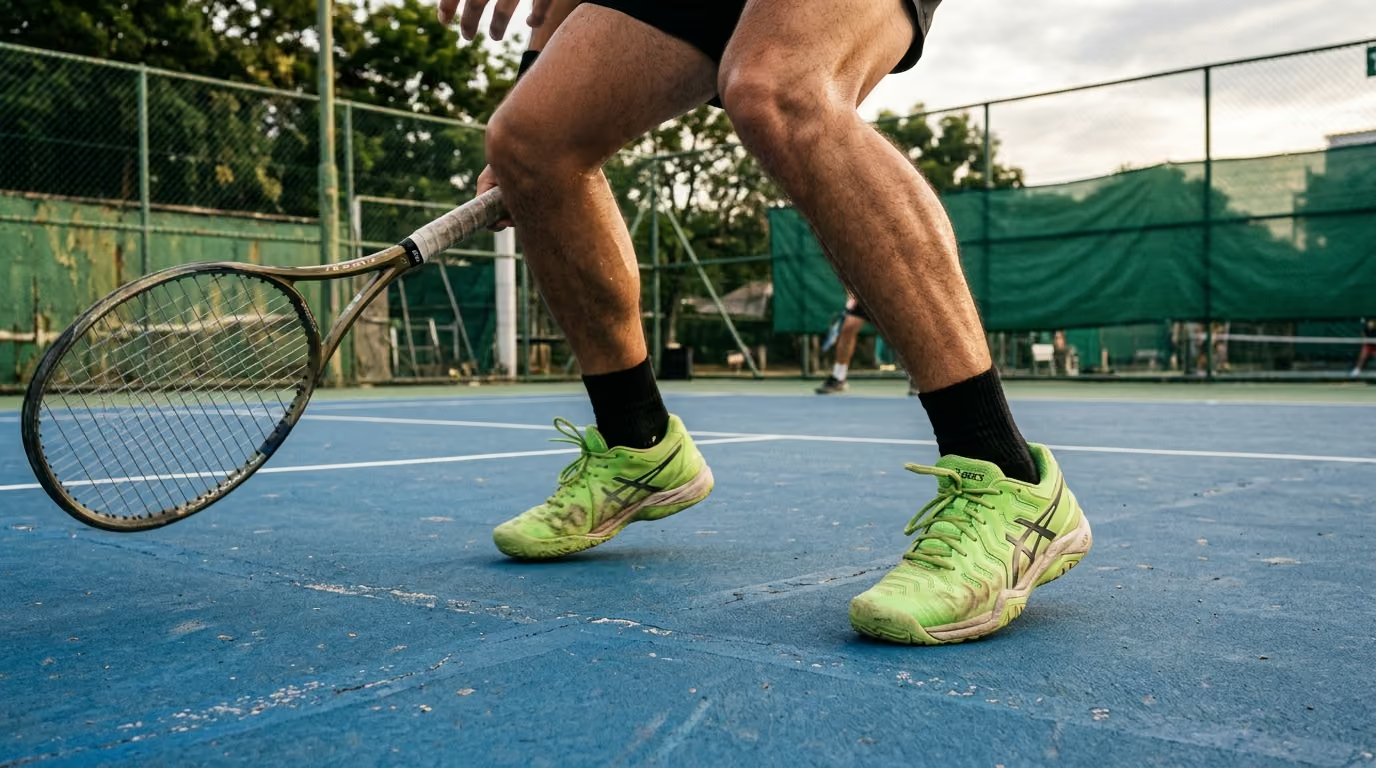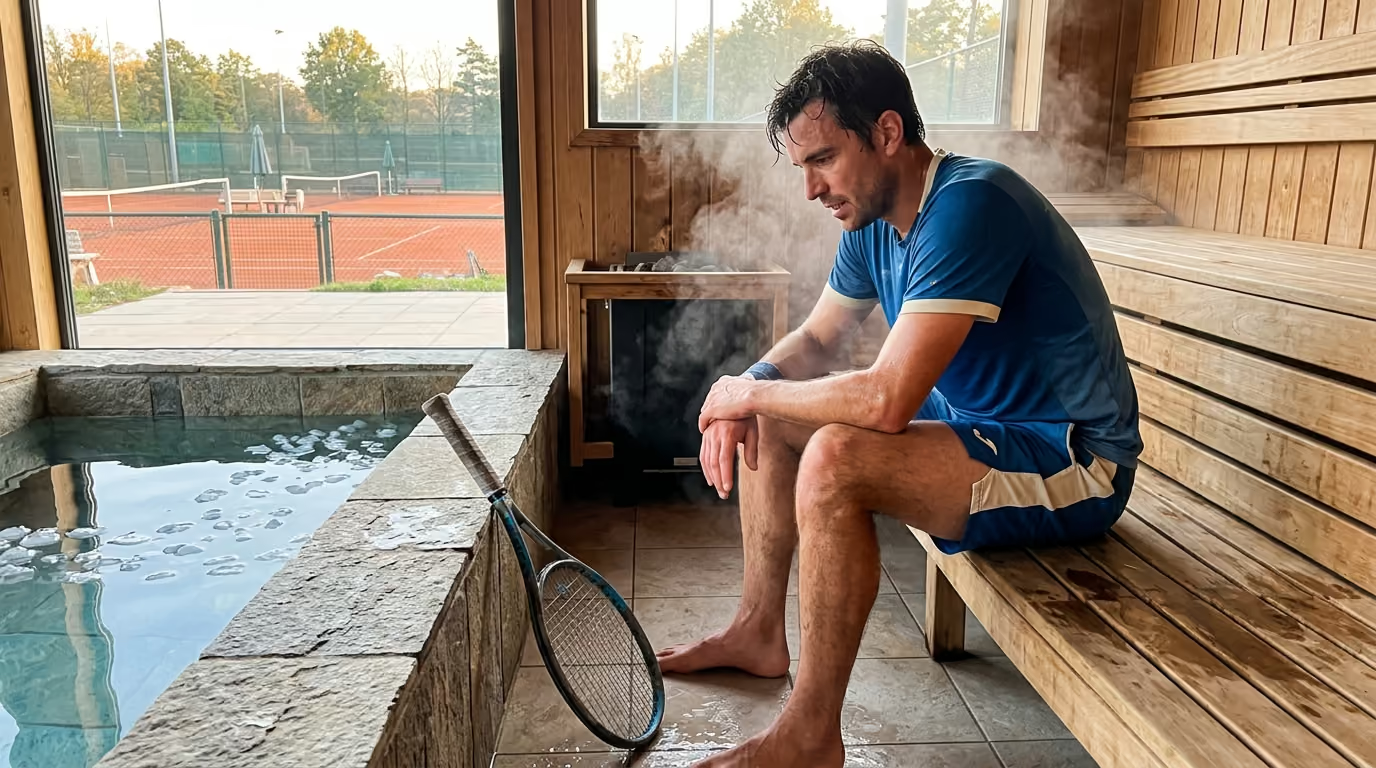

Cold, heat, and contrast recovery methods for racquet sports are explored, detailing their physiological effects on muscle soreness and athletic performance.




You walk off the court after a grueling three-set tennis match on a warm afternoon. Your shoulder feels tight from serving, your knees ache from hard-court split steps, and your lower back is stiff. In the clubhouse, you see some players heading to a cold tub, others toward a hot sauna, and a few stepping into a contrast shower. It can be difficult to know which of these recovery options is actually backed by scientific evidence and which is simply a passing trend.
Selecting the right recovery method depends on whether your immediate goal is reducing muscle soreness, restoring explosive movement, or adapting to your training over time. Cold-water immersion works best for temporary soreness relief when you must play again within days, while heat exposure is more suited for relaxation and cardiovascular conditioning. For long-term tissue development, passive rest is often superior to thermal interventions because it allows your body to adapt naturally to the stress of exercise.
To make informed decisions about your post-match routine, you must understand how cold, heat, and contrast therapies interact with your muscles and nervous system. This guide will help you choose recovery methods based on scientific evidence rather than athletic trends.
To understand how thermal therapies help, you must first understand what happens to your body during a tough match. Racquet sports require constant acceleration, sudden braking, and deep lunges. These movements rely heavily on eccentric muscle contractions, where your muscles lengthen under tension to slow your body down.
These eccentric movements cause micro-tears in your muscle fibers. This microscopic damage triggers a natural inflammatory response, which is a key part of the healing process. This response often leads to delayed-onset muscle soreness, which typically peaks between 24 and 48 hours after your session.
During this process, specific proteins, such as creatine kinase, leak from the damaged muscle cells into your bloodstream. Sports scientists often measure creatine kinase to assess the level of muscle damage an athlete has experienced. However, a lower level of this biomarker does not guarantee that your muscles have recovered their full strength or coordination.
It is also vital to distinguish between physical recovery and perceptual recovery. Perceptual recovery is your subjective sense of fatigue, soreness, and readiness to play. While thermal therapies can make you feel less sore and more energized, they do not always restore your explosive jumping or sprinting ability immediately. Recognizing this difference is essential for maintaining athletic longevity and healthy aging on the court.
Cold-water immersion involves submerging your body in cold water after intense exercise. This practice is popular among court athletes, but its effects must be analyzed carefully. The primary physical response to cold exposure is vasoconstriction, which is the narrowing of your blood vessels.
This narrowing reduces blood flow to your limbs, which helps limit swelling and inflammation in your muscles. Cold temperature also slows down nerve conduction velocity, which acts as a natural numbing agent to reduce the perception of pain. Understanding these mechanisms is a cornerstone of modern recovery science.
A comprehensive meta-analysis of 28 studies evaluated how cold-water immersion compares to other recovery methods. The research showed that cold-water immersion is highly effective for reducing muscle soreness after strenuous workouts. However, the analysis also revealed that cold exposure was broadly similar to other recovery methods for restoring muscular power and joint flexibility.
Another systematic review analyzed 44 studies on cold-water protocols. It confirmed that cold-water immersion successfully manages soreness in both immediate and delayed recovery phases. Interestingly, the review noted that excessively long immersion times did not improve delayed recovery outcomes. This suggests that longer or colder sessions are not necessarily better for your body.
A meta-analysis published in 2026 offered further clarity on what cold-water immersion can and cannot do. The researchers found that cold exposure led to a small reduction in creatine kinase and a small-to-moderate reduction in muscle soreness. However, it did not produce any statistically significant improvements in countermovement jump performance or maximal voluntary isometric contraction.
This research indicates that cold therapy is primarily a tool for reducing discomfort and improving how you feel. It does not magically repair damaged muscle fibers or instantly restore your vertical jump. Instead, it helps quiet your nervous system and makes muscle soreness more manageable during busy playing schedules.
Furthermore, you do not need to submerge your entire body to get these benefits. The 2026 meta-analysis found no meaningful difference in therapeutic efficacy between whole-body immersion and partial immersion. For racquet-sport players, immersing only your lower body can target the leg muscles used for court movement while avoiding unnecessary whole-body cold stress.
If you decide to use cold-water immersion, you must time your sessions based on when you need to perform next. Cold exposure has very different effects depending on whether your next match is hours or days away.
A systematic review examined how cold-water immersion affects performance at different time intervals. The researchers found that cold immersion improved endurance performance when tested one hour after exercise. However, the same treatment impaired sprint performance at the one-hour mark and reduced jump performance six hours after exposure.
This impairment occurs because cold temperatures reduce muscle temperature, which makes your muscle fibers contract more slowly. Cold exposure also reduces the reactivity of your nervous system, which is crucial for quick reactions and explosive movements on the court. For this reason, you should avoid cold baths if you must play another match within a few hours.
In contrast, the same review found that cold-water immersion improved jump performance and strength at 24 hours and 96 hours post-exercise. These longer-term physical benefits coincided with lower creatine kinase levels, reduced muscle soreness, and better subjective ratings of recovery.
This creates a clear guideline for court athletes. Use cold therapy to prepare for matches occurring the next day or later in the week. Avoid cold therapy when you need to maintain explosive speed and agility for a back-to-back match on the same day.
Many players assume that they should use cold therapy after every hard workout. However, research suggests that habitual cold use can actually hinder your long-term fitness goals. This is especially true during periods when you are trying to build strength or muscle mass.
A systematic review and meta-analysis concluded that using cold-water immersion immediately after resistance training sessions can attenuate hypertrophic muscle changes. When you lift weights, your body initiates an inflammatory response that signals your muscles to grow larger and stronger. By rapidly cooling your muscles, you blunt this natural signaling process.
Another review supported these findings, reporting that post-exercise cold-water immersion reduced strength gains in male subjects. The research showed a small but clear negative effect of approximately -0.23 on strength development. This means that while cold therapy makes you feel less sore, it can reduce the strength benefits of your gym sessions.
This does not mean you should never use cold water. Rather, it means you must choose between immediate recovery and long-term training adaptation. If you are in an off-season training phase focused on building strength and power, avoid cold plunges.
If you are in the middle of a competitive tournament where tournament progress matters more than muscle growth, cold therapy is highly appropriate. For more detailed guides on keeping your body moving well through different training phases, explore our injury prevention resources.
Contrast-water therapy involves alternating between warm water and cold water during a single recovery session. The theoretical basis for this method is that alternating temperatures cause your blood vessels to constrict and dilate repeatedly. Some coaches refer to this as a pumping action, although the exact physiological mechanism is still a subject of scientific discussion.
A systematic review of 13 studies looked at contrast-water therapy after exercise-induced muscle damage. The researchers found that contrast therapy improved muscle soreness and reduced strength loss compared to simple passive rest. However, the review found little evidence that contrast therapy was superior to cold water, warm water, compression, active recovery, or stretching.
Another study of team-sport athletes found that contrast therapy improved subjective fatigue perceptions at 48 hours. However, it did not show any specific benefits for neuromuscular recovery in that particular analysis. This suggests that contrast therapy is a comfortable, pleasant option, but not a superior physical recovery method.
A 2024 network meta-analysis of 57 studies, which included 1,220 healthy participants, provided a direct comparison of hydrotherapy methods. The analysis ranked contrast-water immersion most favorably for reducing creatine kinase levels in the blood. Meanwhile, local cryotherapy and cold-water immersion ranked highest for relieving muscle soreness and restoring jumping ability.
These findings show that contrast therapy is a viable alternative to passive rest, especially if you find continuous cold water too uncomfortable. However, you should not believe claims that contrast therapy mechanically flushes toxins or lactic acid from your muscles. The benefits are primarily related to sensory stimulation, pain modulation, and subjective relaxation.
It is also important to separate contrast immersion from contrast showers. Immersing your body in water provides hydrostatic pressure, which helps support circulation and reduce swelling. Contrast showers do not offer this pressure and provide a much smaller thermal load, meaning they may not produce the same physiological effects.
Passive heat exposure involves raising your body temperature without physical exercise. This is typically done using saunas, steam rooms, or hot baths. Heat exposure causes vasodilation, which widens your blood vessels and increases circulation to your muscles and skin.
The scientific evidence for using post-exercise heat as an acute recovery tool is currently unsettled. A systematic review of 14 studies involving 194 participants analyzed the effects of acute post-exercise heat exposure. The results were highly mixed: four studies showed no effect, four showed positive benefits, and one showed adverse effects on recovery.
The researchers concluded that there is insufficient evidence to recommend acute heat exposure for restoring physical performance or accelerating muscle healing immediately after a match. A hot sauna will not reliably restore your sprint speed or repair muscle micro-tears faster than passive rest.
However, repeated heat exposure can be highly beneficial when used as a structured heat acclimation program. Chronic studies in the same review suggested that regular heat exposure can improve running performance, particularly when playing in hot conditions. Interestingly, these studies did not show a consistent effect on cycling performance or maximum oxygen uptake.
This suggests that heat acclimation is a specific training response rather than an immediate recovery cure. Sitting in a sauna can help your body adapt to the cardiovascular strain of playing in high temperatures. It increases your blood plasma volume and improves your sweating efficiency over time.
Additionally, many racquet athletes use the sauna purely for relaxation and subjective well-being. A warm sauna session can help calm your nervous system, ease joint stiffness, and prepare your mind and body for sleep. These mental benefits are valuable, but they should be categorized as well-being goals rather than physical muscle repair.
To help you apply this scientific evidence to your own routine, you can use a simple decision framework. Your recovery choices should be based on four distinct variables: your objective, your workload, your next performance demand, and your adaptation priority.
First, identify your primary objective. Are you trying to reduce deep muscle soreness, restore vertical jump power, or simply relax after a stressful day? Next, consider the preceding workload. A long singles tennis match on clay involves different physical stress than a rapid doubles pickleball session or a heavy strength-training workout in the gym.
Consider when you must perform at your best again. If you have another match in two hours, your needs are different than if you have a week of rest. Finally, determine your adaptation priority. Are you trying to build long-term strength and fitness, or do you need to be immediately ready for a match tomorrow morning?
Based on these variables, you can select the most appropriate method:
To see how this framework works in practice, let us look at six common court scenarios that racquet athletes face.
You have significant leg soreness after a three-hour singles match, and you must play the tournament semi-final in 24 hours. In this situation, lower-body cold-water immersion is a highly reasonable choice. It will help manage your muscle soreness and improve your perceived readiness for tomorrow's match. Keep the water temperature between 50°F and 59°F (10°C to 15°C) and limit your immersion to 10 to 15 minutes.
You just finished a tough morning match and must play a doubles match in two hours. You should avoid cold-water immersion here, as it can temporarily reduce your explosive sprint and jump power. Instead, focus on light active recovery, proper hydration, and targeted nutrition. Before your next match, perform a progressive physical warm-up to ensure your muscles are warm and responsive.
You just completed a heavy leg workout in the gym to build court speed and power. Since your priority is long-term physical adaptation, you should skip the cold plunge entirely. Let your body undergo its natural inflammatory and rebuilding process to maximize your strength gains. Focus instead on high-quality sleep and protein intake to support your muscle development.
You are playing a multi-day tournament and feel accumulated fatigue in your legs and lower back. Here, you can use cold-water immersion or contrast therapy based on your personal preference. If you dislike continuous cold water, contrast therapy can help reduce your perception of fatigue. Alternate between one minute in cold water and two minutes in warm water for a total of four to five cycles.
You are preparing to play a tournament in high summer heat and want to build physical tolerance. You can use a structured post-exercise sauna routine to assist with heat acclimation. Sit in a moderate sauna for 15 to 30 minutes after your practice sessions, ensuring you are fully hydrated beforehand. Do not use the sauna if you feel dizzy, lightheaded, or severely dehydrated after your match.
You finished a late-night match and find yourself too wired to sleep. A moderate sauna session or a warm bath can help activate your parasympathetic nervous system, which promotes relaxation and rest. Use this time for quiet breathing and gentle stretching. View this session as a tool for mental relaxation and sleep preparation rather than physical muscle tissue repair.
While tennis, pickleball, and padel share many similarities, they place different physical demands on your body. Understanding these differences allows you to tailor your recovery routine more effectively.
Tennis is characterized by long matches, explosive multi-directional running, and repetitive high-velocity serving. The physical stress is highly eccentric, especially during hard-court sliding, split-stepping, and deep lunging. Tennis players often experience significant soreness in the quadriceps, glutes, and calves.
The high volume of serving also places immense stress on the shoulder girdle and core muscles. For a tennis player, lower-body cold-water immersion is excellent for leg soreness, while local icing can be targeted to a highly fatigued shoulder. You can read more about managing these demands in our player health articles.
Pickleball features shorter, rapid rallies with continuous low-amplitude lateral shuffling. The sport requires deep lunging for low dinks, which puts repetitive stress on the knees, hips, and lower back. Because pickleball tournaments often feature multiple matches in a single day, recovery windows are very short.
Pickleball players should focus on maintaining joint mobility and managing lower back stiffness. If you have short breaks between matches, avoid cold therapy to keep your reactions quick and explosive. Instead, use gentle active movement and targeted stretching to stay warm and fluid.
Padel is played on synthetic turf courts surrounded by glass walls, leading to high-frequency acceleration, deceleration, and turning. The game involves a high volume of overhead smash shots, which strains the shoulder, upper back, and calf muscles. The constant jumping and landing can lead to Achilles tendon and calf tightness.
Padel players can benefit from lower-body contrast therapy to manage calf fatigue after long matches. Focus your recovery sessions on restoring range of motion in your shoulders and hips to maintain your agility on the court.
Many recreational and competitive players make simple mistakes when incorporating thermal therapies into their routines. Identifying these errors can protect your health and improve your physical results.
The first mistake is assuming that less soreness means your muscles are fully recovered. Cold-water immersion is excellent for reducing pain, but it does not instantly rebuild damaged tissue or restore your central nervous system fatigue. If you rely on cold plunges to mask pain, you may return to the court too early and risk a more serious injury.
The second mistake is using the cold plunge after every single workout. As discussed, immediate cold exposure blunts the signals that tell your muscles to grow stronger. Save the cold tub for times when immediate recovery is your absolute priority, such as during congested tournament weekends.
The third mistake is believing that contrast-water therapy mechanically flushes waste products from your tissues. Contrast therapy is a valuable tool, but its benefits are primarily sensory and perceptual. Do not use it under the false impression that it performs a physical cleansing action on your muscles.
The fourth mistake is using the sauna when you are already severely dehydrated. Sweat loss during a match reduces your blood volume, and sitting in a hot sauna reduces it further. This combination puts significant stress on your cardiovascular system and can lead to heat illness or fainting. Always restore your fluid and electrolyte balance before entering a sauna or steam room.
When used correctly, thermal therapies can be a valuable part of an athletic longevity routine. They help you manage the physical discomforts of regular play so you can continue enjoying your sport for years to come.
Both heat and cold therapy have profound effects on your autonomic nervous system. Cold water initially triggers a sympathetic response, often called the fight-or-flight reaction, which increases your heart rate and releases adrenaline. Over time, adapting to this stress can help improve your mental resilience and stress tolerance on the court.
Conversely, passive heat therapy promotes a parasympathetic state, which is responsible for rest, digestion, and recovery. This shift helps reduce muscle tension, lowers your blood pressure, and improves your sleep quality. Quality sleep is the single most effective recovery tool available to any athlete, and heat therapy can be an excellent way to support it.
However, you should never use extreme heat or cold to compensate for poor lifestyle habits. No amount of cold plunging or sauna use can make up for chronic sleep deprivation, poor nutrition, or inadequate hydration. View these thermal therapies as useful supplements to a healthy foundation of rest, proper fueling, and smart training-load management.
While thermal therapies are generally safe for healthy individuals, they carry inherent physical risks. You must follow conservative safety guidelines to protect your health during both cold and heat exposure.
Cold-water exposure can cause a sudden gasp reflex and rapid breathing, known as cold shock. This reaction can be dangerous, particularly if you submerge your head or enter the water too quickly. Always enter the cold tub slowly, control your breathing, and never use a cold plunge alone.
Extreme cold exposure can also cause your core body temperature to drop dangerously low. Hypothermia begins when your core body temperature falls below 95°F (35°C). Stop your cold session immediately if you experience intense shivering, confusion, dizziness, weakness, or loss of physical coordination.
Heat exposure carries risks of heat exhaustion and heat stroke, which are medical emergencies. The Centers for Disease Control and Prevention identifies athletes as a population vulnerable to heat-related illnesses. Always exit the sauna immediately if you feel dizzy, nauseous, confused, lightheaded, or if you experience chest pain or a rapid, pounding heartbeat.
You should avoid or medically supervise thermal therapies if you have certain pre-existing health conditions. Heat exposure can place significant strain on your cardiovascular system. Avoid saunas and hot tubs if you have:
If you have poorly controlled high blood pressure, peripheral neuropathy, or are pregnant, consult a qualified physician before using extreme heat or cold. Additionally, if you have an acute joint injury with severe swelling, instability, or loss of function, seek a professional medical evaluation rather than trying to treat it yourself with home recovery methods.
You should return to this guide whenever you are planning a change in your training season, such as transitioning from an off-season strength program to a busy summer tournament schedule. It is also helpful to review these principles if you experience persistent muscle soreness, or if you are trying to design a safe, evidence-based recovery routine for a new court sport.
Managing your recovery is a long-term process of learning how your body responds to different physical stresses. By selecting thermal therapies based on scientific evidence rather than trends, you can support your athletic longevity and keep playing the sports you love with confidence.
Follow Evercourts for practical insights on tennis, pickleball and padel performance, movement, recovery and healthy ageing. Stay connected for new articles, research-led guidance and ideas to help you play well and keep playing for years.


Read practical guidance for better movement, smarter preparation and a game that keeps working for you.
explore the Blog