
Ninety-three percent of studies show a significant association between rapid increases in training load and higher injury rates in racquet sports.




You finish a tough two hour match on a cold Tuesday night and sleep well. The next morning, you step out of bed and realize your lower back feels like dry concrete. Your knees ache when you walk down the stairs, and your shoulder resists your attempt to reach for a coffee mug. Many players accept this stiffness as the inevitable price of enjoying court sports.
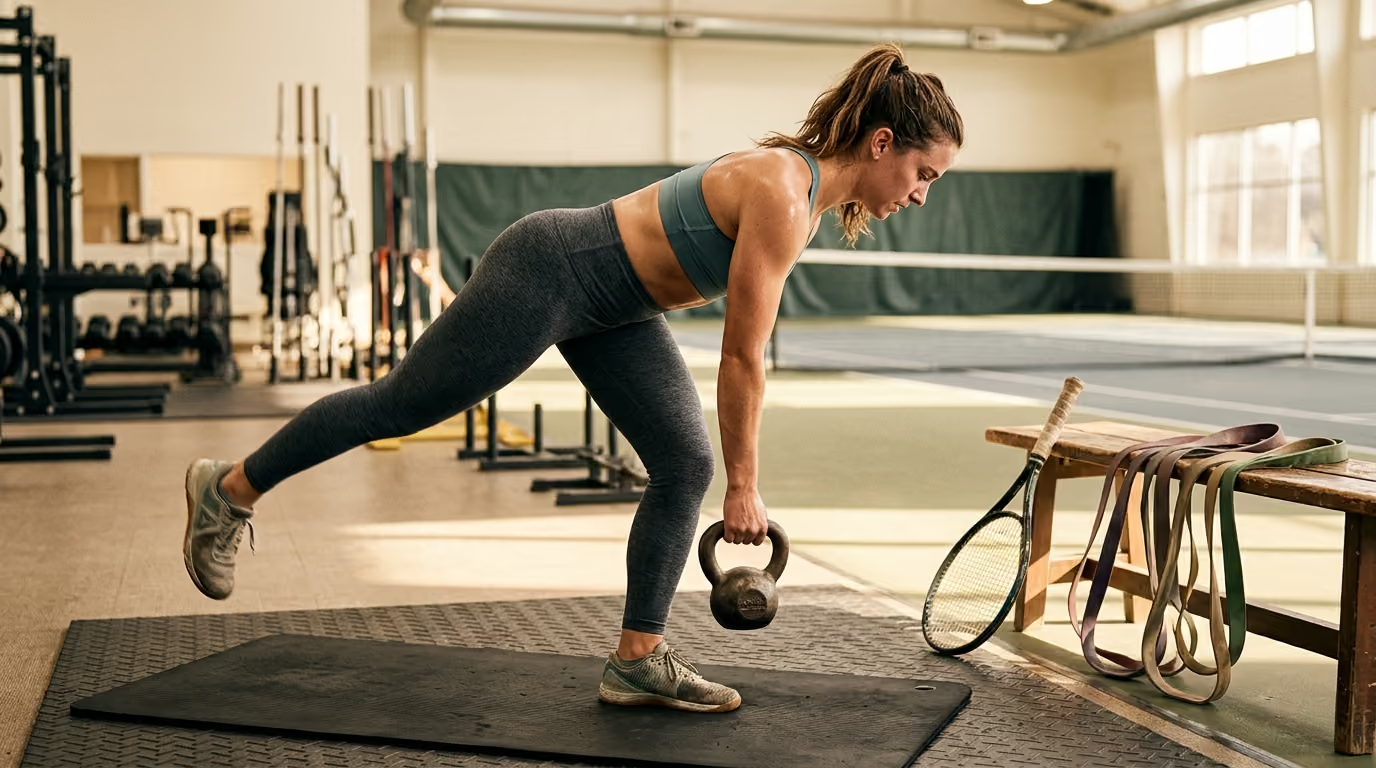
Cross-training for racquet sports is the planned distribution of physical stress across different movement patterns and tissues to build overall capacity while protecting vulnerable areas. It uses activities like cycling, swimming, and resistance training to maintain fitness without duplicating the repetitive impacts of court play. When applied correctly, this approach builds athletic longevity and reduces injury risk by preventing sudden spikes in training stress.
In our experience, trying to solve court fatigue by simply playing more matches often leads directly to the physical therapist's clinic. I remember finishing a tough two hour padel match on a cold Tuesday night and waking up the next morning feeling like my lower back was locked in concrete. For a long time, I just accepted this as the price of playing hard in my forties. But once I started spending just ten minutes on targeted hip mobility before heading to the club, the stiffness almost completely vanished. It taught me that we do not have to accept pain as a default state of aging. By incorporating smart, non-impact training into your weekly routine, you can keep playing the sports you love for decades.
To understand how alternative training protects your joints, you must first understand training load. Physical stress is not inherently bad for your body. Your muscles, tendons, and bones require progressive exposure to stress to become stronger and more resilient. However, problems arise when the volume or intensity of that stress increases too quickly for your tissues to adapt.
According to a comprehensive systematic review of athletic training, there is a clear relationship between training load and physical breakdown. The review analyzed twenty-nine different studies on the topic. Remarkably, ninety-three percent of those studies found a significant association between rapid load increases and injury rates. This highlights why managing your weekly physical stress is the most critical element of athletic longevity.
To manage this stress, the International Olympic Committee recommends tracking both external and internal training loads. External load is the physical work you perform on the court or in the gym. This includes the minutes you play, the miles you run, the number of serves you hit, or the weight you lift. Internal load is how your body responds to that external work. It is measured by your heart rate, your perceived exertion, your sleep quality, and your daily muscle soreness.
A helpful way to conceptualize this balance is the acute-to-chronic workload ratio. This framework compares your training load over the past seven days with your average training load over the previous four weeks. If your recent training far exceeds what you have prepared for, your risk of injury increases. While this model was developed using data from elite team sports, the basic concept applies perfectly to recreational racquet athletes. You must avoid sudden spikes in physical activity while progressively building the long-term capacity required for competitive play.
Court sports place highly asymmetrical demands on your body. Unlike running or cycling, which are linear and repetitive, sports like tennis, pickleball, and padel require constant change of direction. You must accelerate, decelerate, split-step, and lunge in multiple directions. These rapid movements create high impact forces that primarily target your lower extremities.
In fact, systematic reviews of tennis injuries show that the lower limbs are the most frequently injured areas of the body. Your knees, ankles, Achilles tendons, and plantar fascia absorb the brunt of every hard stop and lateral push. If you only get fit by playing your sport, these specific tissues never get a break. Your joints are constantly subjected to high impact forces without time to repair.
Your upper body faces a similar challenge of repetitive, one-sided stress. Serving a tennis ball or hitting a padel smash requires rapid shoulder rotation, elbow extension, and a firm wrist grip. Over time, this repetitive motion can lead to shoulder overuse syndromes and forearm tendon issues. Even though lower-limb injuries are more common, upper-extremity issues often cause more missed playing time.
Finally, you must consider the kinetic chain. Power in a groundstroke or serve does not originate in your shoulder or arm. It starts in your feet, moves through your legs, transfers across your hips and trunk, and finally exits through your racquet. If you have a weak link in this chain, such as poor hip mobility or weak core stability, your shoulder must work twice as hard to compensate. Complementary conditioning addresses these weak links before they cause a breakdown on the court.
Before you add any new exercise to your weekly schedule, you should apply the substitution-versus-addition test. You must ask yourself if the new activity is replacing a high-stress court session or simply being added on top of your current workload. You must also consider which specific tissues the activity loads. The goal is to build your cardiovascular engine and general strength without irritating your joints.
Cycling is an excellent cardiovascular tool for racquet athletes. It provides a continuous, low-impact workout that keeps your heart rate elevated without the joint pounding of hard courts. This makes it highly useful for building aerobic endurance or warming up before a strength session. It also allows you to maintain your fitness if you are recovering from a minor lower-limb impact injury.
However, cycling does have physical limitations. It is a linear movement that does not prepare your body for lateral court movement. Spending hours in a bent-over cycling position can also tighten your hip flexors and fatigue your lower back. If you already suffer from anterior knee pain, the repetitive bending motion of cycling may sometimes aggravate your patellar tendon. Keep your recovery rides easy and limit steep hill climbs to protect your knees.
Swimming offers a unique environment where gravity is minimized. This makes it an exceptional choice for off-court conditioning when your knees, ankles, or feet are feeling irritated. The water resistance provides a gentle, full-body workout that challenges your heart and lungs. It can also help restore general mobility after a demanding tournament weekend.
Despite these benefits, swimming is not a universally safe recovery option for everyone. The repetitive overhead motion of strokes like freestyle or butterfly can place significant stress on your rotator cuff. If you have recently hit a high volume of tennis serves or overhead smashes, a long swimming session might overload your shoulders. For athletes with a history of shoulder instability, kickboard workouts or breaststroke may be safer alternatives.
Rowing is a highly effective, non-impact activity that bridges the gap between cardio and strength training. It targets your hamstrings, glutes, upper back, and core, which are all critical for court performance. A strong posterior chain helps you decelerate safely and maintain a low athletic stance during deep lunges. Rowing also teaches coordinated force transfer from your legs through your trunk.
To get the benefits of rowing, you must focus heavily on proper technique. Poor rowing form, such as rounding your lower back at the start of the stroke, can quickly lead to lumbar strain. It also requires a continuous grip, which can fatigue your forearms if you are already playing several times a week. Introduce rowing with moderate resistance and short durations to ensure your back and grip can tolerate the work.
Walking is the most accessible and underutilized form of cross-training. It requires no special equipment, places very little stress on your joints, and can be done anywhere. A brisk thirty-minute walk promotes blood flow to tired muscles, assists with active recovery, and helps clear mental fatigue. It is an ideal option for the days between intense matches.
To keep walking safe, you must still progress your distance and terrain gradually. Uphill walking increases the demand on your calves and Achilles tendons significantly. If you are already dealing with plantars or Achilles sensitivity, walking on steep inclines or hard concrete can hinder your recovery. Stick to flat, soft surfaces like grass or dirt trails when your lower legs feel tight.
While cardiovascular cross-training keeps your lungs healthy, resistance training is your primary tool for structural durability. Research shows that structured strength training is incredibly effective at preventing sports injuries. A major meta-analysis revealed that strength-based programs can reduce overall sports injuries to less than one-third of their normal rates. Another recent analysis demonstrated a thirty percent reduction in injury rates specifically through strength interventions.
To build a resilient body for court sports, your gym sessions should focus on structural balance. This means targeting the muscles that are often neglected during regular match play. For comprehensive guidance on building a balanced body, you can read our strength and conditioning guidelines. Your routine should prioritize single-leg stability, posterior chain strength, and shoulder rotation balance.
A practical off-court strength routine does not require hours of lifting heavy weights. The World Health Organization and the American College of Sports Medicine recommend that adults perform muscle-strengthening activities at least twice per week. These sessions should target all major muscle groups with a focus on quality movement. For racquet athletes, this should include exercises like single-leg squats, Romanian deadlifts, calf raises, and rotator cuff rotations.
By building stronger muscles, you increase the load-bearing capacity of your joints and tendons. When you land from a jump or stop suddenly on the court, your muscles absorb the impact force instead of your cartilage and ligaments. Strength training also improves your rate of force development, making you faster and more explosive on the court. Consistent resistance work is the single best investment you can make for your long-term playing career.
To integrate cross-training into your life, you need a simple way to organize your week. You should start by keeping a weekly stress inventory. Write down your planned court sessions, gym workouts, and cross-training activities. You can read more about balancing your active schedule by visiting our Evercourts court athletics platform.
A highly practical way to monitor your total workload is the session-RPE method. After every physical activity, rate your perceived exertion on a simple scale from one to ten, where one is extremely easy and ten is a maximal effort. Then, multiply that rating by the duration of the session in minutes.
By tracking these numbers, you can easily see if your weekly physical stress is climbing too quickly. To help organize your training, you should classify your weekly activities into three distinct stress categories.
Green sessions are designed to promote recovery and maintain basic movement quality. These sessions should keep your heart rate low and place minimal demands on your nervous system. Examples include a thirty-minute flat walk, an easy spin on a stationary bike, or a gentle mobility routine. Green sessions should leave you feeling more energized than when you started.
Amber sessions build your general physical capacity without pushing you to your physical limits. These include standard resistance training workouts, moderate-intensity rowing, or controlled hitting drills on the court. You will feel fatigued after these sessions, but you should recover fully within twenty-four hours. These workouts form the foundation of your off-court physical preparation.
Red sessions represent your maximum physical efforts. These include competitive tournament matches, intense high-intensity interval training, or heavy lower-body lifting sessions. Red sessions place high demands on your joints, muscles, and nervous system. You must ensure you have adequate recovery time scheduled after any red session to allow your body to rebuild.
When you want to increase your training, remember to progress only one variable at a time. If you decide to increase your weekly cycling duration, do not increase your cycling intensity or add an extra tennis match in the same week. Small, controlled adjustments allow you to monitor how your joints respond to the new physical demands. This methodical approach is the secret to staying healthy while improving your fitness.
The physical demands of court sports are not identical. The size of the court, the weight of the paddle or racquet, and the flight of the ball all change how stress is applied to your body. Understanding these differences allows you to tailor your cross-training to your specific sport. For more detailed sport-specific advice, you can browse our collection of structured injury prevention resources.
Tennis is played on a large court, which requires long-distance sprints and high-velocity deceleration. The tennis ball is heavy, and the racquet is long, creating substantial leverage force on your shoulder and elbow. Serving in tennis also requires a full, high-velocity overhead motion that places extreme stress on your lower back and rotator cuff.
Your cross-training should focus on building robust eccentric leg strength to handle the high deceleration forces of court sprints. Exercises like eccentric split squats and single-leg heel drops are highly beneficial. Since tennis requires significant upper-body rotation, your warm-ups should emphasize thoracic spine mobility. Cycling is a great way to build the deep aerobic engine needed for long, multi-set tennis matches.
Pickleball is played on a smaller court, which reduces the need for long-distance sprinting. However, it requires constant short, explosive movements and deep squats near the kitchen line. The paddle is short and light, but the game involves rapid-fire volleys that require exceptional wrist and forearm reaction speeds. The lower bounce of the ball also means you spend more time in a bent-over posture.
For pickleball players, cross-training must prioritize hip mobility and quad strength to protect the lower back and knees. If your hips are tight, your lower back will bend to reach low balls, leading to irritation. Walking and rowing are excellent for building the leg endurance needed to stay in a low athletic stance. You should also focus on calf and Achilles strength to handle the constant, short acceleration steps required on the pickleball court.
Padel is played in an enclosed glass cage, which creates a highly dynamic and fast-paced environment. It requires continuous lateral shuffling, quick turns to play balls off the glass, and a high volume of overhead smashes. Because the padel racket is heavy and solid, every hit transmits significant vibration directly into your wrist and elbow.
If you play padel, your cross-training should place a high priority on shoulder blade control and rotator cuff endurance. Swimming can be useful for general fitness, but you must monitor your total overhead volume to avoid shoulder impingement. Rowing is an exceptional cross-training choice for padel players because it strengthens the upper back muscles that support your shoulder during smashes. You should also focus on rotational core strength to handle the constant turning movements required when playing balls off the walls.
The most frequent mistake racquet athletes make is treating low-impact activities as if they are completely stress-free. It is true that swimming and cycling reduce the impact forces on your knees and ankles. However, they still place significant demands on your cardiovascular system, muscles, and tendons. If you add three hours of intense cycling to your weekly schedule without reducing your court time, you will likely experience overuse issues.
Another common error is relying on stretching as your primary tool for preventing injuries on the court. Many players spend fifteen minutes stretching their hamstrings and calves before a match, believing this will keep them safe. However, systematic reviews of exercise-based injury prevention show that stretching alone has no measurable effect on sports injury rates. To protect your joints, you must focus on strength, balance, and progressive movement training. For practical routines that combine these elements, check out our mobility and movement guides.
Finally, many athletes use cross-training to completely avoid any movement that causes mild discomfort. If your knees hurt when you lunge, you might stop playing tennis and only ride a stationary bike instead. While this keeps your heart healthy, it does nothing to rebuild the tissue strength in your knees. When you eventually return to the court, your knees will be even less prepared for the impact. Use cross-training to maintain your fitness, but use progressive resistance work to rebuild your joint capacity.
Cross-training is not just about building fitness; it is also a powerful tool for enhancing your daily recovery. When you perform low-intensity exercise on your non-court days, you promote circulation throughout your body. This increased blood flow delivers fresh oxygen and essential nutrients to tired muscles and tendons, helping them repair more quickly. Active recovery is generally much more effective than complete passive rest.
This off-court movement also helps maintain joint health and tissue mobility between intense match sessions. When you sit at a desk all day and then head straight to the court, your tissues are cold and stiff. An easy cross-training session on your off days keeps your joints lubricated and your muscles supple. This reduces the transition stress your body experiences when you step back onto the hard court.
There is also a significant psychological benefit to varying your physical routine. Playing the same sport day after day can eventually lead to mental fatigue and burnout. Stepping away from the court to go for a scenic outdoor ride or an easy swim provides a refreshing mental break. This variety keeps your training enjoyable and helps you maintain a highly positive relationship with physical activity. For more insights on the science of physical restoration, explore our recovery science principles.
While a structured cross-training routine can solve many common aches and pains, you should not try to self-treat every physical issue. There are clear warning signs that indicate you need to consult a qualified healthcare provider. If you experience sharp joint pain, localized swelling, or pain that wakes you up at night, you should seek professional medical advice.
You should also see a professional if you experience neurological symptoms like numbness, tingling, or radiating pain down your leg or arm. These are common signs of nerve irritation that require a proper clinical diagnosis. Attempting to push through nerve pain or stretch it out can often make the condition significantly worse. A physical therapist can help identify the root cause of the issue and create a safe, targeted recovery plan.
Finally, if you have been managing an ache with cross-training and rest for several weeks without any improvement, it is time to get a professional opinion. A qualified sports medicine physician or physical therapist can evaluate your movement patterns and identify any strength deficits. They can help you adjust your training load and design a rehabilitation plan that gets you back on the court safely.
You should return to this guide whenever you are planning a transition in your playing schedule. If you are preparing for a busy summer tournament season, returning to the court after a long winter break, or recovering from a minor injury, reread these principles to keep your physical loading safe and effective.
By distributing your physical training stress intelligently across cycling, swimming, walking, and structured strength work, you can build a resilient body that handles the demands of your favorite court sport for years to come.
Follow Evercourts for practical insights on tennis, pickleball and padel performance, movement, recovery and healthy ageing. Stay connected for new articles, research-led guidance and ideas to help you play well and keep playing for years.


Read practical guidance for better movement, smarter preparation and a game that keeps working for you.
explore the Blog



