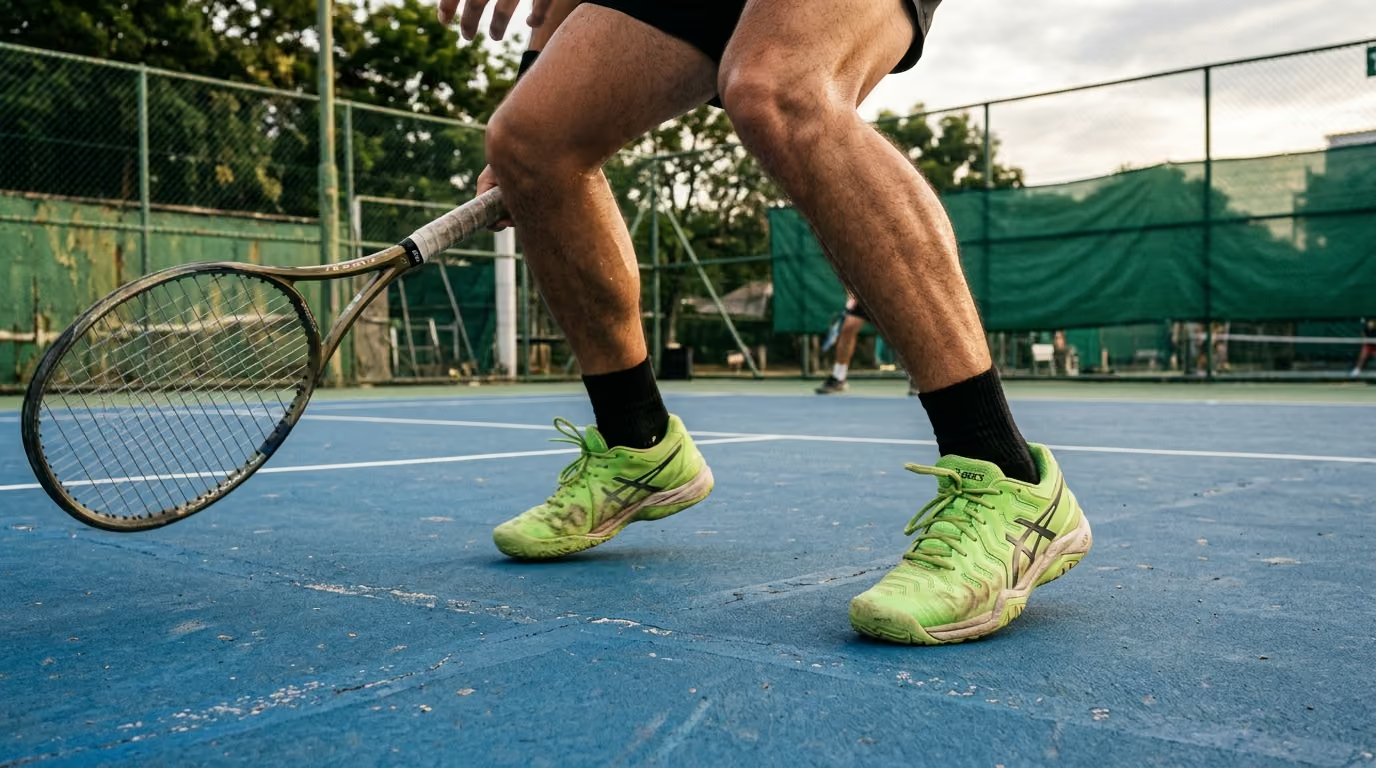
A racquet sport deload is a planned reduction in training stress that clears physical and mental fatigue while preserving athletic readiness and fitness.




Many racquet sports players believe that the only way to recover from a grueling month of matches is to stop moving entirely. They pack away their racquets, sit on the couch, and wait for their muscles to stop aching. However, complete inactivity often backfires by causing joint stiffness, losing court coordination, and increasing the risk of injury when they return. Real athletic longevity requires a more deliberate, active approach to recovery.
A racquet sport deload is a short, planned reduction in training stress designed to clear physical and mental fatigue while preserving your physical readiness. Rather than stopping all activity, you temporarily reduce your training volume and match play while keeping enough light, high-quality movement to maintain your timing and joint health. This approach allows your body to absorb previous training, protect your joints, and prepare you for your next competitive block.
To manage your court schedule effectively, you must understand the difference between three distinct concepts. Many amateur players confuse these terms, leading to either under-recovering or losing their hard-earned conditioning. By defining these terms clearly, you can choose the correct strategy for your current physical needs.
A deload is a brief, recovery-focused reduction in training load inserted directly into an active playing schedule. It typically lasts for one week. The primary objective is to lower physical and psychological fatigue while keeping your body moving. It is not an offseason break, but a strategic pause that allows your muscles, tendons, and nervous system to rebuild.
A taper is a highly specific, performance-peaking phase used immediately before a major tournament or league championship. During a taper, you reduce your training volume significantly but maintain high intensity. This combination helps you shake off residual fatigue while keeping your reaction times sharp and your movements explosive. Tapering is about reaching peak performance on a specific date.
Detraining is what happens when you stop exercising or playing for an extended period. When the training stimulus is completely removed, your body begins to lose its cardiorespiratory endurance and muscular strength. Research shows that these physical adaptations start to decline after just two weeks of complete rest. Therefore, avoiding detraining is a primary reason why we use active deloads instead of total inactivity.
Your performance on the court is always a balance between your fitness and your fatigue. When you train and play hard, you build fitness, but you also accumulate fatigue. Fatigue can mask your true physical capabilities, making you feel slow, sluggish, or inaccurate. A well-planned recovery week clears away that accumulated fatigue. This allows your true, underlying fitness to show through in your matches.
For more on how recovery influences your game, read our dedicated recovery science resources.
Many players make the mistake of measuring their training load solely in hours spent on the court. However, your body does not differentiate between the stress of a tight three-set tennis match and the stress of a difficult week at work. To plan a successful deload, you must evaluate all forms of stress acting on your system. The International Olympic Committee recommends looking at training load as a multidimensional puzzle.
External load refers to the physical work you perform on and off the court. In racquet sports, this includes your total court hours, the number of matches played, and the specific movements you execute. For example, you must track sprints, sudden stops, lunges, and overhead swings. In the gym, external load includes your weightlifting sets, repetitions, and total resistance. Keep an eye on these variables to see when they begin to pile up.
Internal load represents how your body responds to the physical work you do. A simple way to measure this is the Session Rating of Perceived Exertion (sRPE). To find your sRPE, multiply the duration of your training session in minutes by a difficulty rating from one to ten. For instance, a sixty-minute hitting session rated at a seven gives a score of 420 arbitrary units. Tracking this number helps you see that a relaxed sixty-minute drill session is far less stressful than a sixty-minute high-stakes tournament match.
Not all movements are created equal when it comes to joint wear and tear. Racquet sports require highly repetitive, unilateral movements. You must monitor sport-specific stressors such as serve volume, repetitive overhead smashes, deep lunges, and rapid changes of direction. These movements place localized stress on your shoulder, elbow, knee, and Achilles tendon. If these specific metrics spike, your joints will require targeted relief regardless of your overall cardiovascular fitness.
Your body has a limited capacity to handle stress. Psychological stress from work, poor sleep quality, family obligations, and travel all contribute to your total load. If you are experiencing a high-stress period at your job, your body is already working overtime to cope. Adding a heavy week of tournament play on top of this mental stress is a recipe for physical breakdown. A proper recovery week must account for these lifestyle factors to be truly effective.
Learn more about staying healthy through lifestyle changes in our athletic longevity resources.
To design a recovery week that works, we must look at what modern sports science reveals about training reductions. While we must avoid applying elite athletic research too rigidly to recreational players, several key studies offer valuable guidelines. These papers help us understand how quickly we lose strength, how to taper for events, and how load spikes lead to injury.
A study published in 2024 analyzed the effects of a one-week deload midway through a nine-week strength program. The researchers found that a brief deload did not harm muscle hypertrophy, muscular power, or local muscular endurance. However, there was a temporary reduction in maximum lower-body strength measures immediately after the easy week. This suggests that while a deload preserves your muscle mass and power, you should not expect to lift your absolute heaviest weights immediately after a recovery week.
Another study from 2026 looked at young, untrained men over several weeks of resistance training. The researchers compared a group that trained continuously with a group that took planned volume and frequency reductions in weeks four and eight. Both groups showed similar improvements in muscle thickness and strength endurance. This demonstrates that inserting planned, lighter weeks does not halt your physical progress or wash away your gym gains.
When looking at how to peak for an event, the scientific consensus is remarkably consistent. A major meta-analysis by Bosquet and colleagues found that the most effective tapering strategy lasts between one and two weeks. During this time, athletes should reduce their training volume by 41% to 60%. However, they should keep their training intensity and training frequency relatively stable. This ensures you maintain your neural drive and cardiovascular efficiency while shedding accumulated fatigue.
It is crucial to distinguish a controlled deload from complete detraining. Classic research by Mujika and Padilla shows that two weeks of complete inactivity can significantly reduce your VO2max, maximal heart stroke volume, and leg strength. Similarly, a study on elite youth soccer players showed that two weeks of complete training cessation impaired sprinting and jumping performance. This is why we avoid sitting still for weeks, as keeping a minimal dose of movement protects your athletic baseline.
In racquet sports, match play is highly taxing. A prospective study on professional female tennis players showed an injury rate of 56.6 per 1,000 hours of match play. Over 50% of these injuries occurred in the lower limbs, with muscle and tendon issues being the most common. In professional male tennis, a large study found that cumulative competition load significantly increased the risk of time-loss injuries. This risk was even higher for older players, highlighting the need for structured recovery as we age.
A case study of three professional male tennis players during a training lockdown highlighted a major risk. During the lockdown, their court-specific training dropped to zero, but they kept up their general gym fitness. When they returned to full-court training, all three players suffered injuries or illness. This shows that general physical fitness does not protect your tissues from the unique demands of tennis-specific movements. If you take a break from the court, you must return gradually.
Many players rely on massage, cold water immersion, or compression garments to cure their soreness. A study on professional tennis players found that while cooling strategies helped reduce muscle soreness, they did not improve the players' self-reported levels of recovery. These modalities can make you feel more comfortable, but they cannot make up for a lack of sleep or a poorly designed, over-congested playing schedule. True recovery starts with managing your training volume.
To put these scientific principles into practice, you need to know how to adjust your training on the court. You do not need a team of scientists to plan a highly effective recovery week. By systematically manipulating a few key variables, you can lower your physical stress while keeping your timing sharp.
The most important rule of deloading is to reduce your total volume before you reduce your intensity. In practice, this means you should spend fewer minutes on the court and hit fewer total balls. However, when you are hitting, you should still move with good footwork and strike the ball cleanly. For example, instead of playing three hard sets of singles, you might play one set or focus on thirty minutes of controlled target practice. This preserves your hand-eye coordination without overloading your joints.
Racquet sports are notorious for causing wear and tear through constant acceleration, hard braking, and deep lunging. On a deload week, you should actively seek to minimize these high-impact movements. Avoid drills that force you to run from corner to corner under extreme time pressure. Instead, choose cooperative rally drills where the ball is hit directly to you. This allows you to practice your stroke mechanics without subjecting your knees, ankles, and lower back to excessive deceleration forces.
The shoulder joint is highly vulnerable to overuse in racquet sports. Serving and hitting overhead smashes place an immense physical demand on the rotator cuff and labrum. During your recovery week, you should dramatically reduce your serve volume. If you usually hit fifty serves a session, cut that number down to ten or fifteen focus reps. This small dose keeps your service rhythm intact while allowing irritated tendons in your shoulder to heal.
Physical fatigue is closely linked to mental fatigue. Drills that require complex decision-making, rapid scanning, and constant tactical adjustments can exhaust your nervous system. On a deload week, simplify your practices. Focus on predictable, closed drills, such as crosscourt-only rallies or down-the-line patterns. By removing the chaotic element of open play, you give your brain and nervous system a chance to rest and recharge.
For ideas on structured movement routines, refer to our mobility and movement guides.
While all racquet sports share common movement patterns, each sport imposes unique demands on your body. A tennis player's recovery needs are different from those of a pickleball or padel player. Understanding these sport-specific nuances allows you to tailor your deload week to your chosen game.
Tennis is played on a much larger court than pickleball or padel, leading to greater running distances and higher movement speeds. Tennis players must absorb massive ground reaction forces during lateral slides and deep lunges. Additionally, the heavier tennis ball and larger racquet place substantial torque on the wrist, elbow, and shoulder. A tennis deload must prioritize lower-body joint relief and rotator cuff recovery. This means reducing court coverage drills and limiting heavy groundstroke baseline battles.
Pickleball is played on a smaller court, which reduces the need for long-distance sprinting. However, the game requires constant, low-lying lunges at the kitchen line and extremely fast hand-speed exchanges. This constant, semi-squatting position can cause significant fatigue in the quadriceps, patellar tendons, and lower back. A pickleball deload should focus on relieving this bent-over posture. Players should reduce the volume of dink rallies that force prolonged crouching and focus on standing taller during light technical work.
Padel is played in an enclosed glass cage, creating long, continuous rallies with frequent ball rebounds. The sport is highly rotational, requiring players to constantly twist to play balls off the back and side walls. Padel also features an exceptionally high volume of overhead strokes, such as the bandeja and vibora.
I remember finishing a tough two hour padel match on a cold Tuesday night and waking up the next morning feeling like my lower back was locked in concrete. For a long time, I just accepted this as the price of playing hard in my forties. But once I started spending just ten minutes on targeted hip mobility before heading to the club, the stiffness almost completely vanished. It taught me that we do not have to accept pain as a default state of aging. For padel players, a deload week must prioritize shoulder unloading and spinal decompression.
If you want to prevent injuries across any of these sports, check out our injury prevention training.
There is no single deload plan that works for every person. Your recovery needs depend on your playing level, competitive schedule, age, and external life stressors. Below are seven practical, evidence-informed models designed to fit different scenarios.
This model is ideal for players who follow a structured training block. It is best used after three to six weeks of progressively harder play.
Use this model when you want to arrive at a major event feeling fast, sharp, and fully energized.
This model is essential after a multi-match tournament where you have accumulated high levels of joint and muscular fatigue.
If you play in a weekly league, you cannot easily skip matches. This model helps you deload around your scheduled fixtures.
When you have competitions on consecutive weekends, you must use a compressed recovery schedule during the week.
Older athletes often require a more individualized approach to managing joint wear and tissue recovery.
Use this model when your professional life or family responsibilities temporarily spike.
Even well-meaning players often make mistakes that ruin their recovery weeks. By recognizing these common pitfalls, you can ensure your deload actually delivers the physical benefits you expect.
Many players assume that a deload means doing absolutely nothing for seven days. While complete rest is sometimes necessary for acute injuries, a total shutdown can make your muscles tight and your joints stiff. It also leads to a temporary loss of your court timing and spatial awareness. Instead, keep a minimal dose of light, high-quality movement to keep your body feeling fluid.
Some players try to deload by playing for three hours at a very slow, lazy pace. This is highly counterproductive. Long, slow sessions still accumulate massive amounts of mechanical wear on your joints and tendons. It is far better to play for forty-five minutes with good intensity and sharp movement, then head home to rest. Keep the quality of your play high, but keep the duration of your sessions short.
If you take a break from the court, you should not try to make up for it by doing extra workouts in the gym. As the professional tennis lockdown study showed, general physical fitness does not prepare your joints for the specific demands of running, stopping, and swinging. If you spend your recovery week doing heavy leg squats and long treadmill runs, you will return to the court with fatigued muscles and unconditioned tendons.
It is easy to get caught up in using massage guns, ice baths, and compression sleeves. While these tools can help reduce muscle soreness, they cannot override the physiological effects of chronic overtraining. No recovery gadget can replace the restorative benefits of a structured schedule, proper nutrition, and eight hours of quality sleep. Focus on the big planning pieces before worrying about minor recovery tools.
To build a solid foundation for your off-court training, check out our strength and conditioning programs.
A successful deload week does more than just make you feel less tired. It has deep physiological benefits for your muscles, joints, tendons, and nervous system, supporting your athletic longevity.
Tendons have a much lower blood supply than muscles, meaning they take significantly longer to adapt and heal. Repetitive court movements like lunging, jumping, and stopping place massive tensile loads on your Achilles and patellar tendons. A planned recovery week reduces this constant mechanical strain. This gives your tendon fibers the time they need to remodel, synthesize collagen, and build structural resilience.
High-intensity court movements rely heavily on carbohydrates stored in your muscles, known as glycogen. Over several weeks of heavy training, these glycogen stores can become progressively depleted. A deload week, combined with proper nutrition, allows your body to fully replenish these energy reserves. This ensures you return to your next training block with full fuel tanks and improved muscular endurance.
Racquet sports require rapid visual processing, quick decision-making, and precise muscle coordination. This high cognitive demand eventually fatigues your central nervous system (CNS). When your CNS is tired, your reaction times slow down, your coordination drops, and your risk of injury increases. A lighter training week removes this high-stress stimulation, allowing your brain and nervous system to fully recover their speed and accuracy.
A deload week is an excellent tool for managing general fatigue and mild muscle soreness. However, it is not a cure for structural injuries or chronic medical conditions. You must know when to step away from your recovery plan and seek professional help.
You should consult a qualified healthcare provider if you experience any of the following symptoms:
If you have persistent pain that does not resolve with a simple deload, seek a formal diagnosis from a sports physiotherapist or orthopedic physician. Attempting to play through structural joint damage by simply reducing your training volume can lead to long-term compensations and more severe injuries.
Planning regular, structured recovery weeks is the secret to maintaining your performance and playing the sports you love for years to come. By managing your training load wisely, you can stay fast, sharp, and healthy on the court.
Follow Evercourts for practical insights on tennis, pickleball and padel performance, movement, recovery and healthy ageing. Stay connected for new articles, research-led guidance and ideas to help you play well and keep playing for years.


Read practical guidance for better movement, smarter preparation and a game that keeps working for you.
explore the Blog