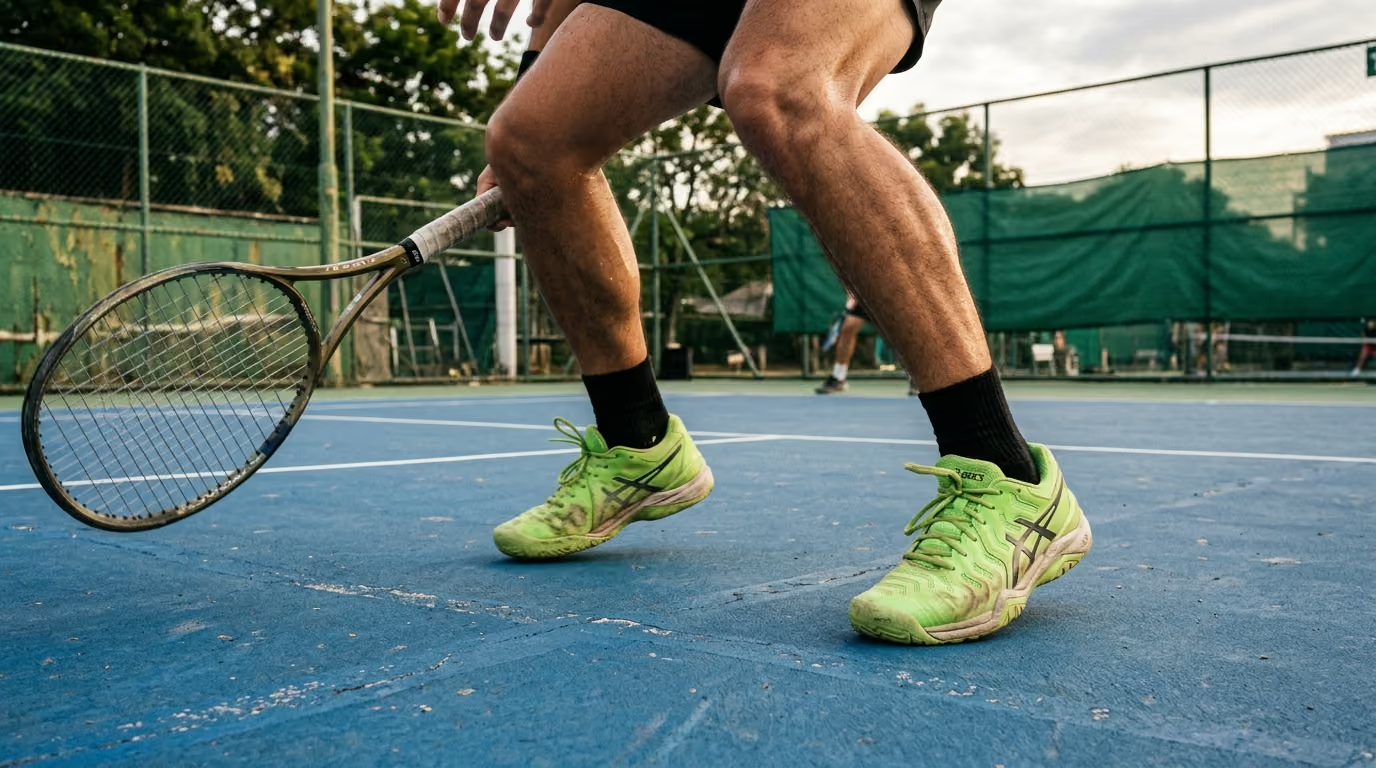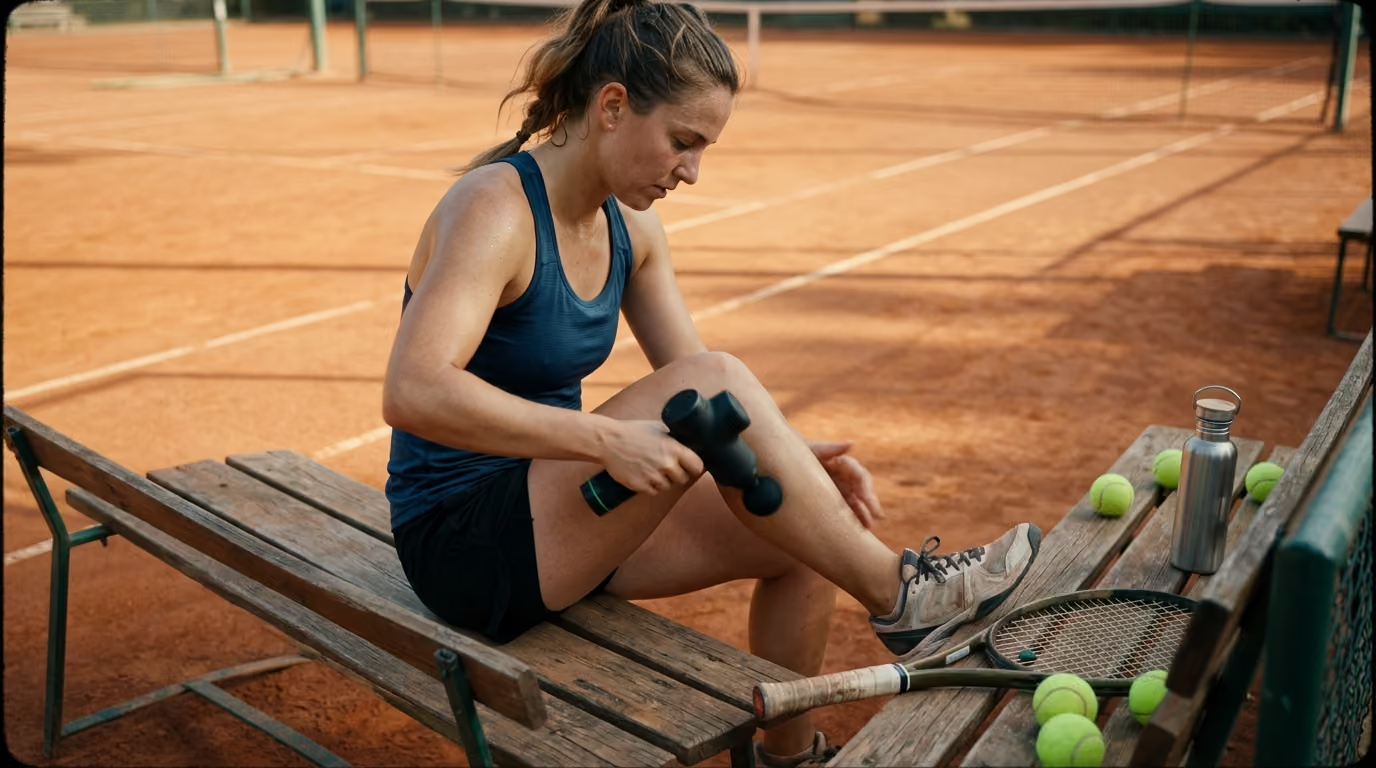

After an intense court session, the deep ache and stiffness from delayed onset muscle soreness signals your body's natural repair process.




Many players believe that extreme muscle soreness means they had a highly productive session. They view the deep, aching stiffness that arrives twenty-four hours after a match as proof of physical progress. In reality, severe delayed onset muscle soreness (DOMS) is often a sign of mismatched training load rather than optimal adaptation. Experiencing moderate soreness is a normal part of building physical capacity, but excessive stiffness can sideline you for days. If you want to maintain a consistent schedule on the court, you must understand how to manage this physiological response. Rather than chasing soreness as a marker of success, smart players focus on structural consistency and efficient recovery.
Delayed onset muscle soreness is a temporary physiological response to microscopic structural damage in muscle fibers caused by unfamiliar or intense eccentric exercise. It typically peaks between twenty-four and seventy-two hours after play and resolves naturally as the body repairs the affected tissue. This condition is a normal adaptation response that actually helps build stronger muscle tissue over time when managed correctly.
To understand why this happens, we must look at how our muscles work during play. When you compete in a sport that requires rapid starting and stopping, your muscles undergo intense mechanical stress. This stress is particularly high during eccentric contractions, which occur when a muscle lengthens under tension. This mechanical tension creates microscopic tears in the muscle fibers and surrounding connective tissue.
The body responds to this microscopic damage by initiating a localized inflammatory cascade. This natural healing process is what actually causes the sensation of soreness, rather than any chemical buildup. The soreness is a protective signal from your nervous system, encouraging you to protect the healing tissue. As the body repairs these micro-tears, the muscle adapts to become more resilient to similar loads in the future.
It is highly important to distinguish this process from acute injuries like muscle strains. While DOMS presents as a diffuse, dull ache across an entire muscle group, a strain usually causes sharp, immediate pain in a localized spot. Understanding this distinction helps you make informed decisions about your recovery and training schedule. By recognizing that soreness is a natural repair process, you can focus on supporting your body rather than worrying about minor discomfort.
The primary driver of delayed onset muscle soreness is eccentric muscle action. During a tennis match or a pickleball game, your muscles must constantly decelerate your body weight. For example, when you plant your foot to change direction, your quadriceps must lengthen while under tension to absorb the impact. This lengthening under load places a high amount of mechanical stress on individual muscle cells, known as myocytes.
On a microscopic level, this mechanical stress pulls on the basic contractile units of the muscle, which are called sarcomeres. When the force exceeds the structural strength of the sarcomere, the structural boundaries, known as Z-discs, experience micro-tears. This disruption of the muscle architecture allows calcium ions to leak out of their normal storage areas within the cell. The excess calcium activates enzymes that further break down damaged structural proteins.
This cellular damage triggers a powerful immune response within the muscle tissue. Within hours of your match, immune cells called neutrophils migrate to the site of the damage to clear away cellular debris. Later, macrophages arrive to assist in tissue regeneration and release signaling molecules called cytokines. This inflammatory process causes a small amount of localized swelling, which increases the pressure inside the muscle belly.
The increased fluid pressure and the presence of inflammatory chemicals sensitize the local pain receptors, known as nociceptors. These nociceptors send pain signals to your brain, which you perceive as stiffness and aching. Because this complex biological cascade takes time to build, the peak of your soreness occurs days after the actual match. This explains why you might feel relatively fine immediately after playing, only to wake up highly stiff forty-eight hours later.
For many years, players and coaches believed that lactic acid buildup caused this delayed pain. Modern sports science has thoroughly disproven this theory, demonstrating that lactate returns to baseline levels within an hour after exercise. Lactate is actually a valuable energy source that your body clears quickly from the bloodstream. The pain you feel two days after a tough match is entirely due to the structural damage and subsequent inflammatory response.
To minimize the severity of post-match soreness, you must prepare your body before you even step onto the court. Static stretching before play can actually reduce your muscle power and does not prevent soreness. Instead, perform a dynamic warm-up that increases your core temperature and prepares your muscles for eccentric loading. Focus on movements that mimic the demands of your sport, such as lateral lunges, arm swings, and light jogging.
When you are returning to play after a break, avoid playing highly competitive matches right away. Your muscles need time to readapt to the unique forces of court sports. Start with shorter hitting sessions of thirty to forty-five minutes at a moderate intensity. Gradually increase your court time by no more than ten percent each week to allow your structural tissues to adapt without excessive damage.
During your practice sessions, pay close attention to how you decelerate and change direction. Try to take multiple small adjustment steps rather than one large, abrupt stop when reaching for a ball. This distributes the braking forces across a larger number of muscle contractions, reducing the eccentric load on any single muscle group. Focus on maintaining a balanced athletic posture, which allows your hips and glutes to absorb impact forces more efficiently.
Immediately after you finish playing, do not sit down or head straight to your car. Spend five to ten minutes performing a low-intensity cool-down, such as slow walking. This keeps your heart rate elevated slightly, assisting your circulatory system in delivering fresh oxygen and nutrients to your fatigued muscles. Follow this light movement with gentle, passive stretching of the major muscle groups you used during play.
Gentle movement is far more effective than absolute rest when managing post-match stiffness. I remember finishing a tough two hour padel match on a cold Tuesday night and waking up the next morning feeling like my lower back was locked in concrete. For a long time, I just accepted this as the price of playing hard in my forties. But once I started spending just ten minutes on targeted hip mobility before heading to the club, the stiffness almost completely vanished. It taught me that we do not have to accept pain as a default state of healthy aging.
To apply this practically, focus on dynamic mobility exercises rather than intense static stretching. Active movements help restore joint range of motion without putting excessive tension on healing muscle fibers. Movements like the cat-cow stretch, gentle hip rotations, and thoracic spine extensions are highly effective. These exercises promote fluid movement in your joints and help reduce the protective guarding reflex of your nervous system.
This approach aligns perfectly with our evidence-based recovery science protocols. When you perform light mobility work, you send safety signals to your brain, which helps lower muscle tone. This reduction in muscle tension allows you to move more freely and reduces the overall sensation of stiffness. It is a highly practical way to maintain physical function while your body completes the tissue repair process.
To get the most benefit, perform your mobility routine once or twice a day when you are experiencing soreness. Keep the movements smooth and controlled, never forcing your joints into painful positions. Focus on deep, relaxed breathing throughout the routine to help transition your nervous system into a parasympathetic state. This state is essential for optimal tissue healing and overall physical recovery.
Tennis requires extensive court coverage, deep rotational forces, and explosive acceleration. The large court size means you must sprint longer distances and decelerate rapidly from high speeds. This deceleration places an exceptional eccentric load on your quadriceps, hamstrings, and glutes. Additionally, the tennis serve demands high-velocity overhead movement, which puts eccentric stress on your shoulder rotators and upper back.
Because of these forces, tennis players often experience severe DOMS in their lower limbs and shoulder complex. To manage this, tennis players must prioritize eccentric strength training in their off-court preparation. Strengthening your legs with exercises like eccentric squats and lunges helps build resilience to hard stops. To perform at your best, you should combine this physical preparation with structured tennis training that focuses on efficient footwork.
Pickleball is played on a smaller court, but it presents unique physical challenges. The game requires a persistent low athletic stance, especially during extended "dinking" rallies. This deep hinge position puts continuous isometric and eccentric strain on your quadriceps, glutes, and lower back. The movement is characterized by short, explosive bursts and rapid, lateral changes of direction.
Pickleball players frequently experience soreness in their inner thighs, lower back, and calves due to this low positioning. To mitigate this stiffness, focus on building endurance in your hip flexors and lower back muscles. Incorporate movements like glute bridges and lateral band walks into your routine. Developing your baseline conditioning through targeted pickleball physical preparation will significantly reduce the severity of post-game soreness.
Padel is played on a synthetic turf court overlaid on a hard concrete base, which transmits significant impact forces. The game involves constant split-steps, rapid wall rebounds, and frequent overhead shots. The combination of a hard playing surface and repetitive jumping places high eccentric stress on your calves and Achilles tendons. The frequent overhead plays also load the thoracic spine, shoulders, and chest muscles.
Padel players must focus heavily on restoring calf flexibility and ankle mobility after a match. Gentle foam rolling of the calves and active ankle circles can help alleviate localized stiffness. Ensuring your upper back can rotate freely is also crucial for preventing shoulder irritation during overheads. Addressing these padel recovery demands systematically will help you return to the court feeling refreshed.
Many players reach for ibuprofen or other non-steroidal anti-inflammatory drugs (NSAIDs) immediately after a match. While these medications can reduce pain, research shows they can impair the natural healing process. The inflammatory response is the primary signal your body uses to initiate muscle repair and adaptation. By blocking this pathway, you may prevent your muscles from growing stronger and more resilient over time.
Instead of masking the soreness with medication, allow the natural recovery process to take place. Use active recovery, hydration, and sleep to manage your discomfort naturally. If you feel you must take pain medication, try to use it sparingly and only for severe discomfort. This mindful approach is a key element of proactive player health strategies designed to support long-term physical well-being.
When your muscles are highly sore, the temptation to remain completely still on the couch is strong. However, total inactivity is one of the worst things you can do for delayed soreness. Without movement, blood circulation to your damaged muscles decreases, which slows the delivery of healing nutrients. This lack of movement also causes the healing tissues to shorten and stiffen, making your next session more uncomfortable.
Instead of complete rest, choose light, low-impact activities like walking or easy swimming. This light movement keeps your joints lubricated and increases blood flow without adding mechanical stress to your muscles. Keep the intensity low enough that you can easily maintain a conversation. The goal is to encourage circulation and movement, not to build fitness or cause further fatigue.
Muscle soreness is not just an uncomfortable sensation; it temporarily alters how your body moves. When your muscles are sore, your central nervous system changes its motor unit recruitment patterns to protect the damaged areas. This means your body will unconsciously use different muscles or joint angles to perform a movement. These compensatory movement patterns can place abnormal stress on your joints, ligaments, and tendons.
For example, if your quadriceps are highly sore, you may lunge shallower or bend your lower back more to reach a low ball. This shift in movement biomechanics increases the risk of acute strains or sprains in surrounding tissues. Sore muscles also have a reduced capacity to produce force and absorb impact. This compromised state makes you less agile on the court and increases your overall risk of injury.
Understanding these biomechanical changes is essential for maintaining healthy aging and athletic longevity. If you consistently play through severe soreness, you risk turning a temporary muscular issue into a chronic overuse injury. Respecting your body's recovery window allows your tissues to rebuild fully, ensuring you can play consistently for decades. By matching your playing intensity to your current recovery state, you protect your structural health.
To minimize these risks, adjust your playing style when you are experiencing mild to moderate soreness. Focus on placement and strategy rather than raw power and explosive movement. If your soreness is severe enough to alter your natural running gait, it is best to skip the match. Use that time instead for gentle mobility work, hydration, and structural rest to accelerate your return to full function.
Foam rolling and massage guns are popular recovery tools, but it is important to understand what they actually do. These tools do not physically break up scar tissue or permanently lengthen your muscles. Instead, they work by stimulating sensory receptors in your skin and fascia, which sends inhibitory signals to your nervous system. This process temporarily reduces your perception of muscle pain and stiffness.
To use a foam roller effectively, spend one to two minutes rolling major muscle groups like your calves, quadriceps, and glutes. Move at a slow, controlled pace, pausing on areas that feel particularly tight or tender. Avoid rolling directly over bony joints or your lower spine, focusing entirely on the muscle belly. Use this tool to create a temporary window of improved mobility before you perform your gentle active stretches.
Wearing compression tights or socks after a hard match is a simple, non-invasive way to support recovery. Compression garments apply gentle, external pressure to your limbs, which assists your lymphatic system in removing cellular waste. This pressure also helps reduce the minor swelling and fluid accumulation that contributes to post-match stiffness. Many players find that wearing compression gear overnight or during travel helps their legs feel lighter and less fatigued.
For the best results, put on your compression garments within an hour of finishing your match and wear them for several hours. Ensure the garments fit snugly but do not pinch or restrict your circulation. While compression gear will not eliminate soreness entirely, it is a practical tool to support your body's natural recovery processes. It is a valuable addition to your recovery toolkit, especially during multi-day tournaments or intense training weeks.
No recovery tool or massage technique can replace the restorative power of high-quality sleep. During deep sleep, your body enters a highly anabolic state, releasing growth hormone and other key factors that drive tissue repair. Aim for seven to nine hours of continuous sleep, especially after a demanding match or training session. Establish a relaxing bedtime routine and keep your bedroom cool and dark to optimize your sleep quality.
To support this physical repair process, you must supply your body with the necessary building blocks through nutrition. Consume twenty to thirty grams of high-quality protein within two hours of finishing your match to support muscle protein synthesis. Combine this with complex carbohydrates to replenish your muscle glycogen stores and restore your energy levels. You can find more comprehensive strategies to support your court performance in our practical court performance resources.
The most effective way to manage delayed onset muscle soreness is to prevent it from reaching extreme levels in the first place. This is accomplished through systematic workload management, which ensures you do not overload your body's capacity to adapt. Sports scientists often use a metric called the Acute-to-Chronic Workload Ratio (ACWR) to monitor training loads. This ratio compares your current week of training (acute workload) to your average training volume over the past four weeks (chronic workload).
To calculate this simply, track the total minutes you spend playing or training each week. Your chronic workload is the average of your weekly minutes over the last month. To minimize your risk of excessive soreness and injury, your acute workload should stay within 0.8 to 1.3 of your chronic workload. This means you should avoid sudden jumps in playing time, keeping increases gradual and controlled.
For example, if you have averaged one hundred and twenty minutes of play per week for a month, your chronic workload is two hours. If you suddenly decide to play four hours of intense matches in a single week, your acute-to-chronic ratio spikes to 2.0. This rapid increase is a primary cause of severe DOMS and potential overuse injuries. Instead, progress your playing time to one hundred and forty minutes, allowing your muscles and connective tissues to adapt safely.
Apply this same systematic progression when you incorporate strength training to support your court play. When starting a new gym program, begin with lighter weights and lower set volumes than you think you need. Allow your nervous system and muscles two weeks to adapt to the new movements before you increase the resistance. This disciplined approach is a cornerstone of court-specific injury prevention and long-term athletic success.
It is highly important for every player to distinguish between normal muscle soreness and a more serious physical injury. Normal DOMS is a diffuse, symmetrical ache that typically affects both sides of your body equally. It feels like a dull stiffness that gradually improves as you move around or apply gentle heat. This soreness typically peaks within forty-eight hours and should begin to fade significantly by the third or fourth day.
You should consult a physical therapist or sports medicine physician if you experience any of the following warning signs:
Ignoring these warning signs and continuing to play can lead to chronic tissue damage, joint instability, or more severe muscle tears. A qualified medical professional can perform a comprehensive evaluation to provide an accurate diagnosis. They can design a structured rehabilitation program tailored to your specific sport, helping you return to the court safely and confidently. Recognizing these boundaries is an essential skill for protecting your long-term physical health.
Managing your recovery and workload intelligently is the most reliable way to stay active, perform well, and enjoy your time on the court.
Follow Evercourts for practical insights on tennis, pickleball and padel performance, movement, recovery and healthy ageing. Stay connected for new articles, research-led guidance and ideas to help you play well and keep playing for years.


Read practical guidance for better movement, smarter preparation and a game that keeps working for you.
explore the Blog