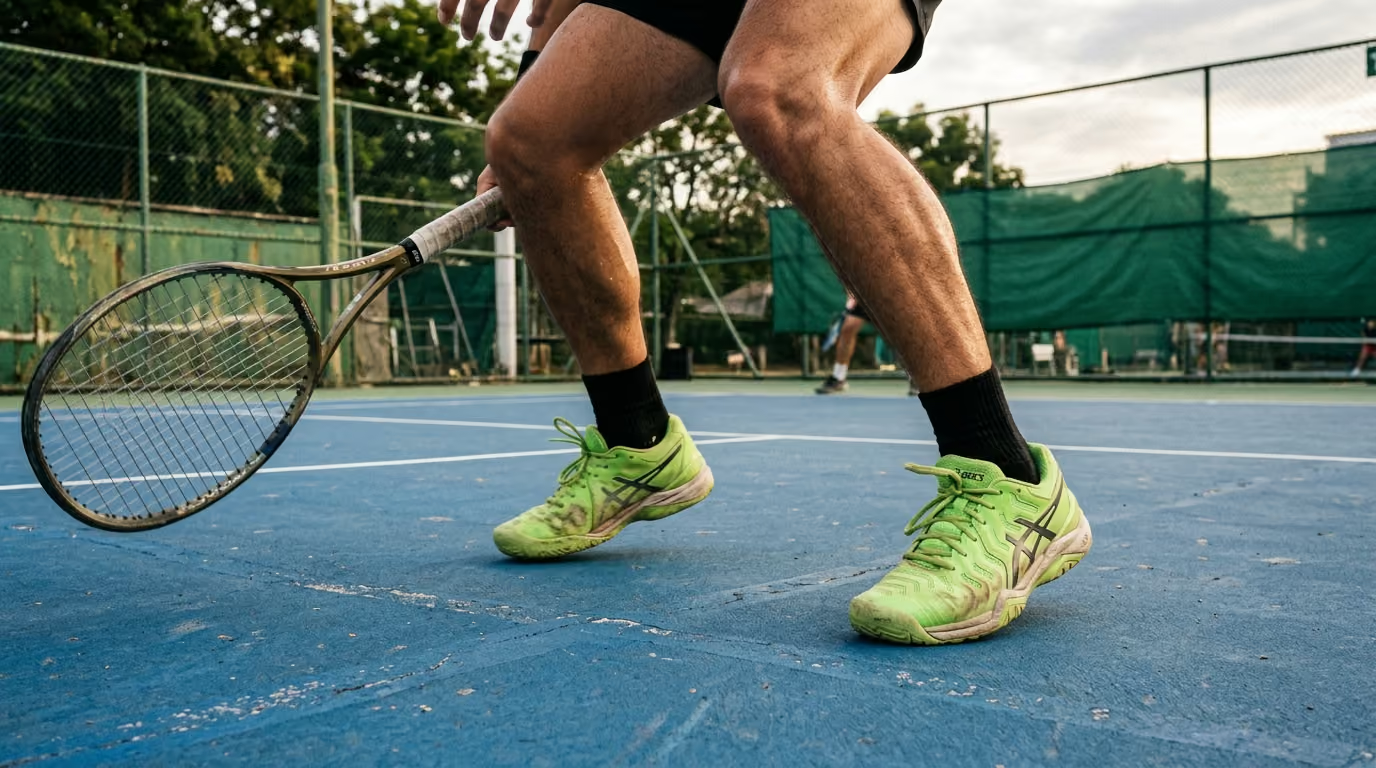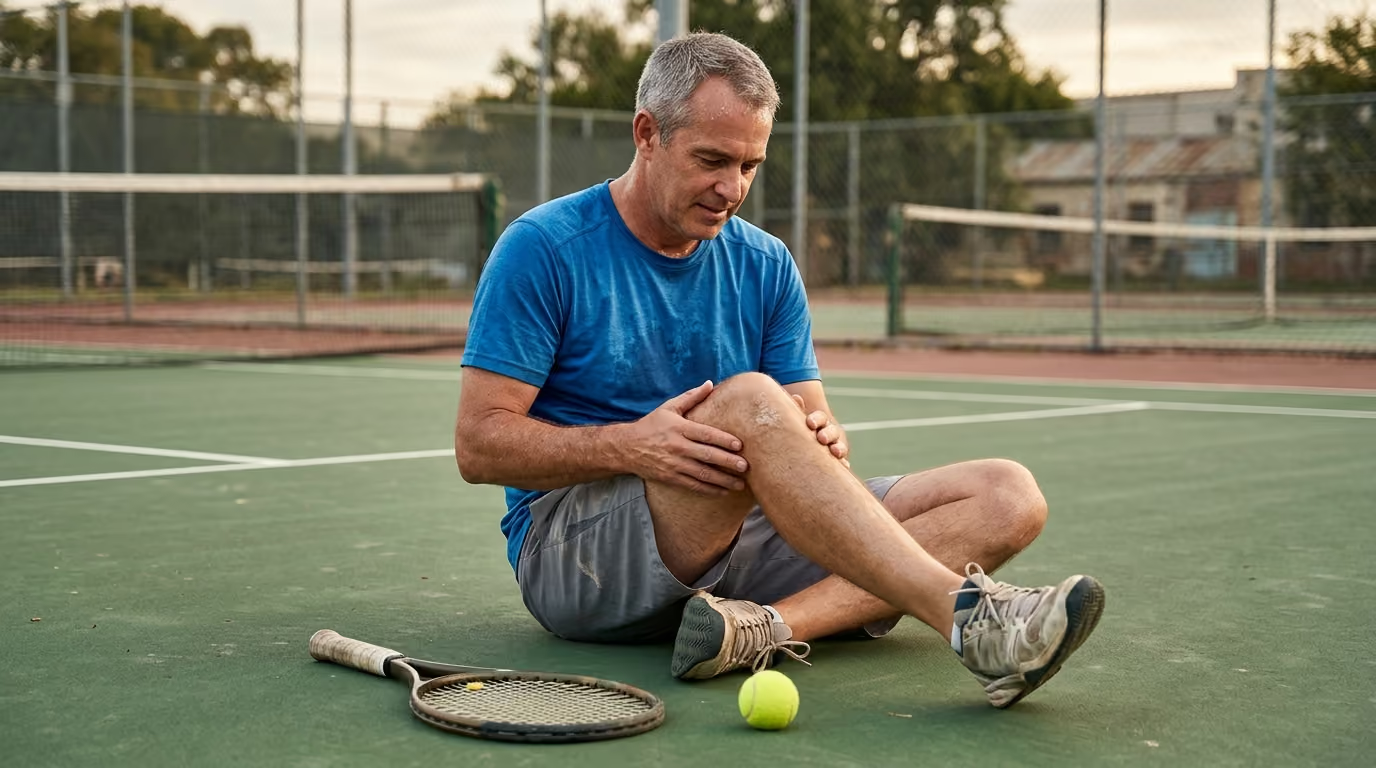

When players sprint for a lob or lunge for a drop shot, unexpected slips and balance loss often lead to severe injuries on the court.




Have you ever found yourself sprinting backward for a lob or lunging for a drop shot, only to feel your feet slide out from under you? Unexpected slips and balance loss are common issues that can lead to severe injuries on the court. To prevent falls and recover safely, players must combine environmental awareness with reactive footwork and a structured post-fall checklist. This approach reduces fall frequency, improves protective landing strategies, and ensures you do not stand up too quickly if an injury has occurred.
Balance is not a static state, but a continuous process of adjustment. When you move across a court, your center of mass must remain aligned over your base of support. A loss of balance occurs when your center of mass moves too far beyond this base, or when you cannot move your feet quickly enough to create a new support system.
On the court, balance is threatened by sudden, rapid movements. These include late lateral reaches, crossover steps, sudden stops, split-step landings, and backward retreats. Lunging with your torso leaning far beyond your feet can also cause an immediate loss of stability.
We must distinguish between a recoverable and an unrecoverable balance error. A recoverable error allows you to perform a protective step, which is a quick foot adjustment to restore your stance. An unrecoverable error surpasses your physical ability to adjust, which leads to a slip, slide, or full fall.
Your brain relies on three primary sensory systems to maintain your upright position on the court. The visual system tracks your position relative to the net, the ball, and the lines. The vestibular system, located in your inner ear, senses head movement and orientation in space. Finally, the somatosensory system uses receptors in your muscles, tendons, and joints to feel the court surface.
During a fast match, these three systems must process information simultaneously. If you are tracking a high lob, your visual focus is pulled upward. This leaves your brain highly dependent on your inner ear and your feet to maintain stability. If your foot hits a slippery patch or a stray ball while your head is tilted back, your balance can fail instantly.
The interaction between your shoes and the court surface involves both static and kinetic friction. Static friction keeps your foot planted when you push off to run. Kinetic friction occurs when your foot is sliding across the surface. A sudden drop in friction can cause your foot to slip outward.
Different court surfaces have different friction profiles. Clean, dry acrylic hard courts offer high static friction, which supports sudden stops. Clay courts allow for controlled sliding, which reduces joint stress but requires specific sliding skills. Synthetic turf with sand can become highly unpredictable if the sand is distributed unevenly.
Understanding the data behind court injuries helps clarify why fall prevention is essential for athletic longevity. Research shows that unexpected contact with the court surface is a leading cause of severe injury in recreational sports. Players of all ages experience slips, but the consequences change significantly as we age.
A 2025 emergency-department study examined the mechanisms of injuries on recreational courts. The researchers found that slips, trips, falls, and unexpected landings were the most common injury mechanisms, accounting for 64.3% of the analyzed cases. The study also revealed that older players had nearly three times the odds of sustaining a fracture compared with younger players. Furthermore, older participants were nearly three times as likely to be injured through a slip or fall.
Emergency-department data from 2014 to 2023 show a major increase in estimated annual court injuries. For example, estimated annual pickleball injuries rose from 1,313 cases in 2014 to 24,461 cases in 2023. The vast majority of these injuries affected players between the ages of 60 and 79. Within this age group, there were significantly higher odds of sustaining fractures, wrist injuries, and hand injuries from falling.
Another national analysis covering the years 2013 through 2022 confirmed these patterns. In that study, fractures and sprains each accounted for 27% of all recorded injuries. Players aged 50 and older represented 91% of the total injury cases. These figures highlight the need for targeted balance training and sensible movement strategies.
General population statistics from the Centers for Disease Control and Prevention (CDC) provide further context. More than 14 million U.S. adults aged 65 and older, which is approximately one in four, report falling each year. About 37% of those who fall require medical treatment or must restrict their activity for at least one day. Falls also stand as the leading cause of injury-related death in this age demographic.
The CDC reports approximately three million emergency-department visits and one million hospitalizations annually due to falls among older adults. Furthermore, falling once doubles the chance of falling again. These statistics highlight the importance of proactive physical conditioning.
The goal of presenting this data is not to discourage active play, but to encourage smart preparation. Applying smart athletic longevity strategies can help you maintain your physical capabilities for years. By understanding these risks, we can build a practical framework to keep playing safely.
To build a comprehensive safety strategy, we must look beyond basic advice. Fall prevention is a multifactorial system that involves your environment, gear, movement habits, physical fitness, and emergency responses. We can organize this system into five distinct layers.
The first layer focuses on your immediate playing environment. Wet or recently cleaned court surfaces present an immediate slipping hazard. Dust, grit, leaves, and loose court debris can also ruin your traction. You must inspect the court before you begin playing, looking for cracked surfaces, loose nets, or poorly secured equipment.
Inadequate space between courts and stray balls are major hazards. Always clear extra balls from your playing area before serving. Clinical guidelines for fall prevention frequently highlight environmental modification as a key factor in reducing accidents. If a court has poor lighting, glare, or wet spots, do not risk playing on it.
Layer two covers your equipment and clothing. You should always wear court-specific shoes rather than casual running shoes. Running shoes are designed for forward motion and often have thick soles that can cause ankle rolls during lateral shifts. Court shoes provide lateral stability and a tread pattern designed for sudden stops.
Ensure your shoes have a secure fit that prevents your heel from lifting. Replace your shoes regularly, as worn soles lose their ability to grip the court. Your clothing should allow free hip and knee movement without catching. Using protective eyewear is also a smart choice to preserve your vision, which is a critical component of your balance system.
Layer three is your movement strategy on the court. Learn to use small, rapid adjustment steps before reaching for a ball. Avoid running backward over long distances, which is a major cause of severe backward falls. Instead, turn your body and run toward the baseline while keeping your eyes on the ball.
Lower your center of mass by bending your knees slightly before changing direction. This lower position stabilizes your body and makes it easier to brake. Practice a controlled split-step as your opponent strikes the ball, which prepares your body to move in any direction. The golden rule of court movement is to arrive balanced rather than merely arriving at the ball.
Layer four involves your physical preparation. Evidence-based guidelines suggest that balance-challenging exercises are highly effective at reducing falls. World guidelines recommend structured programs conducted at least three times weekly for at least twelve weeks. These programs should combine strength work with dynamic balance challenges to prepare your muscles for the court.
Your training should target your ankles, calves, quadriceps, and hamstrings. Strong hip abductors and extensors are also vital for lateral stability. You can access specialized strength and conditioning programs to help build these specific muscle groups.
Layer five is your response and recovery rehearsal. This involves practicing how to react when you actually lose your balance. You must train your mind to stop chasing balls that are completely out of reach. Rehearse how to turn your body during a backward fall, how to protect your head, and how to get up safely.
Even with excellent preparation, some falls are unavoidable. When a fall occurs, your immediate goal is to minimize the impact force and protect your vital areas. Different fall directions require different protective reactions.
During a forward fall, players often lunge or trip while moving toward the net. The natural instinct is to reach out with both arms to stop the fall. However, landing on fully locked elbows can cause severe fractures in your wrists, elbows, and shoulders. Instead, try to slightly bend your elbows to absorb the impact, or turn your body to slide.
If possible, try to turn your shoulder toward the ground to protect your face and chest. Relaxing your muscles rather than tensing up can also help distribute the impact force. Landing on the softer, muscular parts of your outer thighs and buttocks is much safer than landing on joint points.
Backward falls are particularly dangerous because you cannot see where you are landing. If you lose your balance backward, do not try to look behind you. Instead, tuck your chin toward your chest to keep the back of your head from striking the court. Lower your hips toward the ground to reduce the distance you have to fall.
Try to turn your body to the side as you fall, rather than landing flat on your back or spine. A diagonal or side landing allows you to roll, which distributes the impact force across a larger surface area. Never attempt to catch yourself with rigid, straight arms behind your body.
Lateral falls often happen during fast side-to-side movements or sudden direction changes. If you fall sideways, avoid landing directly on the point of your shoulder or your hip bone. Try to roll onto the fleshy side of your thigh and the back of your shoulder. Keep your arms slightly curved to roll with the momentum of the fall.
Controlled rolling can be a useful tool to minimize impact, but it must be practiced carefully. You should never try high-impact rolling exercises on a hard court without proper training. Start on soft mats under professional guidance to teach your body how to roll safely. These protective reactions should be viewed as general safety principles, not as absolute guarantees against injury.
What you do after a fall is just as important as how you land. Many players feel embarrassed after falling and try to stand up immediately to resume play. This rapid reaction can worsen a hidden injury, such as a sprain, fracture, or concussion.
The first stage after a fall is immediate self-assessment. Lie still for a moment and take a few deep breaths to calm your nervous system. Do not let your partners or opponents pull you up to your feet immediately. Scan your body from your head to your toes, checking for sharp pain, numbness, or tingling.
Gently move your fingers, wrists, ankles, and knees to ensure they function normally. If you feel severe pain, notice an obvious deformity, or suspect a fracture, do not try to move. Stay on the court, keep quiet, and ask someone to call for medical assistance.
The second stage is a deliberate, step-by-step floor-to-standing recovery. If you have assessed your body and feel safe to stand, do not rush. First, slowly roll onto your side, keeping your limbs close to your body. From your side, push yourself up onto your hands and knees.
Next, crawl slowly toward a sturdy object, such as a heavy bench, a secure net post, or a stable chair. Place your hands on the sturdy surface for support. Bring one foot forward and place it flat on the ground, so you are in a half-kneeling position.
Push down through your hands and your front foot to slowly lift your body up. Turn gently and sit down on the bench or chair to rest. Do not return to the court immediately after a hard fall, even if you feel fine. Take at least ten minutes to rest, monitor your body, and ensure you do not experience dizziness or delayed pain.
This standard hands-and-knees recovery may be difficult for players with pre-existing limitations. If you have severe knee arthritis or a prior wrist injury, putting weight on these joints can be painful. In these cases, you can slide your hips toward a low bench or use a side-scooting motion to get into a sitting position without kneeling.
Tennis, pickleball, and padel each present unique movement challenges and balance risks. Understanding these differences allows you to customize your safety preparation. Let us examine the specific demands of each sport.
Tennis is characterized by high-velocity sprints, wide lateral lunges, and sliding on specific surfaces. Hard courts provide excellent traction, which can lead to abrupt stops that strain your ankles and knees. Clay courts allow sliding, which requires a specific sliding technique to avoid catching an edge and tripping.
The large size of a tennis court means players must cover significant distances. This leads to high-speed backward running to chase overhead lobs. Players are also exposed to deep lateral reaches on the baseline, which can cause severe lateral slips. Tennis players must focus heavily on dynamic deceleration and hip strength to handle these high-momentum forces.
Pickleball is played on a much smaller court, but it features incredibly rapid exchanges. Most movements occur near the non-volley zone line, where players must react to fast, close-range shots. This environment requires quick, short steps and sudden forward lunges to reach low dink shots.
Because the sport attracts many older participants, fall risks are highly relevant. Slips, trips, falls, and balance losses are particularly common when players attempt to retreat for lobs. Players can find useful safety advice in our specialized pickleball player safety guides. These guides focus on maintaining court posture and avoiding backward balance loss near the kitchen line.
Padel combines elements of tennis and squash, utilizing glass walls and metal mesh surrounds. The court surface is typically synthetic turf filled with fine sand, which can feel slick underfoot. This sand requires specific padel shoes to maintain reliable traction and prevent sudden slips.
The presence of walls means players must track rebounds, which involves rapid turning and backward movement. You must often look up at a lob while moving backward into a corner, creating a high risk of spatial disorientation. Padel players should consult our padel court strategies to learn how to position themselves safely near the glass without losing their balance.
Many recreational players hold false beliefs about how to move and fall on the court. These misconceptions can increase your risk of injury during a match. Let us analyze these common errors and replace them with safer habits.
The first misconception is that you should always put out your hands to break a fall. This instinctive reaction often leads to a fall on an outstretched hand, known in medicine as a FOOSH injury. Landing this way forces your entire body weight onto your wrist bones, which can cause severe fractures. Instead, try to use a rounded arm or turn your body to land on larger, softer areas.
The second misconception is that a backward fall can always be caught or prevented. Backward balance loss happens extremely fast, often before your brain can process the event. Expecting to always save yourself by stepping back can lead to a stiff, rigid posture that increases head-impact risk. Accept that some falls will happen, and focus on lowering your hips and tucking your chin.
The third misconception is that being generally fit or athletic makes you immune to falls. You might have excellent aerobic endurance but still possess poor reactive balance or weak ankle stabilizers. In our experience, fatigue plays a massive role in late-match balance errors.
Members of our team used to think tough conditioning blocks were the only way to improve court endurance. However, after tracking sleep and movement quality, we noticed that sleeping less than six hours led to sluggish net reactions and earlier balance loss. Prioritizing consistent rest did more for late-match stamina than extra sprints. Recovery is a critical foundation of your movement quality, which you can study further in our recovery science guidelines.
The fourth misconception is that aggressive static stretching is the key to preventing falls. While flexibility is useful, static stretching does not train your nervous system to react to sudden slips. You need active strength, coordination, and rapid stepping reactions to stay upright on the court.
The fifth misconception is that if you can stand up after a fall, you should immediately keep playing. Adrenaline can mask the pain of a fracture, concussion, or severe sprain. Standing up too quickly can also cause sudden dizziness if your blood pressure drops. Always take a structured rest break after any significant fall to assess your true physical state.
The sixth misconception is that you can practice falling by simply throwing yourself onto the court. This type of unsupervised, high-impact practice is a recipe for injury. Safe landing skills must be learned progressively, starting with low-intensity floor transitions before attempting dynamic movements.
The final misconception is that older players should only perform low-intensity exercises. While safety is paramount, low-intensity walking is not enough to prepare your body for the physical demands of racquet sports. To improve your reactive balance, you must safely expose your system to progressive challenges that mimic court movements.
To build lasting stability, you must follow a structured, age-conscious training progression. This program should move from basic stability to dynamic, racquet-specific movements. Let us break down this training into four distinct stages.
Stage one focuses on general readiness and basic stability. This stage is ideal for players returning to the court after a break or those starting a new sport. Begin with simple exercises like repeated sit-to-stands from a sturdy chair. This movement builds essential quadriceps and gluteal strength, which are vital for controlling your descent.
Practice stable standing with your feet wide apart, then gradually bring your feet closer together. Progress to standing on one leg near a secure counter or wall for safety. Once you can hold a single-leg stance for thirty seconds, try closing your eyes to challenge your vestibular system. Johns Hopkins medicine suggests only moving to the next level of balance training once you can perform the current step with complete control.
Stage two introduces functional balance movements. These exercises require you to move your center of mass while maintaining control. Practice clock stepping, where you stand on one leg and reach the other foot out to touch simulated numbers on a clock face.
Perform lateral lunges with a slow, controlled lowering phase to build hip strength. Practice turning your head from side to side while walking slowly in a straight line. You can also perform these movements while holding a racquet to make the training feel more familiar. This stage bridges the gap between static stability and active court movement.
Stage three targets racquet-specific reactivity. Here, we train your nervous system to respond to unexpected changes in direction. Practice split-step timing drills, where you jump slightly and land softly on the balls of your feet in response to a visual cue.
Incorporate ball tracking into your balance work by having a partner throw light balls to you while you stand on a foam pad. Practice short acceleration and braking drills, where you sprint forward three steps and focus on stopping with a low, balanced stance. These drills help prepare your joints for the rapid, unpredictable nature of court play.
Stage four involves advanced balance challenges. This stage is reserved for players who have built a strong foundation of strength and stability. It includes fast-paced agility ladder drills, rapid direction changes, and reactive partner drills.
You should also practice moving on different court surfaces to adapt your traction control. Expose yourself to moderate fatigue during these drills to simulate the end of a tough match. Remember that your training progression should always be based on movement quality and control, rather than age or speed.
Evidence-based reviews show that structured exercise programs can reduce fall rates in older populations by 23% to 32%. To achieve these benefits, your training must be consistent and ongoing. If you stop training during the off-season, your balance and strength gains will quickly diminish. Integrate these exercises into your weekly routine to ensure long-term court safety.
While self-training is valuable, certain signs indicate that you should consult a qualified healthcare provider. Working with a physical therapist or sports physician can help you address underlying balance issues before they lead to a fall.
You should seek professional guidance if you experience frequent, unexplained stumbles or slips during daily life. Regular dizzy spells, lightheadedness, or sudden losses of balance without an obvious cause require a medical evaluation. These symptoms can be linked to inner ear issues, vision changes, or medication side effects.
If you experience sharp, persistent joint pain in your knees, hips, or ankles, consult a professional. Pain can alter your movement patterns and compromise your reactive balance, making you more vulnerable to falls. A physical therapist can perform a comprehensive gait and balance assessment to identify specific weaknesses.
You must seek immediate medical attention if you experience a hard fall that results in a head strike, confusion, or a brief loss of consciousness. Do not attempt to drive home or continue playing if you show signs of a concussion. Other red flags include an inability to bear weight on a leg, visible joint deformity, severe localized pain, or persistent numbness and tingling.
If you have a history of osteoporosis or prior bone fractures, you must consult your clinician before starting any fall-landing practice. High-impact rolling or diving drills are highly inappropriate for individuals with compromised bone density. Your provider can help you modify your training to focus on safe, low-impact injury prevention resources instead.
If you ever feel unsure about your physical readiness for racquet sports, our team is always here to assist. You can reach out to us directly through our contact page to ask questions or find specialized resources. Your long-term health and athletic longevity are always our top priorities.
To help you apply this information this week, we have created a practical next-steps checklist. Use these steps to evaluate your court safety and improve your balance control.
Follow Evercourts for practical insights on tennis, pickleball and padel performance, movement, recovery and healthy ageing. Stay connected for new articles, research-led guidance and ideas to help you play well and keep playing for years.


Read practical guidance for better movement, smarter preparation and a game that keeps working for you.
explore the Blog