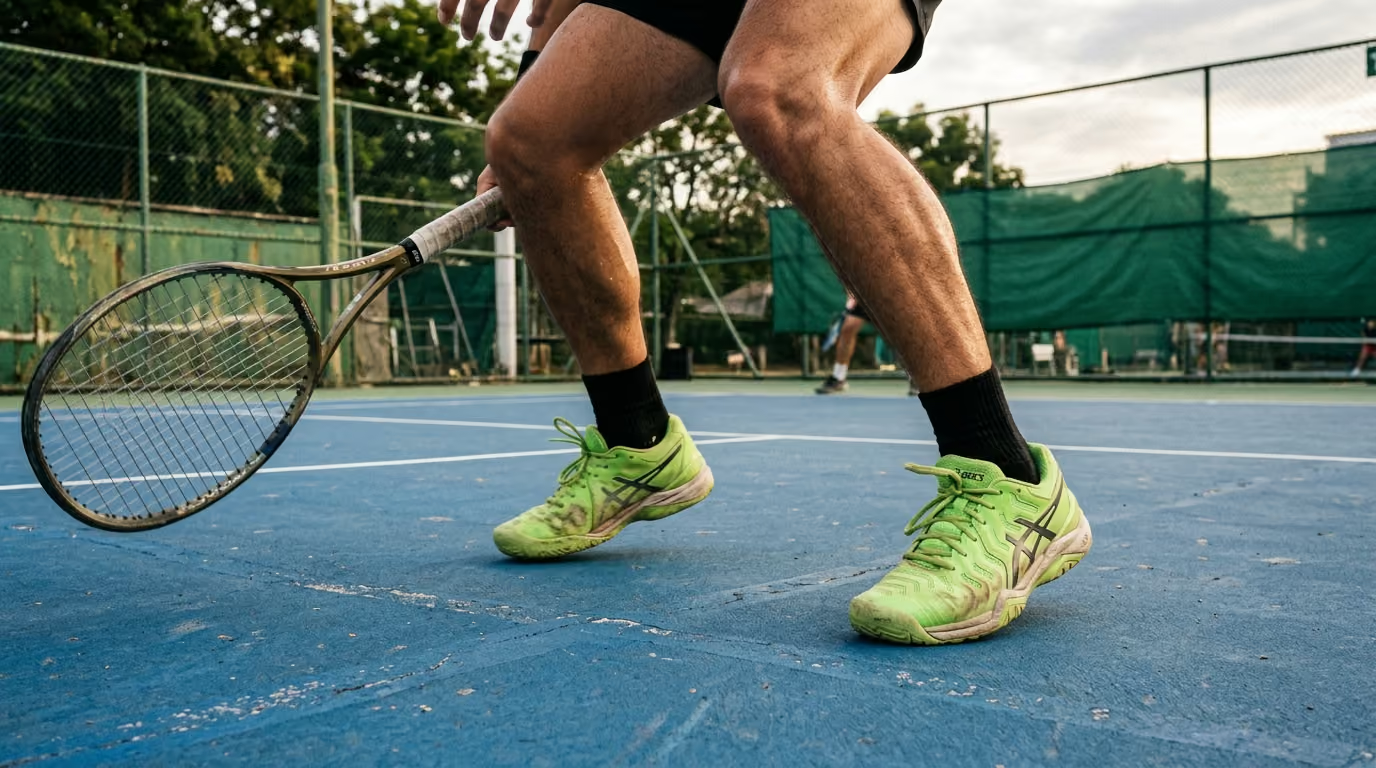
When planting your foot for a shot in racquet sports, the extreme biomechanical demands on your feet and toes require a systematic approach to injury prevention.




You slide wide for a deep forehand, plant your foot to brake, and feel a sharp pinch in your big toe. On the next point, your heel slips inside your shoe as you perform a split step. These small moments of foot instability can ruin your match and lead to long-term issues.
Preventing foot and toe injuries in racquet sports requires a systematic approach that builds tissue capacity, uses stable footwear, and implements progressive training. By combining intrinsic foot strengthening, proper shoe fitting, and balance drills, court athletes can handle the high lateral forces of play. This comprehensive strategy protects the joints and extends your athletic longevity.
Racquet sports require constant, high-velocity adjustments in multiple directions. Players perform repeated starts, sudden stops, lateral cuts, and explosive jumps. These movements place extreme mechanical demands on the lowest parts of the kinetic chain. Research in tennis shows that plantar pressure varies significantly based on movement type, playing surface, and court positioning.
During a typical match, the foot acts as both a shock absorber and a rigid lever. When you plant your foot to change direction, ground reaction forces travel upward through your leg. Advanced players often exhibit higher plantar pressures than recreational players. This difference is linked to their faster movement speeds and more aggressive deceleration patterns.
The dominant foot typically experiences higher pressure values than the non-dominant foot. This asymmetry is natural but can lead to uneven tissue loading over time. If one side is consistently overloaded, the risk of tissue failure increases. A balanced training program must address both limbs to ensure symmetrical capacity.
Fatigue is another critical factor in court-related injuries. The International Tennis Federation notes that many injuries occur toward the end of a match. As the muscles of the lower leg tire, they lose their ability to absorb impact. This shifts the mechanical load directly onto the bones and ligaments of the foot.
The big toe is the anchor of your forward movement. When you push off, force travels from your calf muscles through your Achilles tendon and into the first metatarsal joint. If this joint is stiff or weak, your body will compensate by shifting weight laterally. This shift can cause pain in the smaller toes or the outer border of the foot.
Slowing down after a sprint requires massive eccentric strength. Your foot must flatten to absorb the impact, then stiffen immediately to allow a change of direction. If this transition is too slow, your foot slides forward inside your shoe. This action causes repetitive micro-trauma to the nails and skin.
The court surface plays a major role in how forces are distributed. High-friction hard courts stop your movement instantly, increasing the load on your joints. Clay courts allow a controlled slide, which reduces the immediate impact but requires more ankle control. Your foot must adapt to these different friction profiles to avoid acute injury.
Shear forces occur when the foot tries to move in a different direction than the shoe. This mismatch is the primary cause of friction blisters and hot spots. Ensuring a tight connection between your foot and your shoe is vital for minimizing these forces. Proper footwear and lacing are your first lines of defense.
The foot is a complex structure made of twenty-six bones, thirty-three joints, and more than one hundred muscles and ligaments. To protect this area, we must look at both intrinsic and extrinsic muscles. Intrinsic foot muscles originate and insert entirely within the foot itself. They are responsible for supporting the medial longitudinal arch and stabilizing the toes during movement.
Recent research on intrinsic foot muscles shows that targeted training improves foot core strength. A systematic review published in 2024 confirmed that specific foot exercises consistently enhance intrinsic muscle size. These exercises help the foot maintain its arch structure under heavy loads. A stronger foot core also improves dynamic balance on the court.
Extrinsic muscles originate in the lower leg and connect to the foot via long tendons. The calf complex, consisting of the gastrocnemius and soleus, is the primary driver of forward propulsion. These muscles must possess both explosive power and high endurance. Weak calves force the plantar fascia to work harder, which often leads to heel pain.
Proprioception is the body's ability to sense its position and movement in space. The soles of your feet are packed with sensory receptors that detect changes in surface texture and joint angles. This feedback system allows your brain to make micro-adjustments during rapid lateral movements. Training this sensory system is just as important as building muscular strength.
The foot core system functions similarly to the abdominal core. It features three components: passive structures, active muscles, and neural feedback. The passive system includes the bones of the arch and the plantar fascia. The active system consists of the intrinsic and extrinsic muscles that control movement.
The neural system coordinates these structures by sending signals to the brain. If any part of this system is weak, the arch may collapse under load. This collapse can cause the foot to overpronate, placing extra stress on the knee and hip joints. Developing a strong foot core is essential for maintaining efficient movement mechanics.
The plantar plate is a thick, fibrocartilaginous structure beneath the toe joints. It prevents the toes from hyperextending during push-offs and jumps. In racquet sports, the constant lunging and sprinting can place immense strain on this tissue. Protecting the plantar plate requires adequate forefoot flexibility and stable shoe design.
The sesamoid bones are two tiny bones embedded in the tendon beneath the big toe. They act like pulleys, helping the big toe generate power during movement. These bones can become inflamed from repeated jumping or landing hard on the forefoot. Strengthening the surrounding muscles helps distribute these impact forces more evenly.
To develop effective injury prevention strategies, we must first understand how they present. Court injuries generally fall into acute, overuse, or equipment-mediated categories. Acute injuries happen suddenly during a specific movement or fall. Overuse injuries develop slowly over weeks or months of repetitive play.
Ankle sprains are the most common acute injury among racquet sports players. They typically occur when the foot rolls outward during a sudden lateral cut. This movement damages the lateral ligaments on the outside of the ankle. Studies of Olympic racquet sports indicate that upper ankle and foot injuries have a high overall prevalence.
Metatarsal stress injuries are a common overuse issue. These micro-fractures develop when repetitive pounding exceeds the bone's ability to rebuild itself. Players often feel a dull ache in the forefoot that worsens with impact. If ignored, a stress reaction can progress to a complete bone fracture.
Turf toe involves a sprain of the ligaments surrounding the big toe joint. It occurs when the big toe is forced into extreme hyperextension. This often happens during deep lunges or heavy push-offs on high-traction surfaces. The joint becomes swollen, tender, and highly painful to bend.
The Achilles tendon is highly vulnerable to acute strains during explosive movements. A sudden sprint from a standing position can push the tendon past its limits. This risk is higher in older players or those returning after a long break. Proper warm-up protocols are essential for preparing these tissues for sudden stress.
Peroneal tendon issues can also arise from repetitive lateral cutting. These tendons run along the outside of the ankle and help stabilize the foot. When you change direction, they contract powerfully to prevent your ankle from rolling. Overuse can cause inflammation, leading to pain and swelling behind the outer ankle bone.
Plantar fasciitis is a classic overuse injury characterized by sharp heel pain. The pain is usually worst during the first steps in the morning or after resting. The plantar fascia becomes irritated from repeated stretching and lack of arch support. Strengthening your calves and feet is an effective way to manage this condition.
Morton's neuroma involves the thickening of tissue around one of the nerves leading to your toes. It typically causes a burning pain in the ball of your foot, often between the third and fourth toes. This issue is frequently caused by tight, narrow shoes that compress the forefoot. Choosing footwear with a wider toe box can relieve this pressure.
Your shoes are the most important piece of protective equipment you own. Generic running shoes are designed for straight-line movement and lack lateral support. Court shoes are engineered specifically for side-to-side stability and rapid braking. Using the correct footwear is essential for safety and performance, and you can read more about footwear and movement on our court sports blog.
A proper court shoe must feature a rigid heel counter and a lateral outrigger. The heel counter keeps the back of your foot locked in place. The outrigger is a small extension of the sole that prevents the shoe from tipping over. These features work together to reduce the risk of lateral ankle sprains.
Toe-box fit is another critical factor for toe health. When you stop suddenly, your foot naturally slides forward inside the shoe. If the toe box is too narrow or short, your toes will jam against the front. This constant trauma can cause bruised toenails, blisters, and structural toe deformities.
To ensure a correct fit, always try on shoes in the afternoon. Your feet naturally swell during the day and during physical activity. Wear the same thick socks you use for matches. There should be a thumb's width of space between your longest toe and the end of the shoe.
Stack height refers to the thickness of the shoe's sole. A lower stack height keeps your foot closer to the court, improving stability and court feel. High stack heights can increase lateral torque, making ankle rolls more likely. Choose a moderate stack height that balances cushioning with safety.
Heel drop is the difference in height between the heel and the toe. A higher drop shifts your weight forward, which can relieve tension on the Achilles tendon. A lower drop promotes a more natural foot position and can improve overall balance. Choose a heel drop that matches your comfort and physical needs.
How you tie your shoes affects how well they protect your feet. A loose shoe allows the foot to slide, creating friction and impact trauma. A heel-lock lacing system is highly effective for securing the heel. This technique utilizes the extra eyelets at the top of the shoe to cinch the collar.
Taping or bracing can provide extra stability for players with a history of joint issues. The International Tennis Federation states that ankle bracing helps protect ligaments after an injury. This support does not weaken the ankle when used alongside proper rehabilitation. It provides physical reinforcement and improves sensory awareness on the court.
Outsole traction must match the surface you play on. Clay courts require a herringbone pattern to allow controlled sliding. Hard courts require a more durable sole with pivot points to prevent catching. Using a clay court shoe on hard concrete can cause excessive grip and lead to sudden joint loading.
Replace your footwear regularly to maintain adequate protection. Do not wait for holes to appear in the upper mesh before buying new shoes. Midsole foam loses its shock-absorbing capacity long before the tread wears down. If you experience new foot fatigue, it may be time to replace your shoes.
To perform a heel lock, lace your shoes normally up to the second-to-last eyelet. Thread the lace through the top eyelet on the same side to create a small loop. Cross the laces over and thread them through the opposite loops. Pull the laces down and forward to cinch the shoe securely around your ankle, then tie them as usual.
This simple adjustment prevents your foot from sliding forward during sudden stops. It secures your heel without requiring you to overtighten the entire shoe. This technique can reduce the risk of bruised toenails and forefoot blisters. It is an easy way to customize your shoe fit.
Inspect your outsoles weekly for signs of uneven wear. Smooth spots on the tread indicate areas of high friction and lost traction. If the outer edge of the sole is worn down, your shoes can no longer prevent ankle rolling. Replace your shoes immediately when the midsole foam becomes visible through the tread.
Keep your shoes clean by wiping the outsoles with a damp cloth. Dust and dirt can accumulate on the sole, significantly reducing your grip on the court. Store your shoes in a cool, dry place away from direct sunlight. High heat can degrade the adhesives and foam, reducing the lifespan of your footwear.
Building a strong foot core requires consistent, targeted exercises. These movements should be performed barefoot on a comfortable surface. Start with seated variations before progressing to standing positions. This gradual approach prevents muscle cramping and excessive fatigue.
The short-foot exercise is the foundation of intrinsic foot training. Keep your heel and forefoot flat on the floor. Without curling your toes, pull the ball of your foot toward your heel. This action raises the arch of your foot and holds it for five seconds. Repeat this movement ten times per foot.
Toe spreading is another excellent way to improve control. Lift all five toes off the ground. Spread them as wide as possible, then lower them back down. Focus on keeping space between each toe as they touch the floor. This movement helps restore natural toe alignment after hours in narrow shoes.
Big-toe isolation builds strength in the medial arch. Keep your smaller toes flat on the ground while lifting only your big toe. Hold this position for three seconds, then lower it. Next, press your big toe down while lifting the other four toes. This drill improves coordination and stability.
Introduce these exercises slowly to avoid cramping your foot muscles. A previously untrained foot core will fatigue quickly under load. Perform this routine three times a week for the best results. Over time, you can progress these movements by performing them while standing on one foot.
Towel curls are a classic exercise for building foot strength. Place a small towel on a smooth floor and put your foot on the end. Use your toes to scrunch the towel toward your heel. Ensure your heel remains flat on the floor throughout the movement.
You can increase the difficulty of this exercise by placing a small weight on the far end of the towel. This addition provides extra resistance, further challenging your foot muscles. If you experience cramping, relax your foot and stretch your toes. Gradually increase the volume as your strength improves.
A strong calf complex protects the foot by absorbing impact forces. The calf consists of two main muscles that require different training angles. The gastrocnemius is worked when the knee is straight. The soleus is targeted when the knee is bent.
Perform double-leg calf raises to build initial endurance. Stand on a flat surface and slowly raise your heels as high as possible. Hold the top position for one second, then lower down with control. Aim for three sets of fifteen repetitions. Progress to single-leg raises to challenge each limb individually.
Bent-knee calf raises are crucial for soleus strength. Sit on a bench with your feet flat and place a weight on your knees. Raise your heels while keeping your knees bent at a ninety-degree angle. The soleus absorbs massive forces during deep lunges and must be trained specifically.
For comprehensive physical preparation, consider incorporating targeted strength and conditioning into your weekly routine. Strengthening the anterior tibialis on the front of the shin is also beneficial. Walk on your heels for thirty seconds to activate this muscle. This helps control foot drop and improves ankle stability.
Eccentric training focuses on the lowering phase of the calf raise. Stand on the edge of a step with your heels hanging off. Raise up on both feet, then transfer your weight to one foot. Slowly lower your heel below the level of the step over a three-second count.
This eccentric control is vital for managing the deceleration forces of court play. It builds tension tolerance in the Achilles tendon and calf muscles. Perform this exercise twice a week, focusing on smooth movement. Avoid bouncing at the bottom of the stretch to protect your joints.
The soleus muscle can produce forces up to eight times your body weight during running. Because it consists of slow-twitch fibers, it requires high-volume endurance training. Incorporating weighted, bent-knee calf raises is the most effective way to target this muscle. Start with a light weight and focus on a full range of motion.
You can perform these raises standing in a wall-sit position for added difficulty. Lean against a wall with your knees bent at a ninety-degree angle. Perform calf raises in this position, holding the top of each raise. This combination builds both thigh and calf endurance simultaneously.
Balance training directly reduces the risk of sudden ankle injuries. Studies show that proprioceptive training can lower ankle sprain rates by nearly forty percent. This work teaches your nervous system to respond faster to unstable positions. Start with simple holds and progress to dynamic movements.
Begin with a basic single-leg stance on a hard surface. Stand on one foot with your opposite knee lifted slightly. Maintain a level pelvis and avoid letting your ankle wobble excessively. Hold this position for thirty seconds on each side. If this is easy, try closing your eyes to challenge your balance.
Introduce unstable surfaces once you master flat-ground balance. Stand on a foam pad or a balance disc. The unstable material forces your foot muscles to make continuous micro-adjustments. This drill closely mimics the unpredictable nature of a moving court surface.
Dynamic balance drills are highly specific to racquet sports. Perform the single-leg star excursion test. Stand on one leg and reach your opposite foot in various directions. Touch the floor lightly with your toe before returning to the center. This movement builds control throughout your entire leg.
This progression challenges both your sensory receptors and your muscle control. Perform these drills barefoot to maximize feedback from the sole of your foot. Spend five minutes on balance training before each court session. This helps activate your nervous system before you begin playing.
The skin on the bottom of your foot is highly sensitive to pressure and vibration. These receptors send immediate signals to your brain about your body position. Wearing thick, overly cushioned shoes can dull this sensory feedback. Spending time barefoot during your warm-up can help stimulate these receptors.
You can also use a textured massage ball to stimulate your feet before play. Roll the ball under your foot with light pressure for one minute. This simple activity increases local circulation and wakes up your nervous system. It is an excellent way to prepare your feet for high-speed movement.
Never walk onto the court and begin playing at full speed. A proper warm-up prepares your tissues for the upcoming physical stress. Spend ten to fifteen minutes raising your heart rate and activating your muscles. This routine should progress from slow, linear movements to fast, lateral patterns.
Begin with light jogging and forward marching to warm your joints. Next, perform dynamic calf stretches by pulsing your heels toward the ground. Walk on your toes for twenty paces to activate the foot arch. Follow this with lateral shuffles to prepare your ankles for side-to-side loading.
Deceleration mechanics are critical for preventing acute foot injuries. Many players brake by landing on a straight leg with their foot far outside their body. This technique places immense force on the ankle and first toe. Instead, focus on taking multiple small adjustment steps as you approach the ball.
Lower your center of mass by bending your knees and hips when stopping. This posture distributes the impact forces through your larger glute and thigh muscles. It prevents your foot from taking the brunt of the braking force. Practice controlled deceleration drills during your warm-up sessions.
This warm-up sequence gradually increases the load on your feet and ankles. It helps prevent the sudden tissue shock that can cause acute injuries. Ensure your movements feel smooth and controlled before increasing your speed. Spend at least ten minutes on this preparation.
The split step is a fundamental movement in racquet sports. It involves a small hop just before your opponent strikes the ball. Landing from a split step requires high eccentric control in your feet and calves. Focus on landing on the balls of your feet with your heels slightly off the ground.
Keep your knees bent and your feet wider than shoulder-width apart. This posture allows you to move quickly in any direction. Avoid landing with flat feet or stiff knees, which can cause excessive joint impact. Practicing this movement during your warm-up will improve both your speed and your safety.
While tennis, pickleball, and padel share similarities, their movement profiles differ. Understanding these differences helps you tailor your injury prevention strategy. Each sport places unique physical demands on your lower extremities. For more details, consult our comprehensive injury prevention resources.
Tennis involves long matches on hard, clay, or grass courts. Hard courts offer high traction, which increases the physical impact on your joints. Clay courts allow players to slide, requiring excellent ankle mobility and control. The dominant foot experiences massive pressure during the serve and recovery steps.
Pickleball is played on a smaller court, which changes the movement dynamics. The game requires short, rapid steps and constant split steps near the kitchen line. Because pickleball is often played on abrasive concrete surfaces, footwear wears down quickly. Players must monitor their outsoles for loss of traction and lateral support.
Padel is played on synthetic turf covered with a thin layer of sand. This surface allows for some sliding, similar to clay court tennis. The sport also involves rebounding off glass walls and turning back quickly. These rapid pivots place high rotational torque on the midfoot and ankle complex.
This comparison highlights why generic footwear is insufficient. A shoe designed for tennis may feel too heavy for pickleball. A shoe designed for pickleball may lack the sliding support needed for padel. Choose footwear engineered for your specific sport to ensure maximum protection.
Many players believe that comfort is the only metric for shoe quality. While comfort is important, it does not guarantee lateral stability or safety. A soft, flexible shoe may feel pleasant during a walk. However, it will fail to support your foot during a sudden sideways stop.
Another common misconception is that maximal cushioning prevents injuries. Very thick midsoles can actually reduce your court feel and stability. When your foot is high off the ground, the leverage on your ankle increases. This setup can make ankle rolls more severe. A moderate level of cushioning is usually safer for court sports.
Some athletes think barefoot training is a quick fix for weak feet. While walking barefoot has benefits, it does not prepare you for court forces. Transitioning too quickly to barefoot activities can cause stress injuries in the metatarsals. Always integrate barefoot work gradually and never play racquet sports barefoot.
Ignoring minor friction spots is a recipe for serious blisters. A small hot spot can quickly become a painful lesion that alters your gait. If you feel friction, stop and address it immediately with tape or bandages. Changing your movement pattern to avoid blister pain can lead to knee or hip issues.
Running shoes are designed for linear, heel-to-toe movement. They feature soft midsoles and high heel drops that offer little lateral stability. When you cut sideways in running shoes, the upper mesh stretches too much. This stretching can allow your foot to slide off the sole, causing an ankle roll.
Court shoes feature rigid outriggers and durable uppers to prevent this lateral movement. They keep your foot flat and stable during fast changes of direction. Investing in a quality pair of court-specific shoes is a critical step for your safety. Do not sacrifice stability for straight-line comfort.
While bracing can protect a healing ankle, relying on it too long can be counterproductive. Continuous use of a rigid brace can limit your ankle's natural mobility. This limitation can force the knee and foot core to compensate, potentially leading to new issues. Use braces during the initial return to play, but focus on building long-term strength.
Gradually transition away from braces as your balance and strength improve. Work with a physical therapist to determine the appropriate timeline for removing support. This balanced approach ensures your joints remain both stable and mobile. Prioritize active strength over passive support.
Recovery is just as important as on-court training for tissue health. After a hard session, your feet need time to rebuild and adapt. Simple recovery habits can prevent chronic issues like plantar fasciitis. Make these practices part of your weekly routine to maintain athletic longevity.
Use a firm ball, such as a lacrosse or tennis ball, to roll the sole of your foot. Place the ball under your arch and apply moderate pressure. Roll slowly from the heel to the base of the toes. This practice helps release tension in the plantar fascia and improves local blood flow.
Elevation and active recovery help reduce post-match swelling. After playing, spend fifteen minutes resting with your legs elevated above your heart. You can also perform gentle ankle circles to keep fluid moving through the joints. This simple habit speeds up the removal of metabolic waste from tired tissues.
Proper nail care is essential for preventing subungual hematomas. Keep your toenails trimmed short and cut them straight across. Rounding the corners of your nails can cause painful ingrown toenails. If a nail becomes bruised, avoid tight footwear until the tissue heals.
For more ideas on keeping your body feeling great between matches, consider integrating specific mobility and movement drills. These resources offer excellent ways to address stiffness in your feet, calves, and hips.
To perform a plantar fascia release, sit on a chair and place a firm ball under your foot. Apply enough pressure to feel a deep stretch without causing sharp pain. Roll the ball slowly along the length of your foot, focusing on tight spots. Spend two minutes on each foot after long matches.
This release helps keep the plantar fascia flexible and reduces morning heel stiffness. It is an easy, low-cost recovery tool that you can use at home. Avoid rolling if your foot is acutely swollen or hot to the touch. In those cases, prioritize rest and ice.
Dry skin is more prone to cracking and friction blisters. Apply a thick moisturizing cream to your feet after showering to keep the skin supple. Wear moisture-wicking socks made of synthetic blends rather than cotton. Cotton socks absorb sweat and hold it against the skin, increasing friction.
Double-socking can also reduce shear forces for players prone to blisters. Wear a thin, tight sock underneath your thicker court sock. The two layers of fabric will rub against each other rather than your skin. This simple adjustment can significantly reduce friction on the court.
To help you apply this knowledge, let us look at common real-world scenarios. These case patterns illustrate how to address common issues on the court. Each scenario highlights the connection between equipment, strength, and movement mechanics. Use these examples to guide your own prevention efforts.
A player develops darkened toenails after tournament weekends but has no major pain during play. The likely cause is the foot sliding forward during sudden stops. To address this, check if your toe box is too short or if your shoes are laced too loosely. Implement the heel-lock lacing system to secure your foot.
A player repeatedly rolls the same ankle during defensive changes of direction. This pattern points to a lack of ankle stability and poor proprioception. The prevention plan should include progressive single-leg balance training and calf strengthening. Consider using an ankle brace during matches while building active joint capacity.
A player reports pain beneath the big toe after repeated lunges and forceful push-offs. This issue is often related to turf toe or sesamoid irritation. To prevent this, focus on lowering your center of mass and taking multiple adjustment steps. Ensure your shoes do not flex excessively in the midfoot.
A recreational player moves from one weekly session to four sessions and develops focal forefoot pain. This pattern is a classic case of rapid exposure increase without adaptation. The response should be to reduce playing volume immediately to allow the bone to remodel. Gradually increase court time by no more than ten percent per week.
A player has no symptoms during warm-up but develops foot instability late in competition. This issue is linked to fatigue-induced movement changes. To address this, focus on building lower leg endurance through high-volume calf raises. Stop playing or modify your drills when your foot placement becomes heavy or loud.
While self-care is valuable, some symptoms require professional medical evaluation. Ignoring serious warning signs can lead to long-term joint damage or chronic pain. Knowing when to see a specialist is key to protecting your mobility. Always prioritize safety when dealing with persistent discomfort.
Consult a qualified healthcare provider if you experience sudden, severe swelling or bruising. An inability to bear weight on your foot is a clear sign of a significant injury. If you hear a popping sound during a movement, seek immediate medical attention. These symptoms often point to a ligament tear or bone fracture.
Focal bone pain that worsens with walking requires clinical assessment. This type of localized tenderness is a primary symptom of a developing stress fracture. Early intervention is critical to prevent a minor stress reaction from becoming a complete break. A professional can use imaging to confirm the diagnosis and guide your recovery.
Numbness, tingling, or burning sensations in your toes should not be ignored. These symptoms can indicate nerve compression or irritation, such as Morton's neuroma. A podiatrist or physical therapist can help identify the root cause of the nerve pressure. They can design a custom treatment plan to restore normal sensation and function.
When to revisit this resource: Review these fitting guidelines and exercise protocols whenever you purchase new shoes, begin a new training season, or experience minor foot fatigue.
Building a strong, resilient foundation is the most effective way to ensure athletic longevity on the court.
Follow Evercourts for practical insights on tennis, pickleball and padel performance, movement, recovery and healthy ageing. Stay connected for new articles, research-led guidance and ideas to help you play well and keep playing for years.


Read practical guidance for better movement, smarter preparation and a game that keeps working for you.
explore the Blog