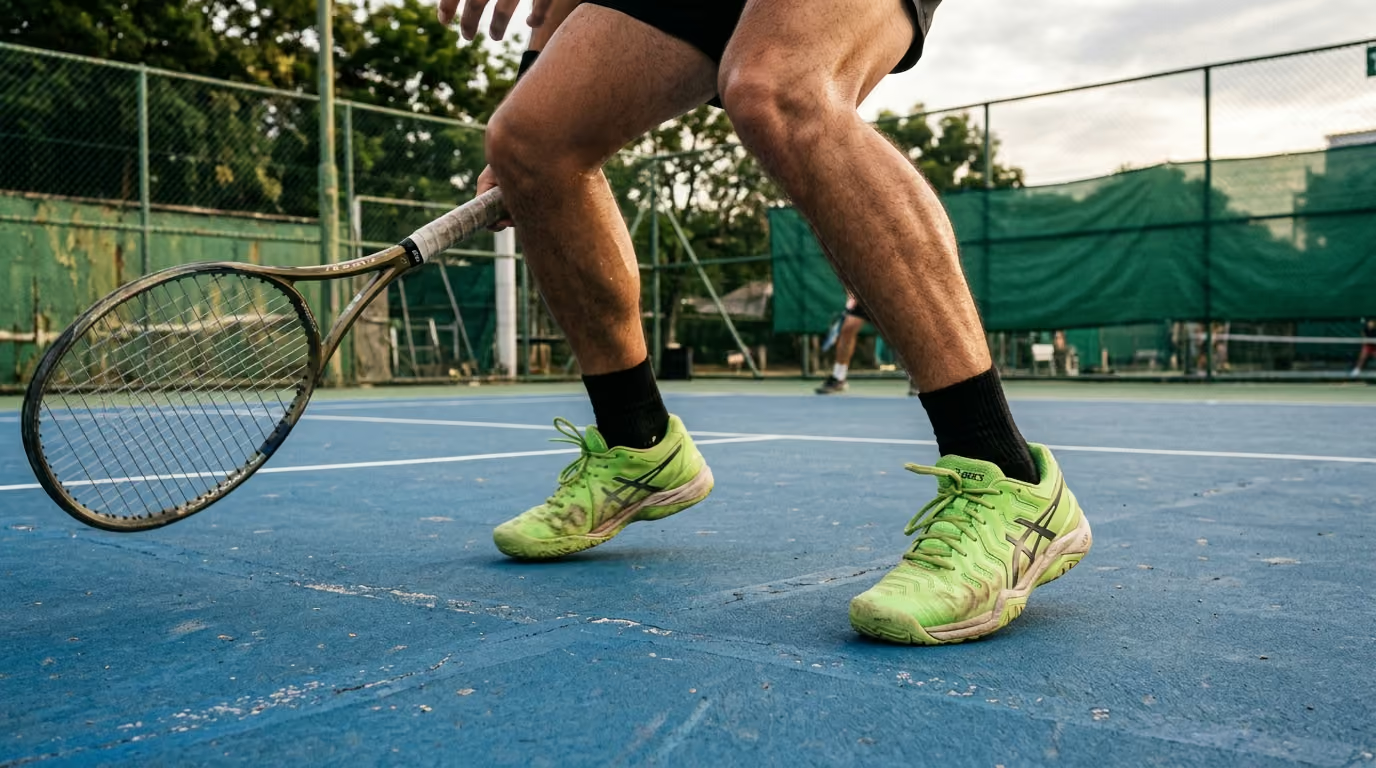
Over 15 years of competitive play can be added to an athlete's career by shifting from raw athletic output to tactical efficiency and anticipation.




Healthy aging on the court relies on shifting your competitive strategy from raw athletic output to tactical efficiency and anticipation. By improving positioning, increasing shot margins, and managing your physical training, you can play at a high level without needing maximum acceleration or extreme physical strain. This approach preserves your joints and energy while keeping you competitive for years.
In our experience, many adult players view aging as a series of forced concessions. They watch their lateral speed decrease and assume their competitive years are drawing to a close. This perspective treats performance as a simple equation of youth and explosive speed.
We believe there is a better way to look at your time on the court. Athletic longevity is not about trying to play like a teenager. It is about learning to allocate your physical resources with greater precision and intelligence. By focusing on tactical adjustments, you can continue to compete at a high level for decades.
To build a sustainable framework, we must separate physical capacity from match exposure. Capacity represents the absolute maximum physical output your body can produce. Exposure is how often you force your body to use that maximum capacity during a competitive match. As you age, your absolute capacity will naturally shift.
However, you can control your exposure by making smarter tactical choices. You do not need to sprint at full speed if you are already standing in the right position. You do not need to make an emergency sliding save if you anticipated the shot early. By reducing your exposure to high-cost movements, you can preserve your energy and protect your joints.
This concept leads to the principle of minimum effective athleticism. This principle means using the smallest amount of high-cost movement needed to win a point. It does not mean playing passively or standing still. Instead, it means reserving your most explosive movements for the moments that truly change the score.
We can also look at performance through a simple coaching model. Think of match performance as a combination of physical capacity, technical reliability, tactical efficiency, and recovery availability. If your raw physical capacity decreases, you can maintain your overall performance. You do this by improving your technical consistency, using smarter tactics, and managing your recovery.
Every action you take on a court has a specific physical cost. Sprinting to a wide ball requires sudden, intense acceleration. Stopping to hit a shot demands heavy eccentric braking. Changing direction quickly places massive strain on your tendons and joints.
We can distinguish between different ways of looking at age. Chronological age is simply the number of years since your birth. Functional age reflects your current strength, mobility, balance, and heart health. Court age shows how these changes appear in your movement, spacing, and shot selection. Our focus must always remain on your functional and court age.
To manage your functional age, you must look at healthy aging and athletic longevity resources that focus on sustainable movement. Playing longer does not mean trying to preserve every element of a younger athlete's game. It means protecting your highest-value qualities while reducing unnecessary physical cost.
Research on master athletes shows that performance decreases at a very gradual rate for several decades. Studies indicate that athletic performance declines in an essentially linear manner until about the age of seventy or eighty. After this point, the rate of decline tends to accelerate. However, these population-level studies do not represent a fixed destiny for every individual court player.
Your training status plays a major role in how your body ages. Systematic physical training helps preserve your movement skills and muscular power over time. A large portion of the physical decline seen in older adults is actually caused by sedentary behavior. When you remain active, you prevent the rapid loss of conditioning that is often blamed on aging alone.
Still, we must acknowledge the physiological shifts that occur over time. Research shows that endurance performance generally remains steady until age thirty-five. It then experiences moderate declines until age fifty or sixty, with faster declines occurring in later years. These changes are driven by reductions in maximum heart rate, stroke volume, and the body's ability to use oxygen.
Strength and power also experience changes as the years pass. Neuromuscular changes affecting strength and power become more visible from age fifty onward. Interestingly, research indicates that physical strength tends to decrease more rapidly than endurance capacity. This difference highlights why resistance exercise is so important for older court players.
Power represents your ability to produce force very quickly. This quality is crucial for your first step, split-step, and explosive overheads. While power athletes experience declines, they still maintain higher peak power and jump height than endurance athletes of the same age. This means focused training can help you keep your explosive capacity, even if your absolute ceiling changes.
Finally, we must consider recovery kinetics. The available scientific literature on recovery in master athletes remains limited. Some studies suggest that older athletes may require more time to restore muscular and nervous system performance after hard training. This uncertainty means you should rely on your own physical markers rather than rigid age formulas.
Speed on the court is not a single physical quality. It actually consists of several distinct stages. These include perceptual speed, decision speed, preparation speed, first-step acceleration, and braking speed. If your first-step acceleration slows down, you can compensate by improving your perceptual and decision speed.
This compensation is achieved through anticipation. Anticipation is not a matter of guessing or luck. It is the skilled use of visual cues and context to predict where the ball will go. Research shows that older, experienced tennis players often demonstrate better anticipatory skills than younger players.
To improve your anticipation, you must learn to read specific cues from your opponent. Watch their preparation angle and racket path as they prepare to hit. Pay attention to their body orientation, hip rotation, and foot placement. For example, a server's toss height and contact point can reveal their intended target before they even strike the ball.
Contextual information also plays a major role in prediction. You should consider the score, the wind, the court surface, and your opponent's preferred patterns. If an opponent is stretched wide, they are highly likely to hit a cross-court recovery shot. Recognizing these high-probability options allows you to start your movement early.
You can train this visual skill using several practical drills. Watch video clips of players hitting shots, and pause the video just before contact. Try to predict the direction and depth of the shot based on their body language. On the court, practice drills where you must call out the shot direction before the ball crosses the net.
However, anticipation must not lead to premature commitment. If you move too early, a skilled opponent will notice and hit the ball the other way. Your movement should be a subtle preparation, allowing you to cover ground while remaining balanced. Anticipation is about reading probabilities, not guessing blindly.
To build these skills, you can examine our court performance resources for training guides. Developing better visual reading skills takes time and focused practice. However, the energy you save by moving early will make you feel faster on the court without needing more physical effort.
Positioning is your most powerful tool for reducing the physical demands of court coverage. If you stand in the right place, you do not need to run as fast. Good positioning allows you to cover the court with shorter, more controlled movements. This approach saves energy and protects your joints from extreme braking forces.
To improve your positioning, you must change how you think about recovery. Many players automatically run back to the middle of the baseline after every shot. This habit can leave you vulnerable and force you to cover unnecessary distance. Instead, you should recover toward the most probable reply based on your opponent's position.
The quality of your own shot should dictate your positioning. If you hit a deep, heavy ball that pushes your opponent back, you can move forward. This positioning allows you to take away their angles and cut off their return early. If your shot is short and weak, you must step back to give yourself more reaction time.
You should also adjust your distance from the baseline or the net. Standing too far back forces you to run long distances for short balls and drop shots. Standing too close exposes you to deep lobs and quick passing shots. Find a balanced position that matches your current reaction speed and movement capacity.
Consider how court surfaces affect your positioning choices. Hard courts offer predictable bounces but place high stress on your joints during sudden stops. Clay and artificial grass allow for sliding, which can reduce the impact on your knees and hips. Adjust your positioning to account for how fast the ball travels on each specific surface.
Ultimately, positioning is about changing the geometry of the court. By narrowing your opponent's open angles, you force them to take higher risks. This tactical pressure reduces your need to make desperate, full-stretch defensive saves. It keeps you in control of the point while using minimal physical effort.
If you struggle with quick changes of direction, working on your movement mechanics can help. You can read our mobility and movement resources to learn how to move with greater efficiency. Better footwork patterns make it easier to maintain your position during intense rallies.
Shot margin refers to the amount of safety you build into every stroke. When players feel their physical speed declining, they often make the mistake of trying to hit closer to the lines. They believe they must end points quickly to avoid getting tired. In reality, this strategy increases your error rate and places you under greater pressure.
A better approach is to increase your shot margins without playing passively. This concept is known as constructive margin. You are not simply pushing the ball back to avoid making an error. Instead, you are hitting high-quality shots that target safe areas of the court while keeping your opponent off balance.
You can create constructive margin in several ways. Focus on hitting with heavier spin to pull the ball down safely inside the lines. Aim for higher clearance over the net, especially during deep baseline rallies. Choose larger cross-court targets rather than attempting risky, down-the-line winners.
Point efficiency is another key element of this framework. It measures the relationship between the physical cost of a point and its tactical outcome. A high-efficiency pattern uses smart shot sequences to create comfortable opportunities. It avoids low-percentage shots that force you into defensive scrambling.
Consider using the serve-plus-one pattern to keep points short and efficient. This tactic involves hitting a placement-focused serve to a predictable location. You then anticipate the return and hit your next shot into the open court. This pattern allows you to dominate the point immediately without engaging in long rallies.
On the return of serve, prioritize deep targets through the middle of the court. This approach reduces your opponent's serving advantage and limits their opening angles. It gives you time to establish a balanced position for the rest of the point. By avoiding early risk, you force your opponent to work harder for every point.
While the general principles of longevity apply to all racquet sports, each game has its own unique physical demands. Understanding these specific challenges allows you to tailor your training and tactics.
Tennis presents unique challenges for the aging player due to the sheer size of the court. The movement demands are highly taxing, requiring long sprints and sudden, heavy braking. To maintain longevity, players must adjust their baseline strategies and court coverage.
In our tennis articles, we often discuss the importance of shot selection in managing physical strain. For singles players, the cross-court rally must become your primary weapon. Hitting cross-court keeps the ball over the lowest part of the net and offers a wider target. It also naturally positions you closer to the next likely ball, reducing your recovery distance.
You should also focus on your serve-and-return efficiency. Instead of chasing high-speed aces, prioritize serve placement and spin to force weak returns. When returning, use block returns or slice shots to buy yourself time to recover your court positioning. If you play doubles, focus on sharp net positioning and clear communication with your partner to close down court space.
Pickleball is played on a much smaller court, which reduces long-distance running but increases the demand for rapid reactions. The game is highly focused around the non-volley zone, commonly known as the kitchen line. For older players, success in pickleball relies on hand speed, balance, and patience.
In our pickleball articles, we emphasize that trying to overpower opponents from the baseline is highly inefficient. Instead, master the third-shot drop to transition safely to the kitchen line. Once at the net, focus on patient dinking patterns that force your opponents to hit upward. This strategy prevents them from attacking and keeps the physical intensity manageable.
You must also maintain a stable, balanced stance at the kitchen line. Avoid leaning forward or reaching too far, as this can compromise your balance and slow your recovery. Use compact paddle movements and keep your weight centered over your feet. This positioning allows you to handle fast exchanges without needing excessive athletic effort.
Padel combines elements of tennis and squash, utilizing glass walls and a smaller court. The presence of the walls completely changes how you must approach movement and defense. Instead of rushing to chase every ball, you can let the ball pass and play it off the glass.
In our padel articles, we highlight how the glass walls can become your greatest ally for energy conservation. Letting the ball hit the back wall gives you more time to prepare your stroke. It also slows down the pace of the ball, allowing you to hit a controlled recovery lob. This lob is crucial for resetting the point and pushing your opponents away from the net.
When playing overheads, avoid trying to smash every high ball out of the court. This action places massive stress on your shoulder and core muscles. Instead, use the bandeja or vibora to maintain net position with controlled spin and depth. These tactical shots keep your opponents in the back of the court while preserving your physical energy.
Physical training off the court is essential for maintaining your playing capacity. While tactical adjustments reduce your court exposure, you still need physical strength and movement skills to execute those tactics. Your training should focus on building resilience rather than chasing extreme fitness trends.
I remember finishing a tough two hour padel match on a cold Tuesday night and waking up the next morning feeling like my lower back was locked in concrete. For a long time, I just accepted this as the price of playing hard in my forties. But once I started spending just ten minutes on targeted hip mobility before heading to the club, the stiffness almost completely vanished. It taught me that we do not have to accept pain as a default state of aging.
To build a strong physical base, you should incorporate regular strength training into your routine. Research shows that older adults benefit greatly from performing muscle-strengthening exercises at least twice a week. Our strength and conditioning resources emphasize compound movements like squats, lunges, and rows. These exercises target the major muscle groups used in court sports and help protect your joints.
In addition to strength, you must also prioritize balance and coordination. The World Health Organization recommends that older adults perform multicomponent balance training at least three days a week. This training can include single-leg balances, step-and-hold movements, and controlled rotational exercises. Good balance helps you maintain control when hitting on the move and reduces your risk of falls.
Cardiovascular fitness is another critical piece of the longevity puzzle. The CDC recommends at least 150 minutes of moderate-intensity aerobic activity per week for older adults. You can meet this goal through a mix of cycling, swimming, brisk walking, and low-impact court drills. This steady conditioning improves your endurance and helps you recover faster between points and matches.
Finally, do not neglect mobility work. Mobility is not about achieving extreme flexibility. It is about maintaining a functional range of motion in your hips, ankles, shoulders, and thoracic spine. Incorporate active stretching and mobility drills into your warm-up routine before every session on the court. This practice prepares your tissues for movement and helps prevent common strain injuries.
When trying to play longer, many well-intentioned players fall into predictable traps. These errors can lead to injuries, frustration, and lost time on the court. By recognizing these mistakes, you can adjust your training and protect your athletic longevity.
The most common mistake is increasing your playing volume without building the necessary tissue capacity. You might feel cardiovascularly fit and ready to play four times a week. However, your tendons, joints, and muscles may not have the tolerance for that sudden increase in impact. Our injury prevention resources explain that tissues adapt slowly to mechanical stress, requiring gradual progression to avoid overuse injuries.
Another frequent error is treating persistent pain as a normal symptom of aging. Many players ignore minor aches in their knees, elbows, or shoulders, hoping they will simply go away. This neglect can turn minor, manageable issues into chronic conditions that require long lay-offs from the sport. Pain is a signal that your body is struggling to cope with the current load, and it should never be ignored.
Players also tend to return to full-intensity play too quickly after an injury or a long layoff. Your cardiovascular fitness often returns much faster than your joint and tendon resilience. Even if you feel energetic, your body still needs time to readapt to the forces of braking, lunging, and twisting. A rushed return almost always leads to re-injury or a new physical setback.
Many court athletes also make the mistake of ignoring their serve volume. The serve is one of the most physically demanding actions in racquet sports, requiring coordinated full-body power. If you suddenly play a long tournament without practicing your serve beforehand, you place immense strain on your shoulder and lower back. Maintain a steady, moderate volume of serve practice throughout the year to keep these tissues conditioned.
Lastly, do not fall into the trap of focusing solely on passive flexibility. Spending hours stretching without building strength and stability can actually increase your risk of injury. Your joints need strength to control your body through wide ranges of motion during quick movements. Always combine mobility work with active resistance training to build a strong, supportive physical structure.
Managing your total training load is just as important as the physical work you do on the court. To play for years, you must balance your activity levels with adequate recovery. This balance ensures that your body has time to adapt, repair, and grow stronger between sessions.
A simple way to monitor your training load is by tracking your internal workload. You can calculate this by multiplying the duration of a session by your rating of perceived exertion. Use a simple scale of one to ten to rate how hard the session felt. For example, a sixty-minute match that you rate as a six produces a total load of three hundred and sixty units.
This tracking method allows you to compare different weeks and avoid sudden, dangerous spikes in activity. Research shows that abrupt increases in training volume are a major risk factor for injuries on the court. Try to keep your weekly training load relatively stable, making gradual increases of no more than ten percent per week. If you plan to play a tough tournament, reduce your training volume in the preceding week to allow your body to freshen up.
Our recovery science resources highlight several practical ways to monitor your daily readiness. Pay attention to simple markers like your morning resting heart rate, sleep quality, and general muscle stiffness. If you notice a sudden rise in resting heart rate or persistent fatigue, it may be a sign that your body needs an extra rest day. Treating recovery as an active part of your performance plan will pay massive dividends over time.
Tournament scheduling also requires careful planning as you age. Organizations like Tennis Canada recommend specific minimum rest periods between matches based on their duration. For matches under an hour, allow at least thirty minutes of rest. For matches lasting over ninety minutes, a minimum of ninety minutes of recovery is recommended before stepping back onto the court.
These recovery guidelines are minimum standards, and you should always listen to your own body. If you feel excessively fatigued or notice your movement mechanics deteriorating, take extra time to rest. Remember that recovery is not just passive time away from the court. It is the active process that allows you to return to the sport stronger, faster, and more resilient.
To see how this framework applies in practice, let us look at several common player profiles. These case patterns show how small tactical and physical changes can completely transform a player's experience on the court.
This player still hits a high-quality ball but struggles to cover wide angles. They find themselves constantly on the run, hitting from defensive, off-balance positions. This struggle leads to high physical fatigue and an increasing number of unforced errors.
The framework response focuses on court positioning and recovery choices. Instead of standing deep behind the baseline, this player is encouraged to step slightly closer to the court. They learn to recover toward the most probable reply rather than running automatically to the center. They also focus on hitting deeper, high-margin cross-court shots that limit the opponent's ability to hit sharp angles.
As a result of these adjustments, the player does not need to run as far to reach the ball. They use anticipation to read the opponent's intent early, saving valuable steps. This tactical shift reduces their physical strain while keeping them highly competitive in baseline rallies.
This player has an excellent, high-velocity serve and a dominant forehand. However, they find themselves fading quickly during the second set of matches. They struggle to recover between points, and their shot accuracy drops significantly as they tire.
The framework response targets point construction and practice density. This player transitions to a serve-plus-one pattern to keep points short and highly efficient. They select larger targets on their second and third shots, reducing the need for high-risk, high-effort winners. Off the court, they transition to shorter, high-intensity training sessions with complete recovery between sets.
These changes allow the player to maintain access to their high-power output when it matters most. They stop wasting energy on low-value, long rallies and focus on clean, efficient execution. Their overall physical strain decreases, allowing them to maintain their performance across entire matches.
This player has plenty of muscular strength but struggles with low volleys and quick reaction shots. They find lateral movement at the net difficult, and their lower back often feels stiff after matches. They feel they are losing their competitive edge in fast double exchanges.
The framework response emphasizes mobility, balance, and court coordination. The player begins a daily ten-minute routine focusing on hip, ankle, and thoracic spine mobility. On the court, they work on stepping-and-stopping drills to improve their balance during quick changes of direction. They also use court formations that reduce unnecessary overlapping with their partner.
These physical and tactical adjustments help the player move more fluidly at the net. They can drop lower for volleys without straining their lower back. Their improved balance allows them to handle fast reaction shots with control and confidence.
This athlete was highly competitive in their youth but is returning to the court after a ten-year break. They try to play with the same speed and intensity as before, but quickly experience minor muscle pulls and joint soreness. They feel frustrated that their body cannot match their mental expectations.
The framework response utilizes a staged exposure plan to rebuild their physical tolerance. They start with controlled, low-intensity hitting sessions before introducing competitive points. They focus on developing a reliable, low-effort stroke technique that relies on timing rather than muscular force. They also monitor their physical recovery markers closely before increasing their playing frequency.
This progressive approach allows the player's tendons and joints to adapt safely to the demands of the sport. They avoid the cycle of injury and frustration that often plague returning athletes. Over time, they rebuild a strong, resilient foundation that supports long-term play.
While this framework can help you manage many common physical challenges, it is not a substitute for professional medical care. To protect your long-term health and athletic longevity, you must know when to seek help. Working with a qualified professional can help you address underlying issues before they turn into major setbacks.
You should consult a healthcare provider or a sports physiotherapist if you experience any of the following warning signs:
If you have a chronic medical condition, such as osteoarthritis or cardiovascular issues, speak with your doctor before changing your training routine. They can help you design a safe, effective plan that supports your playing goals. Remember that seeking professional advice early is a sign of a smart, committed athlete who values their long-term health.
To connect with our team or ask specific questions about your training plan, you can visit our contact page for more information. We are always happy to help players find the right resources for their court journey.
By adapting your tactics, physical training, and court mindset, you can continue to enjoy the thrill of competitive racquet sports for many years to come.
Follow Evercourts for practical insights on tennis, pickleball and padel performance, movement, recovery and healthy ageing. Stay connected for new articles, research-led guidance and ideas to help you play well and keep playing for years.


Read practical guidance for better movement, smarter preparation and a game that keeps working for you.
explore the Blog