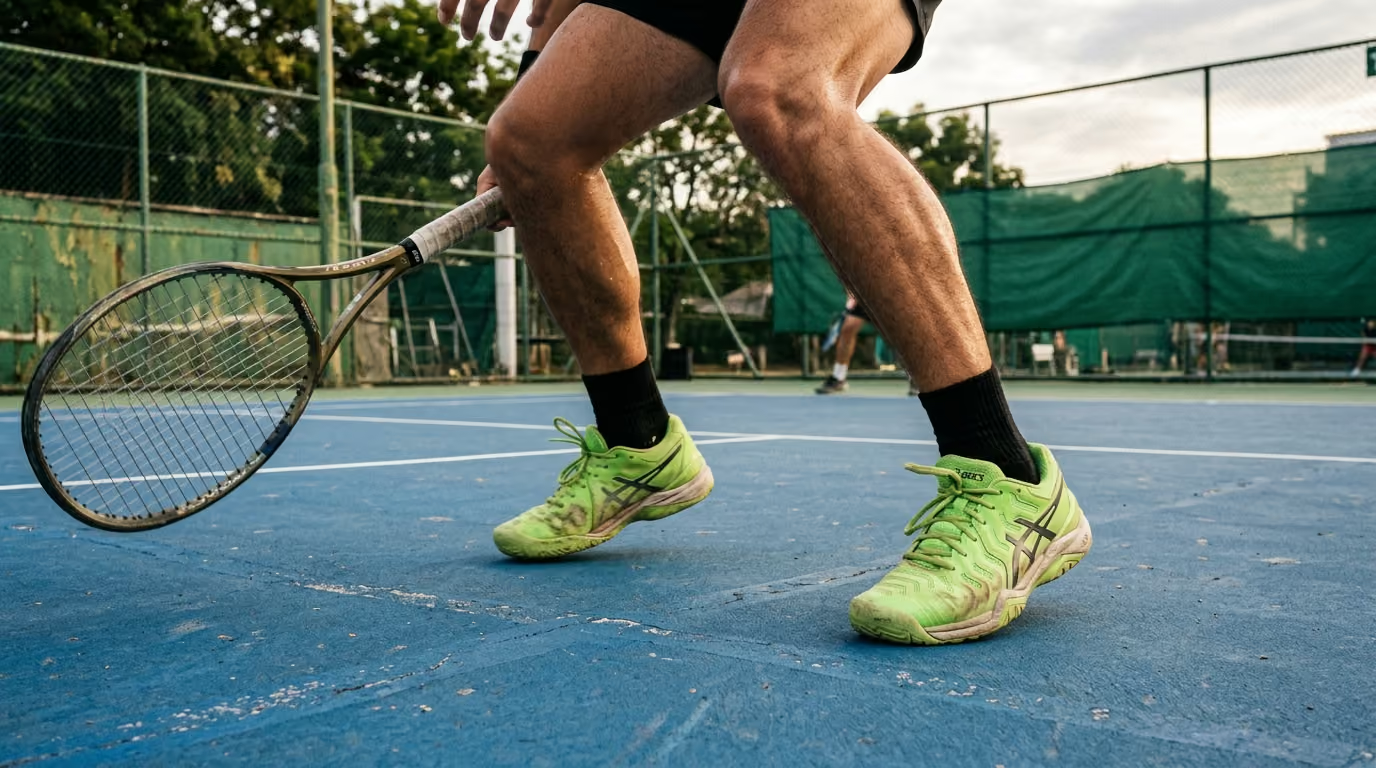
Healthy aging for long-term court players requires dedicated injury prevention strategies, focusing on physical preparation beyond match play.




Imagine finishing a tough two hour padel match on a cold Tuesday night and waking up the next morning feeling like your lower back was locked in concrete. For a long time, I just accepted this as the price of playing hard in my forties. But once I started spending just ten minutes on targeted hip mobility before heading to the club, the stiffness almost completely vanished. It taught me that we do not have to accept pain as a default state of aging.
This experience is incredibly common among adult court players. Many athletes believe that court play alone is enough to maintain physical capacity as they grow older. However, the high-velocity demands of tennis, pickleball, and padel can easily overwhelm tissues that are not prepared. To continue playing for decades, we must treat physical preparation as a necessary foundation rather than an afterthought.
For a long-term player, the goal is to preserve the specific physical capacities that make court movement safe and efficient. This includes leg strength, tendon tolerance, and bone density. It also includes dynamic balance and the ability to decelerate quickly. This guide provides a scientific, practical framework to help you build physical durability away from the court.
To play racquet sports safely after age 40, you must actively build physical capacity away from the court rather than relying on match play alone for conditioning. Longevity is achieved by combining progressive resistance training, dynamic balance exercises, and structured recovery to offset natural age-related declines in muscle and bone. This systematic approach ensures your tendons, joints, and nervous system can withstand the rapid changes of direction required during competitive play.
To understand how to protect your body, you must first understand how aging affects your tissues. The World Health Organization presents a useful framework that treats healthy aging as a combination of aerobic capacity, muscle strength, balance, and functional movement. This holistic view is particularly relevant for court players who must perform complex, multi-directional movements under time pressure. Simply tracking your heart rate or aerobic endurance is not enough to measure your true court readiness.
As we age, we naturally experience a decline in muscle mass, strength, and physical performance, a medical condition known as sarcopenia. The European Working Group on Sarcopenia in Older People (EWGSOP2) consensus places a loss of muscle strength at the center of this diagnosis. Strength declines more rapidly than muscle mass, making targeted resistance training essential. Researchers use several simple screening tools to assess muscle function and identify early signs of decline.
One common screening tool is the handgrip strength test, which correlates strongly with overall body strength and physical longevity. The EWGSOP2 consensus identifies grip strength below 27 kilograms for men and below 16 kilograms for women as a threshold for concern. Another simple test is the five-times sit-to-stand assessment, which measures lower-body strength and power. If a player takes more than 15 seconds to complete this test, it suggests a significant reduction in leg power.
Other key metrics include gait speed and the Timed Up and Go test, which evaluate functional mobility and balance. A walking speed of 0.8 meters per second or slower indicates a decline in physical performance. Similarly, taking 20 seconds or more to complete the Timed Up and Go test indicates impaired balance and mobility. These screening tools can help identify functional deficits before they manifest as court injuries.
Bone health is another critical aspect of athletic longevity for older players. The International Osteoporosis Foundation explains that bone is living tissue that adapts to the mechanical demands placed upon it. Weight-bearing physical activity and progressive resistance training are highly effective for improving bone mineral density. However, not all exercises provide the same osteogenic stimulus.
High-impact activities, such as tennis and padel, offer excellent bone-loading benefits because of the rapid footwork and jumping involved. For players who cannot tolerate high impacts, moderate-weight resistance training and brisk walking are excellent alternatives. The International Osteoporosis Foundation states that progressive resistance training is safe and beneficial for individuals with low bone density when started at a moderate intensity. Gradual, consistent loading is always safer than sudden, intense exposure to impact.
Nutrition supports this training by providing the building blocks for bone and muscle repair. The International Osteoporosis Foundation emphasizes the roles of calcium, protein, and vitamin D in preserving musculoskeletal health. For older adults, a daily intake of 800 to 1000 international units of vitamin D is advised to support muscle strength and bone density. Additionally, higher protein intake, at or above 0.8 grams per kilogram of body weight per day, is associated with slower bone loss and reduced fracture risk.
These nutritional inputs should be tailored to your individual health status in consultation with a physician. This ensures that any supplements do not interfere with medications or existing medical conditions. By combining proper nutrition with targeted exercise, you can maintain a strong skeletal system. This dual approach is the foundation of long-term skeletal durability.
Analyzing injury data from recreational and competitive players can help us understand where the body is most vulnerable. A 2025 epidemiological study on pickleball injuries in the United States highlights a dramatic rise in emergency department visits. The study estimated that annual pickleball injuries increased from 1,313 in 2014 to 24,461 in 2023. This rapid increase is closely tied to the growing popularity of the sport among older adults.
In this study, the majority of serious injuries occurred in players aged 60 to 79. This specific demographic had much higher odds of sustaining hand, wrist, or arm fractures from falls. Slips, trips, and awkward dives were identified as the primary movement mechanisms behind these acute injuries. This suggests that a lack of dynamic balance and fall-protection strategies is a major risk factor for older pickleball players.
Another survey of older pickleball participants found that over 32 percent of players reported a court injury within the previous year. Lower-extremity injuries represented nearly 58 percent of these cases, with muscle and tendon strains being the most common diagnoses. Interestingly, the study also identified male sex, lower body mass index, and higher weekly playing hours as risk factors in their sample. These findings remind us that being active does not automatically prevent injuries if our tissues are overloaded.
Tennis injury patterns show a similar concentration in the lower limbs. A long-term analysis of United States emergency department data recorded nearly 500,000 tennis-related injuries over a 21-year period. Lower-limb injuries accounted for over 42 percent of these cases, while upper-limb injuries represented roughly 27 percent. Sprains and strains were the most common diagnoses, making up over 44 percent of the total injury count.
Although the overall rate of tennis injuries decreased over time, the severity of consequences remained high for older athletes. More than 65 percent of hospital admissions for tennis injuries involved patients aged 56 or older. This indicates that while younger players may recover quickly from minor strains, older players face more significant recovery challenges and higher fracture risks. These trends reinforce the need for targeted conditioning and injury-prevention protocols.
To manage your injury risk, you must understand the relationship between physical capacity and court load. Capacity is the total amount of stress your muscles, tendons, bones, and nervous system can safely tolerate. Load is the physical and mental stress placed on your body by training, matches, work, and daily life. An injury occurs when the applied load exceeds your current physical capacity.
Court load is much more complex than the total number of minutes you play. It includes the volume of rapid accelerations, sharp decelerations, and sudden changes of direction. It also includes split-step frequency, rotational hits, and high-impact landings. Environmental factors, such as court surface stiffness, poor lighting, and cold temperatures, also add to the mechanical load on your body.
Your physical capacity is not static; it fluctuates based on several daily factors. Lack of sleep, poor nutrition, high stress, and dehydration can temporarily lower your tissue tolerance. If you play a highly competitive match on a day when your capacity is reduced, your injury risk increases. Understanding this balance is key to planning your court schedule.
To maintain your athletic longevity, you must focus on two goals. First, you must increase your physical capacity through structured strength and balance training away from the court. Second, you must manage your court load by monitoring your playing volume and avoiding sudden spikes in intensity. This double-sided approach is the most effective way to protect your joints and continue playing.
To build a comprehensive approach to court durability, we can split our preparation into six key physiological capacities. Each of these capacities can be trained through specific exercises away from the court.
Structural resilience is your body's ability to tolerate mechanical stress without tissue breakdown. This capacity involves your bone density, tendon thickness, cartilage health, and joint range of motion. As we age, our tendons lose water content and become less compliant. This change makes them less effective at absorbing sudden forces during rapid footwork.
To build structural resilience, you must subject your tissues to progressive, controlled mechanical loading. Heavy, slow resistance training is highly effective for stimulating collagen synthesis in your tendons. Calf raises performed with a slow tempo can strengthen the Achilles tendon and protect the arches of your feet. These exercises ensure your connective tissues are strong enough to handle the high forces of a split-step.
Force production is your physical strength, which allows you to move, jump, and strike the ball with control. Strong muscles act as natural shock absorbers, reducing the impact forces that reach your knees and hips. When your leg muscles are weak, your joints must bear the brunt of every landing and deceleration. This excessive joint stress often leads to chronic pain and arthritis over time.
Building muscular strength requires consistent, progressive resistance exercises. You should focus on foundational movements like squats, hinges, and step-ups to target your major lower-body muscle groups. These exercises build the strength needed to push off the ground and recover from deep lunges. Additionally, upper-body strength exercises protect your shoulders and elbows from the repetitive stress of hitting.
Force absorption is your ability to slow down, land from a jump, and control your momentum safely. Many players focus exclusively on speed and acceleration but neglect their braking mechanics. Decelerating on a hard court requires your muscles to work eccentrically, meaning they must produce force while lengthening. If your eccentric strength is insufficient, your body will struggle to stop in a controlled manner.
Without adequate force absorption, you are more likely to experience acute ligament sprains or patellar tendon issues. You can train this capacity by practicing step-and-stick drills and low-level landing mechanics. These exercises teach your nervous system to coordinate your muscles for a soft, stable landing. Building this braking power is essential for protecting your lower limbs during intense, erratic rallies.
Dynamic balance is the ability to maintain control of your body position while moving through space. Unlike static balance, which is tested while standing still, dynamic balance is challenged during every stride, turn, and lunging shot. It requires a continuous dialogue between your eyes, inner ear, and proprioceptive receptors in your joints. Poor dynamic balance is a primary driver of awkward landings and falls on the court.
To train this capacity, you must progress from simple static challenges to complex, multi-directional stepping movements. Stepping over small obstacles, performing tandem walks, and practicing single-leg balance are highly effective. These movements challenge your stability and train your nervous system to make rapid postural adjustments. Consistent balance practice three times a week can significantly improve your stability on different court surfaces.
Reaction capacity is the ability to process visual information, decide on a movement, and initiate force quickly. While raw neurological reaction speed naturally slows as we age, your overall court responsiveness can still be highly trained. Experienced players can compensate for physical changes by learning to read their opponent’s body positioning and ball trajectory early. This mental anticipation reduces the need for sudden, panicked movements.
You can train your reaction capacity by integrating unpredictable visual or auditory cues into your drills. For example, practicing lateral shuffles in response to a partner's hand signals teaches your body to react dynamically. These drills help bridge the gap between static strength and the chaotic reality of match play. By improving your decision-making speed, you can move more smoothly and avoid awkward, rushed lunges.
Recovery is the physiological process that allows your body to repair tissue damage and adapt to physical stress. Without adequate rest, your body remains in a state of chronic fatigue, which impairs performance and increases injury risk. A complete recovery system must address sleep hygiene, hydration, and nutritional support. It also requires you to structure your weekly schedule with dedicated rest days between matches.
Monitoring your daily readiness is essential for preventing overuse injuries and managing cumulative fatigue. You should pay close attention to warning signs such as persistent joint stiffness, localized swelling, or a decline in your movement quality. If your body feels excessively fatigued, reducing your playing volume or intensity for a few days can prevent a minor strain from becoming a chronic injury. In our experience, treating recovery as an active input rather than an afterthought is vital for long-term play.
Applying these scientific principles to your regular routine requires a practical, step-by-step approach. You cannot simply read about physical capacity; you must integrate specific habits into your weekly schedule and match preparation. To maximize the benefits of your training, consult our curated injury prevention resources for deeper guides on protecting your joints.
A high-quality warm-up is your first line of defense against acute muscle strains and joint sprains. Avoid static stretching before you play, as holding static poses can temporarily decrease your muscle power and reaction speed. Instead, focus on dynamic movements that gradually raise your core temperature and lubricate your joints.
Begin with three minutes of easy jogging, skipping, or side-shuffling across the court to increase your heart rate. Next, perform ten repetitions of dynamic movements, including leg swings, hip openers, and arm circles. Follow this with court-specific footwork drills, such as shadow swings with a split-step. This dynamic routine prepares your cardiovascular and nervous systems for the rapid movements of a match.
A structured weekly schedule helps you balance the demands of court play with the training needed to build capacity. This sample template is designed for a healthy player over 40 who wants to maintain their performance and protect their joints.
You can modify this schedule based on your individual needs, work schedule, and physical status. The key is to ensure you have at least two strength sessions and two dedicated recovery days each week. For personalized advice, you can use our contact page to reach our team.
This short routine can be completed at home or on the court before your practice sessions. It targets the visual-motor skills and stability needed to prevent falls and manage sudden stumbles.
Begin by standing on one leg for 30 seconds with your hands on your hips. To make this harder, slowly turn your head from left to right while keeping your balance. Next, step forward dynamically onto one leg, bend your knee slightly, and hold the landing for three seconds. Repeat this stepping pattern in both lateral and backward directions to train multi-directional deceleration. Finish by having a partner drop a tennis ball from shoulder height, reacting quickly to catch it after the first bounce.
To build structural capacity and support your joints, you should select exercises that target key movement patterns. These movements include squatting, hinging, lunging, stepping, pushing, pulling, and carrying. By focusing on these patterns, you can develop a balanced body that is prepared for court demands.
The goblet squat targets your quadriceps, glutes, and core. Hold a weight close to your chest, keep your chest high, and lower your hips toward the floor. Focus on keeping your knees aligned with your toes as you rise back to a standing position. This movement patterns the deep knee flexion needed to retrieve low shots.
The Romanian deadlift focuses on your hamstrings, glutes, and lower back. Hold dumbbells in front of your thighs and hinge backward at your hips while keeping a flat back. Lower the weights until you feel a stretch in your hamstrings, then push your hips forward to stand. This exercise develops the posterior chain strength required to power your forward acceleration.
Step-ups target single-leg strength and pelvic stability. Place one foot on a sturdy box or step, press through your heel, and stand tall. Lower yourself back down with control, focusing on keeping your knee from collapsing inward. This exercise mimics the unilateral loading that occurs during every stride on the court.
Calf raises are essential for protecting your Achilles tendons and plantar fascia. Stand on the edge of a step, lower your heels slowly, and then push up onto your toes. Pause for a second at the top before repeating the movement. Building strength in your calves helps absorb the high impact of the split-step.
The farmer carry builds grip strength, shoulder stability, and core endurance. Hold heavy dumbbells at your sides and walk with tall posture for a set distance. Focus on keeping your shoulders packed and avoiding any side-to-side swaying. This exercise develops the total-body tension needed to handle rapid changes of direction.
If you are returning to play after a long layoff or an injury, you must avoid the temptation to jump directly into competitive matches. Your brain retains the memory of your past physical capabilities, but your tissues require time to adapt. A staged, systematic progression is the safest way to rebuild your tolerance.
Start with walking and basic lower-body strength training at home or in the gym. Once you can move without pain, introduce shadow swings on the court to practice your footwork and split-step. Next, transition to cooperative hitting sessions where your partner feeds the ball directly to you. This allows you to practice hitting without the stress of unpredictable running.
After several successful hitting sessions, you can progress to restricted games with a limited court size. This setup reduces the need for emergency lunges or extreme changes of direction. Only transition to full competitive play when you can complete a practice session without pain or swelling the following day. If you experience persistent soreness, it is a sign that you must temporarily reduce your training volume.
As we age, we can also manage our injury risk by adjusting our tactical approach to the game. You do not need to rely on raw speed to win points if you improve your positioning and decision-making. Making smart tactical choices reduces the physical strain on your body during a match.
Focus on earlier preparation by reading your opponent’s racket face and body alignment. This anticipation allows you to start your movement sooner, reducing the need for sudden, jerky accelerations. You should also hit your shots with more margin over the net. This safe style of play reduces errors and gives you more time to recover your position.
Additionally, learn to let high-risk wide balls go rather than making dangerous emergency lunges. Chasing every ball increases your risk of falling or straining a muscle when you are off-balance. In doubles play, work closely with your partner to cover the court efficiently. Good communication and positioning can significantly reduce the distance you need to run.
Although tennis, pickleball, and padel are all racquet sports, they place distinct mechanical stresses on your body. Understanding these differences allows you to customize your injury-prevention training for your sport of choice. You can find more targeted sport-specific articles in our tennis collection, our pickleball collection, and our padel collection.
Tennis is played on a large court surface, which demands significant running volume, long acceleration distances, and high-impact decelerations. These movements require high levels of cardiovascular conditioning and eccentric leg strength. The wide court also forces players to slide or plant their feet forcefully, placing high rotational stress on the knees and ankles.
To prevent injuries in tennis, you must prioritize eccentric quadriceps strength and ankle stability. Exercises like the single-leg squat and lateral lunges are highly beneficial for preparing your lower limbs for these forces. Additionally, the tennis serve involves extreme overhead rotation, making shoulder external rotator strength and thoracic mobility essential. Building a strong core helps distribute these rotational forces and protects your lower back from strain.
Pickleball is played on a much smaller court, which limits the need for long-distance sprinting. However, the game is characterized by rapid, short-step movements, constant split-stepping, and sustained low lunging at the kitchen line. The fast ball speed requires immediate hand-eye coordination and excellent reactive footwork.
The frequent low reaches in pickleball require exceptional hip, knee, and ankle mobility to prevent spinal flexion. If your lower limbs are stiff, you will bend at your waist to reach low balls, which can strain your lower back. Pickleball players should focus on deep squats, calf mobility, and reactive agility drills. Strengthening your glutes and hamstrings will help you maintain a low, stable athletic posture without stressing your joints.
Padel is played within an enclosed glass court, creating a fast, multi-directional playing environment. Players must frequently rotate, chase balls off the walls, and react to unpredictable rebounds. This constant twisting and turning places high rotational demands on the knees, hips, and spine.
To stay healthy in padel, you must build rotational stability and multi-directional braking power. Anti-rotation core exercises, such as the Pallof press, help protect your spine during sudden turns. Padel also features a high volume of overhead smashes, which requires excellent shoulder blade stability and rotator cuff endurance. Training your calf muscles and Achilles tendons is also vital to handle the frequent, short jumps required for overhead play.
Recreational court players frequently make training mistakes that undermine their health and longevity. Recognizing these common errors can help you avoid preventable injuries and stay on the court.
The most prevalent pitfall is the belief that playing your sport is sufficient exercise. While playing matches is excellent for your cardiovascular health and coordination, it does not build progressive strength. Over time, relying solely on court play can lead to muscle imbalances and a decline in joint stability. To protect your body, you must participate in structured strength and conditioning options away from the court.
Another frequent error is relying on static stretching as your primary warm-up or injury-prevention tool. Static stretching before a match can actually reduce your muscle power and impair your reaction speed. A modern warm-up should focus on dynamic movements that prepare your joints and nervous system for rapid play. Save your static stretches for after your matches to help relax tight muscles.
Many players also dismiss minor slips, trips, or stumbles during a match as simple accidents. In reality, these near-falls are early warning signs of declining balance, fatigue, or slow reaction times. Instead of ignoring these incidents, use them as feedback to incorporate more balance training into your routine.
Finally, many players make the mistake of ignoring delayed muscle soreness or joint stiffness. They continue to play through discomfort, believing that pain is a natural part of the aging process. This habit can quickly turn a minor tendon strain into a chronic, long-term injury. Learning to listen to your body and modify your playing volume is a cornerstone of athletic longevity.
Participating in a structured conditioning program has a profound impact on your recovery rate and overall tissue health. When you build a strong physical foundation, your body can handle the physical stress of a match more efficiently. This higher tolerance means you will experience less fatigue during play and shorter recovery periods afterward.
Strength and conditioning work increases the density of your muscle fibers and the thickness of your tendons. This structural improvement allows your body to absorb and distribute the impact of hard court landings. As a result, you will experience less microscopic muscle damage, which reduces post-match soreness and stiffness. Protecting your tissues in this way helps prevent the chronic overuse injuries that often sideline older players.
Furthermore, improved aerobic and muscular fitness allows your body to clear metabolic waste products more quickly. This speedier clearance helps restore your muscles to their optimal resting state, preparing you for your next match. By building a robust physical base, you can maintain your playing frequency without compromising your joint health. To learn more about optimizing your post-match habits, explore our recovery science principles.
While a structured training program can significantly reduce your injury risk, it cannot prevent every physical issue. Some symptoms require the expertise of a qualified medical professional to ensure your safety and long-term health.
You should consult a healthcare provider or physical therapist if you experience persistent joint swelling, locking, or instability. Any sharp pain that does not improve after a few days of rest should also be evaluated. If a physical symptom forces you to change your walking gait or hitting mechanics, seek professional advice immediately.
Cardiovascular symptoms are serious concerns that require immediate medical attention. If you experience chest pain, pressure, dizziness, or sudden shortness of breath during play, stop immediately and seek medical care. Players returning to exercise after a long period of inactivity should obtain medical clearance before playing.
Working with a physical therapist can help you design a safe return-to-play program after an injury or surgery. They can identify specific strength deficits, assess your movement quality, and provide personalized exercises. This professional support is essential for rebuilding your movement confidence and preventing future injuries.
You should return to this guide whenever you plan to increase your weekly playing volume, join a tournament, or return after a layoff. It is also beneficial to review these principles if you experience an increase in post-match stiffness or minor balance issues.
By consistently developing your strength, balance, and recovery habits, you can protect your physical capabilities and enjoy the sports you love for decades to come.
Follow Evercourts for practical insights on tennis, pickleball and padel performance, movement, recovery and healthy ageing. Stay connected for new articles, research-led guidance and ideas to help you play well and keep playing for years.


Read practical guidance for better movement, smarter preparation and a game that keeps working for you.
explore the Blog