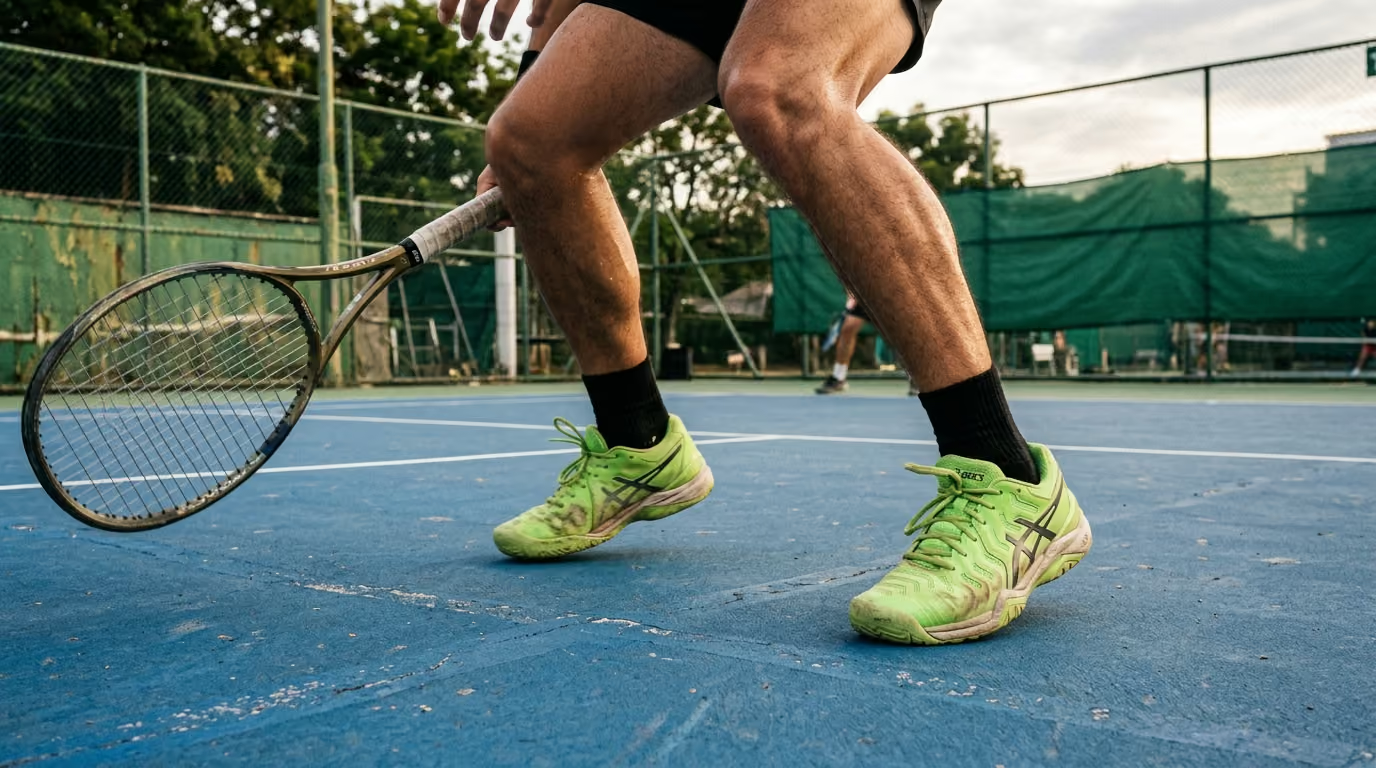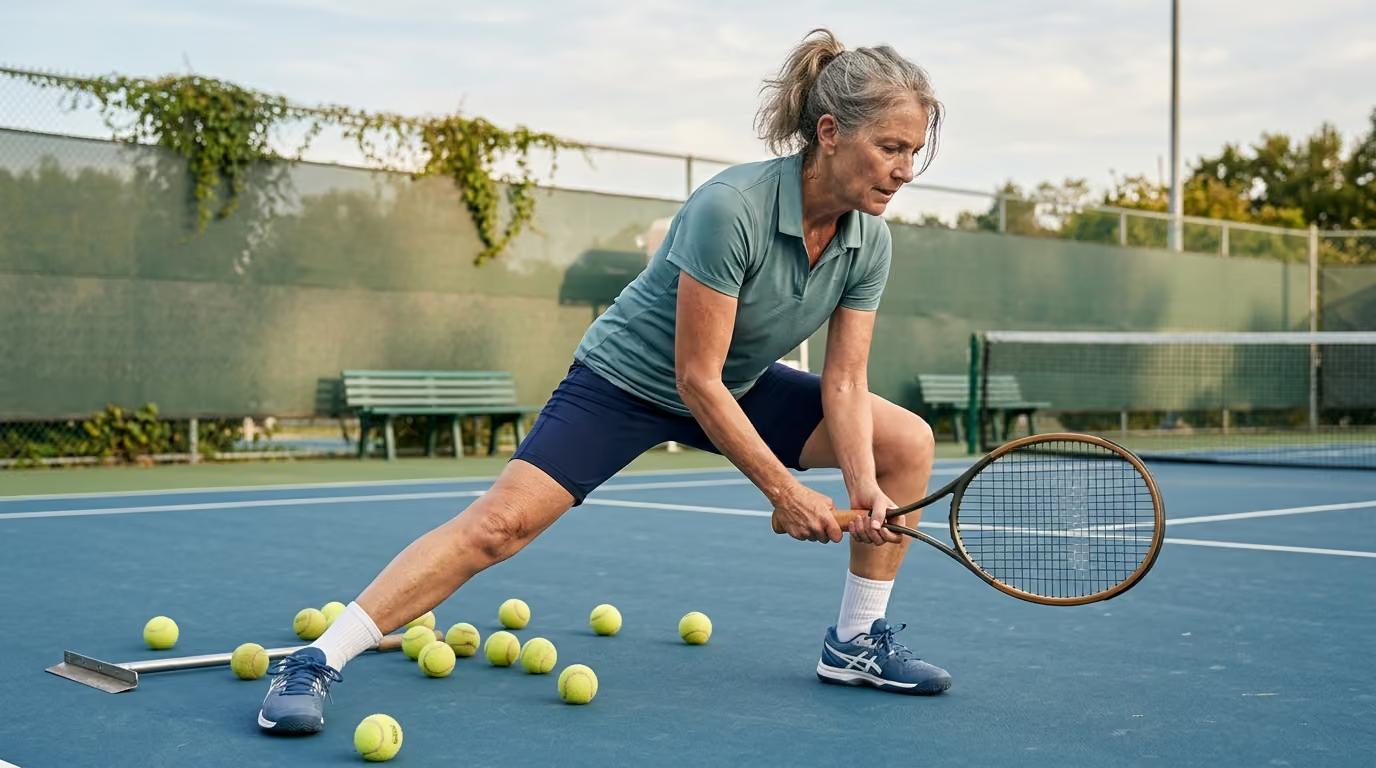

When hips feel stiff or sore after a long match, developing muscular strength, range of motion, and single-leg control is crucial for durable hips in court play.




Many court players search for answers when their hips feel stiff, sore, or restricted after a long match. To build durable hips for court play, you must develop a balance of muscular strength, usable range of motion, and single-leg control. This approach ensures your joints can absorb and produce lateral forces during dynamic rallies while protecting your back and knees.
A resilient hip is not simply a flexible joint or a powerful muscle group. It is a coordinated system that can repeatedly produce and absorb force through flexion, extension, abduction, adduction, and rotation. Tennis forehands, defensive recoveries, split steps, lateral shuffles, open-stance strokes, and pickleball’s frequent decelerations all require coordinated lower-limb and pelvic movement. Isolated stretching is rarely enough to meet these demands [11].
For players focused on athletic longevity, the goal is preserving comfortable movement over decades. This requires an understanding of how our hips change as we age and how we can adapt our training to stay on the court. By building a robust movement reserve, you can ensure that the physical demands of play remain well below your maximum physical capacity.
To understand how the hip functions on the court, we must examine the specific movements required during a match. The hip joint is a ball-and-socket structure designed for multi-directional movement. It relies on a complex network of muscles to generate power, absorb impact, and maintain pelvic stability.
Hip extension is produced primarily by the gluteus maximus, with assistance from the hamstrings. This action occurs when you push your thigh backward behind your pelvis. On the court, extension is vital for rising from a low stance, accelerating forward, pushing off for a overhead, and returning to the center of the court. Without adequate extension, players often compensate by arching their lower back, which can lead to discomfort over time.
Hip abduction involves moving the thigh outward away from the body’s midline. The primary muscles responsible for this action are the gluteus medius and the tensor fasciae latae. These muscles act as lateral stabilizers. When you land on one leg during a split step or lunge laterally, the abductors prevent the opposite side of your pelvis from dropping, keeping your trunk upright and aligned.
Hip adduction is the action of pulling the thigh toward the midline of the body. The adductor muscle group along the inner thigh controls this movement. While often overlooked, the adductors are heavily taxed during lateral recovery, braking, and crossover steps. They help stabilize the leg as it moves underneath the body, acting as a brake during high-speed lateral direction changes.
Hip flexion is the action of lifting the thigh toward the chest. This movement is driven by the iliopsoas, rectus femoris, and sartorius muscles. Court players rely on hip flexion to adopt low defensive positions, execute split-step landings, and maintain a athletic ready stance. Strong, mobile hip flexors allow you to lower your center of gravity without losing balance.
Hip internal and external rotation allow the pelvis and femur to orient to the ball, court, and trunk. Internal rotation occurs when the femur turns inward toward the midline, while external rotation turns the thigh outward. Racquet sports require significant rotational capacity to transfer energy from the ground, through the pelvis, and into the upper body during a stroke [11].
To train effectively, players must distinguish between several types of muscular capacity:
A player may possess excellent maximum strength in a slow laboratory environment but still struggle on the court. If they lack the rate of force development, they cannot stabilize their pelvis quickly during a sudden lateral push-off. This distinction explains why our strength and conditioning training must include both controlled resistance and progressive, faster-tempo movements.
When developing a training plan, we must look to peer-reviewed research to separate established evidence from fitness trends. Recent scientific literature provides clear insights into how hip strength correlates with balance, mobility, and healthy aging.
The relationship between the hip abductors and functional mobility has been studied extensively. A 59-study systematic review involving 2,144 adults analyzed how hip-abduction torque relates to balance and mobility outcomes [33]. The review included 967 older adults with an average age of 71 years.
The researchers found consistent positive associations between greater hip-abduction force and performance on functional tests. These assessments included single-leg stance times, tandem gait, the Timed Up and Go test, and stepping tasks [33]. The data suggest that maintaining abductor strength is directly related to preserving everyday mobility and balance as we age.
Furthermore, individual studies within the review highlighted the practical differences between populations. One included study reported that individuals with a history of falls had 12% lower hip-abduction torque than non-fallers [33]. Another study noted that older adults who used a safer crossover stepping strategy during balance recovery had 26% higher hip-abduction torque than those who used a medial stepping pattern [33]. While these findings come from individual studies within a diverse review and are not universal thresholds, they highlight the value of lateral hip capacity.
The systematic review also noted that maximal hip-abduction torque was more consistently related to balance outcomes than the rate of force development [33]. This suggests that building a solid foundation of maximum strength remains highly valuable for older athletes, even in sports that require rapid movement.
While single-leg balance is an important skill, we must be careful not to treat a single test as a definitive health assessment. A systematic review of 55 studies involving 36,954 community-dwelling adults examined the relationship between one-legged balance times and future fall risk [31].
The review found that while individuals who fell generally had worse one-leg balance times, the test itself had poor and inconsistent prognostic accuracy when used in isolation [31]. This means a simple one-legged balance test is a helpful tracking tool but should not be used as a stand-alone diagnostic measure of your athletic health.
As we age, our muscles undergo changes in structure and performance. A 2025 review documented that older adults exhibit statistically significant reductions in hip-abduction torque, power, and velocity when compared to younger cohorts [35]. These physical changes are often accompanied by lower scores on clinical mobility assessments [35].
This body of research provides a strong scientific rationale for focusing on hip health. Rather than accepting these declines as inevitable, older athletes can use targeted training to maintain their physical capabilities. By actively training hip strength and movement velocity, you can slow these age-related changes and continue playing at a high level.
The physical demands of racquet sports are distinct from running, cycling, or swimming. Court play is characterized by constant acceleration, rapid deceleration, lateral shuffling, and rotation. Understanding these forces helps us design more effective injury prevention strategies for our training sessions.
The modern tennis forehand relies heavily on the open stance, which places unique physical demands on the lead hip. A biomechanical study analyzed the forces involved during three different forehand stances in advanced male players [11]. The researchers compared the attacking neutral stance, the attacking open stance, and the defensive open stance.
The study revealed that the defensive open stance generates significantly higher forces than the other stances. Specifically, the defensive open stance produced:
These measurements show that retrieving a wide ball in a defensive open stance subjects the hip joint to substantial combined loading, flexion, abduction, and rotation [11]. If a player lacks the strength or mobility to handle these loads, the body will transfer the stress to the lower back or knee. However, because this study examined a small sample of eight advanced players, we should use these findings as a guide for physical preparation rather than a reason to avoid open-stance strokes.
While tennis involves large courts and long-distance sprints, pickleball is played on a smaller court with rapid, short-distance exchanges. This layout requires players to perform frequent decelerations, split steps, and quick reaches near the kitchen line.
National emergency-department data indicate that pickleball injuries have risen alongside the sport's popularity. A 2014 to 2023 epidemiological analysis estimated that pickleball injuries treated in emergency departments rose from 1,313 in 2014 to 24,461 in 2023 [2]. The majority of these injuries occurred in players aged 60 to 79 years [2].
A separate ten-year analysis of 66,350 estimated pickleball injuries from 2013 to 2022 found that the mean age of injured patients was 64 years [4]. Crucially, falls were responsible for 65.5% of all reported injuries in this cohort [4]. Another report from 2020 analyzed emergency-department data and found that 90.9% of injured pickleball patients were aged 50 or older, with sprains or strains accounting for 28.7% and fractures accounting for 27.7% of cases [8].
These statistics do not mean pickleball is dangerous. Instead, they highlight that the player population includes many older adults who may benefit from improved balance, eccentric strength, and fall-resistance training. A study of 237 older tournament pickleball players found that 32.1% reported a past-year injury [3]. Of those injuries, 57.9% affected the lower extremity, and 61.8% involved muscle or tendon tissue [3].
The study also found that male sex, lower body mass index, and higher weekly play hours were significant predictors of injury, whereas psychological variables showed no strong association [3]. Because these studies rely on self-reported data and tournament records, we must view them as risk patterns rather than absolute rules. They underscore the importance of progressive conditioning and sensible volume management.
To maintain athletic longevity, players should adopt the kinetic reserve model. This framework helps us understand how physical training protects our bodies during competitive play.
The core principle of the kinetic reserve model can be expressed as a simple equation:
$$\text{Movement Reserve} = \text{Physical Capacity} - \text{Sport Demand}$$
Your physical capacity is the sum of your strength, mobility, balance, and endurance. The sport demand is the physical stress imposed by your matches. If your sport demand regularly approaches or exceeds your physical capacity, your risk of fatigue, movement compensation, and tissue overload increases.
We can understand this relationship by looking at what influences both sides of the equation:
By systematically raising your physical capacity, you create a wide buffer zone. When you lung for a difficult ball, the physical stress of that movement remains well below your maximum structural limit, allowing you to recover quickly and play without stiffness the following day.
Before designing a sport-specific program, players should meet basic physical activity guidelines. The World Health Organization recommends that adults aged 65 and older perform at least 150 minutes of moderate-intensity aerobic physical activity, or 75 minutes of vigorous-intensity aerobic activity, throughout the week [17].
For additional health benefits, the WHO suggests aiming for up to 300 minutes of moderate-intensity activity [17]. Furthermore, the guidelines state that older adults should engage in muscle-strengthening activities involving major muscle groups on two or more days a week, alongside multi-component balance training on three or more days a week to improve physical capacity and prevent falls [17].
The National Institute on Aging supports this foundation, recommending strength training at least twice weekly and balance exercises around three times weekly [20]. The guidelines emphasize allowing recovery days between sessions that target the same muscle groups [20]. Once these baseline recommendations are met, court players can layer on sport-specific lateral and rotational conditioning.
A balanced hip program should target strength, lateral stability, rotational control, end-range usability, power, and balance. The following exercises are designed to build these capacities. You should select movements that match your current fitness level and adjust them based on comfort and access to equipment.
These movements form the baseline of your physical capacity. They target the major muscle groups of the lower body to build tissue tolerance and absolute strength.
These exercises focus on the hip abductors and adductors, which control lateral movement and pelvic alignment on the court.
These movements develop your ability to produce, resist, and transfer rotational forces through the pelvis and trunk.
These exercises build control at the limits of your joint range, reducing stiffness and improving confidence during wide reaches.
These movements are designed to maintain your ability to produce force quickly, which is critical for reactive court play.
While tennis, pickleball, and padel share similar physical demands, each sport places unique stresses on the hips. Understanding these differences allows us to adjust our preparation and recovery.
Tennis is played on a large court, requiring longer sprint distances and high-velocity lateral runs. The playing surfaces, such as clay, grass, or hard court, significantly affect hip loading. Clay courts allow for sliding, which demands smooth, long-range eccentric hip adduction control. Hard courts, conversely, require abrupt deceleration, exposing the hips and knees to high vertical and lateral ground-reaction forces [11].
To prepare, tennis players must prioritize dynamic mobility and movement guides that address deep lateral lunges and open-stance loading.
Pickleball features a smaller court, shorter distances, and a lightweight ball, which increases the frequency of rapid decelerations and quick, low-amplitude lateral steps. Because players spend considerable time bent over at the kitchen line, the hip flexors and lower back are subject to prolonged static loading.
Additionally, the high prevalence of falls in older pickleball populations highlights the need for reactive balance training and single-leg stability [4]. Pickleball players should focus on building robust isometric endurance in their lower body and practicing reactive stepping drills.
Padel is played on a synthetic turf court enclosed by glass walls, which introduces a high volume of multi-directional changes, vertical jumps, and play off the walls. The constant turning to retrieve balls out of the corners demands exceptional multi-directional hip rotation. The low bounces off the glass also force players into deep, repetitive squats and asymmetrical lunges.
In our experience, failing to prepare the hips for these quick turns and low squats can lead to significant post-match stiffness. I remember finishing a tough two hour padel match on a cold Tuesday night and waking up the next morning feeling like my lower back was locked in concrete. For a long time, I just accepted this as the price of playing hard in my forties. But once I started spending just ten minutes on targeted hip mobility before heading to the club, the stiffness almost completely vanished. It taught me that we do not have to accept pain as a default state of aging.
To help players visualize these differences, we can compare the key movement characteristics across all three sports:
By understanding these unique demands, you can tailor your physical preparation to focus on the movements you perform most during play.
Many dedicated players run into physical setbacks because they follow common training misconceptions. Recognizing these errors can help you focus on high-yield, safe exercises.
A common mistake is believing that more hip mobility is always better. While adequate joint range is necessary, excessive flexibility without matching strength can increase your risk of injury on the court. The tennis biomechanics study demonstrated that the defensive open stance, which requires the greatest hip range of motion, also generates the highest joint loading [11].
If you force your hips into wide ranges without the muscular strength to control those positions, you expose your passive joint structures to excessive strain. Focus on building control within your existing range of motion before trying to stretch further.
Light loop bands are excellent for warm-ups, but they do not provide enough resistance to build the deep strength needed for court play. Landing from a split step or stopping from a sprint exposes your lower body to forces several times your body weight [11].
To prepare for these forces, you must progressively load your muscles with exercises like goblet squats, split squats, and loaded hip hinges. Light band work should be viewed as a preparation step, not a complete strength program.
Many players arrive at the court with stiff hips and spend ten minutes performing static stretches. While stretching can temporarily ease the sensation of tightness, research shows that prolonged static stretching can temporarily reduce muscle power and rate of force development.
Instead of static stretching, use a dynamic warm-up that increases your heart rate and moves your joints through active ranges. Save static stretching for after your matches to help restore resting muscle length.
Older athletes are sometimes advised to avoid fast or explosive movements to prevent injury. However, because racquet sports are fast and reactive, avoiding speed work in training can leave you unprepared for the demands of play.
The 2025 review on hip performance noted that age-related declines are most pronounced in joint power and movement velocity [35]. To counteract this, older players should include safe, controlled speed exercises, such as fast sit-to-stands or controlled step-and-holds, into their routine.
Building durable hips requires balancing physical training with structured recovery. Understanding how your tissues adapt to stress can help you avoid overuse issues and maintain athletic longevity resources for years to come.
The cartilage within your hip joint does not have its own blood supply. Instead, it relies on synovial fluid for nutrition and lubrication. Physical movement acts as a pump, circulating synovial fluid throughout the joint capsule to keep the cartilage healthy.
This is why gentle movement, such as walking or easy cycling, is highly effective for reducing post-match stiffness. Complete rest can sometimes cause joint tissues to feel tighter, whereas light, low-impact movement supports the natural recovery process.
Overuse issues rarely occur from a single match; they are usually the result of cumulative physical stress. Even minor technical changes can alter joint loading over time [11].
To manage your training load effectively, monitor your weekly play hours, the intensity of your matches, and your overall recovery. If you decide to increase your playing time or transition to a harder court surface, make these adjustments gradually to give your hips time to adapt. For more recovery strategies, you can explore our recovery science articles.
The physical gains from your training program occur during periods of rest. Sleep is the body's primary state for tissue repair, muscle growth, and systemic recovery. Aim for seven to nine hours of quality sleep per night, especially after challenging training sessions or long matches.
Additionally, ensure your nutrition supports your activity level by consuming adequate protein to assist muscle repair and staying hydrated to maintain joint lubrication.
While stiffness and muscle soreness are common aspects of physical training, court players must be able to recognize when hip discomfort requires professional medical attention. Consulting a qualified healthcare provider ensures you receive an accurate diagnosis and a safe return-to-play plan.
You should seek professional evaluation if you experience any of the following signs:
A qualified physical therapist or sports medicine physician can perform a comprehensive clinical assessment to identify the underlying cause of your symptoms and help you develop targeted rehabilitation strategies.
To help you apply these principles, here is a practical checklist you can use this week to build hip strength and improve your court mobility:
By consistently applying these steps, you can build a strong, mobile hip joint that supports your movement on the court and protects your physical health for years of play.
Follow Evercourts for practical insights on tennis, pickleball and padel performance, movement, recovery and healthy ageing. Stay connected for new articles, research-led guidance and ideas to help you play well and keep playing for years.


Read practical guidance for better movement, smarter preparation and a game that keeps working for you.
explore the Blog