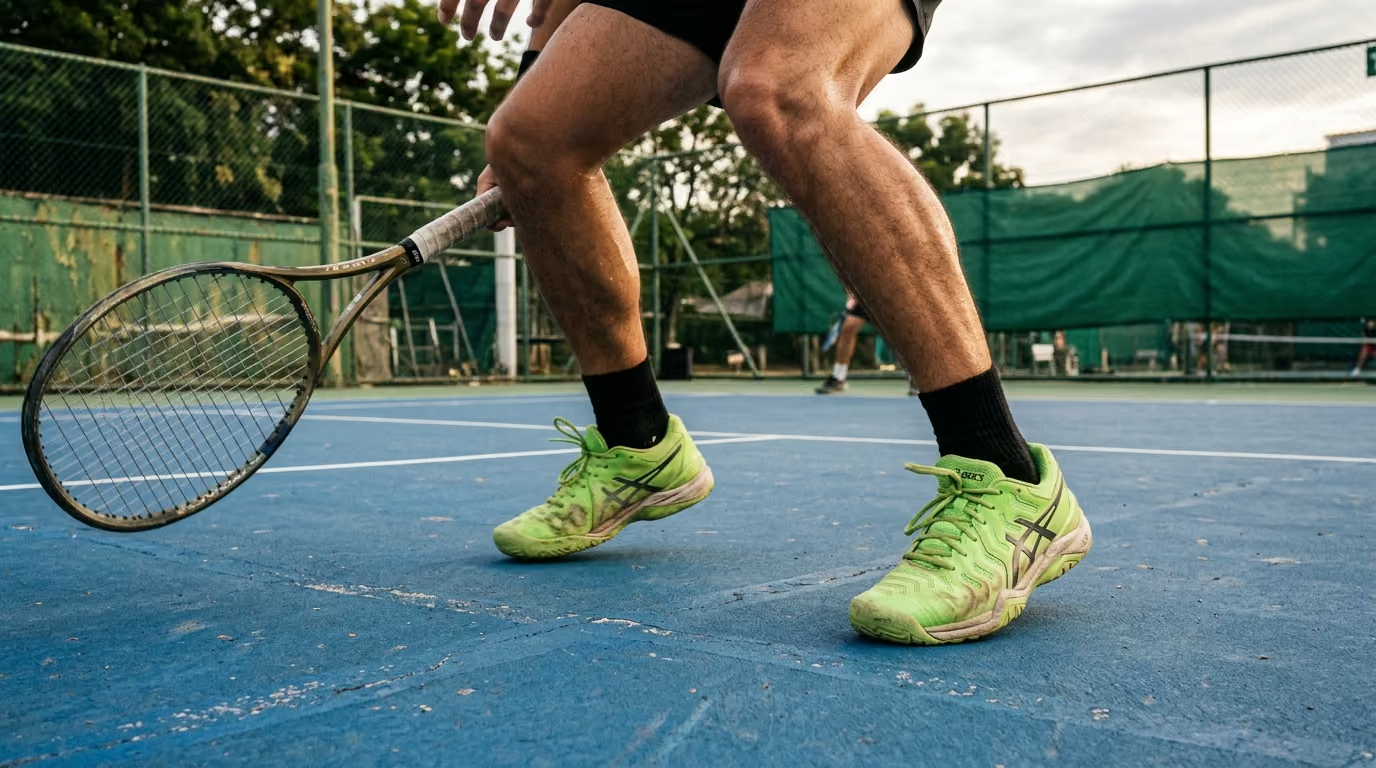
Waking up with a stiff back after a tough match is a common experience, but adjusting your training can help maintain peak racquet sports performance as you age.




You finish a tough two hour match on a cold Tuesday night and go to sleep feeling accomplished. The next morning, you wake up feeling as though your lower back is locked in concrete. For a long time, many of us simply accept this stiffness as an inevitable tax on our athletic pursuits. In our experience at Evercourts, however, adjusting your preparation and understanding how your body changes over time can completely alter this cycle.
While certain physical qualities like peak heart rate and explosive power decline as the decades pass, these shifts do not dictate a uniform drop in overall performance. By shifting training toward targeted strength, reactive power, and strategic court positioning, you can maintain a highly competitive level for decades. This guide details the physiological changes that occur with age and provides a practical framework to keep you playing your favorite court sports.
To understand how to train for longevity, we must first distinguish between chronological age and functional age. Chronological age is simply the number of birthdays you have celebrated. Functional age describes the actual condition of your physical systems, including your lower body strength, balance, joint range of motion, aerobic fitness, and tendon tolerance. Two players who are both sixty years old can have completely different functional profiles on the court.
Our physical capacity is determined by several distinct physiological systems. As we age, these systems change at different rates.
Muscle mass and maximal strength tend to decline as we grow older. Research indicates that muscle mass and strength can decline by roughly 30 percent to 50 percent between the ages of 30 and 80. This loss is primarily driven by the atrophy of type II muscle fibers, which are responsible for fast, powerful movements.
After age sixty, strength loss commonly averages about 1 percent to 2 percent per year. Other reviews show strength declines of approximately 15 percent per decade in a player's sixties and seventies, which can accelerate to roughly 30 percent after age eighty. These numbers represent population averages rather than individual destinies. Regular resistance training can significantly slow or even reverse these trends.
Power is the ability to produce force quickly. It is distinct from maximal strength. An older player might be able to perform a heavy leg press but still struggle to take a rapid first step toward a drop shot.
This difference occurs because power depends on both force and movement velocity. Rate of force development describes how quickly you can generate muscle tension. Because a racquet sports player often has only a fraction of a second to react to a ball, rapid force production is highly critical. Unfortunately, power tends to decline even faster than maximal strength as we age, making deliberate power training essential.
Your maximum oxygen uptake, known as VO2max, is the maximum rate at which your body can transport and use oxygen during exercise. In racquet sports, a strong aerobic base is vital. It supports recovery between long rallies, helps you maintain concentration late in a match, and allows you to repeat high intensity efforts.
Aerobic capacity commonly declines by about 10 percent per decade after age 25. In healthy and active older adults, longitudinal studies have shown a ten-year decline of 14.7 percent in men and 7.0 percent in women. This decline can accelerate past age seventy, sometimes exceeding 20 percent per decade. Maintaining your aerobic base ensures that intermittent court play does not feel completely exhausting.
Flexibility is the passive range of motion available at a joint. Mobility is your ability to actively control and use that range of motion during a dynamic movement. Racquet sports demand usable range of motion in several key areas.
Ankles require adequate dorsiflexion to support low defensive positions. Hips must rotate smoothly during lateral lunges, and the thoracic spine must twist to power your groundstrokes. The shoulders and wrists require control to handle overheads and delicate paddle adjustments. Having excessive flexibility without strength or control is rarely helpful, so your goal should be adequate range of motion combined with active control.
Balance is the ability to control your body's center of mass over your base of support. Proprioception is your body's internal sense of its position and movement in space. Braking capacity is the ability to absorb force when you stop or change direction.
Many points are won or lost based on how well you can decelerate, strike the ball under control, and recover back to the center of the court. Aging can make the braking phase more difficult, especially when you are forced to reach outside your normal base of support.
While muscles can adapt relatively quickly to new exercises, tendons and ligaments take much longer to adapt. Age related changes in collagen composition can reduce the compliance of your tendons. This shift makes these tissues more susceptible to irritation when subjected to sudden workload increases.
Load management is therefore central to athletic longevity. Irritation usually happens when there is a significant mismatch between your recent physical activity and your current tissue capacity.
To organize your approach to athletic longevity, it is helpful to view court performance through a four layer framework. This model helps separate the biological elements we cannot change from the training and strategic factors we can control.
These represent the natural, genetically driven shifts in our tissues, maximum heart rate, and baseline recovery speed. While we cannot stop these biological changes entirely, the rate of decline varies significantly based on our daily habits.
This layer is highly adaptable. Older adults retain an incredible capacity to build strength, improve balance, and increase cardiovascular fitness. Standard guidelines from the American College of Sports Medicine recommend resistance training for all major muscle groups at least two days per week to support functional capacity.
Anticipation and court vision can easily compensate for a slight loss in raw physical speed. Experienced players can read the opponent's body language, predict the ball's trajectory, and begin moving earlier. Research shows that long-term tennis players maintain excellent sport-specific reaction times and timing skills, often matching the performance of much younger individuals.
This outer layer involves tactical decisions that reduce unnecessary physical stress. Examples include choosing high percentage shots, utilizing smarter court positioning, wearing supportive footwear, and playing on softer court surfaces like clay.
While tennis, pickleball, and padel share many similarities, each sport places distinct physical demands on your body. Understanding these differences allows you to tailor your preparation.
Tennis is played on a large court, which requires significant running distance, explosive lateral sprints, and deep crossover footwork. It involves high force groundstrokes, repeated overhead serving, and sudden decelerations.
For older tennis players, single leg strength and braking capacity are highly critical. You must be able to absorb the force of a wide sprint, hit a controlled shot, and push off to recover. Because points can be long and matches can stretch past two hours, maintaining an aerobic base is essential for recovering between points.
Pickleball is played on a smaller court, which reduces the total running distance. However, the game demands rapid acceleration, quick lateral adjustments, and constant bending into low defensive positions near the kitchen line.
A study of older pickleball players found that 32.1 percent reported an injury during the previous year. Lower extremity injuries accounted for 57.9 percent of those cases, with muscle and tendon tissues representing 61.8 percent of the total.
Emergency department data indicates that players between sixty and seventy-nine years old have higher rates of wrist and hand injuries, often resulting from falls. Slips, trips, and falls are the most common injury mechanisms in this age group. Preparing for pickleball requires a heavy focus on balance, single leg stability, and lower body strength to prevent falls. To find more advice on staying healthy while playing, explore our pickleball articles.
Padel is played in an enclosed glass cage, which introduces complex ball rebounds and requires rapid spatial orientation. A systematic review of padel match play shows that the sport presents moderate physiological demands and moderate to high rates of perceived exertion. The contribution from the anaerobic system is relatively small, meaning the sport relies heavily on aerobic repeatability.
The presence of the walls means you do not have to chase every ball immediately. However, the sport requires constant rotational movement, short lateral bursts, and repeated overhead actions like the bandeja.
To play padel safely over the long term, you need excellent thoracic rotation, shoulder endurance, and trunk stability. The constant turning and twisting can stress the lower back if the hips and thoracic spine are stiff. You can read more about managing these demands in our padel articles.
To build a body that can withstand the demands of racquet sports, you should address five primary physical qualities. You do not need to perform dozens of exercises to see progress. Focus on a streamlined selection of high yield movements.
Your strength training should focus on functional movement patterns rather than isolating individual muscles. Perform these movements through a comfortable, pain-free range of motion twice per week.
These movements target your quadriceps, glutes, and core. You can use a chair for guidance, slowly lowering your hips until you touch the seat, then standing up with control. As you build strength, you can hold a dumbbell at your chest to add resistance.
These exercises build single leg stability, which is essential for court movement. Step forward into a comfortable stride, lower your back knee slightly, and push back to the start position. Keep your torso upright and ensure your front knee stays aligned with your foot.
The hip hinge targets the glutes, hamstrings, and lower back. Stand with your feet hip-width apart, bend slightly at the knees, and push your hips backward as if trying to touch a wall behind you. Keep your spine straight throughout the movement.
Strong calves and resilient Achilles tendons are your primary defense against lower leg issues. Perform slow, controlled calf raises on a flat floor or the edge of a step. Take three seconds to lift up, hold for one second, and take three seconds to lower down.
To further develop these essential physical attributes, you can view our court performance resources.
Power training should always be performed when you are fresh, preferably at the beginning of a strength session after a thorough warm-up. Keep the volume low and focus on maximum movement speed.
To build a reliable aerobic engine, aim for a mix of continuous, low intensity recovery work and short intervals that mimic the natural flow of a match.
Usable range of motion and stable balance allow you to reach difficult balls without straining your joints. Focus on dynamic mobility exercises that prepare your body for multi-directional movement. For additional strategies, refer to our comprehensive mobility and movement guidelines.
A proper warm-up raises your core body temperature, lubricates your joints, and prepares your nervous system for fast movements. Avoid long, static stretches before you play. Instead, use this dynamic sequence which should take about ten minutes.
Begin with two minutes of easy court movement, including light jogging, side-shuffling, and gentle backpedaling. Follow this with three minutes of lower body activation by performing ten controlled bodyweight squats and five slow lunges on each leg.
Next, spend two minutes on rotational mobility, performing gentle arm swings, torso twists, and hip circles. Finish your warm-up with three minutes of sport-specific rehearsal, practicing slow shadow swings, light lateral steps, and short accelerations before hitting your first practice ball.
Many players unintentionally hinder their own progress by falling into common training traps. Recognizing these mistakes can help you adjust your routine.
While walking and light stretching are excellent for general health, they do not provide enough stimulus to preserve muscle mass and power. To protect your bones, muscles, and joints from the forces of racquet sports, you must challenge your body with progressive resistance training.
Avoiding all heavy loads can actually allow your physical capacity to decline faster. Progressively challenging your muscles with appropriate weights is highly protective.
As we have discussed, strength and power are distinct physical qualities. A player can be strong enough to perform a heavy squat but still lack the speed to react quickly on the court.
Your training should include fast, low load movements alongside your traditional strength exercises. Power is highly specific, and you must train your muscles to contract quickly to maintain your first-step speed.
Because the court is small and doubles play is common, many players assume pickleball requires no physical preparation. This assumption often leads to sudden workload spikes and subsequent tissue irritation.
The sport demands rapid acceleration, deep lunging, and sudden stops. Arriving on the court without a baseline of strength and balance increases your risk of slips, falls, and muscle strains. If you want to dive deeper into smart preparation, check out our sports injury prevention resources.
If your hip or shoulder feels stiff, your first instinct might be to stretch the area intensely. However, mobility limitations are often caused by muscle weakness, joint restrictions, or poor movement control rather than short muscles.
Stretching a weak joint can sometimes make it less stable. A better approach is to build strength throughout your entire available range of motion, which teaches your brain that the position is safe to use.
As the body matures, our recovery systems undergo natural physiological shifts. These changes do not mean we must stop training hard, but they do require us to design our weekly schedules more intelligently.
The rate at which our muscles repair microscopic damage slows down as we grow older. This means that a hard match or heavy strength session might produce muscle soreness that lasts slightly longer than it did in our youth.
Our nervous systems also take longer to recover from high intensity, explosive training sessions. Rather than trying to fight this biological reality, we can adapt by managing our training volume and prioritizing active recovery.
When you are feeling sore or tired, resting completely on the couch might seem like the best option. However, complete inactivity can actually increase joint stiffness and prolong muscle soreness.
Active rest is often a much more effective strategy. Easy walking, gentle cycling, light swimming, and dedicated mobility work promote blood flow to your tired muscles and joints, helping to speed up the recovery process without adding physical stress.
A successful weekly training schedule balances intense court sessions with strength training, mobility work, and adequate rest. To see how these elements fit together, consider this practical weekly layout.
This schedule is simply a starting template. The key is to avoid placing high intensity court sessions on consecutive days, giving your joints and tendons at least forty-eight hours to recover from hard impacts. If you want to learn more about the science of rest, visit our recovery science for court athletes page.
Every player brings a unique physical history to the court. These distinct profiles require customized strategies to ensure longevity and performance.
This player often retains excellent technical skills and competitive drive but has lost baseline tissue tolerance. The primary risk is returning to the court at the high intensity they remember rather than the physical capacity they currently possess.
To avoid immediate injury, this player should follow a staged return. Spend four weeks building basic strength and walking endurance before stepping onto the court. Begin with short, low-speed hitting sessions before gradually progressing to competitive matches.
This highly fit player participates in multiple leagues, plays several times a week, and often trains in the gym. For this individual, the primary challenge is not adding more exercise but managing their total physical load.
When your match play volume is high, your strength training should focus on maintenance rather than building new muscle. Reduce your training volume, keep your sessions short, and prioritize sleep and nutrition to support your busy schedule.
Osteoarthritis is a common joint condition that does not have to end your playing days. The goal is to find a tolerable level of loading that keeps your joints moving comfortably.
Focus on building the strength of the muscles surrounding your affected joints, which helps absorb the impact of court movement. Warm up thoroughly before you play, and consider playing on softer surfaces like clay or indoor wood courts to reduce joint stress.
For players with low bone density, preventing falls is the single most important objective. Your training should focus heavily on balance, single leg stability, and safe movement patterns.
Avoid exercises that involve deep spinal twisting under heavy loads, and work on developing quick stepping reactions. It is highly recommended to coordinate your exercise program with your healthcare provider to ensure your training is safe and appropriate.
If you have experienced falls on or off the court, generic footwork drills are not sufficient. Your training should include targeted balance work under changing conditions, such as standing on unstable surfaces or catching a ball while moving.
Practice turning quickly, stepping in different directions, and maintaining your balance when your attention is divided. Building lower body strength, especially in your calves and quadriceps, is critical for stabilizing your body during sudden court stops.
Overhead swings and high impact ball contact can place significant stress on your upper extremities. If you experience shoulder or elbow discomfort, rest alone is rarely a long-term solution.
Evaluate your stroke technique to ensure you are using your legs and core to power your shots rather than relying entirely on your arm. Check your equipment to ensure your racquet is not too heavy or strung too tightly, and perform targeted exercises to strengthen your forearms and rotator cuff muscles.
To understand how these training principles apply to real-world scenarios, let us examine five common player profiles and their specific solutions.
A sixty-two year old player performs regular squats and deadlifts in the gym but struggles to reach wide balls on the court. This player has excellent maximal strength but lacks explosive power and rate of force development.
A seventy year old player can easily walk for an hour but finds their court movement and shot control deteriorating significantly during the second set of a tennis match.
A recreational player who normally plays pickleball once a week decides to participate in an intensive weekend tournament, playing six matches over two days. By the end of the weekend, they have developed severe Achilles tendon irritation.
A sixty-eight year old tennis player realizes they can no longer sprint as fast as they did ten years ago. Instead of trying to run faster, they adjust their style of play.
A fifty-five year old padel player begins experiencing shoulder irritation after adding two extra weekly sessions to their playing schedule.
While physical training is highly beneficial for athletic longevity, it is essential to recognize when a physical issue requires professional medical attention.
Do not attempt to play through severe or escalating pain. Consult a qualified healthcare provider if you experience any of the following symptoms:
If you have existing medical conditions, such as cardiovascular disease, severe osteoarthritis, osteoporosis, or a history of joint replacement, consult your doctor before starting a new exercise program.
A qualified physical therapist or sports medicine specialist can help you design a safe, customized training plan that respects your physical history while supporting your court performance goals. To explore general healthy aging concepts further, you can read our athletic longevity resources.
We recommend bookmarking this field guide and returning to it whenever you experience a change in your playing routine. Revisit these guidelines before starting a new competitive season, when returning to play after an injury, or when adjusting your weekly training schedule to ensure you are managing your physical loads safely and effectively.
Your physical capacity will naturally shift over time, but these changes do not mean you have to give up the sports you love. By training your strength, power, and balance intelligently, managing your playing volume, and utilizing smart court strategies, you can continue to enjoy the competition, camaraderie, and health benefits of racquet sports for many years to come.
Follow Evercourts for practical insights on tennis, pickleball and padel performance, movement, recovery and healthy ageing. Stay connected for new articles, research-led guidance and ideas to help you play well and keep playing for years.


Read practical guidance for better movement, smarter preparation and a game that keeps working for you.
explore the Blog