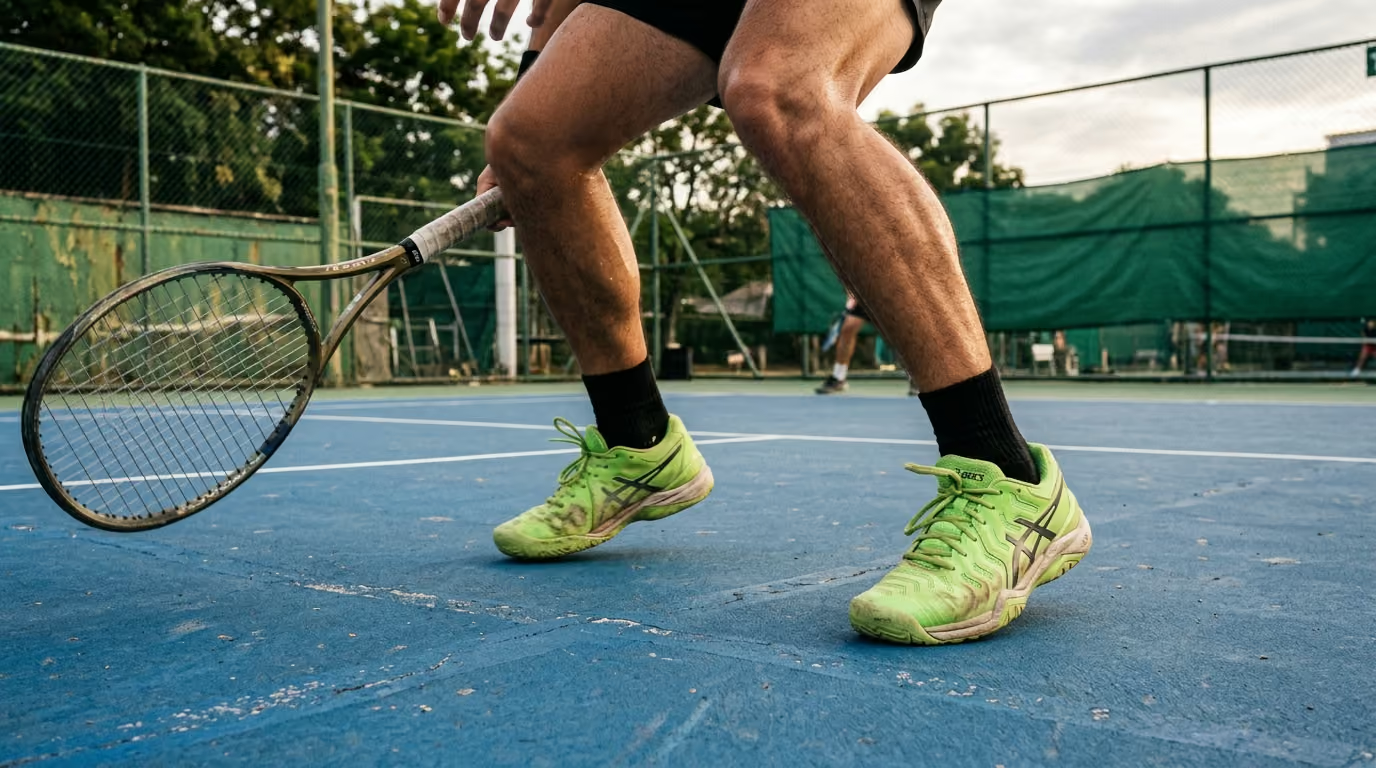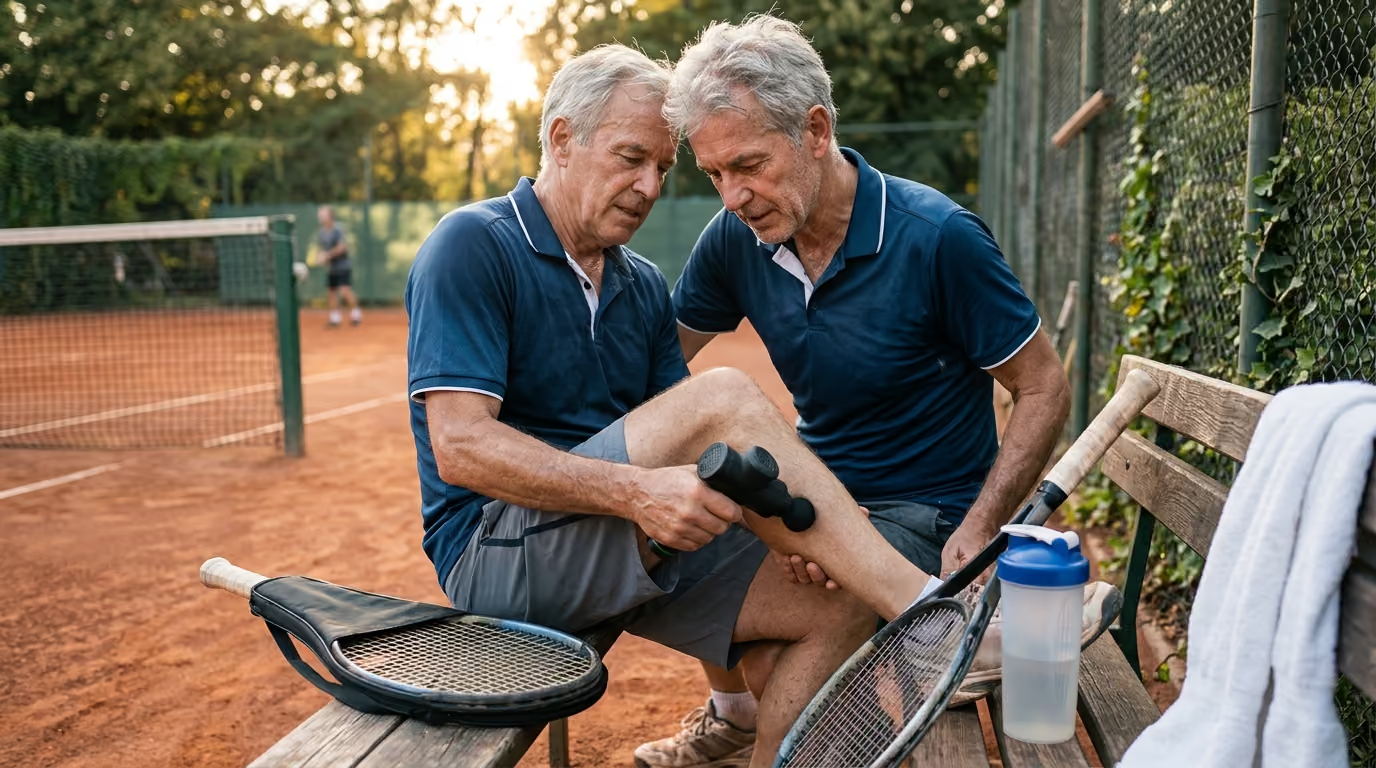

When your Achilles tendons feel stiff the morning after a tough match, understanding how recovery changes with age becomes essential for racquet sports players.




You step off the court after a grueling three-set match. Your lungs feel fine, your energy remains high, and you feel ready to play again tomorrow. Yet the next morning, your Achilles tendons feel stiff, and your lower back protests as you bend over.
While physical recovery constraints change as you age, a slower or less efficient recovery process is not an inevitable consequence of playing racquet sports. Research demonstrates that older athletes do not automatically experience more muscle damage or longer recovery times than younger players. Instead, managing recovery successfully over time requires adapting your training volume, maintaining structural strength, and optimizing basic habits like sleep and protein intake.
To manage your physical longevity, you must understand the difference between chronological age and biological or functional age. Chronological age is simply the number on your birth certificate. It is a poor tool for predicting how much court work your body can handle.
Two players who are both fifty years old can have entirely different recovery capacities. One player may have thirty years of consistent court conditioning, while the other might be returning to sport after a long layoff. Their muscle mass, tendon tolerance, cardiovascular fitness, and joint health will differ significantly.
A major systematic review published in 2025 by Gantois and colleagues analyzed thirty-six separate studies on exercise-induced muscle damage. The researchers found no meaningful differences between younger and older age groups in post-exercise muscle function loss at twenty-four or seventy-two hours. Interestingly, the younger adults in the studies generally reported greater muscle soreness and showed larger spikes in creatine kinase, which is a common chemical marker of muscle damage.
These findings align with a 2021 review by Fernandes and colleagues. This review examined how older men recover from resistance exercise and found that most studies showed no significant recovery differences between older and younger participants. A 2023 scoping review by Millar and colleagues focused on adults over the age of sixty-five. This review highlighted immense variability among individuals, which makes universal, age-based recovery rules highly inaccurate.
We can conclude that aging changes the constraints around your recovery rather than simply slowing down a single recovery clock. Your body can still adapt, build strength, and recover efficiently. However, you must pay closer attention to tissue capacity, structural strength, sleep quality, and the way you organize your training week.
To play racquet sports comfortably for years, you should understand the physiological changes that occur as the body matures. These changes alter how your muscles, tendons, and hormonal systems react to the physical demands of tennis, pickleball, or padel.
Age-related muscle loss, known as sarcopenia, begins earlier than many players realize. Scientific reviews indicate that adults typically lose three to eight percent of their muscle mass per decade after the age of thirty. This decline tends to accelerate once a player reaches sixty.
Physical strength often declines faster than actual muscle size. This happens because aging affects motor-unit recruitment, nervous system coordination, and overall muscle quality. Research shows that after age fifty, leg lean mass decreases by one to two percent annually. Meanwhile, leg strength declines by one and a half to five percent each year.
For court athletes, this loss of strength reserve is highly relevant. Decelerating before a shot, pushing off the court surface, and stabilizing your body during a rotation require significant power. If your strength baseline drops, every explosive movement on the court consumes a larger percentage of your total capacity. You will tire faster during long rallies and put more stress on your joints.
Aging muscles can develop a condition known as anabolic resistance. This means your muscles show a reduced building and repair response to a given dose of dietary protein or resistance training. To trigger the same muscle-repair signals as a younger player, you may need a more precise exercise stimulus and higher-quality nutrition.
Connective tissues, including tendons, ligaments, and joint cartilage, also change over time. These structures have a limited blood supply compared to muscles, meaning they adapt to physical stress much more slowly. In racquet sports, the Achilles tendon, patellar tendon, and rotator cuff absorb immense forces.
As you age, your tendons can lose elasticity and stiffen. This creates a mismatch between your muscular fitness and your connective tissue tolerance. Your heart and muscles might feel ready for a third consecutive day of singles, but your tendons may still be recovering from the micro-stress of the first session.
Hormonal shifts play a significant role in how your body repairs itself between matches. For women, the transition through perimenopause and menopause involves a sharp decline in estrogen. Estrogen is heavily involved in muscle protein turnover, tendon health, and bone density preservation.
For men, a gradual decline in testosterone can affect muscle mass maintenance, sleep quality, and overall energy levels. However, low testosterone should not be blamed for every recovery issue. Poor sleep, chronic stress, inadequate nutrition, and excessive training volume can produce identical recovery symptoms.
Bone health also requires attention as we mature. A combination of lower muscle mass, hormonal changes, and sudden increases in jumping or sprinting volume can increase the risk of stress injuries. Ensuring progressive exposure to high-impact movements is essential for maintaining bone mineral density.
To recover effectively, you must realize that recovery is not a single process. It involves several distinct systems that repair at different rates.
This category refers to the physical repair of muscles, tendons, ligaments, and joint capsules. Muscles have a rich blood supply and generally recover from soreness within two to three days. Tendons require much longer to adapt to changes in your training routine.
Morning stiffness in your heels, knees, or shoulders is a primary indicator of incomplete local tissue recovery. If this stiffness disappears after a few minutes of walking, the tissue is likely adapting. If the stiffness persists throughout the day or worsens during play, the local tissue is overloaded.
Your nervous system controls muscle contraction speed, balance, reaction time, and movement coordination. High-intensity court play requires rapid split-steps, precise racket positioning, and sudden changes of direction.
Neuromuscular fatigue does not always cause physical soreness. Instead, it manifests as poor timing, late preparation, more unforced errors, or a sluggish first step. If you find yourself consistently hitting the ball late, your nervous system may still be recovering from a previous hard session.
Metabolic recovery involves restoring muscle glycogen stores, balancing fluids, and reducing systemic inflammation. Long matches in hot weather drain your carbohydrate reserves and dehydrate your tissues.
If you do not refuel properly, your muscles will feel heavy and weak during your next session. Consuming adequate carbohydrates and fluids after a match is vital for restoring energy.
Mental fatigue directly influences physical performance and recovery. High-stress weeks at work or poor sleep raise your baseline levels of cortisol. This hormone can impair tissue repair and increase your perceived exertion on the court.
A workload that feels easy during a calm week can feel overwhelming during times of high mental stress. You should view your life stress and your court training as one combined load.
To maintain athletic longevity, you must learn to monitor and adjust your training volume. Using a structured framework allows you to continue playing at a high level without overloading your joints.
This simple tracking system helps you assess your physical readiness before every session. Use these three categories to guide your daily training decisions:
When you are returning from a layoff or trying to increase your fitness, modify only one training variable at a time. The primary training variables are session duration, movement intensity, weekly frequency, court impact, and resistance-training load.
For example, if you decide to play on hard courts instead of clay, do not increase your play duration during the same week. If you increase your weekly sessions from two to three, keep the intensity of those sessions moderate. Changing multiple variables simultaneously makes it difficult to pinpoint the cause of joint irritation.
Avoid scheduling high-intensity court sessions on back-to-back days. Your tissues and nervous system need time to return to baseline after explosive play.
A smart weekly schedule alternates demanding days with lighter activities. If you play a highly competitive singles match on Tuesday, use Wednesday for light technical drilling, mobility work, or active rest. This spacing prevents the accumulation of deep fatigue and keeps your movement quality high.
According to guidelines from the American College of Sports Medicine, older adults should allow at least forty-eight hours of rest between intense strength-training sessions targeting the same muscle groups. This advice also applies to high-intensity court sessions.
You do not need to rest completely for forty-eight hours. However, you should avoid repeating high-impact, explosive movements on consecutive days. This spacing allows your tendons and muscles to adapt and rebuild safely.
Many players view strength training as an optional activity that takes time away from the court. In reality, consistent resistance training is the most effective recovery insurance policy available to an older athlete. Building stronger muscles and denser bones reduces the relative physical cost of every step, turn, and stroke you take.
For deep-dive exercise demonstrations and structured routines, you can review our mobility and movement drills.
Your strength program should focus on functional, multi-joint movements that replicate the demands of racquet sports. Prioritize these key patterns:
For healthy aging, you should perform dedicated resistance training two to three days per week. Keep the quality of your movements high, and avoid training to absolute muscle failure. Training to failure creates excessive muscle damage that can disrupt your court play for several days.
Leave one to three repetitions in reserve on most of your strength sets. This approach provides a strong stimulus for muscle maintenance while keeping your recovery demands manageable.
Additionally, use longer rest intervals between your strength sets. Resting for two to three minutes between challenging sets allows your nervous system to recover. This ensures you can perform the next set with perfect technique and maximum power output.
Proper nutrition and hydration provide the raw materials your body needs to rebuild tissue and restore depleted energy reserves. As you age, your nutritional margin for error becomes smaller.
For more information on the physical demands of court play, visit our healthy aging and athletic longevity resources.
To combat anabolic resistance, older athletes must consume enough high-quality protein. The International Society of Sports Nutrition recommends that active individuals consume between 1.4 and 2.0 grams of protein per kilogram of body mass daily. For a seventy-five-kilogram player, this equates to roughly 105 to 150 grams of protein per day.
Do not consume your entire daily protein intake in a single meal. Your body utilizes protein more efficiently when it is distributed evenly throughout the day. Aim for thirty to forty grams of high-quality protein per meal. Ensure your protein sources are rich in essential amino acids, particularly leucine, which acts as the primary trigger for muscle protein synthesis.
Racquet sports rely heavily on anaerobic energy systems during intense rallies. If you restrict your carbohydrate intake, you will struggle to maintain high-intensity movement late in a match. Low carbohydrate availability also increases circulating stress hormones, which can impair sleep quality and delay muscle repair.
If you feel chronically fatigued, irritable, or exceptionally sore after playing, examine your carbohydrate intake. Eating a carbohydrate-rich meal a few hours before play and refueling shortly after will help maintain your stamina and accelerate recovery.
As we age, our natural thirst sensation can become less sensitive. This increases the risk of dehydration, especially during long matches in warm conditions. Dehydration thickens your blood, raises your heart rate, and increases your perceived exertion.
To maintain physical performance, establish a structured hydration plan. Drink water consistently throughout the day leading up to your match. For sessions lasting longer than an hour, or during hot weather, include an electrolyte drink to replace lost sodium and prevent cramping.
While all racquet sports share common physical demands, each discipline places unique stresses on your body. Tailoring your recovery strategy to your specific sport will yield the best results.
Tennis is played on a large court, which requires longer sprint distances and higher top speeds. The sport involves significant eccentric loading on your lower body as you slide or stop on hard court surfaces. The service motion also places repetitive, high-velocity stress on your shoulder and lower back.
If you are a tennis player, your recovery should focus on calf and Achilles tendon care, as well as hamstring strength. Spacing out your singles play is critical for preventing joint irritation. If you want to learn more about managing these demands, read our dedicated tennis articles.
Pickleball is played on a smaller court, which reduces your total running distance but increases the volume of rapid, short-step movements. The game requires a low stance, especially during quick exchanges at the kitchen line. This constant crouching places continuous stress on your lower back, knees, and quadriceps.
Pickleball players should prioritize hip mobility and quadriceps endurance. The quick, repetitive paddle movements can also stress the elbow and wrist tendons. If you play pickleball, focus on forearm strength and regular wrist mobility exercises. For detailed advice, you can examine our pickleball articles.
Padel is played in an enclosed glass court, which leads to long, continuous rallies with fewer breaks. The sport features frequent overhead shots, lobs, and off-the-wall turns. This requires excellent shoulder stability and rapid rotational power in your torso.
In our experience, the combination of concrete courts and frequent overhead play can be particularly taxing on the spine and knees. I remember finishing a tough two hour padel match on a cold Tuesday night and waking up the next morning feeling like my lower back was locked in concrete. For a long time, I just accepted this as the price of playing hard in my forties. But once I started spending just ten minutes on targeted hip mobility before heading to the club, the stiffness almost completely vanished. It taught me that we do not have to accept pain as a default state of aging.
Padel players must prioritize thoracic spine mobility and shoulder rotator cuff strength. The continuous play also makes cardiovascular recovery and post-match refueling highly important. To read more about optimizing your play, check out our padel articles.
Avoiding common training and recovery mistakes will protect your joints and keep you on the court consistently.
Many players assume that if they are not sore, they are fully recovered. However, scientific studies show that older adults often report less muscle soreness despite experiencing temporary drops in power and coordination. Do not rely solely on how your muscles feel. Monitor your movement quality, joint stiffness, and reaction time to evaluate your recovery status.
Stretching can feel relaxing, but it does not repair damaged muscle fibers, restore glycogen, or build tendon tolerance. If you spend an hour stretching but ignore strength training and sleep, your recovery will suffer. Use passive stretching for relaxation, but do not view it as a replacement for active strength work.
Taking anti-inflammatory drugs before or immediately after a match to mask joint pain is a dangerous habit. These medications suppress the inflammatory response, which is your body’s natural signal to repair damaged tissues. Masking pain allows you to overload vulnerable tendons, which can turn a minor strain into a chronic issue.
Wearable devices use heart rate variability and sleep time to calculate a recovery score. These scores can help you track long-term health trends, but they are only estimates. A high recovery score should never override localized joint pain, morning stiffness, or feeling physically exhausted.
High-quality sleep is the absolute foundation of physical recovery. During deep sleep, your body releases human growth hormone, which is essential for tissue repair and muscle growth.
You can learn more about how recovery and performance intersect by exploring our recovery science resources.
As we age, our sleep architecture naturally changes. You may experience lighter sleep, more frequent nighttime awakenings, or earlier waking times. Hormonal changes, stress, and joint discomfort can further disrupt your sleep patterns.
Chronic sleep loss of less than seven hours per night has been shown to raise stress hormones, impair glycogen storage, and slow down protein synthesis. It also impairs your reaction time and spatial awareness on the court. A split-second delay in your split-step can lead to hitting the ball out of position, which increases your injury risk.
To optimize your sleep, track these key metrics for a week:
To improve your sleep quality, maintain a consistent sleep schedule, keep your bedroom cool and dark, and avoid alcohol and heavy meals close to bedtime.
While mild stiffness and temporary muscle soreness are normal parts of training, you must recognize when physical symptoms require professional attention. Continuing to train through structural pain can lead to chronic injuries that require months of rehabilitation.
Consult a qualified healthcare professional, such as a sports physiotherapist or orthopedic physician, if you experience any of the following warning signs:
A professional physical assessment can help you identify structural weaknesses, modify your movement patterns, and design a safe rehab program.
To learn more about our philosophy and commitment to research-led guidance for court athletes, you can visit our about page.
Revisit this field guide whenever you are planning a return to play after a layoff, adjusting your weekly court schedule, or experiencing persistent morning stiffness that disrupts your routine.
By prioritizing progressive strength training, managing your weekly training volume, and focusing on quality sleep and nutrition, you can continue playing the sports you love for years to come.
Follow Evercourts for practical insights on tennis, pickleball and padel performance, movement, recovery and healthy ageing. Stay connected for new articles, research-led guidance and ideas to help you play well and keep playing for years.


Read practical guidance for better movement, smarter preparation and a game that keeps working for you.
explore the Blog