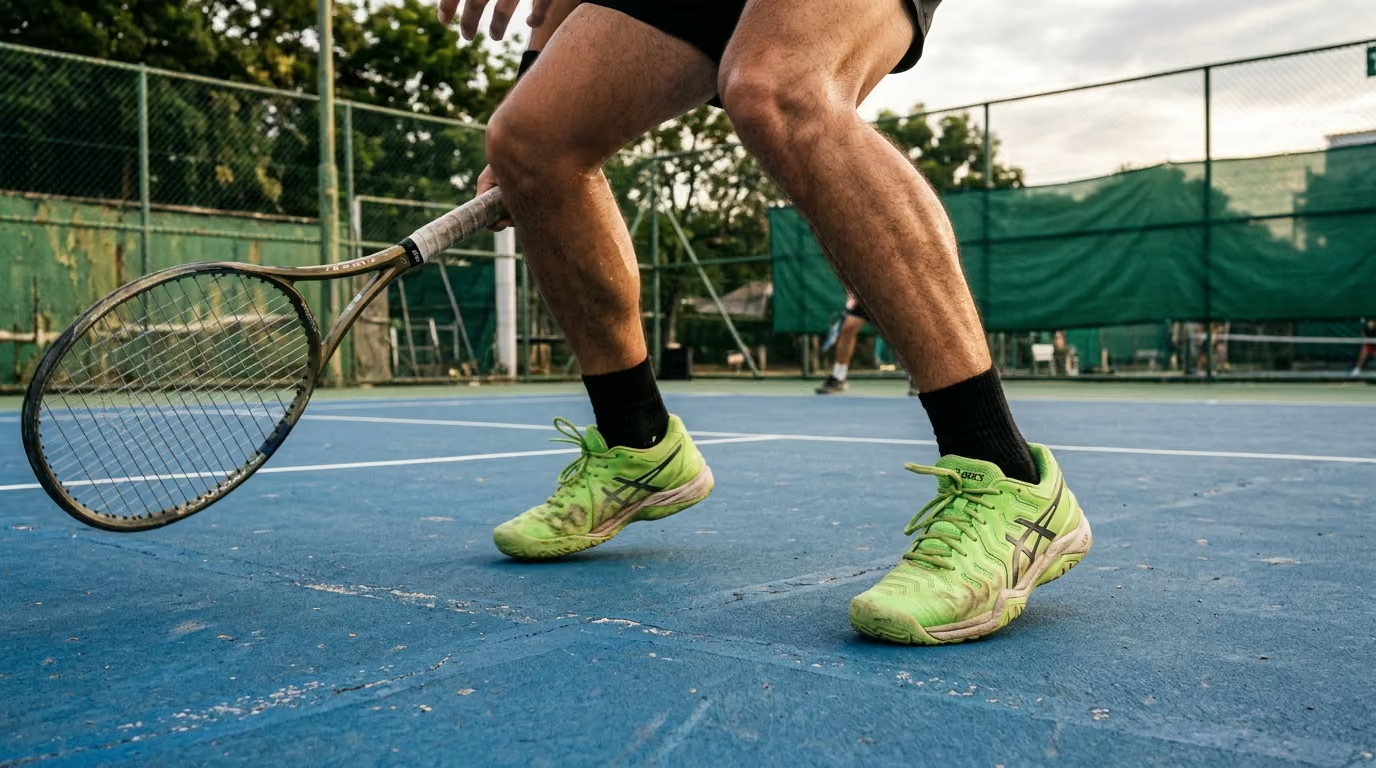

Over 60% of older racquet sport players can maintain their on-court performance by adapting training to address age-related changes in muscle power and balance.




Many racquet sport players search for ways to maintain their on-court performance as they grow older. The physical challenges of fast lateral movements, sudden stops, and rapid overhead swings can feel more demanding over time. However, growing older does not mean you have to stop playing the sports you love.
Adapting your training as you age requires shifting from random court exposure to a deliberate physical preparation system. Rather than simply playing less, athletes should focus on preserving strength, power, and balance while managing recovery time between matches. This proactive approach keeps players performing safely on court and supports long-term healthy aging and athletic longevity without unnecessary physical strain.
To adapt your training effectively, you must understand how your body changes over time. Aging affects your muscles, tendons, joints, and nervous system in predictable ways. Research helps us understand these shifts so we can build better preparation strategies.
A helpful model for preventing injuries focuses on the balance between capacity and exposure. Exposure refers to how much you play, including match duration, weekly frequency, and movement intensity. Capacity is your body's ability to handle those demands, which depends on strength, balance, joint mobility, and aerobic fitness.
When your court exposure exceeds your physical capacity, injury risk rises. As players age, their physical capacity may naturally decline if they only play their sport without extra conditioning. Preparing your body off the court raises your capacity, which allows you to handle the stress of competitive play safely. This model shows that age itself is not the direct cause of injury, but rather an imbalance between preparation and play.
Muscle strength is the ability to produce force, while muscle power is the ability to produce force quickly. Research shows that muscle power declines faster than muscle strength as we age. This rapid loss of power directly impacts racquet sports, which rely heavily on explosive actions.
Every split step, sudden acceleration, and rapid direction change requires muscle power. If you only perform slow strength exercises, you may struggle to decelerate or react quickly during a match. Incorporating lighter, faster movements into your routine helps preserve this essential athletic quality.
Maintaining balance requires coordination between your eyes, inner ear, and muscles. This system can slow down over time, making rapid movements more hazardous. In racquet sports, players frequently move backward, reach outside their base of support, and make sudden stops.
Without targeted balance training, these movements can lead to trips and falls. According to public health guidelines, older adults should perform multicomponent physical activity that emphasizes functional balance. This training is essential for preventing falls and maintaining court coordination.
Clinical data highlights the specific risks older racquet sport players face. A comprehensive national study analyzed emergency department data for tennis and pickleball players aged sixty and older. The researchers found key differences in injury patterns between the two sports.
First, the study emphasized that medical events must be separated from physical injuries. Cardiovascular or other non-injury conditions accounted for over eleven percent of senior pickleball cases. For tennis players, these medical conditions accounted for more than twenty-one percent of emergency department visits. This highlights the need for cardiovascular fitness and regular medical checkups.
Second, the study identified slips, trips, falls, and dives as the leading cause of senior pickleball injuries. This mechanism accounted for over sixty-three percent of all reported cases. The most common diagnoses among senior pickleball players were strains, sprains, and fractures.
The data also revealed significant differences based on sex. Senior men were three and a half times more likely than senior women to sustain strains or sprains. Conversely, senior women were more than three and a half times more likely than senior men to suffer fractures. Most notably, senior women were over nine times more likely to sustain a wrist fracture, often from reaching out to break a fall.
These statistics demonstrate that falls are a major concern on the court. Preparing your body to stay balanced and stop safely is a critical part of injury prevention strategies for older players.
The World Health Organization recommends that older adults perform varied, multicomponent exercise at least three days per week. For court athletes, this means your routine should go beyond simply playing your sport. You need a structured approach that builds strength, power, and joint health off the court.
Using targeted strength and conditioning programs prepares your muscles and joints for the specific demands of match play.
Resistance training builds the structural foundation for your joints. The American College of Sports Medicine recommends training major muscle groups two to three days per week. Beginners can start with lighter loads, around forty to fifty percent of their one-repetition maximum. Intermediate and experienced players can use loads between sixty and seventy percent to build deeper structural capacity.
For older adults, performing ten to fifteen repetitions per set is a safe starting point. You do not need to lift massive weights to see benefits. Focus on controlled movements through a full range of motion, leaving two to three minutes of rest between sets.
A well-rounded strength routine must address the key areas used during racquet sports. Focus on the following muscle groups:
Once you have built a basic foundation of strength, you can safely introduce power training. The goal is to teach your muscles to contract quickly without overloading your joints. The American College of Sports Medicine recommends using light loads, around twenty to fifty percent of your one-repetition maximum, for power movements.
Start with simple exercises that emphasize speed of movement. For example, perform a sit-to-stand exercise where you stand up as fast as possible, then lower yourself slowly. You can also use light medicine ball chest passes or quick, controlled steps onto a low platform. Always prioritize perfect alignment over maximum speed.
Many injuries occur when players try to stop or change direction too quickly. If you only practice hitting the ball, you neglect the critical phase of slowing down afterward. Training your body to decelerate safely is essential for staying upright and avoiding joint strain.
Slowing down after a sprint requires significant eccentric muscle strength. Your muscles must lengthen under load to absorb your body weight. If your legs lack this strength, the impact forces travel directly into your knees, hips, and lower back.
To train deceleration, practice short sprints where you stop over three to four controlled steps. Focus on keeping your hips low and your knees aligned over your toes. Avoid letting your knees collapse inward as you brake.
Chasing overhead lobs is a frequent cause of backward falls. Running backward while looking up severely compromises your balance and spatial awareness. The clinical literature warns that backward running is a primary contributor to severe head and wrist injuries.
Instead of running backward, practice the turn-and-run technique. Pivot your body to the side, run forward toward the back of the court, and look over your shoulder. This pattern keeps your center of gravity stable and allows you to track the ball safely.
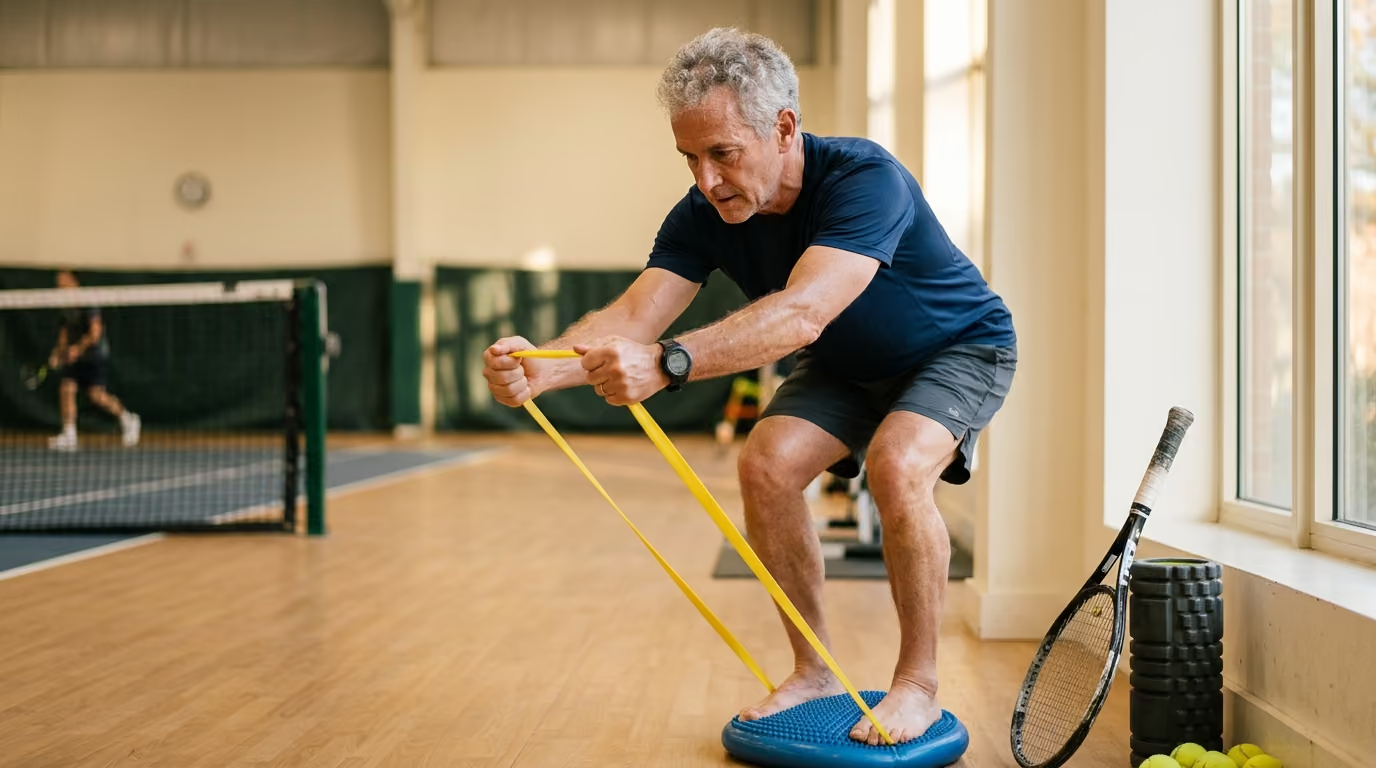
Neuromotor exercise combines balance, agility, and coordination. To make your balance training sport-specific, progress from stable stances to dynamic movements. This challenges your nervous system to react quickly to changing court conditions.
Start by standing on one leg with a stable support nearby. Once this is easy, add head turns or close your eyes to challenge your balance. Next, practice stepping forward, holding a single-leg stance for two seconds, and then stepping back. Finally, practice reactive stepping where you move in response to a visual cue from a partner.
A proper warm-up prepares your cardiovascular system and joints for the intensity of play. Static stretching alone is not enough to prepare you for rapid movements. A functional five- to ten-minute warm-up should include the following stages:
While all racquet sports share common patterns, each sport places unique physical demands on your body. Understanding these differences allows you to tailor your preparation to your preferred game.
Tennis features a large court, which requires longer sprints and high-velocity deceleration. The heavier yellow ball also increases the impact forces on your wrist, elbow, and shoulder. Older tennis players frequently face repetitive-stress issues in their dominant shoulder due to serving.
To adapt your tennis training, consider playing more doubles to reduce the required court coverage. Focus heavily on single-leg stability to handle the wider lateral lunges. You should also monitor the volume of your overhead serves, replacing some maximal efforts with spin and placement. For more advice, you can read our specialized articles about tennis to refine your strategy.
Pickleball is played on a smaller court, which reduces long sprints but increases the speed of reactions. The low bounce of the plastic ball forces players into a deep, sustained squat near the non-volley zone line. This low stance can strain the knees and lower back if hip mobility is limited.
The rapid, short steps in pickleball also create unique trip hazards if players lose their footing. Focus your physical preparation on quad strength and hip mobility to support that low dink stance. Ensure your footwear has adequate lateral support, and avoid diving for balls that are out of reach. For detailed tips, read our dedicated pickleball guidance to protect your joints during play.
Padel is played in an enclosed glass court, which introduces complex angles and rebounds. The sport requires constant turning, backpedaling, and adapting to ball bounces off the walls. The court surface, often synthetic turf with sand, can feel high-traction or slippery depending on maintenance.
The frequent overhead shots in padel place high demands on the shoulder joint and thoracic spine. To prepare for padel, focus on thoracic rotation exercises to help you turn easily. Strengthen your calf muscles to handle the constant, short acceleration steps on the synthetic turf.
Many dedicated players make common training errors that unintentionally increase their injury risk. Recognizing these pitfalls allows you to adjust your routine before pain develops.
A common mistake is assuming that playing your sport is the only exercise you need. While singles or doubles play provides cardiorespiratory benefits, it does not build balanced physical capacity. Court movement is unpredictable and repetitive, which can lead to muscular imbalances over time.
For example, a player may have excellent aerobic endurance but lack the single-leg balance needed to recover from a wide shot. Without targeted strength and balance work off the court, your joints absorb all the impact forces of play. True physical preparation happens in the gym, which then supports your performance on the court.
When players retire, they often find themselves with abundant free time. It is common to see a new retiree begin playing racquet sports for several hours every single morning. This sudden, massive increase in physical exposure frequently leads to repetitive-stress injuries.
Your tendons and ligaments adapt to stress much slower than your muscles. Even if you feel energetic, your joints need time to recover from the impact of hard court surfaces. Instead of playing every day, use your extra free time to mix court play with rest days, swimming, and strength training.
Many players walk directly from their car to the court, perform a few static hamstring stretches, and begin playing. Static stretching without a prior increase in body temperature does not prepare your cardiovascular system for intense play. In fact, holding cold muscles in deep stretches can temporarily reduce their ability to contract powerfully.
A modern warm-up must be dynamic. Focus on movements that mimic the actual physical demands of your sport. Save your static stretching for after the match, when your muscles are warm and ready to recover.
Recovery capacity naturally changes as we age. Your tissues take slightly longer to repair after a demanding session, making workload management incredibly important.
Systemic recovery involves your nervous system, hormone levels, and energy stores. To support this process, focus on three main areas: sleep, nutrition, and hydration. Older adults need seven to eight hours of quality sleep per night to allow their tissues to rebuild.
Proper nutrition, particularly adequate protein intake, helps maintain muscle mass as you age. Hydration is also critical, as older adults have a reduced thirst sensation. Keep a water bottle courtside and drink regularly, even if you do not feel intensely thirsty.
It is normal to experience mild muscle soreness after a challenging practice or match. This discomfort typically peaks twenty-four to forty-eight hours after exercise and resolves on its own. However, you must learn to distinguish this normal response from joint warning signs.
If you experience sharp pain inside a joint, swelling, or localized tenderness, your body is signaling a problem. Pain that alters your gait, causes you to limp, or worsens during play is a warning sign. Never attempt to push through joint pain, as this can turn a minor strain into a chronic condition.
Monitoring your recovery helps you make smart decisions about when to play and when to rest. You can track your daily readiness by asking yourself a few simple questions each morning:
If you score poorly in several areas, consider modifying your plans for the day. Swap a high-intensity singles match for a lighter technical drill session, or take a complete rest day.
While self-modification is useful, some situations require professional guidance. Knowing when to consult a healthcare provider ensures you manage risks safely.
Certain symptoms are clear red flags that require immediate medical attention. If you experience any of the following during or after play, stop immediately and seek professional care:
If you experience persistent joint pain that does not improve after a few days of rest, consult a qualified physical therapist or sports physician. They can analyze your movement patterns, identify specific weaknesses, and design a targeted rehabilitation plan.
Getting a professional evaluation early can prevent minor issues from becoming long-term limitations. It is especially important to seek medical clearance before returning to play after a fall or a suspected sprain.
Many older players manage chronic conditions like osteoarthritis, hypertension, or past joint surgeries. These conditions do not mean you must give up racquet sports, but they do require a more tailored approach.
Work with your doctor to understand how your medications might affect your heart rate or hydration. A physical therapist can help you modify your exercises to protect osteoarthritic joints while building the surrounding muscles.
To help you apply these principles, here are three sample weekly schedules. These plans demonstrate how to balance court play, physical conditioning, and recovery.
This schedule is designed for individuals returning to play after a long period of inactivity, or those who are new to racquet sports.
This plan is tailored for established players who participate in recreational leagues and want to maintain their physical capacity.
This advanced schedule is for experienced masters players who participate in singles tournaments and need high physical capacity.
To begin implementing these changes, focus on a few practical actions this week:
By making your physical preparation more deliberate, you can preserve your capabilities and continue enjoying the game for years to come.
Follow Evercourts for practical insights on tennis, pickleball and padel performance, movement, recovery and healthy ageing. Stay connected for new articles, research-led guidance and ideas to help you play well and keep playing for years.


Read practical guidance for better movement, smarter preparation and a game that keeps working for you.
explore the Blog