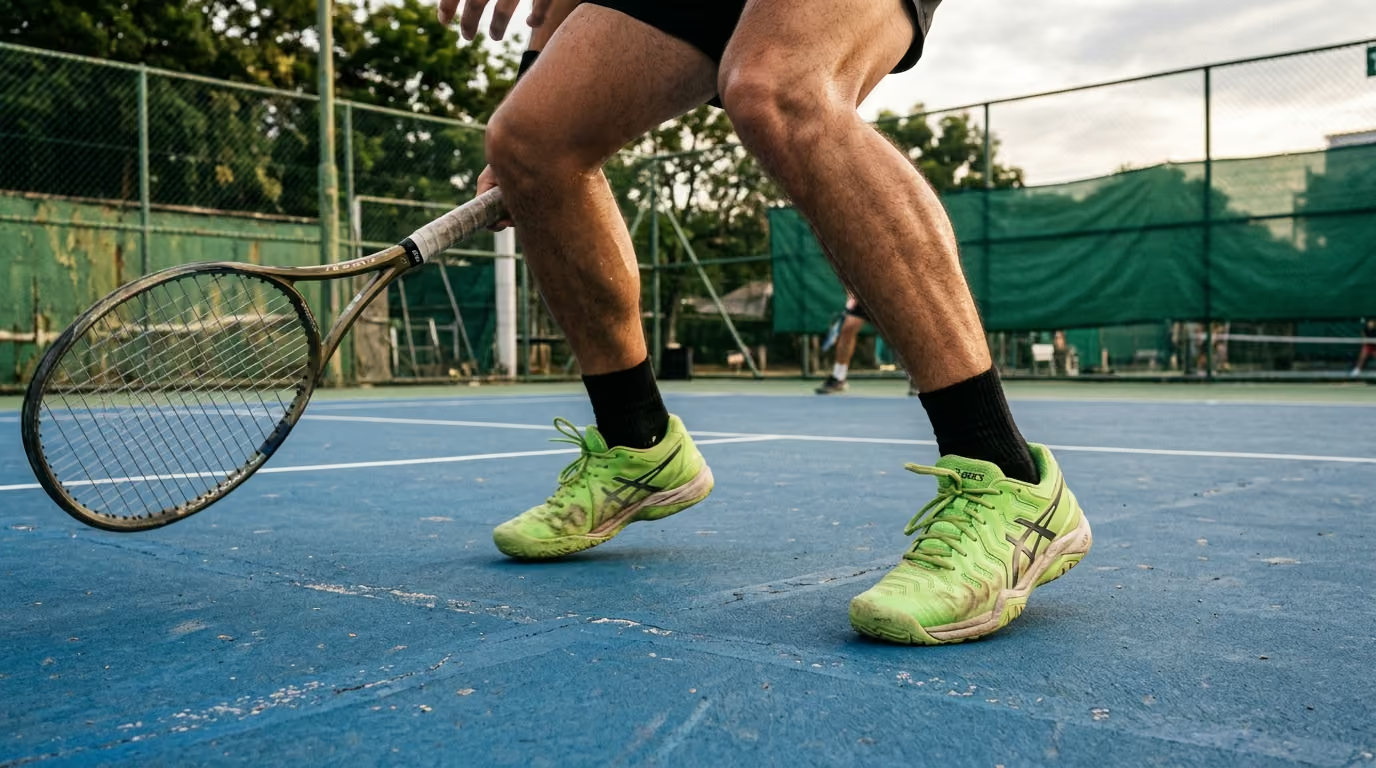
A sustainable racquet sports league routine balances matches, physical preparation, and recovery to maintain high performance without sacrificing health.




Many recreational players believe that the fastest path to league victory is playing as many matches as possible every week. They assume that raw court time is the ultimate metric of progress. However, this approach often leads to physical breakdown, mental burnout, and declining performance by mid-season.
To build a truly sustainable racquet sports league routine, you must view your weekly matches, physical preparation, and recovery as parts of a single connected system. By managing your total physical load and reserving dedicated recovery days, you can maintain high performance without sacrificing your health. This balanced structure ensures that your seasonal commitments remain compatible with your personal and professional obligations over the long term.
Managing your weekly schedule effectively requires a clear understanding of load management. Every physical activity you undertake contributes to the total demand placed on your nervous system and muscle tissues. If you plan your training sessions independently of your work life and family duties, you risk creating an unsustainable schedule. To prevent chronic fatigue, you must learn to monitor both your external and internal physical loads.
External load represents the objective physical work you perform on and off the court. This includes your match duration, the number of matches played in a week, and your total court time. It also covers the physical demands of your gym sessions and your daily travel commitments. In professional sports science, tracking external load is a standard practice for reducing injury risk.
Researchers studying tennis players have used tracking systems to monitor movement patterns and physical stress. A study published in peer-reviewed sports journals highlights how monitoring external load helps identify overload risk. This allows coaches and players to make better decisions about weekly training volume. For recreational players, you do not need expensive technology to track external load.
You can easily monitor simple metrics on a weekly basis. Keep track of your total weekly match duration and the number of high-intensity court sessions. Write down your total training minutes, the number of strength sessions, and any late finishes that disrupt your sleep. Tracking these basic numbers helps you visualize the true volume of work you are asking your body to perform.
Internal load measures how taxing those activities are for your unique body. A two-hour doubles match might feel effortless for a highly conditioned player. That same match can be extremely exhausting for someone returning from an illness or a stressful work week. You can track internal load using a simple calculation.
Multiply the duration of your session in minutes by your rate of perceived exertion on a scale of one to ten. For example, a ninety-minute singles match that felt like a seven out of ten yields a score of six hundred and thirty units. Tracking this score over several weeks helps you spot patterns of accumulating fatigue. It is also useful to watch for physical and mental fatigue markers.
These markers include persistent muscle soreness, mild joint pain, and a decline in sleep quality. You might also notice a sudden drop in motivation or a loss of coordination during play. If your serve speed drops or your footwork feels sluggish, your body is showing signs of high internal load. Do not interpret one bad day as a sign of overtraining, but pay attention to multi-day trends.
To plan your season safely, you must distinguish between acute load and chronic load. Acute load refers to the physical stress you have accumulated over the current week. Chronic load represents your historical physical tolerance built over several weeks or months. Injury risk typically rises when your acute load suddenly spikes far above your chronic baseline.
A study on tennis players examined a four-week progressive overload period followed by a one-week taper. During the peak weeks of overload, stress symptoms and stress hormones rose significantly. However, these markers returned to baseline once the training load was deliberately reduced during the taper. This demonstrates that your body can handle hard training, provided you include planned periods of reduced work.
To build a sustainable routine, you must organize your weekly calendar systematically. A balanced weekly structure prevents you from compressing too many demanding activities into a short window. By planning your days intentionally, you protect your physical energy and maintain your enthusiasm for competition.
Write down your league match dates first. Then, add your peak work periods, family travel, and important social obligations. Once these fixed blocks are in place, you can see exactly where your training sessions fit. Treating your weekly league match as your primary high-intensity session is a wise default rule.
For adult competitive athletes, integrating sport with life is the primary challenge of a competition court lifestyle program. If you have a demanding work deadline on a Thursday, do not schedule a heavy practice session on Wednesday night. Align your physical training with the flow of your professional life to avoid sudden exhaustion.
A simple weekly structure helps prevent scheduling conflicts and physical overload. Consider using a template that includes a competition day, a technical practice day, and a dedicated strength day. You should also include a low-intensity movement day and a complete recovery day.
Crucially, leave one buffer day completely unscheduled. This buffer day acts as a safety valve when work deadlines or weather disruptions force you to reschedule your matches. Without a buffer day, you are more likely to compress missed training sessions into a tight schedule. This compression often leads to a sudden spike in physical stress.
Not all court time is equally important to your development or team performance. Identify the two or three sessions that matter most each week. For most league players, these key sessions are the weekly match, one focused technical practice, and one strength session.
If you are short on time, let the other optional sessions go. Trying to complete every planned workout at the expense of your sleep is a dangerous trade. Sports science reviews emphasize that athletes require stable sleep patterns to recover from intense physical work. Most adult players need seven to nine hours of quality sleep each night to perform at their best.
To guide your daily training decisions, adopt a simple red, yellow, and green readiness system. A green status means you slept well, feel energetic, and have no physical pain. When you are in the green, you can proceed with your planned sessions as scheduled.
A yellow status indicates moderate soreness, poor sleep, or elevated work stress. When you are yellow, you should reduce your training volume and intensity. Replace a high-speed hitting session with controlled technical repetitions or light movement drills.
A red status signals acute pain, altered movement patterns, or severe mental fatigue. If you are in the red, do not attempt to play through the discomfort to test your physical limits. Rest, notify your team captain early, and focus entirely on low-impact recovery strategies.
Your weekly schedule must adapt to the frequency of your league matches. Let us look at four practical patterns designed for different competitive scenarios. These templates help you balance court time with physical recovery.
Pattern A is designed for players with one league match per week. This is the most manageable structure for busy adults. It allows you to distribute your physical stress evenly across seven days.
The day before the match should not normally be used for an exhausting conditioning session. The aim is to arrive fresh enough to execute skills rather than merely survive the match.
Pattern B applies when you must play two league matches in a single week. In this scenario, you must reduce your optional training volume to prevent extreme fatigue. Focus on preserving your energy for the competitive events.
Avoid heavy lower-body lifting immediately before or after either match. The specific physical response depends on your sport, level, match length, and training history.
Pattern C addresses the physical stress of traveling for matches. Travel should never be treated as neutral recovery time. Long periods of sitting and disrupted schedules place distinct physical demands on your body.
During travel weeks, reduce your non-essential practice hours. Pack nutritious meals and hydration options rather than relying on airport food. Use your first session after arriving at your destination as a gentle physical check. Do not assume that temporary sluggishness means you have suddenly lost your physical skills.
A consensus review on travel fatigue found that travel can affect physical performance and influence illness and injury risk. The researchers recommend implementing pre-flight, in-flight, and post-arrival strategies to manage these risks. Keep your post-travel sessions low in intensity to allow your body to adapt.
Pattern D is tailored for playoff weeks and tournament weekends. A playoff week is not the time to introduce new training methods or extra conditioning drills. Your primary goal is to display the physical qualities you built during the regular season.
Use a deliberate taper by reducing your total practice minutes while keeping your movement specific. Avoid unfamiliar strength exercises that might cause new muscle soreness. Ensure you get ample sleep and dedicate extra time to your pre-match warm-ups. A well-planned taper allows your nervous system to recover fully before the first point.
Strength training is far more than a tool for hitting harder shots. It serves as a foundation for safe movement, physical balance, and tissue resilience. Developing your physical capacity is a powerful strategy for maintaining athletic longevity throughout a long season.
Research published in sports medicine journals highlights the protective benefits of resistance training. A major systematic review reported that consistent strength training can cut sports injuries significantly. The researchers noted that overuse injuries could be reduced by nearly half. This evidence supports including structured resistance work in your weekly schedule.
Another review reported that higher strength-training volume and intensity were associated with reduced sports-injury risk. These findings do not mean you need to lift maximal weights or that strength training eliminates all injury risk. They support a more modest conclusion that appropriately prescribed strength work is a valuable part of a long-term racquet-sports routine.
To keep your routine sustainable, use a simple two-session weekly strength model. The first session should target your lower body and core musculature. Focus on fundamental movements like split squats, hip hinges, lateral lunges, and calf raises. Add an anti-rotation press to build stability in your trunk.
The second session should focus on your upper body and your kinetic chain. Include rows, push-ups, and targeted external rotation exercises for your rotator cuff muscles. Add single-leg balance work to improve your landing control. Keep these sessions brief, aiming for thirty-five to fifty minutes of focused effort.
A systematic review of collegiate athletic programs shows that periodized training improves sports performance. While you do not need to train like a collegiate athlete, you can still apply periodization principles. Divide your year into distinct training phases to match your competitive schedule.
During the preseason, focus on building general strength and movement capacity. As the league season begins, transition to a maintenance phase with lower overall training volume. During the playoffs, reduce your lifting sets to preserve your maximum energy for the court. Use the off-season to rest, address muscular imbalances, and gradually rebuild your strength.
Many players fall into the trap of measuring practice success by the number of hours spent on court. However, long, unstructured hitting sessions often lead to sloppy technique and unnecessary fatigue. Your practices should always address a specific tactical or technical question.
Before you step on the court, define your primary objective for the session. You might want to practice returning deep serves under physical pressure. Or you might focus on defending the middle of the court during doubles play. Knowing your goal keeps your focus sharp and prevents mindless hitting.
If you spend your entire practice playing random points, you miss opportunities to refine specific patterns. Use your practice time to work on areas that directly support your league performance. This intentional focus ensures that every minute on court contributes to your overall improvement.
A highly productive sixty-minute practice does not need to be exhausting. Start with a thorough dynamic warm-up to prepare your muscles and joints for movement. Spend fifteen minutes on a specific technical block, focusing on clean ball-striking. Transition to a tactical block that mimics real match scenarios under controlled conditions.
Finish your session with a short, competitive game using specific point constraints. This structure allows you to build skill without accumulating excessive physical fatigue. Keep your weekly practice ratio balanced by scheduling one hard competitive match, one moderate technical practice, and one light social hit. Adjust this balance when your work stress or league schedule demands it.
Managing team lineups is both a sporting challenge and an administrative task. To maintain team harmony and physical health, captains must build a clear roster strategy. Start by creating a private team document that outlines player preferences and availability.
Do not build your lineup decisions solely on absolute playing ability. A slightly lower-rated player who is rested and enthusiastic is often a better choice than a higher-rated player who is physically exhausted. Consider recent form, travel limitations, and partner compatibility when making selections.
Your depth chart should be a dynamic tool that adapts to the changing demands of the season. Note down which players are eligible for specific divisions to avoid administrative errors. Keep communication clear and transparent so every team member understands their role.
Your lineup decisions must also factor in each player's weekly load. Track how many matches each athlete has played over the past seven days. Consider the playing surface, the weather conditions, and the expected duration of the upcoming tie. Rotating your players intelligently helps keep the entire roster fresh for the postseason.
If a player is recovering from a minor injury or high work stress, give them a rest day. Using your substitute pool actively prevents any single player from carrying an unsustainable physical load. This collaborative approach build team depth and reduces the risk of mid-season injuries.
Familiarize yourself with your league's specific regulations regarding substitutions before an emergency occurs. For instance, USTA league regulations specify that substitutions are highly restricted once lineups have been officially exchanged. If a player is injured during the warm-up, a substitute may be permitted under specific local guidelines. Knowing these rules prevents costly defaults and administrative errors.
For pickleball leagues, the rules regarding substitute players may differ. Many adult pickleball leagues require all substitutes to be registered and approved before they can step on the court. Captains should establish a clear communication tree with their substitute pool. This ensures that backup players know exactly when, where, and with whom they will be playing.
To make your substitute system work smoothly, set clear expectations for your backup players. Provide them with the match schedule, directions to the facility, and the required play format. Keep your communication open and respectful throughout the season.
A well-organized backup system takes the stress out of last-minute roster changes. Establish a clear confirmation deadline for your main players each week. If a player cannot confirm by the deadline, activate your substitute tree immediately to ensure a full lineup.
A sustainable routine must accommodate the unpredictable demands of your professional life. Work deadlines and business travel can easily disrupt even the most carefully planned training schedule. The key to staying on track is learning to budget your physical energy.
When planning a travel week, create a realistic physical budget. Consider the total hours you will spend sitting in cars or airplanes. Think about how time-zone changes might affect your sleep quality and your nutrition. Anticipating these stressors allows you to adjust your training expectations accordingly.
Do not expect to perform at your peak immediately after a long, stressful trip. Give yourself a buffer day to readapt to your normal schedule before playing a competitive match. This patient approach prevents unnecessary injuries and reduces travel-related performance anxiety.
During periods of high work stress, modify your training intensity rather than skipping your routine entirely. You can maintain your physical qualities with shorter, more focused sessions. Accept that your performance may remain stable rather than improving during these challenging weeks.
If you have a major presentation or a long work shift, make that day a rest day. Do not feel guilty about missing a practice session when your professional life demands your full attention. Resuming your normal routine once the work pressure eases is a much safer strategy than forcing a late-night workout.
Use simple, low-cost movement strategies to stay active while traveling. A short mobility routine in your hotel room can help ease muscle stiffness from travel. Focus on simple stretches that target your hips, shoulders, and spine.
These gentle movements support your physical readiness without adding to your recovery burden. You can also perform basic bodyweight exercises to maintain physical activation. A fifteen-minute routine of squats, glute bridges, and bird-dogs keeps your joints moving well.
The physical demands of racquet sports vary significantly based on the game you play. Understanding these sport-specific differences is essential for designing an effective routine. Let us examine how your training focus should change depending on your chosen sport.
Tennis is characterized by large court dimensions, explosive linear sprints, and high-impact groundstrokes. The physical load of tennis requires a strong focus on aerobic endurance and multi-directional speed. Your strength training should place a high priority on lower-body power and shoulder durability.
Because tennis matches can last several hours, your cardiovascular fitness must be well-developed. Ensure your weekly routine includes activities that support aerobic capacity, such as cycling or light running. Give your body ample rest after long singles matches to allow your muscle tissues to repair.
Pickleball involves a smaller court, rapid lateral shifts, and a high volume of quick reactions. The physical stress of pickleball is concentrated in the knees, ankles, and lower back due to constant low-dinking postures. Your routine should emphasize mobility and movement strategies to protect these vulnerable areas.
Focus on developing strength in your quadriceps, hamstrings, and calves to support your knees during quick lateral movements. Warm up thoroughly before every match to prepare your joints for sudden changes of direction. Because pickleball matches are shorter, you can often play multiple matches a week, but watch for repetitive strain in your elbow and shoulder.
Padel combines elements of tennis and squash, requiring players to react to ball rebounds off the walls. The game involves frequent overhead smash attempts, rapid turning movements, and constant deceleration. Your padel preparation should focus on rotational core strength, calf endurance, and shoulder stability.
Include exercises in your strength routine that improve your ability to rotate your torso safely under control. Focus on building endurance in your calf muscles to handle the constant stopping and starting on the artificial turf. Pay close attention to your rotator cuff health to handle the high volume of overhead shots.
Even the most dedicated league players can fall victim to common planning mistakes. Recognizing these errors early can help you keep your training routine sustainable. Let us look at two of the most frequent pitfalls.
The first mistake is believing that more court time always leads to better results. Many players assume that playing several matches a week is the only way to improve their skills. In reality, accumulating excessive court hours without adequate rest leads to a decline in movement quality.
When you are physically exhausted, your technique breaks down, and you develop poor movement habits. This repetitive strain can lead to chronic overuse injuries that force you to take extended breaks from the game. Focus on the quality of your sessions rather than the sheer volume of hours you spend on court.
The second mistake is treating travel days as rest days. Travel is physically demanding and places distinct stress on your nervous system. Sitting for hours in a cramped seat does not allow your muscles to recover from intense play.
Always treat your travel days as active recovery periods and adjust your training volume accordingly. Perform light stretching and stay hydrated throughout your journey. When you arrive, go for a short walk to encourage blood flow before attempting any high-intensity training.
Recovery is not simply the absence of physical training. It is an active process that supports recovery science and helps keep your tissues healthy. A well-designed recovery routine reduces muscle soreness and helps prevent chronic overuse issues.
To optimize your recovery, focus on sleep quality and basic nutrition. Consistent, high-quality sleep is the most powerful tool you have for restoring your physical capacity. Ensure you consume adequate protein and carbohydrates after matches to rebuild your muscle tissue.
Drink plenty of water to replace fluid losses from sweating during intense play. Avoid heavy meals and alcohol late at night, as they can disrupt your sleep architecture. Simple nutritional habits form the foundation of efficient tissue recovery.
Gentle, low-intensity movement can also accelerate the recovery process. A short walk or a light cycling session helps promote blood flow to your tired muscles. This gentle circulation delivers essential nutrients to your tissues, helping to ease persistent stiffness.
Avoid high-intensity workouts on your recovery days to allow your central nervous system to rest. Focus on gentle mobility exercises that improve your joint range of motion. Incorporating regular recovery sessions into your week is vital for long-term athletic success.
While managing your training load is highly effective, some physical symptoms require professional attention. Continuing to play through pain can turn a minor issue into a long-term setback. Knowing when to seek help is a critical component of injury prevention for court athletes.
You should consult a qualified healthcare provider if you experience persistent pain that does not improve after several days of rest. Pay close attention to any sharp joint pain, swelling, or localized numbness. If a physical symptom forces you to alter your normal walking or running stride, seek professional advice.
Do not ignore minor aches in your elbow, shoulder, or knee, as they can quickly develop into chronic inflammatory issues. A professional evaluation can help you identify movement faults that contribute to your discomfort. Early intervention often prevents the need for prolonged periods away from the sport.
A licensed physical therapist or sports physician can help diagnose the root cause of your discomfort. They can provide personalized exercises to restore your movement quality and rebuild your strength. Working with a professional ensures that your return-to-play plan is safe and structured.
Do not rely on generic internet advice to treat complex physical issues. Every player's body is unique, and a personalized approach is always more effective. Taking a proactive approach to your physical health supports your athletic longevity and keeps you playing for years to come.
To make your league participation sustainable over several years, you must embrace a long-term perspective. It is easy to get swept up in the immediate excitement of a competitive season and overcommit your schedule. However, consistent, moderate training is far more valuable than short bursts of extreme effort.
Consider the physical cost of your training decisions on your body. Every match, practice, and gym session adds to your total physiological load. Building a routine that respects your personal limits allows you to stay active and competitive for decades. This measured approach to training is the foundation of healthy aging on the court.
Keep your communication with your team captains and partners open and honest. Be willing to step aside or play a backup role when your physical or work stress is too high. A healthy, rested player is always a greater asset to the team than an exhausted one.
Ultimately, a sustainable league routine is one that brings joy and physical vitality to your life. When you balance your competitive goals with smart recovery and sensible planning, you protect your ability to play the sports you love. Focus on building a routine that supports your life off the court as much as your performance on it.
By taking a deliberate and structured approach to your league routine, you can enjoy competitive racquet sports while protecting your physical health for years to come.
Follow Evercourts for practical insights on tennis, pickleball and padel performance, movement, recovery and healthy ageing. Stay connected for new articles, research-led guidance and ideas to help you play well and keep playing for years.


Read practical guidance for better movement, smarter preparation and a game that keeps working for you.
explore the Blog