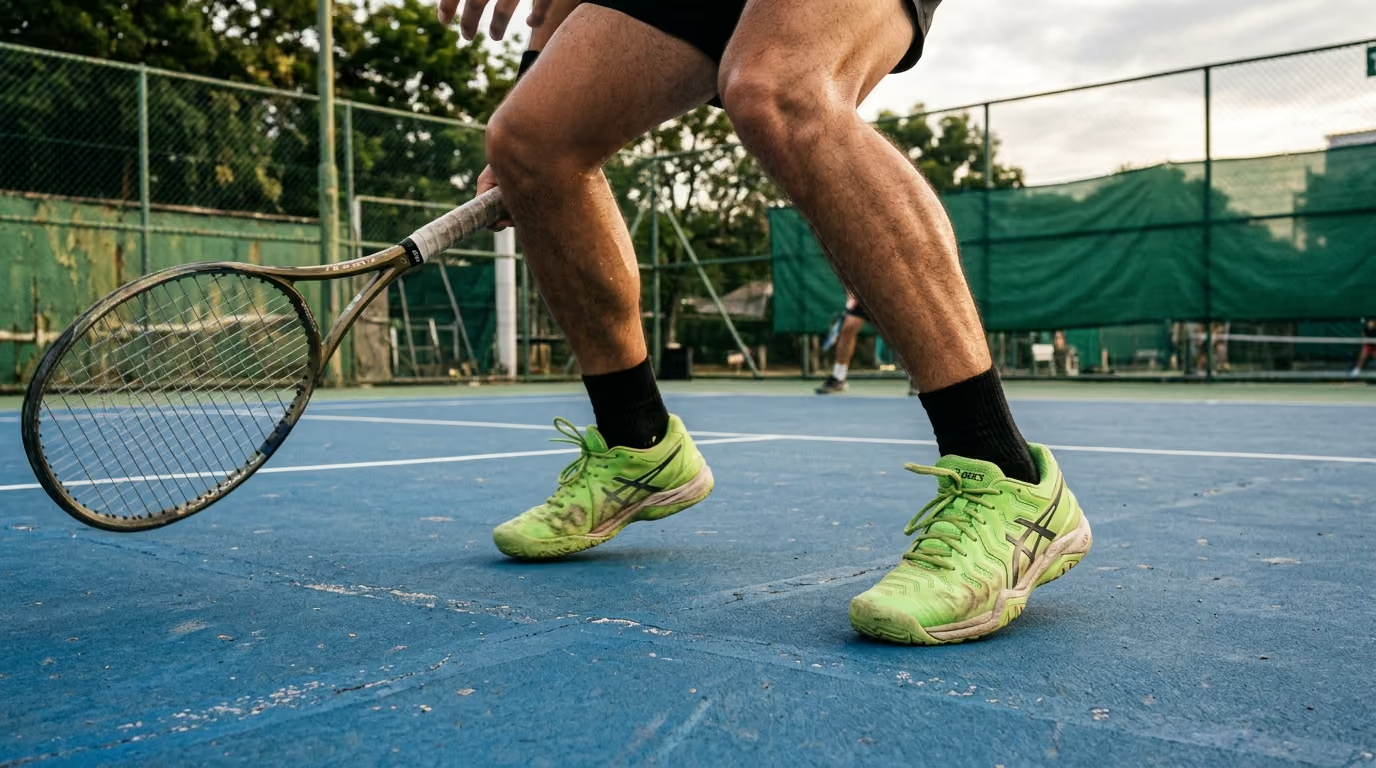
When planning your racquet sports season, balancing competitive play with recovery and conditioning prevents chronic fatigue and injury, ensuring athletic longevity.




Most amateur racquet sports players believe that playing more matches is the fastest route to improvement. In reality, filling your calendar with tournaments without a structured plan is the fastest route to chronic fatigue and injury. A truly sustainable season requires a deliberate system that balances competitive play, progressive conditioning, and planned recovery around a few peak events.
To build a sustainable competition season, an adult player must organize their calendar into distinct training and recovery blocks while targeting only two to four peak tournaments per year. This system relies on monitoring your total weekly stress, scheduling regular low-volume recovery weeks, and adjusting your court time based on life demands rather than emotional motivation. By treating your physical capacity as a finite resource, you can improve your on-court performance and support your athletic longevity.
To build a sustainable calendar, you must first understand training load. Training load is the total physical and mental stress imposed on your body by exercise and competition. It includes far more than the minutes you spend on the court. To manage this stress effectively, a practical adult-player model must separate training load into distinct components.
External load refers to the objective, measurable physical work you perform during a session. This includes variables like minutes played, matches completed, sets finished, and drills performed. It also includes running distance, accelerations, decelerations, and specific stroke volumes. For example, the number of serves or overheads you hit directly influences your external load.
Internal load represents your body's personal response to that physical work. It is influenced by variables like perceived exertion, heart rate, muscle soreness, fatigue, mood, and sleep quality. Your internal load is highly individual. The exact same training session can have very different physical consequences depending on your current state of recovery.
A useful monitoring method for adult players is session rating of perceived exertion, also known as session-RPE. To calculate this, you simply multiply the session duration in minutes by your perceived exertion on a simple zero to ten scale. For example, a ninety-minute court session rated at a six out of ten produces an internal-load score of 540 arbitrary units. In our experience, treating this score as a personal tracking trend is far more useful than comparing your numbers to other players.
Life load encompasses the psychological and physical stressors that occur outside of sport. This category includes demanding work deadlines, parenting responsibilities, commutes, poor sleep, and illness. If your life load is exceptionally high, your body will have less physical reserve to process your on-court training. A smart competitor adjusts their training volume downward when life stress peaks.
You must also track both acute and chronic loads to prevent sudden physical setbacks. Acute load is the total stress accumulated over the past seven days. Chronic load is your training history over a longer period, typically represented by a rolling three to six week average. The primary goal of tracking these numbers is to identify sudden spikes in activity.
A player who normally plays three times per week should not suddenly add a tournament, extra conditioning sessions, and high-volume serving in the same week. A review on training overload and recovery recommends using accurate performance records and individualized programming. The researchers also highlight the importance of avoiding training monotony and adjusting training load in response to the player's immediate condition.
Using trends rather than isolated numbers allows you to make informed decisions. This structured approach to training organization is known as periodization. Periodization does not require a complicated elite-sport spreadsheet. For an adult player, it simply means deciding that specific weeks or months will emphasize different physical and tactical priorities.
A typical season is divided into microcycles, mesocycles, and macrocycles. A microcycle is your weekly schedule. A mesocycle is a training block of several weeks focused on a single objective, such as building aerobic capacity or refining shot accuracy. A macrocycle represents your entire season, which usually spans several months to a full year.
This simple hierarchy ensures that you always know why you are performing a specific workout. You can connect your daily efforts directly to your broader competitive goals.
Each racquet sport imposes unique physical demands on your body. Understanding these specific demands allows you to tailor your preparation and protect vulnerable areas. Without this specific context, your training plan may fail to prepare you for the unique stress of match play.
Tennis requires repeated high-intensity accelerations, sudden braking, and explosive lateral movements. Players must frequently use open-stance recovery steps, which place significant stress on the hips and lower back. Rotational power is essential for groundstrokes, while the serve and overhead require repetitive overhead loading. Because tennis injury patterns commonly include overuse problems involving the upper limb and trunk, players must space their sessions carefully. Comparative injury research also shows that the ankle is among the most frequently affected lower-limb regions in tennis.
For tennis players, we recommend reviewing our targeted injury prevention resources to build localized joint durability.
Pickleball demands short accelerations, lateral shuffles, sudden stops, and rapid restarts. Players spend significant time in a low, crouched position at the kitchen line, which requires exceptional knee and quadriceps endurance. The sport also demands quick hand-eye reactions, repetitive wrist actions, and excellent single-leg balance.
According to United States emergency-department estimates, pickleball-related injuries rose from 1,313 in 2014 to 24,461 in 2023. This study found that most injuries involved players aged sixty to seventy-nine. Older adults in this dataset had greater odds of wrist and hand injuries, fractures, and falls.
A separate analysis covering 2003 to 2022 found a 3,650 percent increase in identified extremity injuries in pickleball from 2012 to 2022. This research showed that adult players had a greater proportion of lower-extremity injuries. Geriatric players had a greater proportion of upper-extremity injuries. These findings support a season design that emphasizes lower-body strength, balance, deceleration, and safe movement mechanics.
Furthermore, a tournament study of older pickleball participants found that 32.1 percent reported an injury during the prior year. Lower-extremity injuries and muscle or tendon injuries were highly prominent. The study identified greater weekly playing hours as a risk factor for these issues. While this was a specific participant sample, it highlights the importance of managing your weekly court time.
Physiological research has classified pickleball as a generally moderate-intensity activity. One sample of older participants averaged a heart rate of 108.8 beats per minute and about 4.1 metabolic equivalents during match play. However, average match intensity can easily obscure brief, high-intensity lunges and sudden falls. You should not use a moderate average workload to dismiss the real joint and tendon stress of competitive play.
Padel preparation must address repeated short sprints, sharp changes of direction, and rapid wall rebounds. The sport requires constant spatial anticipation and rotational control. Players hit a high volume of overhead shots, including the bandeja and vibora, which place repetitive stress on the shoulder and elbow. Padel also requires frequent forearm and elbow loading during low defensive volleys.
A systematic review of padel literature reported a high injury prevalence of 85.4 percent across the included studies. The researchers noted that tendon injuries represented approximately 44 to 49 percent of these issues. Muscle injuries represented approximately 27 to 34 percent. The elbow was frequently reported as the most affected body region.
To explore specific tactical and physical strategies for this sport, you can browse our dedicated padel category.
These statistics do not mean that these sports are inherently dangerous. Instead, they demonstrate that a sustainable season must include progressive exposure to specific movements. Your physical preparation should support your sport, rather than simply matching the volume of your matches.
A successful season plan must fit your actual life. Before you register for tournaments, you must conduct an honest audit of your personal constraints. This step prevents the common error of designing a schedule that looks great on paper but fails in practice.
Begin by listing your fixed work commitments, travel requirements, and family responsibilities. Take note of your typical sleep duration and any logistical limits on court access. You must also consider your history of previous injuries and any current medical restrictions.
Once you have identified your constraints, you can classify your competitive events into three distinct tiers. This categorization ensures that you allocate your physical and mental energy appropriately throughout the year. You cannot realistically peak for every match on your calendar.
An A-priority event is a season-defining tournament. You should select only two to four of these events per year. For these tournaments, you will perform a complete preparation block and a structured pre-event taper. You should enter these matches feeling physically fresh and mentally sharp.
B-priority events are important developmental or ranking tournaments. These matches provide valuable competitive experience but do not require a full taper. You should use B events to test your skills under pressure while maintaining a moderate training load.
C-priority events are practice matches, local leagues, or friendly club challenges. You should enter these events primarily for match exposure and tactical experimentation. C events are excellent opportunities to test new serving strategies, return patterns, or partner communication systems.
By using C events as live practice, you can reduce the psychological pressure of competition. This approach allows you to focus on process goals rather than outcome goals. For example, a process goal might be making eighty percent of your first-serve returns. An outcome goal is simply winning the match.
Focusing on process goals during lower-priority events builds long-term confidence. It also ensures that you do not burn out from constant competitive anxiety. To refine your competitive mindset, you can read our court performance resources.
Your physical capacity is a finite resource. An honest audit of your weekly schedule will show you exactly how many high-intensity sessions your body can process. If your schedule allows for three quality sessions per week, do not attempt to follow a six-day training program.
Once you have identified your A-priority events, you must plan your training calendar backward from those dates. Working backward prevents you from running out of preparation time. It also ensures that each training block has a clear, logical purpose.
A comprehensive preparation sequence consists of six distinct phases. The duration of each phase will depend on your fitness level and your target tournament date.
The first phase is general preparation. During this block, your primary goals are to build a strong physical base, improve movement quality, and establish technical consistency. You should emphasize full-body strength training, low-intensity aerobic conditioning, and basic technical drills. The court volume should be moderate, and you should avoid high-pressure point play.
The second phase is specific preparation. Here, you will increase the intensity of your training to match the specific demands of your sport. You should incorporate more point-play drills, lateral speed work, and sport-specific movement patterns. Your strength training should shift toward power development and rotational speed.
The third phase is competition preparation. This block is designed to rehearse the exact conditions of your target event. You should play practice matches with realistic scoring, practice your between-point routines, and manage match-day logistics. The training volume should remain high, but you must ensure that you have adequate recovery time between hard sessions.
The fourth phase is the taper. During this brief period, your primary goal is to reduce physical fatigue while preserving your sports-specific sharpness. You will reduce your total training volume but maintain brief exposures to high-intensity movements. This phase ensures that you arrive at the tournament feeling energized and fast.
The fifth phase is competition itself. Your only focus during this period is to execute your game plan and manage your recovery between matches. You should avoid introducing any new physical training or technical adjustments during tournament week.
The sixth and final phase is recovery and review. Immediately after the tournament, you must allow your body and mind to rest. Use this time to evaluate your performance, note any physical limitations, and adjust your plan for the next training block.
Mapping your season this way prevents the common mistake of training at the same high intensity all year. It creates natural variations in volume and intensity, which are essential for long-term improvement.
A sustainable season relies on progressive overload combined with planned recovery. You cannot expect your body to adapt if you constantly increase your training stress without rest. To manage this balance, you should organize your training into structured multi-week blocks.
A highly effective mesocycle structure is a four-week progressive block. In week one, you establish a baseline with a moderate training volume. You should focus on movement quality, basic drills, and technical precision.
In week two, you introduce a modest increase in training volume or intensity. This might mean adding fifteen minutes to your practice sessions or increasing the number of points played.
Week three represents your highest training stress. This week should include competition-specific point play, high-intensity movement drills, and demanding strength work. You will feel fatigued during this week, which is a normal part of the adaptation process.
Week four is your planned deload. During this week, you must deliberately reduce your training stress. A planned deload is not a period of complete inactivity. Instead, it is a strategic reduction in volume that allows your tissues to heal and adapt.
During a deload week, you should reduce your court time by thirty to fifty percent. You can keep your technical quality high by performing short, focused drills rather than playing long matches. You should also reduce your strength-training sets and lower your cardiovascular intensity.
For structured guidance on balancing your training volume with recovery, you can read our recovery science resources.
This structured approach prevents training monotony and cumulative strain. High training monotony occurs when you repeat identical workloads with insufficient variation. If you play the same intense singles match every day, your risk of overuse injury increases significantly.
A planned deload is far more effective than an emergency break. If you wait until you are completely exhausted or injured to rest, you will lose valuable training time. Scheduling your recovery weeks in advance keeps you in control of your athletic progress.
Strength training is a critical support system for court performance and athletic longevity. It should not be treated as a bodybuilding program separate from your sport. Instead, your off-court training should directly prepare your body to handle the forces of racquet sports.
Your strength program should prioritize functional movement patterns. These include squat and split-squat variations, hip hinge patterns, calf and ankle strengthening, and single-leg balance work. You must also include exercises for trunk rotation control, upper-body pulling, and shoulder external rotation.
According to the World Health Organization physical activity guidelines, adults should perform muscle-strengthening activities involving all major muscle groups on at least two days per week. For older adults, the guidelines recommend including multicomponent physical activity that emphasizes functional balance and strength training.
For competitive racquet sports players, this public-health recommendation should be treated as a foundational baseline. Appropriately dosed strength training builds tissue resilience, improves movement efficiency, and helps protect your joints from repetitive impact.
I remember finishing a tough two hour padel match on a cold Tuesday night and waking up the next morning feeling like my lower back was locked in concrete. For a long time, I just accepted this as the price of playing hard in my forties. But once I started spending just ten minutes on targeted hip mobility before heading to the club, the stiffness almost completely vanished. It taught me that we do not have to accept pain as a default state of aging.
To build your own movement preparation routine, you can use our mobility and movement resources.
Your strength sessions should be carefully scheduled around your court play. Avoid performing heavy lower-body lifts immediately before a demanding singles match. Spacing your strength work appropriately ensures that you can train with high quality in both environments.
Your tournament-day performance depends heavily on your immediate preparation and recovery habits. A chaotic match day can quickly ruin weeks of diligent training. To perform your best, you should establish a reliable, repeatable match-day routine.
A successful tournament day begins with a progressive warm-up. You should avoid rushing to the court directly from your car. Spend fifteen minutes performing light aerobic movement, dynamic mobility exercises, and sport-specific shadow swings to prepare your nervous system.
Hydration is another critical factor in performance. The American College of Sports Medicine suggests drinking approximately two cups of water in the hour before exercise. During play, you should aim to drink roughly one cup of water every fifteen minutes. You must adjust these guidelines based on your sweat rate, the environmental conditions, and your personal thirst.
For matches or training sessions that last longer than sixty minutes, you should consider using electrolytes. Consuming small amounts of carbohydrate-containing foods, such as a banana or a salty snack, can also help maintain your energy levels.
Your daily nutrition should support your recovery needs. The American College of Sports Medicine recommends that adults aged fifty and older consume approximately 1.0 to 1.2 grams of protein per kilogram of body mass daily. During periods of heavy training or competition, these protein needs may rise toward 1.5 grams per kilogram.
On tournament days, you must also plan for recovery between matches. If you have multiple matches scheduled, change out of your wet clothing immediately after playing. Take a brief, light walk to help your heart rate return to baseline rather than sitting completely still.
Once your matches are finished, conduct a brief physical and tactical review. Note any areas of localized soreness, joint discomfort, or unusual fatigue. This information will help you decide if you need to modify your training plan for the upcoming week.
To learn more about managing your nutrition, hydration, and sleep for athletic longevity, you can read our healthy aging and athletic longevity resources.
By treating match-day recovery as an essential part of competition, you can maintain your physical performance across multi-day tournaments. You will arrive at your later matches with a distinct advantage over opponents who ignore these recovery details.
Reviewing practical examples can help you understand how to apply these concepts to your own life. The following four profiles illustrate how different players can organize their competition seasons based on their specific needs, age, and physical constraints.
Profile: A forty-seven-year-old recreational singles player with a demanding full-time job and family commitments. They have three reliable training windows per week and a history of intermittent elbow irritation.
Goal: Peak for a regional singles tournament in late June.
During the general preparation phase in January and February, this player focuses on building physical capacity. They schedule two moderate court sessions and two short strength sessions per week. They place a high priority on gradual shoulder, forearm, and trunk conditioning to protect their elbow.
During the specific preparation phase in March and April, they shift their court sessions. They perform one technical practice, one tactical point-play session, and one competitive singles match each week. They maintain two weekly strength sessions but reduce their upper-body training volume on days preceding high-volume serving.
In May, during the competition preparation phase, they play practice matches on consecutive days to simulate tournament conditions. They schedule a lower-volume recovery week after any heavy match weekend to prevent cumulative fatigue.
In June, they execute a two-week taper. They reduce their training volume by forty percent while maintaining high-quality footwork and serving rhythm. They enter the regional tournament feeling physically fresh and mentally prepared.
Profile: A sixty-three-year-old doubles player returning to court play after a largely sedentary winter season. They want to compete in a regional tournament without risking injury.
Goal: Build court tolerance, balance, and leg strength before entering a competitive league.
Because older pickleball players have an increased risk of falls and extremity fractures, this player begins with a dedicated physical preparation block. Before playing matches, they spend four weeks building calf strength, ankle stability, and single-leg balance.
When they return to the court, they start with two short doubles sessions per week. They perform structured warm-ups and focus on safe deceleration mechanics when moving toward the kitchen line. They only add a third weekly court session when their post-play muscle soreness remains minimal.
They avoid playing back-to-back matches during their first two months of play. They treat the tournament as a long-term goal, prioritizing physical preparation over immediate match volume.
Profile: A thirty-nine-year-old padel player who currently plays four to five times per week. They enter tournaments almost every weekend but suffer from persistent elbow discomfort.
Goal: Manage their elbow pain while maintaining a competitive tournament schedule.
This player's primary issue is high training monotony and a lack of planned recovery. Their forearm muscles and tendons are constantly overloaded by repetitive overheads and low defensive volleys.
To resolve this issue, they perform an honest load audit. They reduce their weekly padel play from five sessions to three, ensuring they have at least forty-eight hours of recovery between matches. They replace one high-intensity match with a low-impact mobility and strength session.
They add progressive forearm strengthening, shoulder external rotation work, and scapular control exercises to their weekly routine. They also limit their tournament participation to every second or third weekend. This simple reduction in competitive volume allows their elbow tendon to heal without requiring them to stop playing entirely.
Profile: A fifty-two-year-old athlete who regularly alternates between tennis, pickleball, and padel throughout the week.
Goal: Maintain their fitness and enjoy multiple sports without developing overuse injuries.
This player often assumes that switching sports is a form of active recovery. However, tennis, pickleball, and padel all place heavy demands on the calves, knees, shoulders, and elbows. Changing rackets does not change the physical stress imposed on these tissues.
To manage this cumulative load, they organize their week with a clear hierarchy. They designate one sport as their primary competitive focus for a three-month block. They play the other two sports at a much lower intensity, treating them as light recreational play.
They also schedule one genuine passive rest day each week. On this day, they do not step onto any court. Instead, they focus on walking, gentle mobility work, or swimming to support their recovery.
Many adult racquet sports players fall into predictable scheduling traps. Recognizing these common errors allows you to avoid them and protect your athletic longevity.
The first major pitfall is believing that more matches always produce more improvement. While tournament play is essential for developing mental toughness, excessive match play can quickly erode your technical quality. When you are constantly fatigued, your movement efficiency declines, and your bad habits return.
The second pitfall is viewing a rest day as a sign of losing fitness. Many players feel guilty when they take a day off from physical activity. In reality, your body does not build strength or aerobic capacity during your workouts. These physical adaptations occur exclusively during your recovery periods.
The third pitfall is assuming that tapering means stopping all physical activity. If you sit on the couch for an entire week before a tournament, you will likely enter your matches feeling slow and flat. A proper taper keeps your nervous system active by maintaining short, high-quality movements while reducing your overall fatigue.
The fourth pitfall is trying to make up for missed training sessions. If you miss a week of training due to work or illness, do not try to squeeze twice as many workouts into the following week. This sudden spike in training volume is a primary cause of acute muscle strains and tendon irritation.
The fifth pitfall is believing that older players should only perform light, low-intensity exercise. While older athletes must progress more gradually, they still require a robust physical stimulus to maintain their health. Strength training, balance drills, and explosive movement are incredibly beneficial for supporting athletic longevity.
The sixth pitfall is assuming that pickleball is entirely safe because the court is smaller than a tennis court. While the cardiovascular demands may be lower, the rapid stops and lateral lunges can still place significant stress on your joints. You must prepare your body for the unique movement patterns of pickleball just as you would for tennis or padel.
The seventh pitfall is treating a tournament as just another match. A tournament weekend involves travel, psychological stress, long waiting periods, and multiple matches. You must design your training to prepare for this cumulative physical load, rather than preparing for only one isolated set.
While a structured training plan can prevent many physical setbacks, you must remain attentive to your body's warning signs. Ignoring persistent pain in the pursuit of a competitive goal is a recipe for long-term injury. To manage this risk, you can use a simple traffic-light system to evaluate your readiness each day.
A green light indicates that you feel normal. You have manageable muscle soreness, your joints feel comfortable, and you slept well. You should follow your training plan as scheduled.
A yellow light indicates that your body is showing signs of elevated stress. This might mean you slept poorly, feel unusual fatigue, or have lingering joint stiffness. You should modify your session by reducing the volume, lowering the intensity, or focusing on light technical work.
A red light indicates a potential injury or systemic illness. This includes sharp or localized joint pain, swelling, numbness, or pain that worsens during your warm-up. If you experience a red-light symptom, you must stop playing immediately and seek appropriate medical evaluation.
There are several clear signs that indicate you should consult a qualified healthcare provider. Do not rely on advice from fellow club members or online forums. You should seek professional medical evaluation if you experience any of the following:
Additionally, players who manage chronic conditions like menopause, osteoporosis, osteoarthritis, or cardiovascular disease should work closely with their doctors. The World Health Organization guidelines explicitly include recommendations for individuals living with chronic conditions, but these plans must be tailored to your individual health status.
A qualified physical therapist or sports medicine physician can provide an accurate diagnosis and a safe return-to-play protocol. They can help you identify the root cause of your movement limitations and design specific exercises to build long-term joint durability.
By combining your competitive drive with an honest respect for your body's physical limits, you can build a sustainable, rewarding, and highly successful racquet sports season.
A sustainable competition season is built through selectivity, progressive preparation, and structured recovery. By treating your physical capacity as a valuable resource, you can continue to compete at a high level and enjoy your sport for many years to come.
Follow Evercourts for practical insights on tennis, pickleball and padel performance, movement, recovery and healthy ageing. Stay connected for new articles, research-led guidance and ideas to help you play well and keep playing for years.


Read practical guidance for better movement, smarter preparation and a game that keeps working for you.
explore the Blog