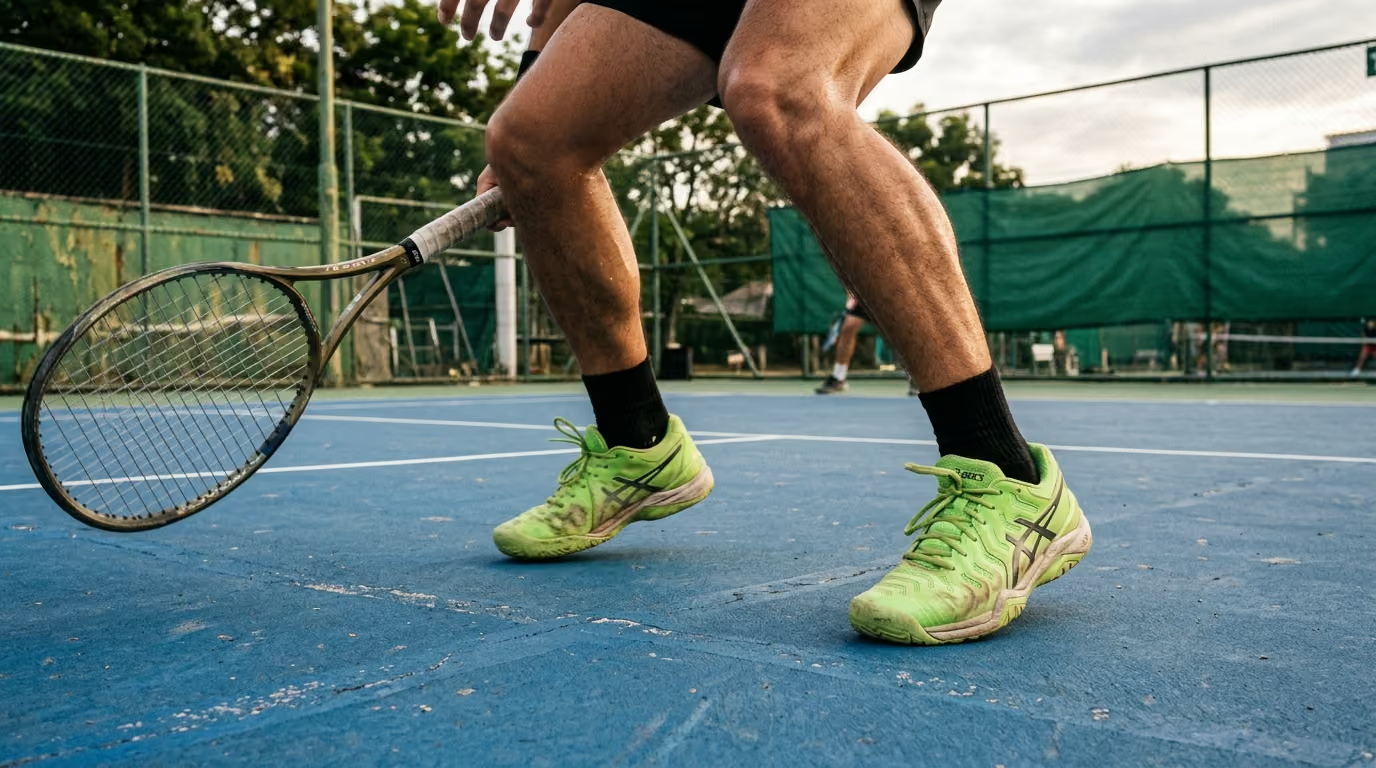
A sustainable weekly racquet sports schedule balances mechanical load and metabolic stress by separating high-intensity matches, strength training, and recovery.




You wake up on a Tuesday morning with a stiff lower back, a throbbing Achilles tendon, and a familiar sense of frustration. Just three days ago, you felt excellent and played two competitive matches back to back. Now, you must cancel your next game and wait for the stiffness to subside. This pattern of intense play followed by forced inactivity is incredibly common among court athletes.
A sustainable weekly schedule balances mechanical load and metabolic stress by intentionally separating high-intensity matches, strength training, and recovery. By organizing sessions into predictable high, moderate, and low-stress days, court athletes can play consistently without falling into the cycle of overexertion followed by forced rest. This deliberate organization ensures you build progressive physical capacity over time instead of constantly recovering from sudden load spikes.
To build a schedule that works, you must first understand training load. Training load is divided into two categories: external load and internal load. External load refers to the physical work you perform on the court or in the gym. This includes your total minutes of play, the number of games played, and the count of explosive movements. It also includes the specific volume of serves, overheads, accelerations, and abrupt decelerations.
Internal load represents how your body responds to that physical work. This response is highly individual and changes daily. It is influenced by your sleep, your stress levels, and your nutritional status. A two-hour singles match might feel manageable when you are well-rested. That same match can cause extreme fatigue if you are sleep-deprived or highly stressed from work.
A systematic review published in the British Journal of Sports Medicine reported moderate evidence of a significant relationship between training load and injury in 93% of the analyzed studies. However, the researchers also noted that training load is not inherently dangerous. When you introduce training load progressively, it actually has a protective effect on your muscles and tendons. The danger lies in sudden spikes in activity, which your tissues are not prepared to absorb.
To monitor your internal load without expensive technology, you can use the session rating of perceived exertion. This method requires you to rate the difficulty of each session on a scale from 0 to 10. You then multiply that rating by the duration of the session in minutes. For example, a 60-minute technical practice that you rate as a 5 out of 10 results in a session load of 300 arbitrary units.
Tracking this number over time allows you to compare your weekly workloads. You can identify when you are drastically increasing your training volume. A sudden jump in your weekly load is often referred to as a load spike. These spikes are a primary driver of tendon issues and muscle strains.
According to a 2025 systematic review of high-performance tennis, abrupt increases in the acute-to-chronic workload ratio are important predictors of injury. While high-level players use precise calculations for this ratio, recreational players should focus on a simpler concept. You should avoid increasing your playing time, serving volume, and match play all in the same week. Changing only one variable at a time is the safest way to progress.
Training monotony is another common issue for court athletes. Monotony occurs when you perform similar workloads at similar intensities on consecutive days. If every session is a hard competitive match, your body never has the opportunity to repair damaged tissues. Your joints and tendons require periods of lower stress to adapt and grow stronger.
A sustainable schedule does not require you to play less. Instead, it requires you to organize your activities based on their physical demands. You can categorize every session as high, moderate, or low stress.
High-stress sessions demand maximal physical output and require significant recovery time. Competitive singles matches are the most common example of high-stress sessions on the court. These sessions involve unpredictable lateral movements, explosive lunges, and sustained mental focus.
Maximal serving practice also falls into this category due to the high rotational forces placed on the shoulder and spine. In the gym, heavy lower-body strength training is considered a high-stress session. These workouts create deep muscular fatigue that can temporarily impair your movement quality.
Moderate-stress sessions allow you to build skill and capacity without exhausting your system. Technical drilling on the court is a prime example of moderate-stress work. During these sessions, you control the pace and can take planned breaks.
Controlled doubles matches also fit here because the court coverage demands are lower than in singles. Moderate resistance training, submaximal serve practice, and tactical walk-throughs are also moderate-stress activities. These sessions maintain your fitness baseline without overloading your joints.
Low-stress sessions are designed to facilitate recovery and restore normal movement patterns. Easy hitting drills, where you focus on rhythm rather than power, are excellent low-stress options. Light movement sessions, shadow swings, and dedicated mobility workouts also fall into this category.
Low-intensity cycling or walking can help flush waste products from your muscles. These activities promote blood flow to healing tissues without adding mechanical wear and tear.
To prevent chronic fatigue, you must alternate these stress levels throughout the week. Stacking multiple high-stress days together prevents your body from completing the remodeling process in your muscles and tendons.
Guidelines from the United States Tennis Association suggest allowing at least 48 hours between intense sessions that target the same muscle groups. For older athletes or those recovering from previous injuries, extending this recovery window to 72 hours for large muscle groups is highly beneficial.
Creating your schedule is a highly individual process. It must account for your physical preparation, your lifestyle, and your athletic goals. You can build your plan using five systematic steps.
Before making any changes, you must accurately assess what your body is currently tolerating. Write down your exact activity from the past three weeks. Note how many days you played, the total minutes on court, and the number of matches completed.
Include any strength training, commuting times, and average hours of sleep. If you are experiencing lingering aches or returning from a layoff, your baseline is temporarily lower. You must design your schedule around this actual baseline, not your ideal or historical fitness level.
Your schedule must reflect what you want to achieve over the next six to eight weeks. If your goal is to maintain health and enjoy social play, your schedule will look highly balanced. If you are preparing for a competitive tournament, you will need to prioritize match-specific intensity.
When returning from an injury, your primary goal is to rebuild tissue tolerance. In this scenario, technical drills and strength work take priority over competitive matches. Clearly defining your goal prevents you from trying to accomplish too many physical adaptations at once.
When your week becomes busy, you need a clear hierarchy of sessions. This helps you decide which workouts to keep and which to modify or skip. Your key competition or high-quality practice session should be your top priority.
Strength training should follow closely because it builds the physical structural tolerance required for play. High-quality strength work is essential for long-term health on the court. You can learn more about structured preparation by reading our articles on proven strategies for injury prevention.
You should schedule your high-stress sessions for days when you are most prepared. These sessions are best placed after a full rest day or a low-stress recovery day. Ensure you have adequate time to complete a thorough warm-up and a proper cool-down.
Avoid scheduling a competitive singles match the morning after a heavy lower-body strength workout. Your muscles will be fatigued, which can lead to poor movement mechanics and increased injury risk. Spacing these sessions allows you to perform both activities with high quality.
Racquet sports place unique repetitive demands on specific regions of your body. Serving and overhead hits place high demands on the shoulder, elbow, and core. Repeated lateral lunges and sudden stops stress the Achilles tendon, knee, and hip.
If you have a high-volume serving day, avoid scheduling heavy shoulder pressing in the gym on the following day. If you play a demanding singles match, give your lower limbs a break by scheduling a mobility or upper-body strength day next. This rotation prevents localized tissue fatigue from turning into a chronic overuse injury.
While tennis, pickleball, and padel share many physical demands, their mechanical profiles are quite distinct. Your weekly schedule must adapt to the specific sport you play most often.
Tennis requires exceptional eccentric lower-body strength and high rotational power. The larger court dimension demands longer sprint distances and violent decelerations. This sport also involves a high volume of overhead serving, which places significant stress on the shoulder joint and thoracic spine.
An epidemiological review of tennis injuries notes that lower extremity injuries are the most common, followed closely by upper extremity issues. Recreational players frequently suffer from lateral epicondylitis, while high-level players report more shoulder pain.
Your tennis schedule must include adequate time for calf and Achilles tendon recovery. It should also feature shoulder-stabilizing exercises to balance the repetitive forces of the serve. If you play tennis, you can find helpful guidance on conditioning by visiting our section on tailored strength and conditioning programs.
Pickleball is played on a smaller court, which reduces the need for long sprints. However, the game features rapid lateral shuffling, constant dinking in deep lunges, and extremely fast reflex volleys. The paddle is short and light, but the repetitive wrist flicking can still strain the forearm muscles.
Because of the low contact point of the ball, pickleball players spend significant time in a bent-over position. This stance places continuous static stress on the lower back and knees.
Your pickleball schedule should emphasize hip mobility and lower back decompression. It must also prioritize calf and Achilles capacity to handle the constant, short, explosive steps forward and back.
Padel is a fast-paced game played within glass walls, requiring continuous multi-directional agility. The sport involves a very high volume of overhead hits, such as the bandeja and vibora, which are hit with a bent elbow. This movement pattern can place unique stress on both the shoulder and the elbow joint.
The court surface is typically synthetic turf with sand, which can create subtle slips and rapid grip changes. This surface demands excellent ankle stability and knee control.
Your padel schedule must prioritize rotator cuff strength and forearm endurance. It should also include lateral hip strengthening to protect your knees during rapid changes of direction off the glass. To learn more about managing these unique demands, explore our dedicated Padel Articles on the Evercourts Blog.
To make your schedule functional, you need to understand how to design each individual component of your week. This ensures that every session serves a clear purpose.
Your court sessions should never be random mixtures of exhausting play. Every time you step onto the court, define your primary objective. If the session is for technical development, keep the physical intensity low.
Focus on your footwork rhythm, stroke mechanics, and ball placement. If the session is competitive, prepare your mind for high-intensity work. Always begin your court sessions with a progressive warm-up. This should start with simple movements to raise your body temperature.
Follow this with dynamic stretches for your hips, shoulders, and ankles. Before hitting at full speed, perform controlled shadow swings and light rallying. End your session with a structured cool-down to help your nervous system transition into a recovery state.
Strength training is your best tool for long-term athletic longevity. A systematic review of sports injury prevention found that strength training can reduce sports injuries to less than one-third. It also reported that overuse injuries could be nearly halved with regular resistance training.
For recreational players, two brief full-body strength sessions per week are highly effective. These sessions are much easier to recover from than one long, exhausting workout. The World Health Organization recommends that all adults perform muscle-strengthening activities involving all major muscle groups at least two days per week.
Your strength program should target single-leg stability, calf power, hip rotation, core control, and shoulder health. Focus on movement quality and progressive resistance rather than working to absolute failure.
Mobility work is highly individual and should target your specific areas of restriction. For court athletes, common areas of stiffness include ankle dorsiflexion, hip internal rotation, and thoracic spine extension. You should use dynamic mobility exercises before you play to prepare your joints for movement.
Save longer-duration static stretching for after your sessions or during dedicated evening routines. Static stretching immediately before explosive play can temporarily reduce your muscle power. Use post-play stretching as a tool to calm your nervous system and restore resting muscle length. To understand the science behind these movement strategies, explore our resources on the fundamentals of recovery science.
Even well-intentioned players can fall into scheduling traps that lead to injury. Recognizing these common mistakes can save you from months of forced rest.
Many players believe that playing doubles is equivalent to a rest day. While doubles reduces the total distance you run, it still involves explosive lateral movements, sudden jumps, and competitive stress.
Your Achilles tendons and knees must still absorb high-impact forces during a doubles match. If you are experiencing joint pain or deep fatigue, a doubles match is not an appropriate recovery session. True recovery requires low-impact movement that does not involve sudden deceleration.
The traditional advice to never increase your weekly training volume by more than ten percent is an oversimplification. This rule does not account for the intensity of your play or the specific stress placed on different joints.
An extra thirty minutes of light hitting is far less demanding than ten minutes of maximal competitive serving. Your progression must be relative to your current recovery capacity and pain levels. If you feel deep joint soreness that lasts more than 24 hours, your progression is too fast, regardless of any percentage rule.
When players feel stiff or tired, their instinct is often to sit on the couch for several days. While complete rest is necessary for acute injuries, active recovery is usually more effective for general fatigue.
Light walking, easy swimming, or dedicated mobility work increases blood flow to your muscles. This movement delivers oxygen and nutrients that accelerate the tissue repair process. Complete inactivity can lead to temporary joint stiffness and a decline in coordination, making your next session feel more difficult.
Playing at the exact same intensity every day is a major cause of stagnation and overuse injuries. If you play three times a week and each session is a hard social match, your body never gets a chance to adapt.
You will likely experience a plateau in your skills and a steady increase in minor aches. Your schedule must have clear peaks and valleys of intensity. This variation is what stimulates positive physical adaptation and keeps your training fresh. You can find more tips on structuring your play by visiting our educational court life blog.
Your schedule is only as good as your ability to recover from it. Sleep, nutrition, and environmental management are the foundation of any training plan.
Sleep is the single most powerful recovery tool available to athletes. During deep sleep, your body releases growth hormone, which is essential for repairing muscle tissue and strengthening bones.
The British Journal of Sports Medicine athlete sleep consensus states that while general adult guidelines suggest seven to nine hours, individual needs vary. Older adults may require seven to eight hours, while younger players often need more.
If your training volume is high, your sleep needs will increase naturally. A lack of sleep directly impairs your reaction time, your coordination, and your cognitive decision-making on the court.
Environmental conditions add a massive physical stressor to your training. Playing in high heat and humidity increases your heart rate and accelerates dehydration. It also causes your muscles to fatigue much faster than they would in cool weather.
A review of tennis heat research highlights that playing multiple matches on the same day in hot conditions poses a major risk for heat-related illnesses. The International Tennis Federation advises moving practice sessions away from the hottest part of the day when possible.
When playing in the heat, you must modify your schedule by shortening your warm-ups and reducing your total play duration. Increase the length of your rest breaks and prioritize fluid and electrolyte intake. If you experience dizziness, nausea, or muscle cramps, stop playing immediately and move to a cool area.
These four templates demonstrate how to organize your weekly sessions. Choose the template that matches your current lifestyle and athletic goals.
This template is designed for players who want to enjoy consistent play while prioritizing their long-term health. It features two primary court sessions and two short strength workouts.
This template is for athletes who are preparing for a specific weekend league match. It reduces training volume later in the week to ensure peak performance on match day.
This template is designed for older athletes who want to protect their joints and tendons. It emphasizes recovery, balance, and targeted strength work to support healthy aging. You can discover more resources for your tennis journey in our section on healthy aging and athletic longevity.
This template is designed for players who have multiple matches scheduled over a weekend tournament. It prioritizes energy conservation and physical preparation.
No matter how carefully you build your schedule, you may still experience physical setbacks. It is essential to distinguish between normal muscle soreness and pain that requires professional assessment.
Normal post-exercise muscle soreness typically peaks 24 to 48 hours after a hard session. This soreness is symmetrical, feels like a dull ache, and improves with light movement. It does not affect your normal walking gait or prevent you from performing daily tasks.
You should consult a qualified healthcare professional, such as a physical therapist or sports physician, if you experience any of the following warning signs:
Do not attempt to train through these symptoms by taking pain-relieving medication. Masking pain can lead to more severe tissue damage and significantly increase your eventual recovery time. A professional assessment can provide you with a clear diagnosis and a targeted rehabilitation plan. This ensures you can return to your weekly schedule safely and confidently.
You should review this scheduling guide whenever your physical circumstances or external commitments change. A change in your work hours, the start of a new competitive league, or your recovery from an illness are all reasons to re-evaluate your weekly plan.
Revisiting these guidelines every six months will help you adapt your training load to the natural changes in your body and lifestyle. Consistent, thoughtful adjustment of your physical load is the most effective way to ensure a lifetime of enjoyment on the court.
Follow Evercourts for practical insights on tennis, pickleball and padel performance, movement, recovery and healthy ageing. Stay connected for new articles, research-led guidance and ideas to help you play well and keep playing for years.


Read practical guidance for better movement, smarter preparation and a game that keeps working for you.
explore the Blog