
A weekly recovery plan for racquet sports balances playing time, strength training, and rest to promote athletic longevity and prevent chronic fatigue.




A weekly recovery plan is a structured system that balances playing time, strength training, and rest. It is not an excuse for complete inactivity, nor is it a random collection of trendy recovery gadgets. Instead, it is a systematic distribution of physical stress across a seven-day cycle to promote athletic longevity. By understanding how your body adapts to stress, you can maintain your performance on the court for years to come.
A weekly recovery plan for racquet sports organizes your training, playing, and rest so your body can repair tissue and restore energy between sessions. By matching your physical output with planned periods of sleep, nutrition, and lighter movement, you prevent chronic fatigue and maintain your performance. Instead of treating rest as a passive afterthought, this framework integrates restoration directly into your weekly schedule.
Racquet sports like tennis, padel, and pickleball place unique physical demands on the body. These sports are characterized by repeated, short, high-intensity efforts. A typical intense rally lasts between four and ten seconds. Players must then recover in the ten to twenty seconds before the next point begins.
This intermittent structure means you are constantly accelerating, decelerating, and changing directions. These movements require explosive power and place high eccentric loads on your muscles and tendons. Eccentric loading occurs when your muscles lengthen under tension, such as when you lunge to reach a low volley. This type of muscle action causes micro-tears in your muscle fibers, which leads to soreness.
A match is not just a physical challenge. It also requires constant tactical decision-making under pressure. This mental effort drains your neurological reserves and contributes to overall fatigue. According to sports science research, physical performance markers like sprint speed can return to baseline within twenty-four hours after play. However, subjective feelings of fatigue and muscle soreness often last much longer.
This disconnect is why a structured recovery strategy is essential. You might feel physically capable of playing another hard match the next day. However, your nervous system and connective tissues may still be recovering. Without a plan, minor fatigue accumulates week after week. This cumulative fatigue eventually reduces your reaction time, alters your movement patterns, and increases your injury risk.
To build an effective recovery plan, you must understand the difference between external and internal training loads. External load is the physical work you perform on the court or in the gym. This includes the minutes you play, the number of matches you complete, and your total stroke volume. Internal load is how your body reacts to that physical work.
A simple way to measure your internal load is the Session Rating of Perceived Exertion, or Session-RPE. To calculate this, you multiply the duration of your training session in minutes by your subjective effort rating on a scale of one to ten. For example, a ninety-minute practice session with an intensity rating of six yields a training load of five hundred and forty units. Tracking this number helps you understand the actual stress placed on your system.
Two sessions of the exact same length can produce very different internal loads. A light sixty-minute technical lesson might feel like a three out of ten. This results in an internal load score of one hundred and eighty. A sixty-minute singles match against a tough opponent might feel like an eight out of ten. This creates an internal load score of four hundred and eighty.
Using this metric helps you monitor your acute and chronic workloads. Your acute workload is the total physical stress you manage over the current week. Your chronic workload is your average weekly stress over the past month. Research indicates that sudden spikes in your acute workload relative to your chronic workload can increase injury risk.
The European College of Sport Science and the American College of Sports Medicine support this approach to training-load management. Their joint guidelines emphasize that managing physical stress is critical to reduce the risk of illness and overtraining. We can use the latest research in recovery science to design schedules that avoid these dangerous spikes in training volume.
Building a recovery plan requires a step-by-step approach. You should not try to fit every possible training modality into a single week. Instead, you must organize your schedule based on your personal commitments and match schedule. This prevents you from treating every single day as either intense training or complete inactivity.
Start by listing the sessions that cannot easily be moved. These include league matches, scheduled team practices, coaching lessons, and work commitments. Once these fixed events are on your calendar, you can build the rest of your week around them. Treat competitive matches as high-load events that require dedicated preparation and recovery.
Once you know your match days, schedule your most demanding practice and strength sessions. Try to place these sessions when you are freshest, typically after a rest day. Avoid scheduling high-intensity court drills immediately after heavy lower-body weight training. This clustering of high-intensity work helps prevent chronic, low-grade fatigue from building up.
The twenty-four hours leading up to a match should preserve physical freshness and mental clarity. A pre-match practice should focus on technical sharpness rather than physical conditioning. Keep your hitting sessions short and limit your serving volume. Avoid heavy weight training, high-volume sprints, and exhausting live-ball drills during this period.
Strength training is essential to improve your court movement and protect your joints. However, you must schedule your gym sessions carefully to avoid metabolic interference. If you must lift weights and play on the same day, separate the sessions by at least six hours. This gap gives your muscles time to recover, which improves the quality of both workouts.
After a high-load match or practice, schedule a low-load or restorative day. A low-load day might include light hitting, mobility work, or easy aerobic exercise. A restorative day focuses on complete rest, walking, or gentle stretching. These easier days allow your tissues to remodel and repair before your next hard session.
I remember finishing a tough two hour padel match on a cold Tuesday night and waking up the next morning feeling like my lower back was locked in concrete. For a long time, I just accepted this as the price of playing hard in my forties. But once I started spending just ten minutes on targeted hip mobility before heading to the club, the stiffness almost completely vanished. It taught me that we do not have to accept pain as a default state of aging.
By using functional mobility routines, you can improve how your joints move on the court. These simple habits help restore normal movement patterns after hard matches. They also prepare your nervous system for the demands of the next high-load training session.
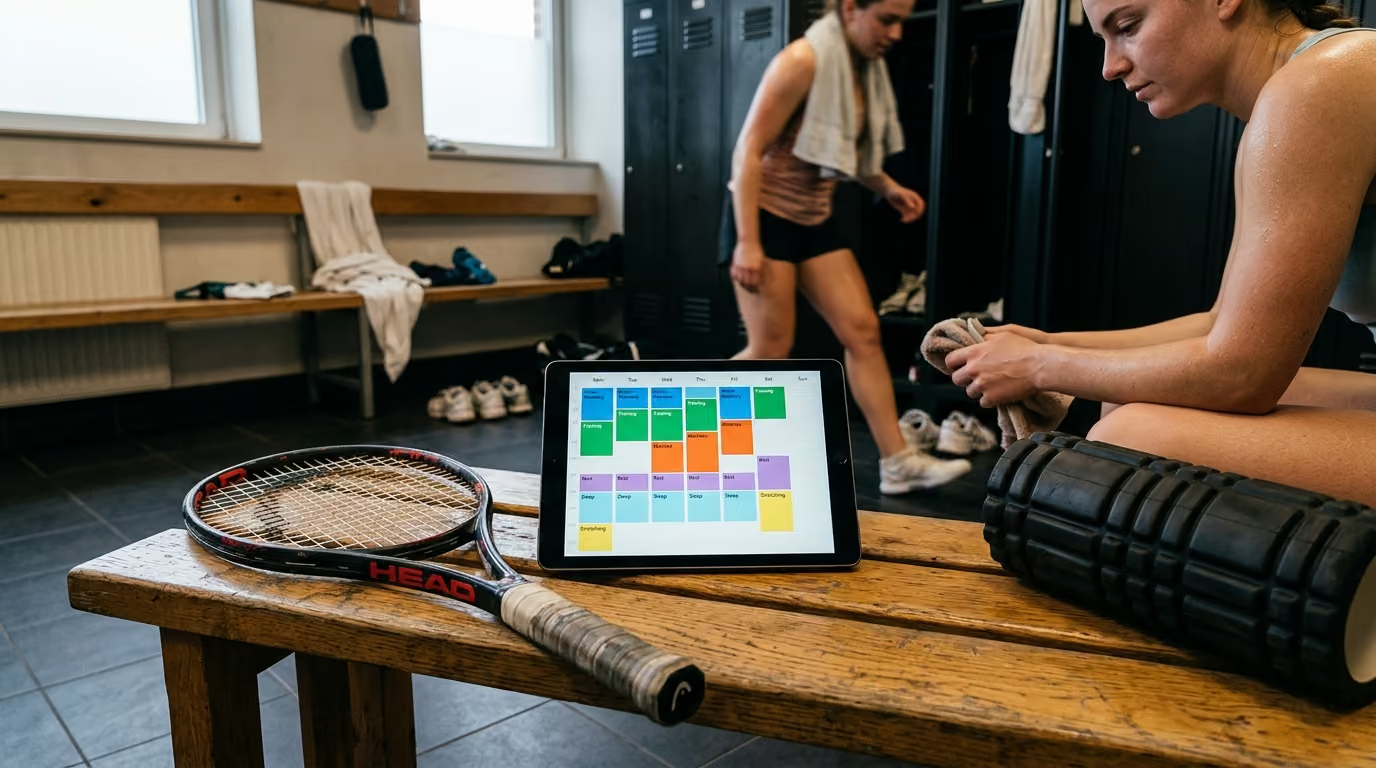
To help you organize your training, here are three weekly schedules. These examples show how to distribute stress and rest based on different playing goals. You can adjust these plans to match your personal schedule and fitness level.
This schedule is designed for players who compete in a high-intensity match on Saturdays. The goal is to build fitness mid-week while ensuring maximum freshness on match day.
This layout ensures that you have a low-load day before and after your competitive match. It also allows you to complete your hardest physical training on Tuesday and Wednesday.
This template is useful when you have to play multiple matches over a single weekend. It prioritizes rapid recovery and joint preservation during the week.
When playing on consecutive days, your primary focus must be rapid nutrition and hydration. You should minimize extra physical training during the week to save your energy for the tournament.
This plan is for athletes who play three times a week for fitness and social enjoyment. It integrates strength training without overloading the joints.
This schedule avoids making every court session high intensity. It also places your strength training on separate days from your hardest hits to protect your muscles.
While all racquet sports share similar movement patterns, each sport places distinct stresses on your body. Understanding these differences allows you to customize your recovery plan. This sport-specific focus helps you address the unique physical demands of your preferred sport.
Tennis is played on a large court, which requires longer sprints and deeper lunges. This increases the eccentric load on your hamstrings, quadriceps, and glutes. The heavier tennis racquet and high-velocity serving motion also place extreme stress on your dominant shoulder and elbow.
Your recovery plan should prioritize posterior chain mobility and shoulder care. Spend time stretching your hamstrings and strengthening your rotator cuff muscles. Because tennis matches can last several hours, you must also focus on replenishing large glycogen stores.
Padel matches are played on a smaller, enclosed court made of artificial turf over concrete. This hard surface increases the amount of joint vibration felt in your knees, ankles, and lower back. The glass walls require you to perform constant rotational twisting and quick changes of direction.
Your recovery plan should focus on lower-back decompression and hip mobility. The high volume of overhead overhead shots, like the bandeja, requires excellent thoracic spine rotation. Padel players should use targeted injury prevention techniques to protect their knees from the hard court surface.
Pickleball is played on a smaller court, but the speed of the game requires rapid reflexes. Players spend a significant amount of time in a deep crouch near the non-volley zone line. This sustained squatting position places high demands on your patellar tendons and your lower back.
Your recovery plan should emphasize quad flexibility and ankle mobility. The quick, wrist-heavy paddle movements can also stress the forearm tendons. Pickleball players should focus on calf stretching to prevent Achilles tendon tightness and plantar fasciitis.
Many players spend time and money on advanced recovery methods while ignoring the basics. This approach rarely leads to better performance or fewer injuries. Avoiding these common errors will make your recovery plan far more effective.
It is common to see players using massage guns, compression boots, or ice baths after a match. While these tools can reduce temporary muscle soreness, they cannot replace fundamental recovery habits. A cold bath cannot fix a chronic sleep deficit or a poor diet.
Sleep and proper nutrition are the foundation of athletic longevity. If you sleep less than seven hours a night, your body cannot produce the hormones needed to repair tissue. Focus on getting high-quality sleep and eating balanced meals before buying expensive recovery equipment.
Many competitive players believe that they must train hard every single day to improve. This mindset often leads to a state of chronic fatigue. When you never allow your body to rest, your tissues cannot remodel and grow stronger.
A successful recovery plan requires you to have clear high-load days and low-load days. Playing at seventy percent effort every day is less productive than alternating between ninety percent effort and active rest. Give yourself permission to rest so your training days can be truly effective.
What you eat and drink after a match determines how quickly your body can rebuild itself. Nutrition and hydration should be treated as active parts of your recovery plan. By matching your food intake to your playing intensity, you can speed up the restoration process.
Your fluid needs depend on your sweat rate, the weather, and your match duration. A simple way to estimate your fluid loss is to weigh yourself before and after a match. According to the American College of Sports Medicine, you should try to avoid losing more than two percent of your body mass from water deficit.
If you lose weight during a match, you need to replace those fluids systematically. Consume approximately one to one and a half liters of fluid for every kilogram of body weight lost. For a simple practical guide, drink one twenty-ounce bottle of fluid for every pound of weight lost.
Avoid drinking massive amounts of plain water in a short period. This can dilute your blood sodium levels, which can lead to a dangerous condition called hyponatremia. Instead, choose fluids that contain sodium and other electrolytes, especially after playing in hot or humid conditions.
Carbohydrates are your body's primary fuel source during high-intensity racquet sports. When you play a long match, you deplete the glycogen stored in your muscles and liver. Replacing these carbohydrate stores is a priority for recovery.
The timing of your carbohydrate intake depends on when you plan to play next. If you have less than eight hours before your next match, consume one to one point two grams of carbohydrates per kilogram of body weight immediately. Repeat this intake every hour for four hours to speed up glycogen replenishment.
If you have a full day of rest before your next session, the timing is less critical. Simply focus on eating balanced meals that contain adequate carbohydrates over the next twenty-four hours. This approach ensures your muscles are fully fueled for your next training session.
While carbohydrates restore your energy, protein is required to repair damaged muscle fibers. Consuming protein after a match stimulates muscle protein synthesis and reduces post-game soreness. Aim to eat twenty to thirty grams of high-quality protein within two hours of finishing your session.
You do not need to rely on expensive protein powders or specialized supplements. Excellent whole-food protein sources include:
Pairing your protein with carbohydrates in your post-match meal improves overall nutrient absorption. This combination helps your body transition from a state of breakdown to a state of recovery and repair.
Sleep is the most powerful recovery intervention available to court athletes. During deep sleep, your body releases growth hormone, which is essential for muscle growth and tissue repair. Sleep also allows your brain to consolidate the technical skills you practiced during the day.
Research shows that increasing your sleep duration can significantly improve your athletic performance. A systematic review found that adding forty-six to one hundred and thirteen minutes of sleep per night helped athletes move faster and react quicker. This extra sleep also improved shooting accuracy and cognitive focus.
If you are preparing for a tournament, try to increase your time in bed during the preceding week. This sleep extension builds up a buffer that protects your performance against late-night match schedules. Keep your wake times consistent to help regulate your body's natural circadian rhythm.
If you cannot get enough sleep at night, a short afternoon nap can be a highly effective recovery tool. A nap of twenty to ninety minutes can restore physical alertness and mental focus. Naps are particularly useful on tournament weekends when match schedules are unpredictable.
To get the most benefit from your naps, keep them relatively short. A twenty-minute nap provides a quick mental boost without causing grogginess. Avoid taking naps late in the evening, as this can disrupt your ability to fall asleep at night.
To improve your sleep quality, focus on your sleeping environment. Keep your bedroom dark, quiet, and cool, ideally between sixty and sixty-seven degrees Fahrenheit. Avoid looking at screens for at least thirty minutes before going to bed.
The blue light from phones and televisions can suppress melatonin production, making it harder to fall asleep. Instead, develop a relaxing bedtime routine that includes reading, light stretching, or breathing exercises. These simple steps help prepare your nervous system for deep, restorative sleep.
A well-designed recovery plan does more than just reduce muscle soreness. It also plays a critical role in protecting your joints and tendons from chronic wear and tear. This protection is essential for long-term health and athletic longevity.
Tendons have a much lower blood supply than muscles, which means they take longer to adapt to physical stress. When you play a hard match, your tendons experience micro-damage that requires time to heal. If you play again before this healing is complete, the micro-damage accumulates.
Over time, this cumulative stress can lead to chronic tendinopathy, such as tennis elbow or patellar tendonitis. These injuries are difficult to treat and can keep you off the court for months. A structured recovery plan gives your tendons the necessary time to remodel and grow stronger.
Using court athletic health resources can help you learn how to balance your training loads. By tracking your joint pain and stiffness, you can make smarter decisions about when to play and when to rest. This proactive approach helps you maintain your physical capabilities as you age.
While mild muscle soreness is a normal part of training, you must be able to recognize the signs of a more serious injury. Ignoring persistent pain can turn a minor strain into a chronic condition. Knowing when to see a professional is key to preserving your health.
You should consult a qualified sports-medicine specialist or physiotherapist if you experience any of the following warning signs:
A qualified professional can provide an accurate diagnosis and a structured rehabilitation plan. Do not rely on self-diagnosis or advice from social media. A timely assessment can help you return to play safely and prevent further damage.
If you want to return to court play safely after an injury, look at structured strength and conditioning programs. These programs help rebuild the tissue capacity required for the high demands of racquet sports.
Yes, you can generally play through mild muscle soreness, also known as DOMS. If the soreness decreases during your warm-up and does not alter your movement patterns, it is safe to play. However, if the pain worsens or forces you to limp, you should stop playing and rest.
If you are playing another match within eight hours, you should eat a carbohydrate and protein meal within thirty minutes. If you do not have another match for a day or two, the exact timing is less critical. Simply focus on eating a balanced meal within two hours of finishing your session.
For most players, a light walk is better than complete inactivity. Light movement increases local blood circulation, which helps deliver nutrients to recovering muscles. However, if you are experiencing severe systemic fatigue, a day of complete rest may be more beneficial.
When traveling, focus on protecting your sleep and hydration. Pack portable recovery tools like lacrosse balls for self-massage and bring your own electrolyte packets. Research the local food options near the court ahead of time so you can maintain your nutrition schedule.
Follow Evercourts for practical insights on tennis, pickleball and padel performance, movement, recovery and healthy ageing. Stay connected for new articles, research-led guidance and ideas to help you play well and keep playing for years.


Read practical guidance for better movement, smarter preparation and a game that keeps working for you.
explore the Blog