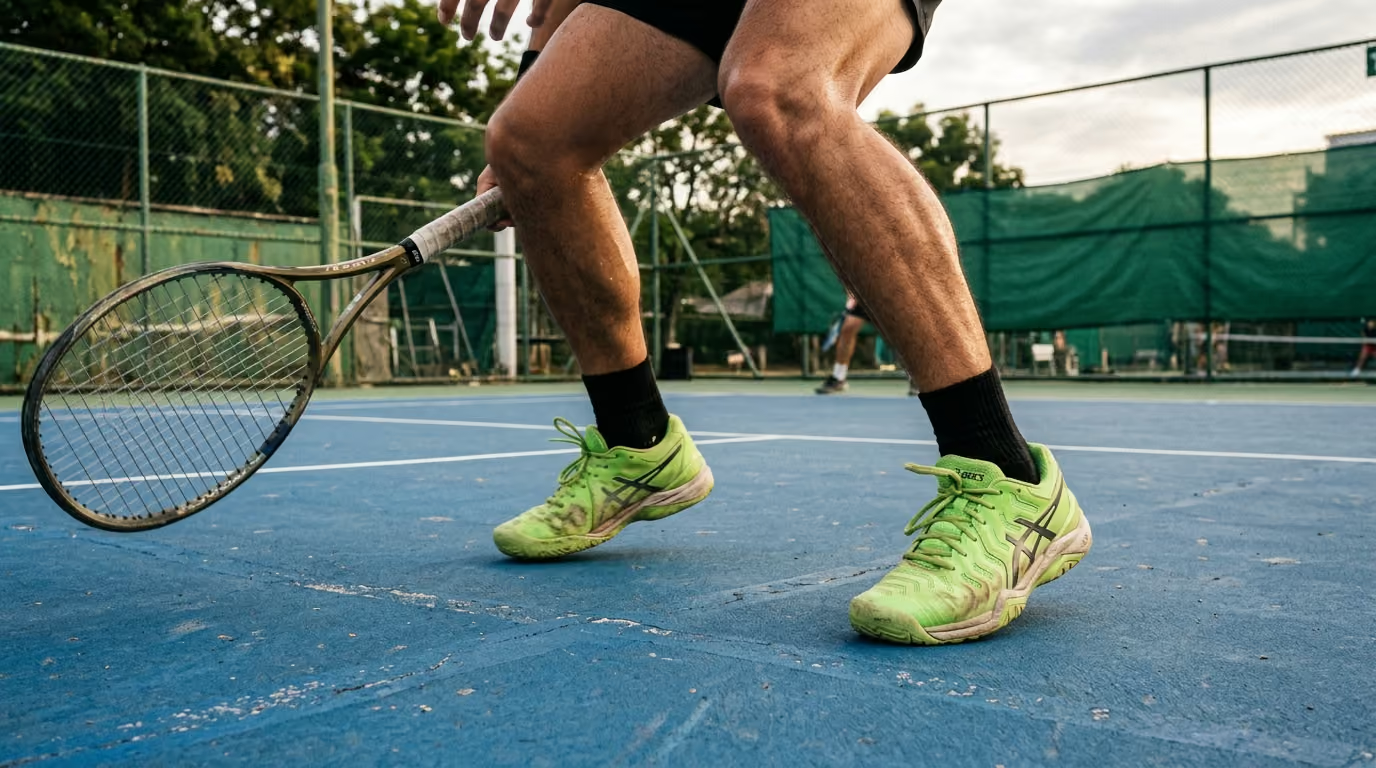
When your body aches after a demanding tournament, building a coordinated support team of specialists is essential for long-term athletic longevity in racquet sports.




You wake up on a Monday morning after a demanding weekend tournament. Your shoulder feels stiff, your lower back aches when you bend over, and your feet feel heavy. Your immediate reaction might be to schedule an isolated massage or take a break from play. However, long-term athletic longevity requires a more systematic approach to your physical health.
Building a long-term support team requires shifting from a reactive approach to a coordinated system of specialists. By aligning your physician, physical therapist, strength coach, and racquet professional around your specific playing goals, you can safely navigate the physical demands of your sport. This structured network helps you maintain performance, prevent recurring issues, and protect your physical longevity over many years.
A common mistake among court athletes is treating healthcare and coaching as separate, unconnected services. You might see a physical therapist for a sore knee, a trainer for general fitness, and a coach for technical lessons. When these professionals do not communicate, you receive conflicting advice. Your therapist might tell you to rest, while your coach encourages you to play through discomfort.
A true athletic support system places you at the center. Your providers should understand your medical history, your schedule, and your personal definition of competitive success. This requires a practical team architecture with clearly defined responsibilities.
To make this system work, you need a designated medical lead to oversee clinical diagnoses and clearance decisions. You also need a movement lead, a performance lead, and a technical lead. When everyone understands their roles, you avoid the confusion of conflicting advice. This structure allows you to build a sustainable, coordinated path toward athletic longevity.
According to consensus guidance on return to sport, defining team roles early is a critical best practice. Regularly sharing information among relevant stakeholders helps establish a clear process for resolving disagreements. This is particularly important when different professionals have different tolerances for physical risk.
Scientific research consistently highlights the health benefits of regular racquet sports participation. A large cohort study published in JAMA Network Open analyzed data from 272,550 older adults over several years. The researchers found that participating in racquet sports was associated with the greatest reduction in cardiovascular mortality in that analysis. The hazard ratio was 0.73, indicating a significant benefit compared with nonparticipation.
Earlier cohort findings summarized by Harvard also showed positive health associations. Regular racquet sports participants had a 47 percent lower risk of all-cause mortality. They also showed a 56 percent lower risk of cardiovascular mortality compared with nonparticipants. However, we must remember that these are observational associations rather than absolute clinical proof.
While the cardiovascular benefits are clear, playing racquet sports also introduces specific physical stresses. A 2025 systematic review of high-performance tennis reported that lower-limb trauma accounted for 48 to 56 percent of all recorded injuries. Lumbar spine problems and shoulder overuse syndromes were also highly prevalent. To manage these risks, you must maintain a baseline level of physical preparation.
The World Health Organization recommends that older adults accumulate 150 to 300 minutes of moderate-intensity aerobic activity per week. They should also perform muscle-strengthening activities on at least two days per week. For those with poor mobility, the guidelines recommend balance-focused activities on three or more days weekly. Your support team can help you adapt these general guidelines into a sport-specific training schedule.
Before you begin interviewing professionals, you must clarify your personal playing objectives. Staying competitive means different things to different players. You might want to play recreational singles twice a week, or you might want to return to a national ranking. Your specific goals will dictate the type of support you need from your team.
Writing a one-page personal brief is an excellent way to start this process. This document should outline your current playing frequency, your desired level of play, and your previous injury history. It should also detail your current physical limitations, your typical weekly schedule, and your medical history. This brief ensures that every professional you hire is working toward the same objective.
We must assess aging athletes by their actual physical function rather than by age stereotypes. Two players of the same chronological age can have vastly different movement capabilities and recovery rates. Your team should evaluate your explosive strength, balance, joint range of motion, and tendon tolerance. This functional profile is much more useful than a standard age-based template.
Defining your risk tolerance is another critical step in this process. You must decide what physical trade-offs you are willing to make for your sport. Some players are willing to accept a higher risk of soreness to continue playing singles. Others prefer to modify their play to ensure they can remain active in daily life.
Your primary-care physician is responsible for monitoring your overall health and managing chronic medical conditions. They evaluate your cardiovascular health, monitor your medications, and coordinate specialist referrals when necessary. While they do not need to be racquet sports experts, they must support your desire to remain active. They help ensure that your athletic training does not conflict with your broader medical needs.
A sports-medicine physician is highly valuable when you have complex, recurrent injuries or unexplained joint pain. They provide diagnostic clarity, order appropriate imaging, and discuss the benefits and risks of medical interventions. They understand the specific biomechanical demands of tennis, pickleball, and padel. They can make informed decisions regarding medical clearance and return-to-play protocols.
Your physical therapist should evaluate how your entire body moves rather than just treating the immediate site of pain. They assess your single-leg stability, hip mobility, trunk rotation, and shoulder strength. For a racquet athlete, they must analyze the entire kinetic chain to find the root cause of movement limitations. They design target rehabilitation programs that prepare your tissues for the specific forces of court sports.
The strength coach translates your physical limitations and athletic goals into a progressive training program. They focus on building your power, aerobic conditioning, and single-leg balance. A qualified trainer will ensure that your gym work directly supports your court performance without causing excessive fatigue. They help you build the physical capacity needed to absorb the forces of acceleration, deceleration, and rotation.
Your coach is responsible for technical development, but they also play a major role in managing your physical workload. They can modify your session duration, ball-feeding intensity, and footwork patterns to protect your joints. A knowledgeable coach can teach you movement strategies that reduce stress on your lower back and shoulders. They should be willing to adjust your lessons based on your current physical recovery status.
A registered dietitian can help you optimize your hydration, daily nutrition, and recovery practices. They design specific fueling plans for long match days and hot weather conditions. If you struggle with fatigue, weight changes, or slow recovery, a sports dietitian can identify potential nutritional gaps. They ensure that your dietary habits support both your athletic performance and your metabolic health.
A sport psychologist or mental performance professional can assist with the psychological challenges of athletic longevity. They help you navigate the fear of reinjury, manage competitive anxiety, and adjust to physical changes. If you are recovering from a major injury, they provide strategies to maintain motivation during long rehabilitation periods. They help you build a resilient mindset that keeps the game enjoyable.
When evaluating a new professional, you should ask about their formal credentials and their experience with mature athletes. Verify that they hold appropriate professional licenses and registrations in their field. Ask how often they work with players in your specific age bracket and sport. A clinician who understands the unique demands of tennis or pickleball will design more effective protocols.
A high-quality professional should be able to explain their treatment or training philosophy clearly. Ask them how they arrived at a particular recommendation and what evidence supports their approach. They should be comfortable discussing uncertainty and identifying alternative explanations for your symptoms. Avoid providers who offer vague explanations or promise immediate, guaranteed results.
Your support team must treat you as an individual with unique physical capabilities and life constraints. Ask prospective providers how they modify generic protocols to fit your specific needs. They should take the time to learn about your training history, sleep quality, and daily work stress. A highly personalized program is essential for preventing overuse injuries in mature players.
Effective communication is the foundation of a successful athletic support team. Ask new providers how they plan to share information with your other coaches or clinicians. They should be willing to send brief written summaries or coordinate on key return-to-play decisions. Clear communication channels help prevent conflicting advice and keep your recovery on track.
Ensure that your providers respect your autonomy and prioritize your long-term joint health over short-term competitive wins. Be cautious of professionals who recommend expensive, unproven treatments or discourage you from seeking second opinions. They should never encourage you to hide symptoms or use temporary measures to mask pain. A good provider helps you balance athletic ambition with physical safety.
To put your team’s advice into practice, you need a reliable method for tracking your physical responses. A simple daily log can help you monitor how your body reacts to the stress of play. You do not need a complicated digital system to track these trends over time. A small notebook or a basic text document is often the most effective tool.
Using this information, you can implement a practical traffic-light system to guide your daily training decisions. This system serves as a simple communication trigger between you and your support team. It helps you decide when to push your training and when to modify your sessions.
When returning from an injury, you must treat your recovery as a progressive continuum. Do not view medical clearance as a single event that allows you to return to full match play immediately. Instead, move through three distinct phases: returning to participation, returning to sport, and returning to performance. This gradual progression gives your tissues the time they need to adapt to the high demands of competitive matches.
Tennis is characterized by large court dimensions, which require significant sprinting and deceleration forces. The repetitive overhead serving motion places immense stress on the shoulder joint, thoracic spine, and abdominal muscles. Players must also manage high rotational forces through the lower back during groundstrokes. Your support team should help you build trunk stability, rotational power, and single-leg deceleration strength.
To learn more about optimizing your physical preparation for these movements, check out our strength and conditioning resources.
While the pickleball court is smaller, the game involves rapid acceleration, sudden lateral movements, and deep knee flexion. Players spend significant time in a low, loaded position near the non-volley zone line. This constant crouching places high demands on the quadriceps, patellar tendons, and hips. The rapid, short-swing nature of the game can also lead to chronic wrist and elbow issues if proper mechanics are not maintained.
If you are currently managing discomfort from these fast-paced court movements, you can find helpful advice on our player health page.
Padel combines elements of tennis and squash, requiring players to react to ball rebounds off glass walls. This dynamic environment demands exceptional multi-directional agility, spatial awareness, and rapid turning. The frequent use of overhead shots, such as the bandeja and vibora, places unique mechanical stress on the elbow and shoulder. Additionally, the synthetic turf court surface can increase the shear forces transmitted through your knees and ankles.
For specialized advice on managing these court-specific physical challenges, explore our healthy aging and athletic longevity articles.
One of the most frequent errors court athletes make is returning to full play as soon as their pain subsides. Pain is often the first symptom to disappear, but tissue healing and strength recovery take much longer. If you return to competitive matches without restoring your baseline strength, you invite recurring injuries. Your physical therapist and strength coach should verify that your movement control and tissue tolerance have fully recovered before you play competitively.
Many players believe that an MRI or an X-ray scan can explain every physical ache or pain. However, structural abnormalities like rotator cuff tears or knee meniscus wear are very common in active, pain-free older adults. Your symptoms and movement patterns are much more important than a scan result alone. A skilled sports-medicine physician will interpret your imaging findings in the context of your actual physical function on the court.
Building a large team of specialists can backfire if there is no central coordination of your care. If your physical therapist, massage therapist, strength trainer, and chiropractor do not communicate, you may receive conflicting instructions. This fragmentation can lead to overtraining, redundant exercises, and unnecessary financial expenses. Ensure that you have a designated lead professional who coordinates your overall training and rehabilitation plan.
To design a highly effective and balanced routine, you can read our detailed guide on how to design an effective injury prevention strategy.
A well-coordinated support team helps you manage your overall training load to prevent chronic fatigue and tissue breakdown. As we age, our bodies require more time to recover from high-intensity training sessions. Your team can help you design a weekly schedule that balances demanding matches with low-intensity technical sessions and active recovery. This balanced approach ensures that your muscles and tendons have adequate time to adapt to training stress.
By structuring your weekly routine this way, you allow your nervous system and joint tissues to recover completely between sessions. Your strength coach and physical therapist can monitor your progress and make minor adjustments before small aches turn into chronic issues. This preventative management is the most effective way to ensure long-term participation in your chosen sport.
To access more tools and practical templates for planning your training weeks, view our collection of resources for court athletes.
While mild muscular soreness is common after a tough match, certain symptoms require immediate medical evaluation. You should never attempt to play through joint swelling, sharp neural pain, or structural instability. If you experience chest discomfort, an irregular heartbeat, or sudden shortness of breath during play, stop immediately. These are potential signs of a serious underlying cardiovascular issue that requires urgent clinical assessment.
If you experience any of these symptoms, consult a qualified healthcare provider before returning to the court. Your primary-care physician or a sports-medicine specialist should perform a comprehensive evaluation to ensure you are medically safe to play.
You should review this team-building guide whenever you experience a significant change in your physical health or competitive goals. It is also highly useful to revisit these concepts during your sport's off-season, before starting a new tournament schedule, or when hiring a new coach or therapist. Keeping your support system aligned is a continuous process that changes alongside your athletic journey.
Building a dedicated support team is an investment in your physical longevity, athletic capability, and long-term enjoyment of racquet sports.
Follow Evercourts for practical insights on tennis, pickleball and padel performance, movement, recovery and healthy ageing. Stay connected for new articles, research-led guidance and ideas to help you play well and keep playing for years.


Read practical guidance for better movement, smarter preparation and a game that keeps working for you.
explore the Blog