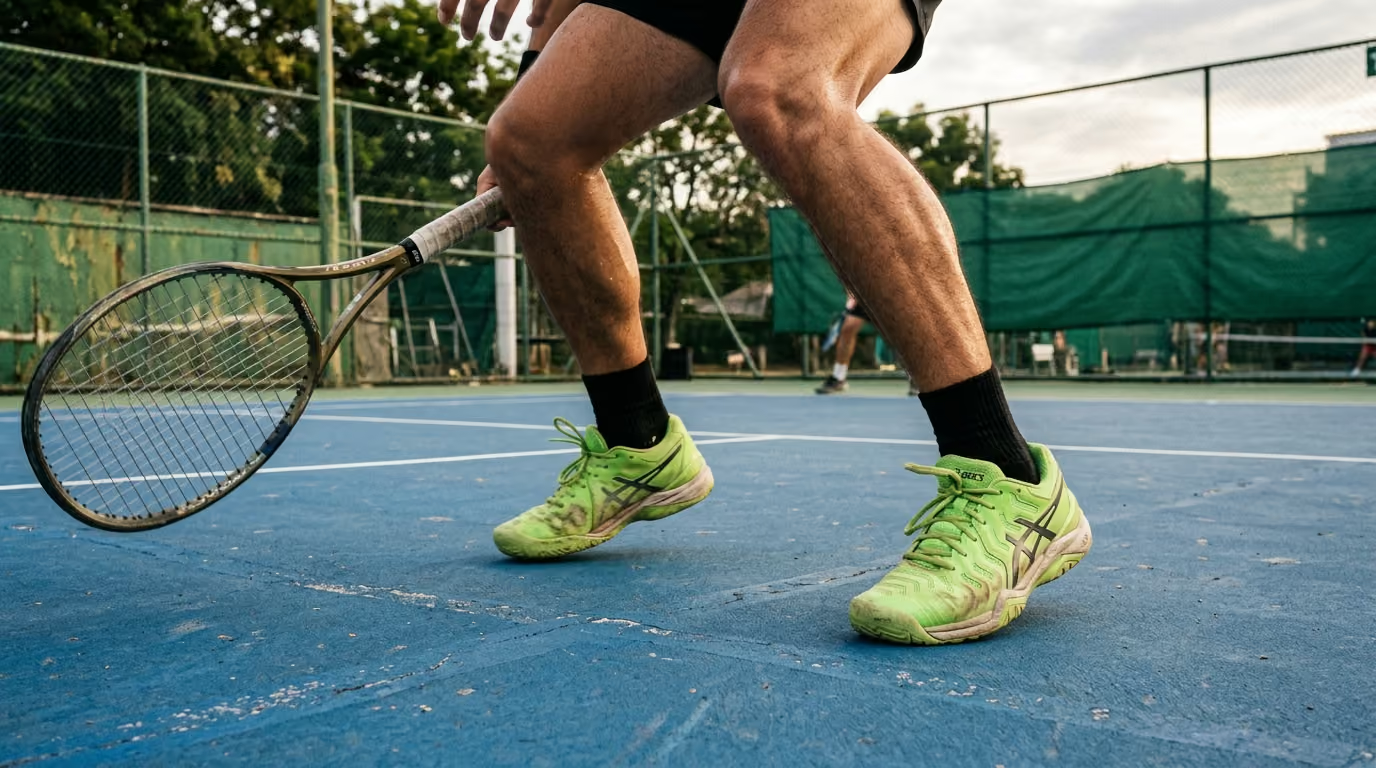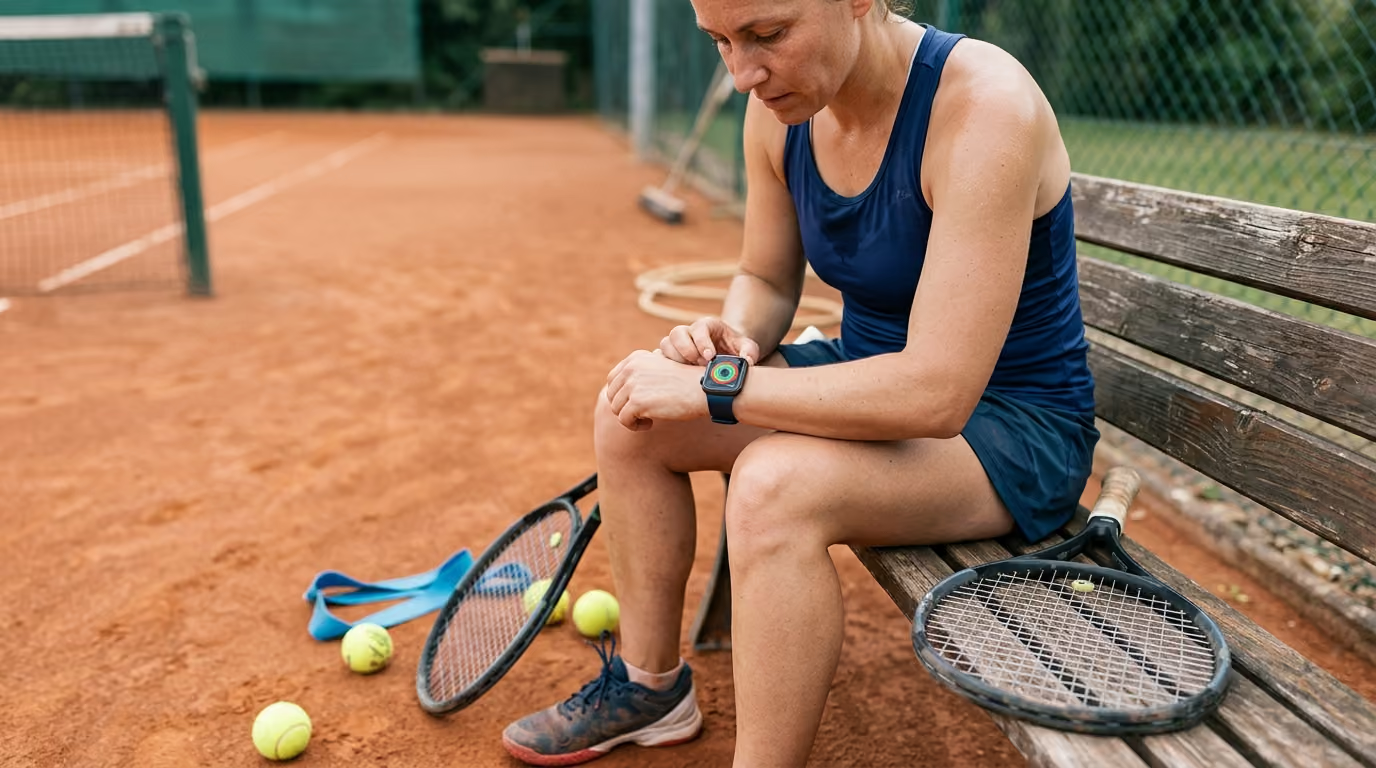

Returning to racquet sports after a break requires a careful, step-by-step increase in court time and intensity to build tissue resilience and prevent injury.




Many players believe that resting completely and then returning directly to competitive play is the safest path back to the court. This approach assumes that human tissue rebuilds itself during long periods of complete inactivity. In reality, joint capacity and tendon strength are developed through structured, progressive physical exposure.
To increase your racquet sports volume safely, you must gradually increase your court hours, movement speed, and competitive intensity. This strategy allows your connective tissues and cardiovascular system to adapt together over time. By evaluating your physical response the morning after play, you can build a resilient, long-term routine.
We often view physical conditioning as a broad, general metric. We assume that if we can run on a treadmill for an hour, we can immediately play an hour of intense singles. However, court sports require specific, high-torque movements that linear running cannot replicate. This comprehensive guide outlines how to progress your playing volume safely across tennis, pickleball, and padel.
To structure your court schedule, you must first understand how physical work affects your body. Exercise scientists divide training volume into external and internal loads. External load is the objective work you complete on the court. This includes your playing time, the number of matches you play, and your total stroke count.
Internal load is the biological stress your body experiences during that activity. It represents the physiological and psychological response to your court work. For example, a player returning from a long layoff will experience a high internal load during a simple rally. A fully conditioned player might experience a very low internal load during that same session.
Research shows a strong connection between sudden spikes in workload and injury risk. A systematic review of training load studies found that rapid increases in volume often precede joint and tendon issues. However, the same research indicated that consistent, progressive loading can actually protect your joints from injury. Your ability to tolerate play depends on your chronic baseline capacity.
When you increase your volume too quickly, you exceed your tissues' rate of repair. This imbalance leads to common overuse issues like tendinopathy or structural joint irritation. Connective tissues adapt much more slowly than your cardiorespiratory system. While your lungs may feel ready after two weeks, your tendons require months of progressive stress to adapt fully. You can examine detailed strategies on this balance by reading our injury prevention resources.
You do not need expensive tracking devices to monitor your court stress. A practical, research-backed method is the session rating of perceived exertion. To calculate this, you multiply your total court time in minutes by your perceived effort on a scale of one to ten. A score of one is complete rest, while ten represents maximum physical exertion.
Suppose you play a friendly doubles match for sixty minutes. You rate the physical effort as a four out of ten. Your calculated session workload is 240 units. If you play sixty minutes of highly competitive singles, you might rate the effort as an eight. This single change doubles your session workload to 480 units.
Tracking these numbers helps you see hidden spikes in your weekly routine. You might play the same number of hours but face tougher opponents, which raises your weekly effort. This shift increases your overall internal load without changing your calendar schedule. Keeping a daily log is a highly effective way to identify these trends.
Your training log should record several key variables:
This structured data helps you make logical decisions about your volume. If your weekly workload increases by more than twenty percent, hold your volume steady for the next week. This consolidation phase gives your joints the necessary time to adapt before you add more stress.
When you want to increase your playing time, avoid jumping straight into competitive matches. Instead, progress through structured levels of movement and technical intensity. This progression ladder allows your nervous system and muscles to adapt to specific forces. It prevents you from overloading your body with highly reactive, unpredictable steps.
Spend at least two weeks at each stage before moving to the next level. If you experience persistent joint pain, return to the previous step immediately. This structured approach ensures your body is physically prepared for the unique forces of match play.
Cooperative rallying is an excellent way to rebuild your stroke mechanics. It allows you to focus on your balance, timing, and point of contact. This phase conditions your shoulder and forearm muscles without requiring sudden, emergency braking. Once your upper body adapts to this load, you can safely introduce directional movement.
Only transition to competitive matches when you can complete high-intensity drills without pain. Match play introduces psychological stress, which often causes players to ignore their body's warning signs. By building a solid foundation through the progression ladder, you protect your physical health. To support this preparation, you can view our strength and conditioning resources.
Each racquet sport places a distinct physical demand on your body. Tennis requires significant court coverage, which demands excellent cardiovascular capacity and lateral sprinting. The heavier racquet and yellow balls create substantial rotational forces through your trunk and shoulder. Overuse injuries are highly common in tennis, with research indicating that two-thirds of injuries stem from repetitive wear.
Pickleball is played on a much smaller court, which reduces the need for long-distance sprints. However, the game requires rapid, reactive steps, deep lunges at the kitchen line, and continuous bending. The hard, concrete court surface transfers significant impact through your ankles, knees, and lower back. Because players often play multiple matches in a single session, the cumulative joint stress is high.
Padel combines elements of tennis and squash within an enclosed glass court. The continuous play and ball rebounds require constant turning, backing up, and overhead adjustments. Padel courts feature artificial turf over concrete, which can stress your calves and Achilles tendons during explosive movements. The high frequency of overhead smashes also demands exceptional rotator cuff strength.
When moving between these sports, do not assume your fitness transfers completely. A fit tennis player can easily overload their lower back in pickleball due to the constant low-crouching posture. Similarly, a pickleball player starting tennis may experience shoulder strain from the heavier racquet. Treat each sport as a completely new physical exposure that requires its own gradual progression.
The most frequent mistake court athletes make is relying on calendar time to guide their physical progression. A player might wait six weeks after an injury, assume they are fully healed, and immediately enter a tournament. Connective tissues like tendons and ligaments do not regain their mechanical strength through rest alone. They require progressive, loaded movement to rebuild their structural capacity.
Another common pitfall is confusing general cardiovascular fitness with joint-specific tolerance. Cycling or swimming for an hour builds excellent heart and lung capacity. However, these activities do not prepare your ankle ligaments for lateral cutting. Your joints must be conditioned specifically for the exact movements of your chosen sport. You can read more about balancing your activities on the Evercourts blog.
Many players also overlook the cumulative stress of playing multiple sports. If you play tennis twice a week and then add two sessions of pickleball, you have doubled your weekly court exposure. Your body does not distinguish between sports when it comes to total systemic fatigue. If you add a new sport, you must temporarily reduce your volume in your primary sport.
Finally, players often ignore the physical impact of the playing surface. Moving from soft clay courts to hard courts increases the ground reaction forces traveling through your lower limbs. If you change surfaces, reduce your session duration by thirty percent for the first two weeks. This simple adjustment gives your knees and shins time to adapt to the harder impact.
Your body does not build strength on the court; it builds strength while you rest. The stress of training creates microscopic tears in your muscles and breaks down collagen fibers in your tendons. Your body then repairs these tissues, making them stronger and more resilient than before. If you do not allow sufficient recovery time, this repair process is cut short.
Sleep is a critical pillar of this recovery cycle. While scientific evidence on sleep as an independent injury risk factor is mixed, chronic sleep deprivation hinders tissue repair. Aim for seven to nine hours of quality sleep per night to support your physical adaptation. If you have a poor night of sleep, consider reducing the intensity of your next court session.
Nutrition and hydration also play vital roles in supporting your athletic longevity. Consuming adequate protein provides the amino acids needed to rebuild muscle and tendon tissue. Drinking enough water maintains joint lubrication and prevents premature muscle fatigue during long matches. Keep a water bottle on the court and drink regularly during changeovers.
Additionally, the quality of your warm-up influences how your body handles physical stress. A proper warm-up prepares your cardiovascular system and increases tissue temperature, which helps you move more fluidly. Rather than static stretching, which can temporarily reduce muscle power, focus on dynamic movements. For more insight into these recovery strategies, visit our recovery science resources.
To determine if your current court volume is appropriate, you must monitor your body's response after play. The next-day response test is a simple, highly effective tool for self-monitoring. It focuses on how your joints and muscles feel the morning after a strenuous session. This feedback tells you if your body successfully tolerated the physical load.
Evaluate your joints, particularly your knees, Achilles tendons, and shoulders, using these criteria:
If you experience mild, stable stiffness that resolves within fifteen minutes of moving around, your body is likely adapting well. You can maintain your current playing volume. However, if your stiffness lasts longer or turns into sharp pain, your body is signaling that the current load is too high.
When this occurs, do not ignore the warning signs or try to play through the discomfort. Instead, temporarily reduce your playing time or intensity by thirty percent. Hold this reduced volume until you can complete a session and wake up the next morning without stiffness. This conservative approach prevents acute irritation from turning into a long-term, chronic injury. To manage your physical wellness more effectively, read our articles on player health.
Let us look at how these principles apply to common situations that court athletes face. These examples demonstrate how to adjust your schedule based on exposure and symptom response.
A recreational tennis player currently plays doubles twice a week for ninety minutes per session. They decide to transition to singles play to increase their physical fitness. Singles play requires significantly more court coverage, which increases lower-limb and cardiovascular demands.
Instead of replacing their doubles sessions with singles, they should introduce singles gradually. In week one, they play seventy-five minutes of doubles, followed by fifteen minutes of light singles rallying. They monitor their body's response the next morning. If they have no joint stiffness, they increase the singles portion to thirty minutes in week two, while reducing doubles to sixty minutes.
By week four, they can safely play a full, sixty-minute singles match. This step-by-step transition allows their calves, Achilles tendons, and knees to adapt to the explosive, unilateral movements required in singles play. It also prevents the sudden load spike that occurs when jumping directly into competitive singles.
An active pickleball player plays three times a week and wants to take up padel. They assume that because they are already fit, they can immediately play padel three times a week as well. This sudden increase would double their total weekly court time and introduce unfamiliar movement patterns.
To add padel safely, they must temporarily reduce their pickleball volume. In the first phase, they reduce their pickleball sessions from three to two per week. They add one sixty-minute padel session focused on cooperative drilling and basic footwork. They maintain this split for three weeks to assess how their shoulder and knees handle the padel strokes and glass rebounds.
If their next-morning response remains positive, they can gradually increase the intensity of their padel session. After six weeks of consistent play, they can consider adding a third pickleball session back into their schedule. This methodical approach ensures that their total weekly load remains within their body's capacity to recover.
A club-level tennis player decides to enter an upcoming weekend tournament. They typically play one competitive singles match per week. The tournament will require them to play up to three matches over two days, representing a major exposure spike.
To prepare, they should start building their physical capacity six weeks before the event. They begin by adding a second weekly session focused on high-intensity drilling and short, back-to-back practice sets. This extra session simulates the fatigue they will experience during the tournament.
In the week leading up to the tournament, they perform a structured taper. They reduce their total court time by forty percent and avoid high-intensity matches. This reduction allows their energy reserves to recover and ensures their joints are fresh for the competition. They also focus on sleep, hydration, and gentle mobility work to optimize their recovery.
Creating a balanced weekly schedule is key to supporting athletic longevity. A sustainable routine should alternate high-demand days with low-demand days or complete rest. This hard-easy structure prevents you from stacking high-stress exposures, which can quickly lead to overuse injuries.
A high-demand day involves intense singles play, competitive matches, or long, multi-set sessions. These exposures place significant mechanical stress on your joints and deplete your muscle energy stores. Your body needs at least forty-eight hours of recovery before you subject it to another high-demand session.
A low-demand day can include cooperative rallying, technical drilling, doubles play, or light strength training. These sessions allow you to practice your skills and maintain your court feel without overloading your tissues. Complete rest days are also essential, especially after highly demanding competitive events.
To help you plan, consider this sample weekly template for a recreational player looking to play three times a week:
This schedule ensures you never play high-intensity sessions on consecutive days. It provides your tendons and muscles with adequate time to repair and adapt between workouts. You can adjust this template based on your primary sport and individual fitness level, always prioritizing your next-day response. For more advice on tailoring your routine to your age and fitness goals, view our healthy aging and athletic longevity resources.
A dynamic warm-up is an essential component of load management that prepares your neuromuscular system for the specific demands of court play. Rather than holding static stretches, which can decrease muscle power, use progressive movements that raise your core temperature and improve joint mobility. This routine should take about ten minutes and should mimic the movements you will perform during your match.
Begin with general cardiovascular preparation to increase your heart rate and warm your muscles. A light jog, side-shuffling, or skipping across the width of the court for two to three minutes is highly effective. Once you feel warm, transition to dynamic stretches that target your lower body, trunk, and shoulders.
Incorporate these specific movements into your warm-up routine:
After completing these dynamic exercises, start your on-court warm-up at a gentle pace. Begin with short-court mini-tennis or cooperative pickleball rallies before moving back to the baseline. Gradually increase your swing speed and movement intensity over five minutes. This step-by-step entry into play ensures your joints are fully lubricated and ready for the demands of the game. For more movement prep ideas, review our mobility and movement resources.
While mild stiffness can be a normal part of physical training, certain symptoms require professional attention. Ignoring serious warning signs can lead to structural damage that may keep you off the court for months. Developing an eye for these indicators is crucial for protecting your athletic longevity.
You should consult a qualified physical therapist or sports medicine physician if you experience any of the following:
A professional assessment can identify the root cause of your symptoms and provide a targeted rehabilitation plan. Early intervention often prevents minor issues from developing into chronic conditions. A physical therapist can also evaluate your movement mechanics to identify any technical flaws that may be contributing to your discomfort. Working with a professional ensures you can return to the sport you love safely and confidently.
Progressing your court volume safely is a deliberate, scientific process that rewards consistency over speed. By respecting your body's limits and listening to its feedback, you can build a resilient physical foundation that keeps you playing tennis, pickleball, or padel for years to come.
Follow Evercourts for practical insights on tennis, pickleball and padel performance, movement, recovery and healthy ageing. Stay connected for new articles, research-led guidance and ideas to help you play well and keep playing for years.


Read practical guidance for better movement, smarter preparation and a game that keeps working for you.
explore the Blog