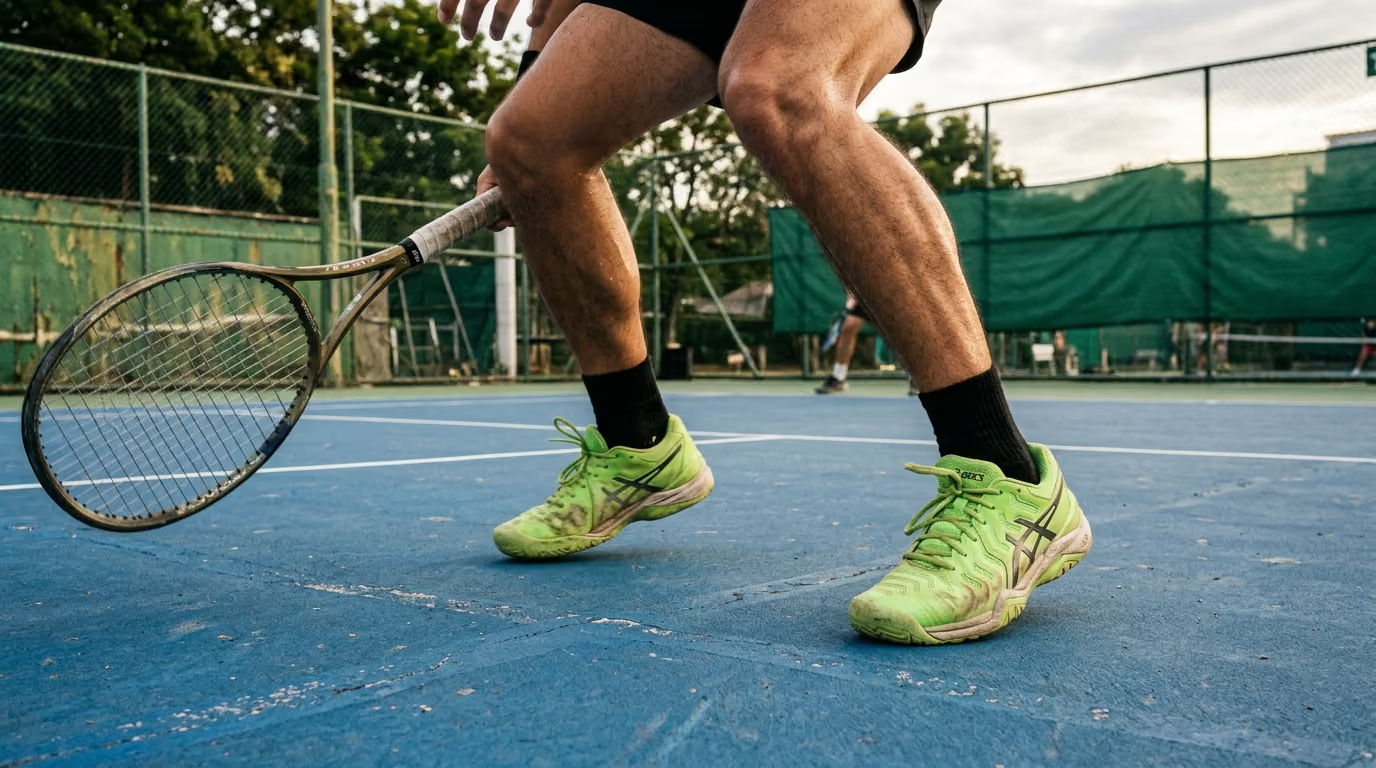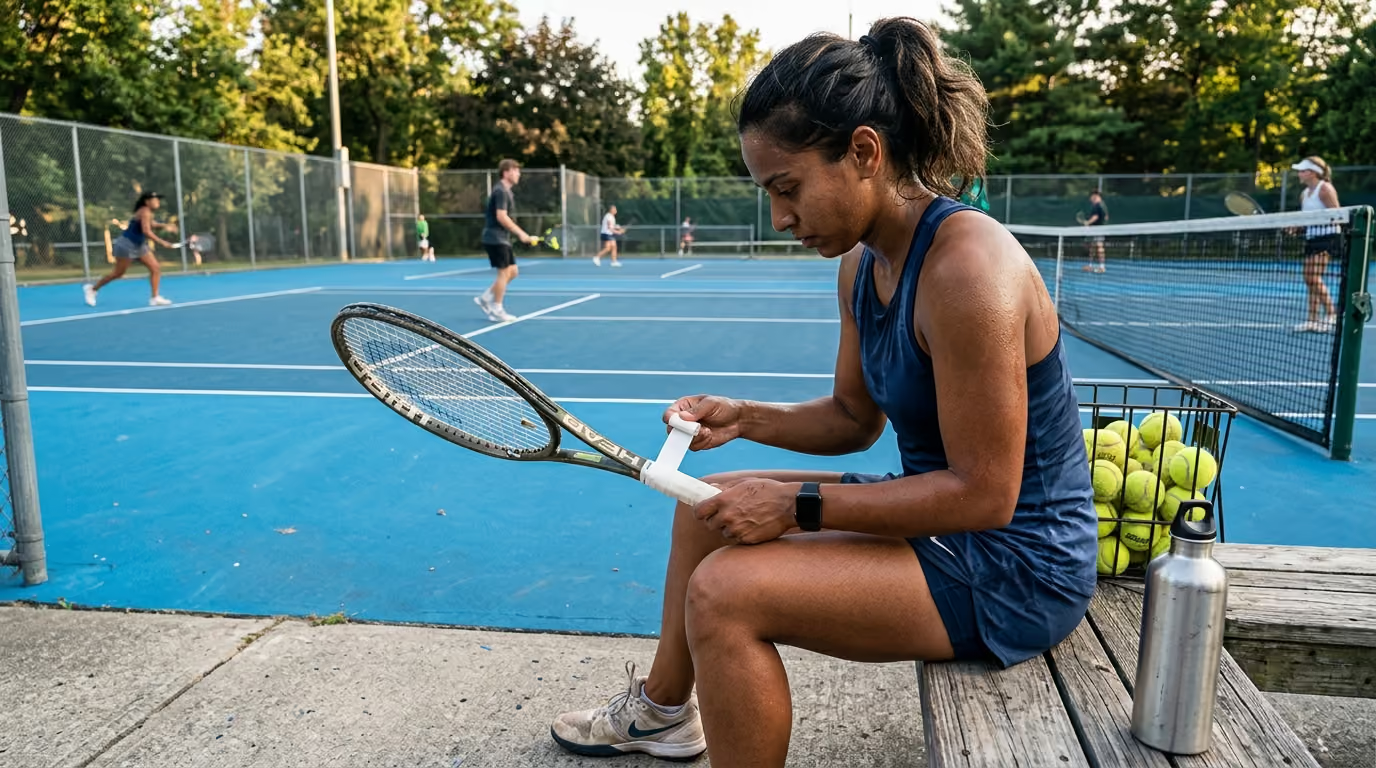

While many believe motivation is a constant, it actually fluctuates and requires strategic management to sustain performance throughout a long racquet sports season.




Most tennis, pickleball, and padel players assume that the best competitors possess a bottomless reservoir of enthusiasm. They believe that if they truly loved their sport, they would step onto the court every day feeling eager to play. This perspective is not only incorrect, but it also sets a dangerous trap for your long-term progress. In reality, motivation is a highly volatile resource that naturally ebbs and flows across a competitive calendar.
To maintain consistency during a long racquet sports season, players must shift their focus from fluctuating feelings of enthusiasm to structured, controllable habits. True athletic commitment relies on designing a supportive court environment, establishing process-oriented goals, and prioritizing systematic physical recovery. By focusing on these elements, you can sustain your performance even when your initial excitement begins to fade.
To build a sustainable path through a long season, we must first understand the psychological forces that drive our behavior. Relying on sheer willpower is a failing strategy. By looking at established sports science, we can learn how to structure our training, our matches, and our minds to protect our passion for the game.
Sports psychologists do not view motivation as a single, simple trait. Instead, they examine both the quantity and the specific quality of the drive that brings you to the court. Understanding these distinctions helps you diagnose why your energy levels might be dropping mid-season.
Self-Determination Theory describes motivation as a spectrum that ranges from a complete lack of intent to deep, self-driven enjoyment. According to research on exercise and physical activity, these different states heavily influence whether an athlete stays with a sport long-term.
A narrative review concluded that athletic commitment is much more durable when it is rooted in personal goals and self-determination. External rewards and recognition can provide brief boosts in energy, but they rarely sustain an athlete through the repetitive grind of a multi-month league.
Self-Determination Theory proposes that your psychological well-being and drive depend on three basic needs. When a season frustrates these needs, your motivation will inevitably decline.
First, you need Autonomy. This is the feeling that you have a choice and ownership over your sporting life. If your tournament schedule is dictated entirely by external pressures, or if you feel forced to play through injury, your sense of autonomy drops.
Second, you need Competence. This is the belief that you are effective and capable of improving. When you only judge competence by match wins, a string of close losses can make you feel completely unskilled, destroying your confidence.
Third, you need Relatedness. This is the feeling of connection to teammates, partners, opponents, and the broader club community. A longitudinal study of competitive athletes found that high relatedness at the start of a season predicted lower levels of burnout later in the year. Connection acts as a vital psychological buffer when your on-court results are disappointing.
The environment in which you train plays a massive role in your mental longevity. Sports science distinguishes between a mastery climate and an ego climate.
A mastery climate focuses on learning, personal effort, tactical improvement, and controllable execution. An ego climate focuses strictly on social comparison, proving superiority, and ranking points.
Research shows that ego-oriented environments are closely linked to high performance anxiety and eventual burnout. Conversely, task-oriented climates support long-term engagement and athletic well-being. Ambition is not the problem, but ambition becomes fragile when it is disconnected from personal growth and learning.
When your energy drops, it is easy to assume you have simply lost your discipline. However, you must learn to distinguish between ordinary discouragement, physical overreaching, and genuine psychological burnout.
Ordinary discouragement is a temporary emotional reaction. It typically follows a tough loss, a brief plateau in your skills, or a rainy week that disrupts your practice schedule. This state usually improves after a few days of rest, some perspective, or a fun, low-stakes hitting session with a friend.
True burnout is a much more serious, multi-dimensional syndrome. It is characterized by persistent emotional and physical exhaustion, a reduced sense of personal accomplishment, and a growing cynicism toward the sport. If you find yourself dreading the drive to the courts or feeling completely indifferent to your performance, you may be experiencing burnout.
Your mind and body do not operate in isolation. Often, what feels like a mental failure is actually a physical recovery deficit.
I remember finishing a tough two hour padel match on a cold Tuesday night and waking up the next morning feeling like my lower back was locked in concrete. For a long time, I just accepted this as the price of playing hard in my forties. But once I started spending just ten minutes on targeted hip mobility before heading to the club, the stiffness almost completely vanished. It taught me that we do not have to accept pain as a default state of aging.
When you physical preparation is inadequate, your movement becomes inefficient. This inefficiency causes rapid fatigue, which your brain interprets as a lack of motivation. Incorporating structured preparation, such as the exercises found in our mobility and movement resources, can instantly refresh your mental outlook by making movement feel effortless again.
To protect your drive through a long league, you must change how you define success. Relying solely on outcome targets, such as winning a division or reaching a specific rating, leaves you vulnerable to variables you cannot control. Instead, build a layered goal system.
A resilient competitive mindset uses four distinct levels of goal setting. This structure ensures that even on days when you lose, you can still find clear evidence of progress.
A systematic review and meta-analysis of goal-setting research in sport revealed that process goals produce the largest positive effect on athletic performance. Outcome goals, by contrast, had the smallest direct effect on performance. While wanting to win is natural, focusing on the immediate process is what actually helps you achieve that win.
On days when your energy is low, the prospect of a grueling two-hour training session can feel overwhelming. This often leads to players skipping practice entirely.
To prevent this all-or-nothing cycle, define a minimum viable action for your training days. This is the smallest possible task that preserves your athletic identity and keeps your momentum alive.
If you arrive at the courts feeling exhausted, commit only to your minimum plan. Often, once you complete the warm-up, your physical readiness increases, and you will feel capable of transition to the target plan. If not, you can leave the courts knowing you maintained your discipline without forcing a damaging session.
To keep your motivation high, you need clear, constructive feedback. Instead of obsessing over the final score, use a structured debrief after every competitive match. Answer these four simple questions:
This practice prevents you from treating a single loss as a definitive verdict on your athletic potential. It turns every match into a valuable data-gathering exercise.
The mental challenges of a long season differ significantly depending on your specific sport. Managing a busy competition and court lifestyle requires understanding these unique environmental demands.
Tennis is a highly isolated sport, particularly in singles. Matches can easily stretch past the two-hour mark, demanding immense physical stamina and prolonged mental focus.
Because you are alone on court, negative self-talk can quickly spiral out of control. To stay motivated through a long tennis season, you must prioritize your social connections off the court. Schedule regular practice sessions with a supportive group, or join a local club league where matches contribute to a team score.
Additionally, focus heavily on physical pacing. Because tennis matches are long, learning to rest deeply during changeovers is crucial for preserving your mental energy.
Pickleball tournaments often require you to play many short matches in a single day. The sport also features highly volatile rating systems, where a single bad weekend can visibly drop your standing.
This rapid feedback loop can make pickleball highly addictive, but it also increases the risk of early burnout. To survive a long season, you must establish strict boundaries around your rating obsession.
Limit how often you check your tournament software or player rating. Focus on building stable, long-term partnerships rather than constantly switching partners based on recent results. Relatedness is a powerful shield against the anxiety of fluctuating ratings.
Padel is exclusively a doubles game played within a glass enclosure. The sport requires constant communication, quick reflex volleys, and complex tactical adjustments using the walls.
Because you are always playing with a partner, your motivation is deeply intertwined with another person. A difficult partnership can quickly drain your enthusiasm for the game.
To protect your motivation, establish clear communication guidelines before the season starts. Agree to focus on positive reinforcement during matches, and commit to discussing tactical adjustments without personal blame. On the court, focus your process goals on team movement and defensive court positioning rather than individual winners.
Many dedicated athletes unknowingly undermine their own drive by falling into common mental traps. Recognizing these patterns is the first step toward correcting them.
The most common mistake racquet sports players make is assuming that progress is a straight, upward line. When they lose a match to an opponent they feel they should beat, they interpret it as evidence that their skills are sliding backward.
In reality, athletic development is highly non-linear. Your performance on any given day is influenced by sleep quality, daily stress, tactical matchups, and simple luck. A single bad result is rarely a sign of regression. It is merely a single data point in a much larger, upward trend of development.
After a frustrating loss, many players experience a strong urge to immediately register for another tournament. They want to get back on the court as quickly as possible to erase the bad memory and prove their worth.
This behavior, known as revenge playing, is driven by controlled extrinsic motivation and ego protection. It almost always backfires.
By playing again without addressing your physical fatigue or tactical mistakes, you enter the court vulnerable and unprepared. This often leads to another poor performance, deepening your discouragement. Instead of racing back to competition, impose a mandatory forty-eight-hour waiting period to rest and evaluate your game objectively.
High standards are essential for improvement, but they must not turn into self-punishment. Some players respond to a poor match by forcing themselves through exhausting, punitive training sessions the very next day.
This approach is highly counterproductive. It ignores your body's physical limits and drastically increases your risk of injury.
True discipline means sticking to a balanced, intelligent plan, even when your emotions are telling you to overwork. It means recognizing that taking a scheduled rest day requires more mental strength than forcing yourself to run sprints on sore legs.
Your physical state dictates your mental resilience. If you are chronically under-recovered, no amount of mental training or motivational quotes will keep you focused on court. Healthy aging and athletic longevity rely entirely on your daily recovery habits.
As your competitive schedule intensifies, your cumulative training load increases. A consensus statement on athletic load highlights that sudden increases in training volume can significantly disrupt both sleep quantity and sleep quality.
When your sleep is compromised, your brain's ability to regulate mood, manage stress, and maintain focus declines. This creates a dangerous loop. High training stress leads to poor sleep, which leads to reduced mental drive, which makes your training feel even more exhausting.
To break this cycle, monitor your weekly playing hours. If you notice your sleep becoming fragmented or restless, proactively reduce your training volume for a few days to let your nervous system recover.
For years, sports medicine articles have emphasized the link between sleep deprivation and increased injury rates. Some research suggests that sleeping fewer than seven hours per night is associated with a higher risk of acute sports injuries.
However, a newer systematic review of adult athletes found no clear consensus on a direct, universal relationship between sleep duration and specific injury rates. Despite this lack of consensus, the evidence remains absolutely clear on one point: poor sleep consistently degrades athletic performance, reaction time, and decision-making.
An expert consensus review on athlete sleep recommends avoiding rigid, one-size-fits-all prescriptions. Instead, focus on your individual needs. To optimize your recovery, utilize the strategies detailed in our recovery science resources, which include:
To maintain a healthy perspective on your physical and mental health, pay attention to leading indicators. Lagging indicators, like your tournament ranking or match record, only show you results after they have occurred. Leading indicators tell you where your performance is heading.
If your leading indicators are strong, your performance will naturally improve over time. Tracking these daily habits gives you a sense of control and accomplishment, which directly supports your intrinsic motivation.
While motivational dips are a normal part of any sports season, you must be able to recognize when your fatigue points to a deeper issue. Sometimes, continuing to push through a slump can lead to serious physical or psychological harm.
If you experience any of the following symptoms for more than two consecutive weeks, you should stop training and seek professional guidance:
Depending on your symptoms, different healthcare providers can help you recover safely. For physical pain, mobility issues, or chronic tightness, consult a physical therapist. They can help you identify movement imbalances and design a safe rehabilitation program using our injury prevention resources.
If you are struggling with severe anxiety, depressive symptoms, or total emotional burnout, reach out to a licensed sports psychologist or mental health professional. They can provide you with personalized cognitive strategies to help you rebuild a healthy, positive relationship with your sport.
Sustaining your drive through a long racquet sports season is not about being a perfect, emotionless competitor. It is about understanding that your mind and body require careful, intelligent management to perform at their best. By focusing on the process, protecting your recovery, and staying connected to your community, you can enjoy competing on the court for many years to come.
Follow Evercourts for practical insights on tennis, pickleball and padel performance, movement, recovery and healthy ageing. Stay connected for new articles, research-led guidance and ideas to help you play well and keep playing for years.


Read practical guidance for better movement, smarter preparation and a game that keeps working for you.
explore the Blog