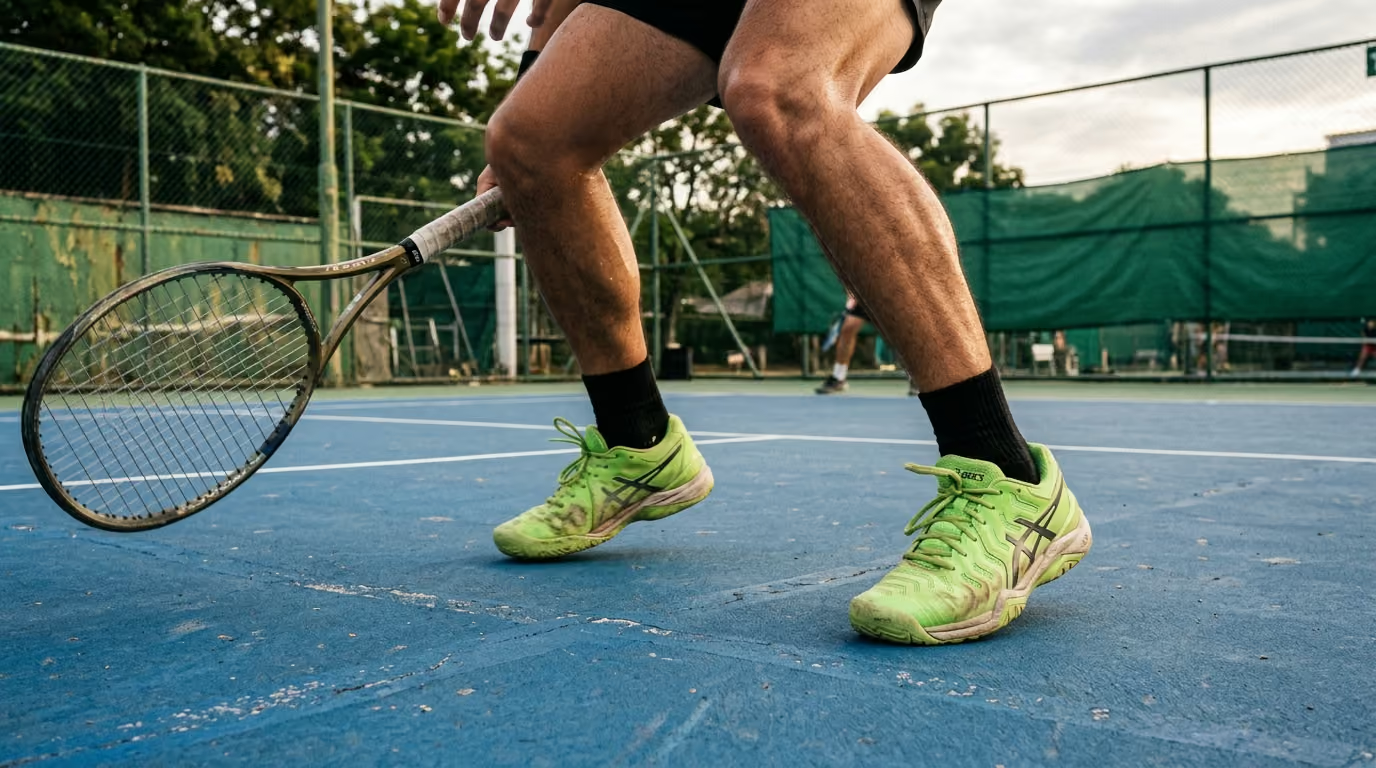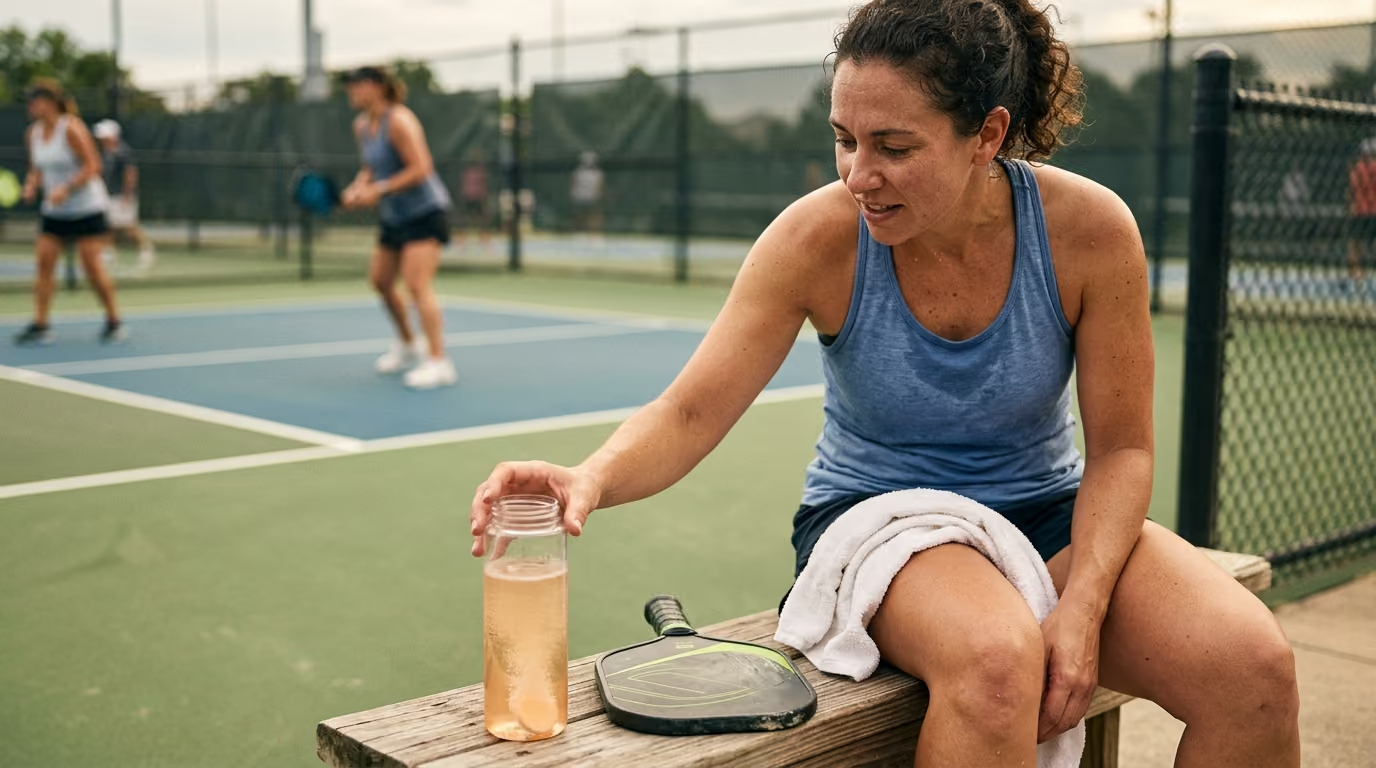

Proper hydration for racquet sports involves replacing water and essential minerals based on individual body size, sweat rate, and the playing environment.




Hydration for court athletes is often presented as a simple matter of drinking a set amount of water before, during, and after play. However, standard formulas often fail to address the highly variable demands of racquet sports like tennis, pickleball, and padel. Proper fluid management is actually a highly individual process of replacing water and essential minerals based on your body size, sweat rate, and the playing environment.
To stay hydrated and recover effectively for racquet sports, you should start matches in a normal state of hydration, drink primarily when you feel thirsty during play, and replace lost fluid afterward by drinking about 1.25 to 1.5 liters of water for every kilogram of weight lost. For matches lasting over an hour or in high heat, incorporating sodium into your fluids helps maintain electrolyte balance and prevents dangerous blood sodium dilution. This personalized approach avoids the twin risks of dehydration and overhydration.
In this comprehensive guide, we will examine the actual science of sweat, explain how to calculate your personal fluid losses, and look at practical hydration strategies for your next match.
A universal drinking guideline does not work because sweat rates and sodium losses vary wildly from person to person. According to the National Athletic Trainers' Association, adult exercise sweat rates can range from approximately 0.5 to 4.0 liters per hour. At the same time, measured sweat sodium losses can range from 0.2 to 7.3 grams per hour. This massive variability means that what works for your doubles partner might leave you severely dehydrated or dangerously overhydrated.
An effective hydration plan must account for several moving parts. Your body size, sweat rate, and sweat sodium concentration form your baseline physical profile. The playing environment, including air temperature, relative humidity, solar radiation, and wind, dictates how hard your body must work to cool itself. Finally, the match duration, playing intensity, access to fluids during breaks, and the time remaining before your next session all influence your immediate hydration requirements.
To manage these variables, you should understand three distinct phases of hydration planning. The first objective is arriving at the court adequately hydrated. The second objective is limiting excessive fluid loss during play without overdrinking. The third objective is fully replacing fluid and minerals after play, especially when you plan to step back onto the court within 24 hours.
By viewing hydration as an individual fluid-replacement problem rather than a set of rigid rules, you can protect your performance and support long-term athletic longevity on the court.
To understand how to hydrate, it is helpful to look at the underlying physiology of fluid balance during exercise. Your body maintains a delicate equilibrium of water and minerals to support cardiovascular function, regulate temperature, and facilitate muscle contractions.
Euhydration refers to the state of normal, optimal body-water balance. This is the physiological baseline where your cardiovascular system operates most efficiently. Hypohydration, on the other hand, is a body-water deficit that develops either before or during your match.
When you lose fluid through sweat, your total blood volume decreases. This reduction in blood volume means your heart must beat faster to pump oxygen to your working muscles and carry heat to your skin. This cardiovascular strain can cause early fatigue, reduced concentration, and a decline in movement coordination during long rallies.
Sweating is your body's primary method for cooling itself. During a intense rally, your muscles generate a substantial amount of heat. To prevent your core temperature from rising to dangerous levels, your nervous system triggers the sweat glands to release moisture onto your skin.
However, sweating only cools your body if the moisture actually evaporates into the air. In high humidity, the surrounding air is already saturated with water vapor, which prevents sweat from evaporating efficiently. Consequently, you may find yourself drenched in sweat but still feeling overheated, causing your body to sweat even more in a futile attempt to cool down.
Sweat is not just plain water. It also contains essential minerals known as electrolytes, with sodium being the most abundant and important mineral lost during activity. Sodium plays a critical role in maintaining fluid balance outside your cells and supporting nerve transmission.
Because your sweat sodium concentration is genetically determined and varies widely, you cannot assume your electrolyte losses are identical to other players. Replacing only water during prolonged, heavy sweating can dilute the remaining sodium in your blood. This dilution is the primary cause of a dangerous condition called exercise-associated hyponatremia.
Exercise-associated hyponatremia, or EAH, is defined as a blood sodium concentration below 135 millimoles per liter. It occurs when a player drinks water or low-sodium sports drinks in excess of their sweat losses, essentially diluting their blood plasma. The International EAH Consensus Group notes that drinking beyond the limits of thirst is the single greatest risk factor for this condition.
Many players mistakenly believe that commercial sports drinks prevent hyponatremia. In reality, most sports beverages are hypotonic relative to your blood, meaning they contain far lower concentrations of sodium than your blood plasma. If you force yourself to drink these beverages when you are not thirsty, you can still develop dilutional hyponatremia.
Managing your fluid intake is best approached chronologically. By establishing a routine that begins hours before you play and extends into your post-match recovery, you can maintain optimal performance without stomach discomfort.
The primary goal before you step onto the court is to arrive normally hydrated. You should avoid last-minute fluid loading, which can cause a bloated stomach, a drop in blood sodium, or an urgent need to urinate mid-match.
According to the American College of Sports Medicine, a practical starting range is to consume approximately 5 to 7 milliliters of fluid per kilogram of body weight at least four hours before play. For a 70-kilogram player, this equates to roughly 350 to 490 milliliters of water. If you weigh 90 kilograms, this starting range is about 450 to 630 milliliters.
If your urine is still dark or you have not produced urine after two hours, you can drink an additional 3 to 5 milliliters per kilogram about two hours before the match. Arriving with a light-yellow urine color is a good general indicator of adequate hydration. However, remember that certain vitamin supplements and medications can alter urine color, making it an imperfect gauge.
While playing, your goal is to manage your fluid deficit without overfilling your stomach. You do not need to replace every milliliter of sweat in real-time. Instead, focus on drinking small, manageable amounts during natural breaks like changeovers.
The most reliable tool for preventing both dehydration and overhydration is your natural sense of thirst. The Wilderness Medical Society guidelines support thirst-guided drinking as the safest baseline strategy. A general starting range for intense activity is 0.4 to 0.8 liters of fluid per hour, but this must be adjusted based on environmental heat and your personal sweat rate.
For sessions lasting under 60 minutes in moderate conditions, plain water is usually entirely sufficient. However, if your match extends beyond an hour, or if you are playing in high heat, you should incorporate sodium. The American College of Sports Medicine recommends a concentration of 0.5 to 0.7 grams of sodium per liter of water during prolonged exercise to maintain blood mineral balance and improve the taste of your beverage.
If you are playing highly competitive matches, adding carbohydrates can also support your performance. Drinks containing a 4% to 8% carbohydrate solution can provide necessary fuel for your muscles and brain during long, grueling matches.
Once your match concludes, your focus shifts to recovery. To design an effective rehydration plan, you should first estimate how much fluid you actually lost during the session.
If you do not need to play again soon, a normal meal containing sodium along with plain water will naturally restore your fluid balance. However, if you are playing a tournament or have another session scheduled within a few hours, rapid rehydration becomes critical.
Research suggests drinking 1.25 to 1.5 liters of fluid for every kilogram of body mass lost during play. This higher volume is necessary because your body will continue to produce urine as you rehydrate. Including sodium in your post-match beverages or eating salty foods alongside water helps your body retain the fluid rather than excreting it immediately.
To move away from generic advice, you can perform a simple sweat test during a representative practice session. This field test will give you a clear estimate of how much fluid you lose per hour under specific weather conditions.
This simple protocol from the National Athletic Trainers' Association requires only a digital scale and a way to measure your fluid intake.
To make this practical, let us look at three distinct player examples under this protocol.
A 70-kilogram player weighs 70.0 kilograms before a 90-minute tennis session. During the match, they drink 0.6 liters of water and do not urinate. Afterward, they weigh 69.2 kilograms.
In this scenario, the player's body mass decreased by approximately 1.1%. This is well within the safe 2% limit. Their current drinking strategy is highly effective, and they can continue to drink to thirst while using water as their primary fluid.
An 80-kilogram player weighs 80.0 kilograms before a two-hour singles match in hot conditions. They drink 1.5 liters of an electrolyte beverage during play and do not urinate. Afterward, they weigh 78.4 kilograms.
This player lost exactly 2.0% of their body weight, indicating a high sweat rate. To maintain performance, this athlete needs regular access to fluids and should use a beverage containing 500 to 1,100 milligrams of sodium per liter. They also require a structured post-match rehydration plan to replace the remaining 1.6-liter deficit before their next session.
A 75-kilogram player weighs 75.0 kilograms before a 60-minute pickleball session. Afraid of dehydrating, they drink 2.5 liters of water during play. Afterward, they weigh 75.4 kilograms.
This player is at risk of dilutional hyponatremia. They should reduce their fluid intake during play, ignore rigid hourly drinking rules, and rely on their natural sense of thirst to guide how much they drink.
While all three sports require quick lateral movements and mental focus, their structural differences impact how you sweat and when you can drink.
Tennis matches often feature the longest playing times, with singles matches easily exceeding two hours. Because tennis is frequently played on open, outdoor courts, players must contend with direct solar radiation and high temperatures. Research published in sports medicine reviews shows that elite tennis players can exhibit sweat rates exceeding 3.5 liters per hour in extreme thermal conditions.
Fortunately, tennis has a highly structured format that supports regular hydration. The 90-second changeover after every odd-numbered game, along with the two-minute set breaks, provides reliable, predictable opportunities to drink and cool down. This structure allows players to consume fluids in small, measured doses rather than rushing to drink between points.
Padel matches are characterized by continuous, fast-paced rallies with very few natural breaks. The court is smaller, but the ball remains in play much longer due to the glass walls. This high rally frequency means your heart rate often stays elevated, resulting in continuous sweating.
In addition, many padel facilities are located indoors. If an indoor club has poor ventilation, the relative humidity can rise quickly, making sweat evaporation highly inefficient. Padel players must utilize the rapid change of ends to take small sips of fluid, paying close attention to indoor humidity levels even when they are shielded from the sun.
Pickleball is often perceived as a lower-intensity sport, but this assumption can lead to poor hydration planning. While a single game may be short, recreational players often stay at the courts for three to four hours at a time. In tournament play, athletes may play multiple matches in a single day with unpredictable waiting periods in between.
Because pickleball courts are small, players do not have formal, lengthy changeovers like tennis. Instead, they must utilize quick side-out transitions or short time-outs to drink. Pickleball players often face a greater risk of cumulative, slow-onset dehydration across a full day of tournament play rather than acute fluid loss during a single game.
To learn more about managing your body for long-term play, you can read our racquet sports player health articles, which cover a wide range of wellness topics.
Even experienced players often fall prey to common misconceptions about hydration. Recognizing these errors can help you protect both your safety and your performance.
The old advice to drink eight glasses of water per day is completely arbitrary and does not factor in athletic activity. An active racquet sports player losing two liters of sweat during a summer match has completely different daily fluid demands than a sedentary adult. Your baseline hydration should always be adjusted to reflect your actual daily energy expenditure, sweat rate, and the local climate.
Many players believe that their urine must be completely clear to indicate optimal hydration. However, very clear urine often means your kidneys are simply excreting water rapidly to clear an excess load from your bloodstream. According to the Centers for Disease Control and Prevention, a pale, straw-like yellow is the ideal target. Completely clear urine can sometimes be an early indicator of overhydration.
Many commercial sports beverages contain very low levels of sodium compared to the concentration of sodium in your blood. If you drink massive quantities of these beverages in the absence of real thirst, you can still dilute your blood sodium levels. Sports drinks are useful tools for replacing small amounts of sodium and providing carbohydrates, but they cannot make overdrinking safe.
While sodium replacement is helpful for heavy, salty sweaters, taking highly concentrated salt tablets without sufficient water can cause immediate gastrointestinal distress. It can also disrupt your body's natural fluid distribution, drawing water out of your cells and into your stomach. Unless you have confirmed a high sweat sodium loss through testing, using a balanced electrolyte drink or consuming salted food is a much safer approach.
Many players lower their guard when playing indoors. However, indoor tennis and padel courts can trap warm air and moisture, especially in older metal-clad buildings or facilities with poor air conditioning. Research on indoor tennis players has documented mean sweat rates around 1.1 liters per hour even in moderate temperatures, showing that indoor matches still require a proactive hydration plan.
To find more information on how to prepare your body for the physical demands of court sports, you can explore our resources on targeted mobility and movement strategies.
Your hydration habits do not just affect your performance during the match; they also dictate how quickly your muscles and connective tissues recover afterward.
When your body is hypohydrated, your muscle cells lose water, which slows down protein synthesis and impairs the cellular repair processes that occur after exercise. This delay can prolong the muscle soreness you feel in the days following a tough match. Consuming a combination of water, sodium, and carbohydrates immediately after play helps transport nutrients into your muscle cells, accelerating muscle glycogen restoration and reducing physical recovery time.
Your joints are cushioned by synovial fluid, which is composed primarily of water. When you are chronically dehydrated, this fluid can thin, increasing friction within the joint capsule. Your fascia and tendons also rely on water to remain pliable and slide smoothly over one another.
This connection between joint mobility, tissue health, and physical preparation is a lesson many players learn the hard way. I remember finishing a tough two hour padel match on a cold Tuesday night and waking up the next morning feeling like my lower back was locked in concrete. For a long time, I just accepted this as the price of playing hard in my forties. But once I started spending just ten minutes on targeted hip mobility before heading to the club, the stiffness almost completely vanished. It taught me that we do not have to accept pain as a default state of aging. Combining targeted physical preparation with structured hydration is the key to maintaining joint health.
To read more about maintaining your physical health as you age, you can view our guides on healthy aging and athletic longevity.
A common post-match ritual is enjoying a cold beer or cocktail with opponents. While this is a highly social part of court life, alcohol is a powerful diuretic that can derail your recovery.
According to the National Health Service (NHS), alcohol suppresses vasopressin, a hormone that tells your kidneys to conserve water. This suppression increases urine production, meaning that a post-match alcoholic drink can actually worsen the fluid deficit you created during play. Furthermore, Ireland's Health Service Executive (HSE) advises avoiding alcohol for 48 hours before sporting activity to ensure optimal muscular performance.
If you do choose to drink alcohol after a match, you should prioritize rehydrating with water and sodium first. Consuming food and non-alcoholic fluids before having an alcoholic beverage will help buffer the diuretic effect and protect your recovery.
For a deeper dive into recovery protocols, check out our evidence-based recovery science section.
While most players can manage their hydration using simple home protocols, there are times when medical advice is necessary.
You should seek immediate medical attention if you or another player exhibits signs of severe heat illness or exercise-associated hyponatremia. These symptoms include confusion, disorientation, slurred speech, persistent vomiting, severe dizziness, or loss of consciousness. If a player collapses on the court, do not force them to drink water, as this can worsen EAH if their blood sodium is already dangerously low.
If you have underlying health conditions, you must tailor your hydration strategy under clinical supervision. For example, athletes with hypertension, kidney disease, or cardiovascular issues may need to restrict their sodium or fluid intake.
Certain medications, such as diuretics prescribed for high blood pressure, will fundamentally change how your body handles fluid and sodium. If you take any daily medications, ask your primary care physician how they affect your heat tolerance and fluid requirements on the court.
Yes. Children and adolescents have a higher surface-area-to-mass ratio than adults, meaning they absorb heat from the environment more rapidly. They also sweat less than adults, making them less efficient at cooling themselves through evaporation. Parents and coaches should ensure that youth players have structured, mandatory drinking breaks during play and monitor them closely for early signs of heat fatigue.
Generally, no. As we age, our natural thirst mechanism becomes less sensitive, meaning older players may not feel thirsty even when they have developed a meaningful fluid deficit. If you are an older court athlete, you should use a mild schedule, such as drinking a few sips of water at every changeover, rather than waiting for thirst to appear. If you have cardiovascular or renal conditions, work with your doctor to establish safe fluid ranges.
Caffeine is a mild diuretic, but research shows that moderate doses (up to 300 milligrams) do not cause dehydration or negatively affect temperature regulation during exercise. If you regularly consume caffeine, your body is likely adapted to its effects. However, you should avoid consuming highly concentrated energy drinks right before playing in extreme heat, as they can sometimes cause stomach upset.
Using double-walled, vacuum-insulated stainless steel bottles is highly effective for maintaining cool fluid temperatures. Studies indicate that drinking cool fluids (around 15°C) can help lower your core temperature and make you more willing to drink. Carrying two separate bottles, one with plain water and one with a dedicated sodium-carbohydrate solution, allows you to alternate based on your thirst and how long you have been playing.
Use this simple, printable layout to track your fluid balance and customize your approach for your next match.
By completing this worksheet across different seasons and court surfaces, you can build a highly personalized hydration plan that supports your health, protects your performance, and ensures you can enjoy your favorite racquet sports for years to come.
Follow Evercourts for practical insights on tennis, pickleball and padel performance, movement, recovery and healthy ageing. Stay connected for new articles, research-led guidance and ideas to help you play well and keep playing for years.


Read practical guidance for better movement, smarter preparation and a game that keeps working for you.
explore the Blog