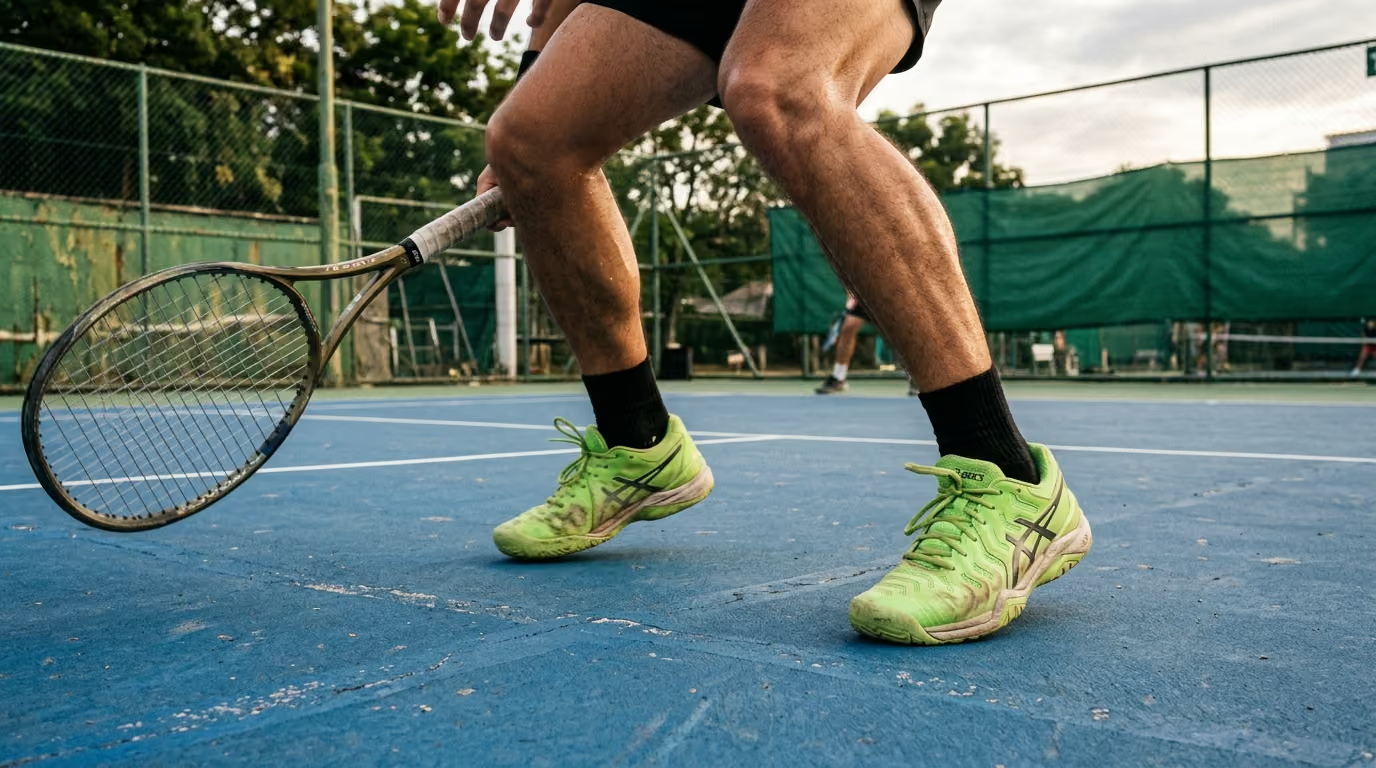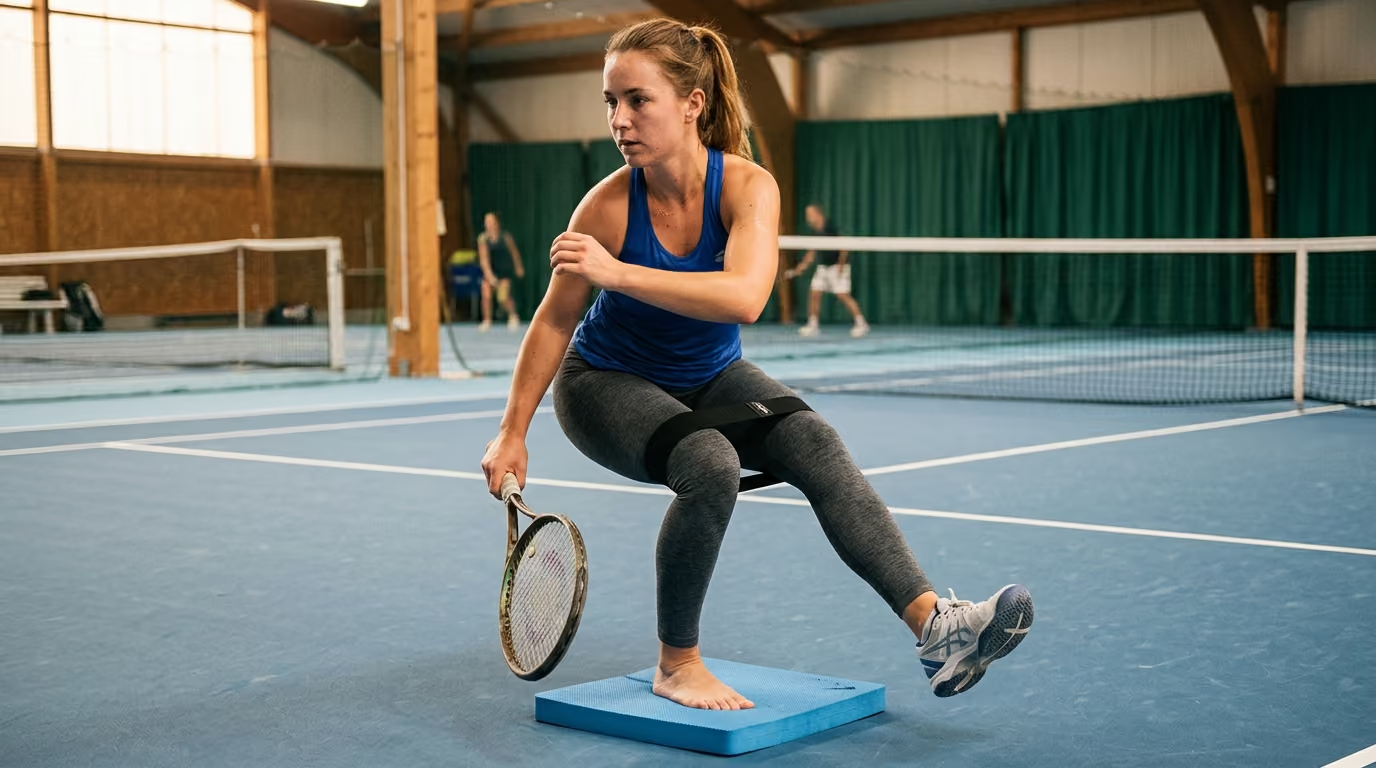

While many believe knee pain is an unavoidable part of racquet sports, resilient knees actually stem from a holistic approach to movement, training, and recovery.




Many players believe knee pain is an unavoidable tax for playing racquet sports, or that it can be solved simply by wearing a tighter brace. In reality, the knee is often caught in the middle of a weak hip and a stiff ankle. Protecting this joint has little to do with isolating the knee itself, and far more to do with how you move, stop, and train.
Preventing knee injuries in racquet sports requires building physical capacity to absorb rapid stopping forces, controlling your movement during dynamic landing, and managing your total weekly playing time. By strengthening the surrounding muscles and improving landing techniques, players can distribute joint stress evenly across the entire lower body. This comprehensive approach allows athletes to maintain court speed and protect their joint health for long-term participation.
Understanding the specific physical demands of court movement is the first step toward athletic longevity. When you learn how to distribute forces through your entire lower limb, you reduce the strain on your joints. This playbook provides a practical framework based on current sports science to help you build resilient knees.
To protect your knees, you must understand the forces that act upon them during a match. The knee joint functions primarily as a hinge, moving through flexion and extension. However, racquet sports force the knee to manage rotational and lateral forces that it is not structurally designed to handle alone.
Knee pain is a signal from your nervous system, but it does not always indicate a structural tear. Pain can arise from the patellofemoral joint, the patellar tendon, or the surrounding soft tissues when they are overloaded. Acute injuries, such as a ligament tear, happen during a sudden event like a slip or a twist.
Overuse injuries develop slowly over time when your playing volume exceeds your body's ability to recover. For instance, a survey of pickleball players published in a South Korean sports medicine journal found that 78 percent of reported injuries were categorized as overuse issues, while only 22 percent resulted from acute trauma. This highlights the importance of focusing on gradual tissue conditioning rather than only preparing for sudden accidents.
Dynamic knee valgus is a term that describes the inward movement of the knee during movement. This pattern often occurs when you land from a jump, lunge for a ball, or change direction quickly. It is not a permanent structural defect, but rather a temporary movement pattern.
The scientific consensus regarding what causes this inward collapse is highly nuanced. Some research indicates a strong association between weak hip muscles and increased knee valgus. However, other systematic reviews show inconsistent relationships across different muscle groups and physical tasks.
This means that simply strengthening your hips is not a guaranteed fix for every movement pattern. You must also train your ankle mobility, foot control, and overall movement coordination to keep your knees aligned. Proactive players can benefit from dedicated injury prevention resources that address the entire lower body.
Many conditioning programs focus heavily on force production, which is your ability to push off, sprint, and jump. However, racquet sports place a massive demand on force absorption, which is your ability to stop, land, and decelerate. When you sprint toward the net and stop suddenly, your muscles must work eccentrically to slow your momentum.
Eccentric muscle action occurs when a muscle lengthens under load, acting like a brake. If your quadriceps and calves lack eccentric strength, the kinetic energy of your movement is transferred directly into your knee joints and tendons.
According to the International Olympic Committee consensus on athlete health, monitoring your training load alongside your physical readiness is essential for preventing these tissues from breaking down. Building force absorption capacity requires specific, progressive strength work rather than just playing more matches.
Most non-contact knee injuries do not happen when a player is running at top speed. Instead, they occur when a player attempts to stop, change direction, or land from a split step without proper control. Improving your mechanics in these specific moments is highly effective for reducing joint stress.
Every time you perform a split step or jump for an overhead shot, you must land. A stiff, straight-legged landing forces your joints to absorb the impact of your body weight. A safe landing is a soft landing, where you bend your ankles, knees, and hips to distribute the force through your muscles.
Research indicates that poor core stability, heel-strike landings, and weak hip abduction contribute to knee stress during impact. A meta-analysis of 18 studies involving over 27,000 participants demonstrated that structured neuromuscular training reduced ligament injury risk by approximately half. The most successful prevention programs combined landing stabilization drills with lower-body strength exercises.
You should train your landing mechanics in a controlled environment before applying them on the court. Start with simple movements and gradually increase the complexity:
A common phrase in court movement is "brake before you cut." When you need to change direction, do not attempt to stop all your momentum on a single, rigid leg planted far outside your body frame. This position places extreme lateral stress on the knee joint.
Instead, use several small adjustment steps to slow down as you approach the ball. Lower your center of mass by bending your knees and hips, which allows your large gluteal and quadricep muscles to absorb the braking force. Keep your feet wider than your hips to establish a stable base of support before you strike the ball.
To protect your joints, you must build strong muscles that can support them. A balanced strength routine should target the muscles above and below the knee, ensuring that your entire leg can handle the demands of court play. Implementing structured strength and conditioning guidelines is a reliable way to build this capacity.
This template is designed for recreational and competitive players alike. It requires minimal equipment and can be adjusted based on your current fitness level. Perform these sessions on non-consecutive days to allow for adequate muscle recovery.
The American College of Sports Medicine recommends performing resistance training at least two days per week. For healthy adults, starting with one to three sets of 8 to 12 repetitions per exercise is an effective way to stimulate muscle growth and strength.
Do not try to increase weight, speed, and volume all at once. Begin by mastering the movement patterns using your body weight. Once you can perform the exercises with excellent control, slowly add resistance or introduce unilateral variations.
While all three racquet sports require acceleration, deceleration, and lateral movement, their specific physical profiles differ significantly. Tailoring your injury prevention strategy to your specific sport will yield the best results on the court.
Tennis is played on the largest court of the three sports, measuring 78 feet long and 36 feet wide for doubles. This larger surface area requires longer, high-speed sprints and wider lateral coverage. Tennis players must frequently slide on clay courts or perform sudden, high-friction stops on hard courts.
Because of these demands, tennis players are exposed to high-velocity decelerations and deep lateral lunges. The split step is repeated hundreds of times per match, requiring excellent calf and Achilles tendon resilience.
Epidemiological reviews of tennis show a wide range of injury rates, often between 0.04 and 3.0 injuries per 1,000 hours of play. While the knee is a common site of discomfort, it is part of a broader network of lower-limb injuries that also affect the ankle and foot. Tennis players should prioritize multi-directional braking drills and eccentric thigh strength to manage these high-velocity forces.
Pickleball is played on a smaller court, measuring 44 feet by 20 feet, which reduces the need for long-distance sprinting. However, the game requires rapid, short-range reactions, lateral shuffling, and sudden forward lunges toward the non-volley zone, commonly known as the kitchen.
Because pickleball is highly popular among older adults, physical preparation must account for natural changes in joint structure and balance. United States emergency department data from 2014 to 2023 showed a substantial increase in pickleball injuries, with many presenting as lower-limb strains, sprains, or fractures. A South Korean study also noted that the knee was the most frequently injured lower-limb area, accounting for over 23 percent of reported issues.
Older recreational players often experience falls when moving backward to retrieve lob shots. To prevent these accidents, pickleball players should focus on backward-stepping drills, reactive balance training, and wearing appropriate court shoes with lateral support. Integrating mobility and movement training can also help players maintain the low athletic positions required at the kitchen line.
Padel is played on an enclosed doubles court measuring 20 meters by 10 meters, surrounded by glass and mesh walls. The presence of these walls changes the movement dynamic, requiring players to track ball rebounds, turn quickly in tight spaces, and decelerate near boundaries.
Although the court is smaller than a tennis court, the physical intensity remains high. A systematic review of padel injuries reported an incidence of three injuries per 1,000 hours of training and eight injuries per 1,000 match hours. While elbow issues are the most common overall, the knee is the most frequently injured lower-limb structure, representing about 12 percent of total injuries.
Common padel knee issues include patellar tendinosis, meniscus irritations, and ligament sprains. The constant rotation, twisting, and low-squatting positions required to return low balls off the glass place a unique rotational demand on the joint. Padel players should focus on rotational trunk control, hip mobility, and short-step deceleration work to handle these confined space transitions.
Many players perform routines that they believe are protective, but are actually ineffective or even counterproductive. Identifying these common errors can help you refine your preparation and save valuable training time.
Many players arrive at the court, perform a few static hamstring stretches, and believe they have prepared their knees for a match. Static stretching, where you hold a muscle in a stretched position for 30 seconds or more, does not prepare your nervous system for explosive movement.
Current sports science demonstrates that static stretching does not prevent acute or overuse injuries when used as a standalone warm-up. Instead, you should perform a dynamic warm-up that increases your core temperature, activates your muscles, and rehearses court movements.
Using structured warm-up programs, like the FIFA 11+ system, has been shown to reduce lower-limb injury rates by up to 30 percent. You can easily adapt these principles for racquet sports by combining light jogging, lateral shuffling, lunging, and low-intensity split steps before you pick up your racquet.
While knee sleeves, straps, and braces can provide compression and a sense of security, they are not a substitute for muscle strength and joint control. A brace cannot actively absorb the impact of a hard stop or prevent your knee from collapsing inward if your hips are fatigued.
Use braces as a temporary aid during recovery under the guidance of a professional. Relying on them permanently can lead to a false sense of security, causing you to play through pain or ignore the underlying weakness that caused the discomfort in the first place.
The most common cause of tendon and joint irritation is a sudden, drastic change in your playing volume. This often happens when a recreational player who usually plays once a week decides to participate in a weekend tournament, playing multiple matches over two days.
Your tendons and cartilage require time to adapt to physical stress. When you suddenly double your playing time, these tissues experience microscopic damage faster than they can repair themselves. To prevent these overuse issues, follow the general guidelines for healthy aging and athletic longevity by pacing your court time and building your physical capacity gradually.
The human body is highly adaptable, but it requires predictable, progressive stress to grow stronger. When you manage your physical workload carefully, you allow your joints to adapt and become more resilient.
Simply counting the number of minutes you spend on the court is not a precise way to monitor your physical stress. A 90-minute doubles match with friendly rallies places far less stress on your knees than a 60-minute singles match with intense lateral drilling.
To track your exposure accurately, consider these factors:
The International Olympic Committee load consensus suggests that weekly increases in training volume and intensity should be kept small to minimize injury risk. A conservative and practical guideline is to limit your weekly volume increases to less than 10 percent.
For example, if you played 120 minutes of racquet sports last week, aim for no more than 132 minutes this week. This gradual progression gives your tendons, muscles, and joints sufficient time to adapt to the physical demands of play.
To bridge the gap between gym-based strength training and on-court play, you should practice sport-specific movement drills. These exercises rehearse the exact footwork patterns you will use during a match, helping your nervous system coordinate safe movement.
This drill rehearses the footwork required when you are pulled wide to the forehand side and must recover quickly to the center of the court.
This drill improves your balance, leg strength, and joint alignment when reaching for low volleys at the non-volley zone line.
This drill trains your ability to track a ball off the glass wall, rotate your body, and brake safely in a confined space.
No self-care playbook can replace the diagnostic expertise of a qualified medical practitioner. Knowing when to manage discomfort on your own and when to seek professional care is vital for your long-term health.
If you experience any of the following symptoms, stop playing immediately and consult a healthcare provider:
If you have a history of major joint issues, such as a previous ACL reconstruction, your recovery and training needs will be different. Return-to-play decisions after reconstructive surgery should be guided by specific clinical strength testing, balance assessments, and clearance from your orthopedic specialist.
For chronic issues like patellofemoral pain or patellar tendinopathy, working with a physical therapist can help you design a customized training program. They can assess your movement, identify specific muscle imbalances, and help you return to sport safely. Additional resources and guidance are available through the Evercourts platform to support your journey toward athletic longevity.
Maintaining your physical capabilities is a continuous process of smart training, proper movement mechanics, and adequate recovery. By applying these principles, you can protect your joints and continue playing the racquet sports you love for years to come.
Follow Evercourts for practical insights on tennis, pickleball and padel performance, movement, recovery and healthy ageing. Stay connected for new articles, research-led guidance and ideas to help you play well and keep playing for years.


Read practical guidance for better movement, smarter preparation and a game that keeps working for you.
explore the Blog