
Six to ten minute recovery sessions can positively impact subsequent athletic performance, and low-intensity conditioning builds an aerobic base without overloading.




Many court players believe that recovery requires choosing between two extreme options. They either collapse onto the couch for days of complete inactivity, or they attempt to run themselves into the ground with another high-intensity workout. Neither extreme serves the long-term needs of a competitive athlete.
Low-intensity conditioning supports recovery by gently stimulating blood flow to tired muscles while avoiding the heavy joint impact of competitive play. This method helps court athletes build a resilient cardiovascular foundation that reduces fatigue during long matches. By keeping your heart rate low and your movements controlled, you can keep training without overloading your recovering tissues.
Passive rest has a vital place in any training program. If you are experiencing systemic illness, severe sleep deprivation, or a joint injury, staying off the court is the correct decision. However, relying solely on complete inactivity after normal match fatigue can lead to stiffness and a slow decline in cardiorespiratory fitness.
Active recovery represents a structured middle ground between hard training and complete rest. It involves performing light, rhythmic physical activity that does not add to your accumulation of fatigue. The primary goal is to finish the session feeling better than when you started.
Active rest is a broader concept that can include gentle mobility, light technical drills, or outdoor walking. Unlike a standard practice session, active rest does not aim to challenge your physical limits. Instead, it maintains movement quality and keeps your joints moving through their natural ranges of motion.
The effectiveness of these methods depends entirely on your current physical condition. An activity that feels restorative for a highly conditioned player can easily become an exhausting workout for a beginner. You must define "easy" by your personal fitness level, rather than using a generic training template. Finding this balance is essential for maintaining long-term athletic longevity on the court.
The scientific literature on active recovery reveals a nuanced picture. Many players believe that light exercise is a guaranteed cure for muscle soreness, but the actual evidence is mixed. A systematic review published in the journal of physical education and sport analyzed various active recovery interventions. The researchers found that short recovery sessions of six to ten minutes showed positive effects on subsequent performance, but the ideal intensity remained unclear.
Another broad review of recovery strategies for endurance athletes found that no single method produced consistent benefits across all performance metrics. However, active recovery did succeed in lowering blood lactate levels faster than passive rest.
It is important to understand that clearing lactate from your blood does not mean your muscles have fully recovered. Lactate is naturally cleared by the body within an hour of finishing exercise anyway. Fast lactate clearance does not instantly rebuild damaged muscle fibers, restore depleted glycogen energy stores, or heal strained tendons.
However, consistent low-intensity training does produce powerful long-term adaptations. A systematic review and meta-analysis of low-intensity endurance training demonstrated moderate to large improvements in maximal aerobic capacity. It also showed positive changes in the first ventilatory threshold, which is the point where breathing starts to become heavier. This means that easy conditioning sessions are not just empty training volume. They gradually build the capillary networks and cellular energy systems that allow you to recover faster between intense rallies.
To keep your recovery sessions truly restorative, you must learn to measure your training intensity accurately. Relying on heart rate monitors alone can sometimes be misleading. Your heart rate can be artificially elevated by high temperatures, dehydration, caffeine, poor sleep, or general life stress.
Combining heart rate data with the Rating of Perceived Exertion, or RPE, provides a more reliable picture of your training stress. Using a simple zero to ten scale is highly effective for court athletes:
The talk test is another practical tool for managing your intensity. If you can easily speak in full sentences without needing to pause for breath, you are working at an appropriate recovery pace. If you can only speak in short phrases, your intensity has crossed into a moderate or hard training zone.
Monitoring both external and internal training loads will help you prevent overtraining. External load is what you actually did during the session, such as walking for thirty minutes. Internal load is how your body responded to that work, which is calculated by multiplying your session duration by your RPE.
For example, a thirty-minute walk at an RPE of 2 yields an internal load score of 60 arbitrary units. If you perform the same thirty-minute walk while fatigued, your RPE might rise to 4, which doubles your internal load to 120 units. This simple calculation allows you to adjust your training based on how your body is actually feeling. This systematic approach is a core element of scientific recovery protocols for court athletes.
Selecting the appropriate movement style is crucial for protecting your joints while promoting recovery. Each modality offers distinct physical advantages and requires specific boundaries to remain restorative.
Walking is the most accessible and low-stress option available to court players. It requires no specialized equipment and allows you to control your pace instantly. Walking on flat, even grass or a smooth track minimizes joint impact.
To keep walking restorative, avoid steep hills or carrying heavy backpacks. A flat fifteen to twenty-five minute walk at a very easy pace is ideal for a highly fatigued player. Fit athletes can extend this duration to forty-five minutes on their rest days to support their cardiovascular base.
Cycling is an excellent low-impact option because it removes the stress of repeated ground contact. It uses concentric muscle actions, which means your muscles are shortening as they work. This type of contraction creates far less muscle soreness than the eccentric loading of running and jumping.
When using a stationary or road bike, select a low resistance setting. Keep your pedaling speed high, aiming for eighty to ninety revolutions per minute. Grinding against heavy resistance will fatigue your quadriceps and put unnecessary pressure on your kneecaps.
The buoyancy of water relieves pressure on your spine, hips, knees, and ankles. This makes pool sessions highly therapeutic after long matches on hard courts.
However, swimming is only restorative if you possess efficient technique. If you struggle to swim laps or find yourself gasping for breath, the high energy cost will ruin the recovery benefit. If your swimming technique is limited, choose deep-water walking or easy aqua jogging with a flotation belt instead.
Moving on the court at a slow pace helps maintain your sport-specific coordination without the joint stress of competition. This work should focus on smooth, flowing movement patterns rather than ball contact or competitive play.
Focus on slow shadow swings, relaxed footwork patterns, and gentle lateral shuffling. Never include explosive lunges, sudden stops, or reactive chasing drills. Keep your movements fluid, and make sure you finish the session feeling loose rather than tired. Maintaining this level of control ensures you can practice efficient court movement and mobility without overloading your joints.
To integrate low-intensity conditioning into your weekly routine, you should utilize three distinct types of sessions. Each session serves a specific purpose in your training calendar.
This session is designed for the day after a grueling match or a heavy training block.
This session maintains your physical activity levels on non-match days while protecting your joints.
This session actively develops your cardiovascular endurance without the orthopedic strain of running on hard courts.
Your personal fitness level must dictate how you implement these sessions. Beginners or players returning from a long break should start with short fifteen-minute walks. You should only progress your session duration by five to ten percent per week.
Moderately trained recreational players can comfortably complete thirty minutes of easy cycling or swimming. Highly trained competitive athletes can use these low-intensity sessions to balance out their high weekly match mileage. No matter your level, these conditioning strategies should be coordinated with structured strength and conditioning plans to ensure balanced athletic development.
While tennis, pickleball, and padel share many physical similarities, each sport places unique mechanical demands on your body. Your recovery strategy should address these specific patterns of wear and tear.
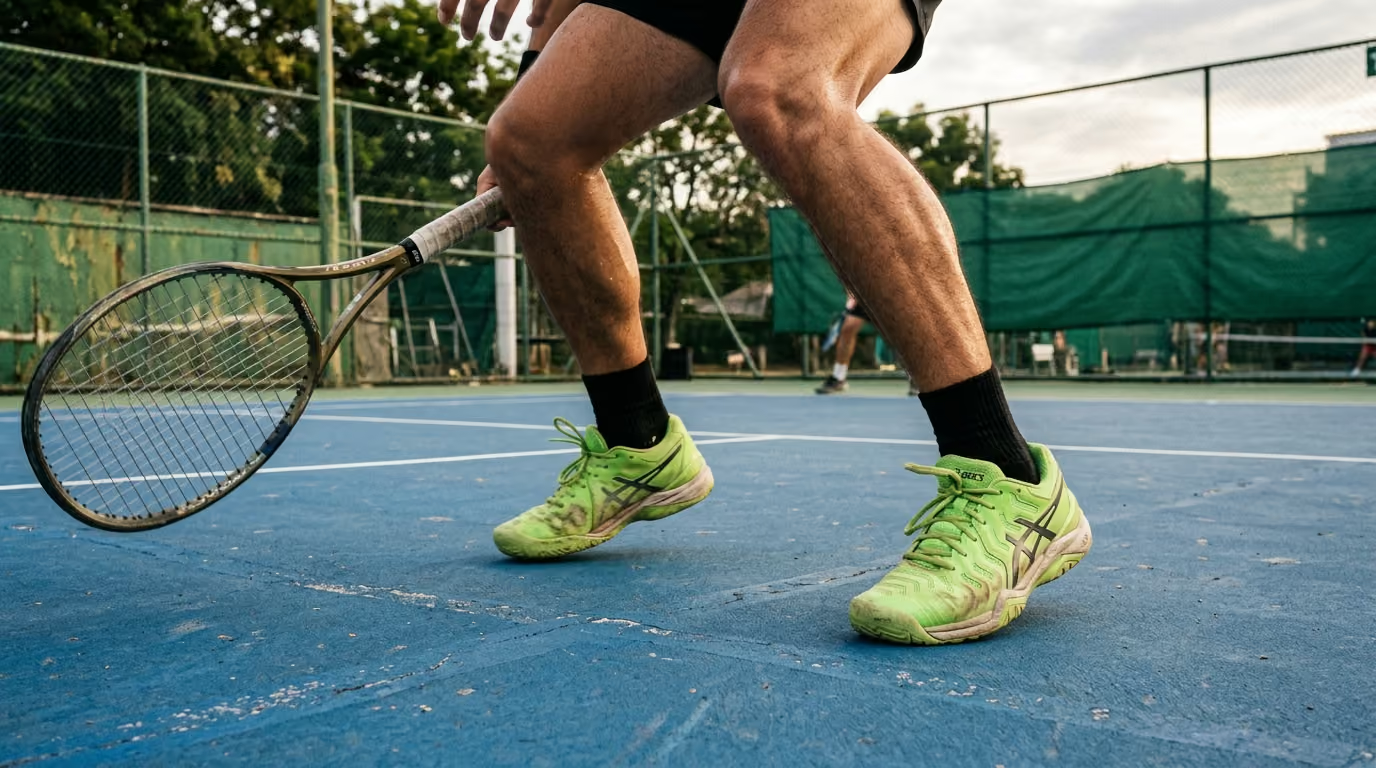
Tennis involves covering a large court area, which requires repetitive sprinting, sliding, and deep lunging. This movement creates significant eccentric load on your quadriceps, calves, and patellar tendons. The hard court surface also sends high-impact shockwaves through your ankles, knees, and lower back.
Because tennis players experience so much ground impact, running is rarely a suitable recovery modality. If you are sore from a long tennis match, choose easy cycling or swimming. These non-impact activities stimulate blood flow to your lower body without subjecting your joints to further pounding.
Pickleball is played on a much smaller court, which reduces your total running distance. However, the game requires rapid, low-slung lateral movements and sudden, short steps near the kitchen line. This constant bending puts high repetitive stress on your knees, lower back, and Achilles tendons.
To recover from pickleball, focus on activities that allow your knees and back to extend fully. A brisk walk on a flat, natural grass surface is highly beneficial. Walking helps decompress your spine and gently stretches your hip flexors after hours of staying in a low athletic stance.
Padel is played in an enclosed glass court, which leads to highly explosive, multi-directional rallies. The sport requires continuous rotation, overhead reaching, and lunging off the rebound walls. This movement pattern creates unique rotational strain on your torso, shoulders, and lower back.
If you are recovering from padel, choose modalities that involve symmetrical, rhythmic movements. Easy swimming is highly effective because the water supports your weight while you gently rotate your shoulders and torso. If a pool is not available, using an elliptical machine with moving arm handles can help restore fluid movement to your upper and lower body.
Many dedicated athletes struggle to execute low-intensity conditioning correctly. Recognizing these common errors will save you from accidental overtraining and injury.
The most common mistake is allowing a recovery session to slowly turn into a hard workout. This often happens when a player feels good during the warm-up and decides to push their pace. They might add steep hills to a walk, increase the resistance on a stationary bike, or sprint the last few laps of a swim.
When you increase your intensity, you change the physiological nature of the session. What was supposed to be a restorative activity becomes another source of training stress. If your session leaves you feeling tired, sore, or mentally drained, you have failed to execute a recovery session. You must have the discipline to keep your easy days truly easy.
Another frequent error is assuming that any low-intensity exercise will support recovery. You must consider the mechanical stress of the movement, not just your heart rate.
For example, a low-intensity jog might keep your heart rate in a recovery zone, but the physical impact of running on concrete still loads your sore joints. If your knees and ankles are aching from a hard match, a recovery run will likely worsen your symptoms. Always choose non-impact modalities like cycling or swimming when your joints require a break from gravity.
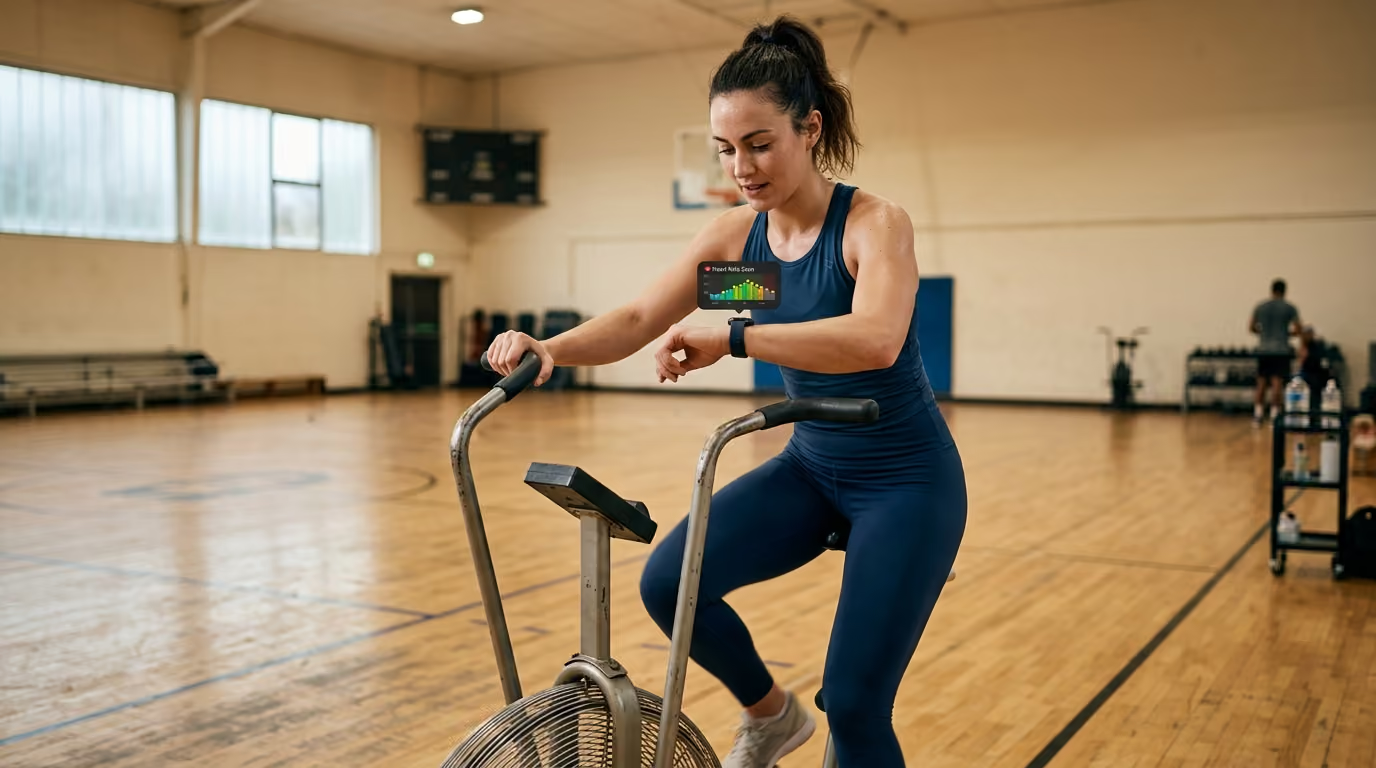
Many modern athletes are obsessed with tracking their physiological data. They monitor their heart rate zones, sleep scores, and recovery percentages constantly. While this data can be useful, it should never override your personal physical feedback.
If your fitness watch claims you are fully recovered, but your legs feel heavy and your joints are sore, you should trust your body. Do not force yourself through a base-building session just because an app tells you to. Your subjective feelings of fatigue, muscle soreness, and mental readiness are highly accurate indicators of your recovery status.
Using low-intensity conditioning instead of sitting completely still produces several physiological benefits. These changes support both your short-term recovery and your long-term athletic longevity.
Gentle, rhythmic muscle contractions act as a natural pump for your circulatory system. This movement increases blood flow to your tired muscles without demanding high levels of energy. The increased circulation delivers fresh oxygen and essential nutrients to damaged muscle fibers, which helps speed up the natural tissue repair process.
Light movement also stimulates your lymphatic system. Unlike your cardiovascular system, your lymphatic system does not have a central pump like the heart. It relies entirely on physical muscle contraction to move lymphatic fluid through your body. Gentle walking or cycling helps clear metabolic waste products from your tissues, which can reduce post-match stiffness.
Additionally, low-intensity exercise has a calming effect on your central nervous system. High-intensity competition keeps your body in a sympathetic, "fight or flight" state. Engaging in a relaxed, non-competitive walk or easy bike ride helps shift your body into a parasympathetic state. This transition lowers your stress hormones, reduces muscle tension, and supports deep, restorative sleep.
While low-intensity conditioning is an excellent tool for managing normal athletic fatigue, it is not a cure for physical injuries. You must be able to recognize when your physical symptoms require an evaluation from a qualified healthcare provider.
If you experience sharp, localized pain in a specific joint or muscle, do not attempt to work through it. Normal post-match soreness is typically dull, symmetrical, and spread across major muscle groups. Sharp pain that occurs on only one side of your body is a clear sign of potential tissue damage.
Other warning signs include visible joint swelling, a reduced range of motion, or pain that forces you to alter your natural walking stride. Attempting to perform active recovery with an altered gait will only create secondary movement problems and worsen your condition.
You should also watch for systemic warning signs. If you experience chest pain, dizziness, an irregular heartbeat, or extreme shortness of breath during light exercise, stop immediately. These symptoms require prompt medical evaluation. Persistent, unexplained performance decline and chronic fatigue are also signs that you may need professional guidance to restructure your training and recovery.
By incorporating structured, low-intensity movement into your weekly routine, you can support your body's natural healing processes and build a strong aerobic foundation for your favorite court sports.
Follow Evercourts for practical insights on tennis, pickleball and padel performance, movement, recovery and healthy ageing. Stay connected for new articles, research-led guidance and ideas to help you play well and keep playing for years.


Read practical guidance for better movement, smarter preparation and a game that keeps working for you.
explore the Blog