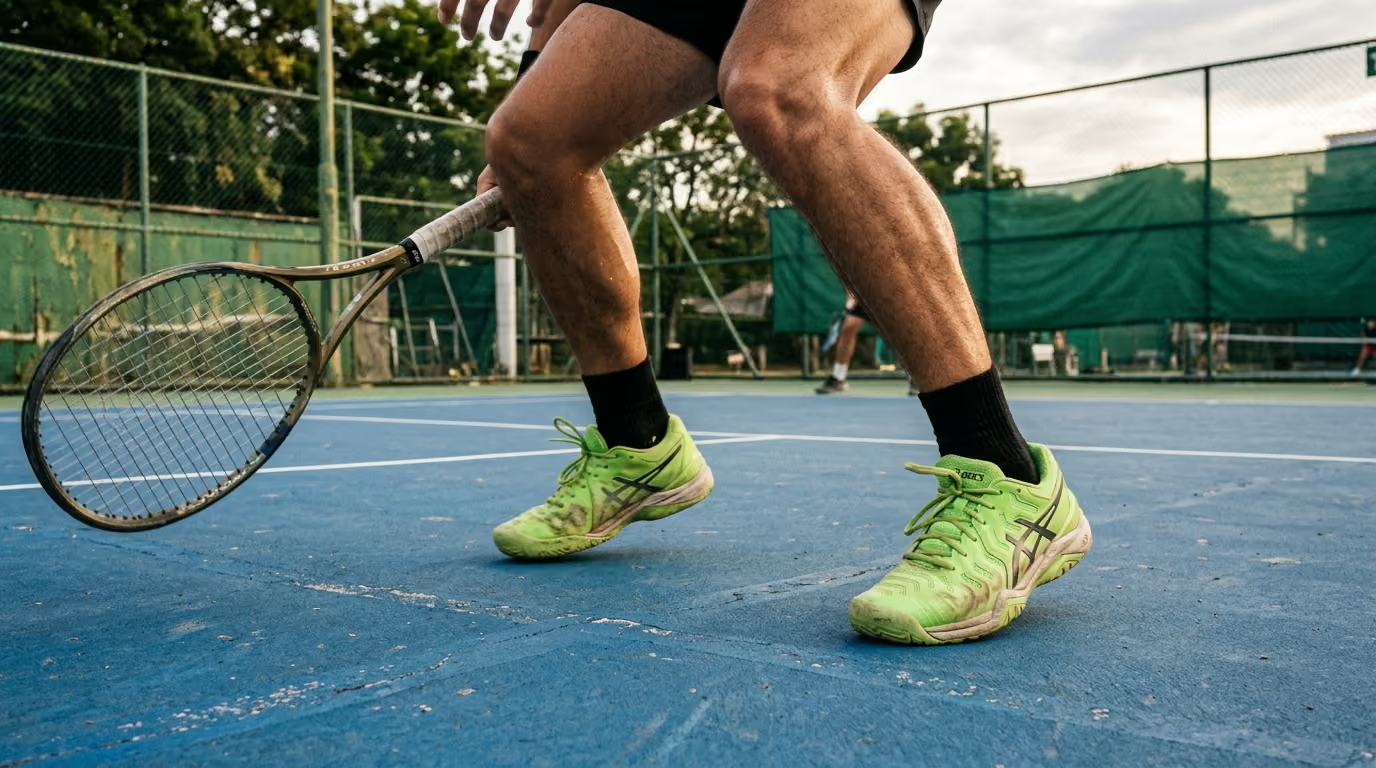
Masters racquet sports recovery involves a systematic process of managing fatigue and tissue adaptation to sustain high-intensity training while aging.




Masters recovery in racquet sports is not about doing less work or accepting a slow decline on the court. It is a systematic process of managing fatigue and tissue adaptation so that high-intensity training remains repeatable over time. It is not a collection of passive treatments like ice baths and massage guns. It is a deliberate plan that addresses the changing economics of the aging body.
To recover effectively while aging, masters players must transition from random court play to a structured training program that prioritizes progressive resistance training, tendon health, and power preservation. This approach moves away from complete rest, focusing instead on active recovery and tissue loading to keep players on the court. By protecting slow-recovering connective tissues and training fast-twitch muscle fibers, mature athletes can play at a high level for years to come.
We must distinguish among different types of aging to build an effective program. Chronological age represents the simple number of years since birth. Training age refers to the years of structured strength, conditioning, and sports practice you have completed. Functional or biological age represents your actual capacity for strength, balance, movement, and recovery. Two players of the exact same chronological age often have vastly different recovery needs due to their training histories, previous injuries, sleep quality, and baseline tendon capacity.
A comprehensive approach to recovery must look at the athlete as a whole. According to research on masters athletes published in the Journal of Science and Medicine in Sport, recovery needs depend heavily on baseline function, training frequency, and the presence of underlying health conditions. We cannot apply a generic template to every older player. Instead, we must look at the specific physical qualities that change as we age and build targeted habits to support them. You can find more structured guides on this topic by reading our healthy aging and athletic longevity resources.
The physiological changes associated with aging alter how the body responds to the stress of a hard match. In particular, we experience a decline in the size and number of type II muscle fibers, which are responsible for fast, explosive movements. This reduction in fast-twitch capacity means that our power reserve decreases over time. A mature player might still possess excellent cardiovascular endurance, but they may find it harder to brake suddenly or change direction explosively. This loss of power often begins before any visible loss of muscle mass occurs, as subtle changes in motor control affect how quickly our muscles can produce force.
At the same time, the recovery rate of our soft tissues begins to slow down. Connective tissues like tendons, ligaments, and joint cartilage receive less blood flow than muscle tissue, which makes their adaptation process much slower. While a young player might bounce back from a grueling three-hour match in a single day, an older player may experience lingering stiffness for several days. This is not a sign of permanent damage, but rather a reflection of slower cellular turnover and protein synthesis in our structural tissues.
To manage this shift, we must look at recovery as a collection of distinct physiological systems. We have neuromuscular recovery, which restores motor control and reaction speed. We have metabolic recovery, which replenishes energy stores and fluid balance. We also have tendon, joint, and bone recovery, which require specific mechanical loading to adapt and stay strong. If we only focus on cardiovascular fitness, we run the risk of overloading our structural frame.
Furthermore, complete rest is rarely the answer when we experience stiffness or minor strains. The research on masters athletes indicates that older adults decondition much faster than younger players during periods of total inactivity. If you stop moving entirely to protect a sore knee, you will quickly lose muscle mass, tendon stiffness, and joint mobility. The goal is to utilize relative rest, which involves modifying our movements to keep loading the body safely while avoiding highly provocative activities.
Progressive resistance training is the single most important recovery strategy for a mature racquet athlete. A stronger muscle can absorb more kinetic energy during hard landings and lateral shuffles, which shields your joints from excessive impact. According to a position statement from the National Strength and Conditioning Association on resistance training for older adults, structured lifting is highly effective for maintaining physical function and health. The organization recommends that healthy older adults perform resistance exercises two to three days per week, targeting major muscle groups with progressive loads.
To support court performance, our strength training must target the exact muscle groups used in racquet sports. We need to focus on single-leg strength, hip stability, calf power, and rotational control. Excellent exercises to build these areas include split squats, Romanian deadlifts, heel raises, and cable rotations. You should aim for two to four sets of eight to twenty repetitions per exercise, focusing on perfect technique and a controlled tempo. For deep insights into structuring these workouts, explore our strength and conditioning resources.
A common mistake is using weights that are too light to stimulate real physical change. While high-repetition training with light weights has some benefits, it does not build the mechanical tension needed to trigger muscle growth or increase tendon stiffness. You must gradually increase the weight or the difficulty of the exercises as your body adapts. Progressive loading sends a clear signal to your nervous system and muscles that they need to remain strong and resilient.
Your resistance program should also include targeted exercises for the upper body and core to support your swinging mechanics. Rotator cuff strengthening, scapular pulls, and trunk stability exercises will help distribute the forces of serving and hitting. If your trunk and hips are strong, your shoulder does not have to work as hard to generate racket head speed. This balanced distribution of force reduces local fatigue and accelerates your post-match recovery.
Nutrition plays a vital role in supporting muscle protein synthesis and tissue repair after hard matches. There is, however, some debate about the exact impact of protein supplements for older athletes. A major meta-analysis published in the British Journal of Sports Medicine evaluated forty-nine studies on protein supplementation during resistance training. The researchers found that adding protein significantly increased muscle strength, fat-free mass, and muscle fiber size, with benefits peaking at a daily intake of around 1.62 grams of protein per kilogram of body weight.
Conversely, some scientific reviews suggest that protein supplements may not offer massive extra benefits if you already consume a balanced diet. A systematic review of systematic reviews in the journal Advances in Nutrition reported that while protein plus resistance training increased lean body mass, the evidence showing an extra benefit for pure muscle strength was of moderate to low certainty. Another earlier review published in the American Journal of Clinical Nutrition concluded that protein or amino acid supplementation did not consistently improve strength or muscle size in older adults when compared to resistance training alone.
Given this mixed evidence, masters athletes should focus on a practical nutrition strategy rather than relying on supplements alone. First, aim to meet your daily protein targets by consuming high-quality, whole-food sources like fish, poultry, eggs, tofu, and legumes. A useful general recommendation for active older adults is to target 1.2 to 1.5 grams of protein per kilogram of body weight each day. Distributing this protein evenly across three or four meals throughout the day appears to be more effective for muscle preservation than eating one large protein-heavy meal at night.
We must also look at bone and joint health when designing our nutritional habits. Consuming 1,000 to 1,200 milligrams of calcium daily is highly beneficial for maintaining bone density as we age. Vitamin D is another common focus, but scientific trials have shown that high-dose vitamin D supplements do not automatically improve muscle strength or mobility in athletes who are not deficient. Correcting a true clinical deficiency is important, but taking excessive amounts of vitamin D will not speed up your recovery or make your bones stronger.
Power is the ability to apply force very quickly, and it is the physical quality that declines fastest as we age. Without targeted power training, a mature player will gradually lose their quickness off the mark and their ability to jump or change direction. However, performing highly intense plyometric exercises without preparation is a major cause of Achilles and knee injuries. We need a progressive system that builds tissue capacity before we introduce explosive movements.
Our coaching team uses a structured four-stage model to help players rebuild their power capacity safely. In our experience, skipping steps in this progression is where most training injuries occur. By spending several weeks in each phase, your tissues will have ample time to adapt to the changing physical demands.
This stage builds the foundation for rapid movement by focusing on muscle strength and deceleration. You will perform isometric calf raises, static split-squat holds, and single-leg balance work. The goal is to teach your muscles and tendons to absorb force under control before you try to move fast. Focus on low-speed lateral movements and learning how to land quietly from a small step.
I remember finishing a tough two hour padel match on a cold Tuesday night and waking up the next morning feeling like my lower back was locked in concrete. For a long time, I just accepted this as the price of playing hard in my forties. But once I started spending just ten minutes on targeted hip mobility before heading to the club, the stiffness almost completely vanished. It taught me that we do not have to accept pain as a default state of aging. You can read more about these movement routines in our mobility and movement resources.
Once you have established basic control, you can begin to train your nervous system to move quickly. In this phase, you will perform your regular resistance exercises with a fast concentric phase. For example, when performing a squat, you will push upward as fast as possible with a submaximal weight, then lower the weight slowly under control. You can also introduce light medicine ball chest passes, rotational throws, and rapid step-ups.
This stage introduces light elastic loading to build tendon stiffness. Exercises include skipping rope, low-amplitude pogo hops, and light lateral bounds. The focus is on minimizing your contact time with the ground, teaching your tendons to store and release energy like a spring. Keep the volume of these exercises very low at first, allowing at least two days of rest between sessions.
The final stage prepares you for the chaotic demands of a real match. You will perform multi-directional court drills, rapid changes of direction, and reactive movements in response to visual cues. This stage should mimic the split-step patterns and acceleration bursts you use during play. Keep these sessions short and highly focused, performing them when you are completely fresh.
The masters-athlete literature suggests that older players can benefit greatly from plyometric work, but the volume must be carefully managed. If you have moderate-to-severe joint arthritis or osteoporosis, you should avoid high-impact jumping exercises unless a qualified clinician has cleared you. For most players, a small amount of high-quality power work is much better than performing high repetitions of fatiguing jumps.
Tendons do not simply wear out because of chronological age; they adapt to the demands we place on them. Research published in the journal Ageing Research Reviews indicates that aging is associated with a decrease in tendon stiffness and modulus, but resistance training can reverse these changes. A systematic review in the Scandinavian Journal of Medicine and Science in Sports found strong evidence that high-intensity isometric training increases Achilles tendon stiffness, while heavy isotonic loading improves both Achilles and patellar tendon properties.
To apply this science, we must understand the floor-to-ceiling model of tissue capacity, which is outlined in the United States Olympic and Paralympic Committee tendinopathy guidelines. Your floor is the current load your tendon can tolerate without swelling or pain. Your ceiling is the maximum physical demand required to play a highly competitive racquet match. If your tendon capacity floor is low, a long match will push you far past your limit, resulting in tendon pain and micro-tears.
To close this gap, you must systematically raise your floor with progressive resistance exercises. If you have Achilles tendon discomfort, you might start with heavy, slow calf raises on a flat floor. As your capacity increases, you can transition to raises off the edge of a step, then progress to light hopping, and finally return to full court movement. If you try to jump straight from walking to competitive play, your tendons will not be prepared for the sudden impact. For detailed injury prevention advice, look through our injury prevention resources.
Tendon injuries in racquet sports are almost always caused by sudden spikes in training volume or intensity. Common load spikes include returning to play after a winter break, switching from soft clay to hard courts, or playing three matches in a single weekend. Your cardiovascular system might feel completely fresh and ready to play, but your tendons require weeks of gradual exposure to handle the mechanical stress of these changes.
Monitoring your tendon response is highly straightforward if you use a simple pain-monitoring model. Pay close attention to how your joints and tendons feel during activity, later that same evening, and the following morning. A small amount of mild discomfort during movement is often acceptable, but a significant increase in morning stiffness or pain the next day is a clear sign that you exceeded your tissue limit. If you experience persistent morning stiffness, you need to reduce your court volume or intensity for a few days to let the tissue adapt.
Some players turn to collagen supplements to support their tendon health, but the scientific evidence remains mixed. A systematic review in the journal Amino Acids reported some positive effects of long-term collagen peptide intake on tendon morphology and recovery, though the overall certainty of the evidence was low to moderate. Another review in the journal Physical Therapy in Sport found that collagen combined with exercise helped reduce pain and increase tendon thickness, but had very little extra effect on tendon stiffness when compared to exercise alone. Supplements cannot replace the physical stimulus of heavy loading; mechanical stress is what actually triggers tendon remodeling.
To keep playing hard while aging well, you must avoid the common trap of treating every training session as an independent event. We use a simple coaching rule called the three hard things rule to manage weekly physical stress. This rule states that you should never place more than two or three major physical stressors in the same 24 to 48-hour window. A major stressor could be a competitive tournament match, a heavy lower-body lifting session, a high-intensity plyometric workout, or even a night of very poor sleep.
If you stack too many stressors together, your body will not have the physical resources to recover and adapt. For example, if you play a hard three-set match on Tuesday night, lifting heavy weights on Wednesday morning is highly counterproductive. Your muscles and nervous system will still be fatigued, which increases your risk of joint overload. Instead, space your intense sessions out, allowing at least one day of lower-intensity movement between your hardest efforts.
A highly effective weekly schedule for a committed, healthy masters player should balance court time, strength work, and dedicated recovery. This layout ensures you can train hard without overloading your tissues:
To use this schedule effectively, you should monitor your personal readiness trends rather than just following the calendar blindly. Simple markers like morning joint stiffness, sleep quality, and your perceived energy levels will tell you when to push and when to back off. If you wake up with significant calf stiffness two days in a row, it is a clear sign to replace your next hard court session with an easy mobility workout. Managing these small fluctuations is how you prevent minor aches from turning into long-term injuries.
During busy periods when work or family commitments limit your training time, focus on maintaining your physical foundation with a minimum effective dose of exercise. You do not need to spend hours in the gym to keep your strength. One or two short resistance sessions per week, combined with ten minutes of daily mobility work, is enough to preserve your physical qualities. This consistent baseline of movement will protect your muscles and tendons from rapid deconditioning, making it much safer to step back onto the court when your schedule clears. You can find more advice on planning your training weeks by reading our recovery science resources.
While all racquet sports share some physical demands, each sport places unique stresses on the human body. To optimize your recovery, you must tailor your training and recovery strategies to the specific movement patterns of your chosen sport.
Tennis is characterized by long, grinding rallies, wide lateral movements, and a high volume of overhead serves. The large court size requires significant acceleration and high eccentric braking forces as you slide or plant your foot to strike the ball. The repetitive serve motion places immense stress on the shoulder joint, rotator cuff, and lower back.
Masters tennis players should focus their recovery on maintaining hip internal rotation and shoulder mobility. If your hips are stiff, your lower back will be forced to rotate excessively during groundstrokes, which often leads to lumbar stiffness. Tennis players also need to focus on rotator cuff endurance and thoracic spine mobility to protect the shoulder from the repetitive impact of serving. You can read more about these specific demands in our collection of tennis articles.
Pickleball is played on a much smaller court, which reduces the need for long-distance sprinting but increases the demand for rapid, short-step reactions. The game requires players to spend long periods in a deep, bent-knee posture near the non-volley zone line. This constant low stance places high mechanical loads on the patellar tendons, lower back, and Achilles complex.
Masters pickleball players should focus their recovery on knee extensor strength and ankle mobility. The rapid lateral shuffling and deep lunges require excellent hip abduction strength to keep the knees from collapsing inward. Because the paddle is short and light, players often use excessive wrist action, which can lead to elbow tendon irritation. To prevent this, pickleball athletes should prioritize grip and forearm strengthening alongside their lower-body work. Explore our pickleball articles for more targeted guides.
Padel is played inside a glass enclosure, creating a highly dynamic game with constant changes of direction, rebounds, and turning movements. The sport features a very high volume of overhead overheads, viboras, and bandejas, which are often struck while moving backward. This unique overhead volume places a heavy load on the shoulder complex and the calves during explosive jumps.
Masters padel players need to focus heavily on rotational hip mobility and calf complex strength. The constant turning to chase balls off the glass can strain the lower back if the hips lack rotational range of motion. Padel players should also incorporate plenty of calf and soleus strengthening to prepare their ankles for the quick, springy footwork required on artificial turf. For more specific insights, take a look at our padel articles.
The court surface also has a major impact on how your joints recover after a session. Clay courts allow for controlled sliding, which dampens the joint impact of sudden stops. Hard courts, on the other hand, transmit all the ground reaction force directly into your knees, hips, and lower back. If you play primarily on hard courts, you will need to allow more recovery time between your high-intensity sessions and pay extra attention to single-leg strength training.
The most common mistake among mature court athletes is relying on cardiovascular fitness as a shield against injury. It is highly common to see a player with outstanding aerobic endurance from cycling or running experience severe tendon injuries on the court. While your heart and lungs might be highly fit, your tendons and joints require specific, heavy loading to handle the high-impact forces of racquet sports. You cannot jog your way to healthy tendons; you must perform targeted strength and power exercises.
Another frequent error is practicing complete, passive rest when dealing with minor joint aches or stiffness. If you sit on the couch for three weeks waiting for a sore knee to heal, the surrounding muscles will quickly become weaker and less supportive. This muscle loss makes your joints even more vulnerable when you eventually return to the court. Unless you have a fracture or an acute, swollen injury, you should focus on active recovery and modified, pain-free movements to keep your tissues healthy.
Many players also waste valuable time on passive recovery tools while ignoring the foundations of physical longevity. Things like compression garments, massage guns, and expensive supplements can feel very pleasant, but they do not build tissue capacity or preserve muscle mass. If you are sleeping less than seven hours a night and skipping your strength training, no amount of passive therapy will keep you on the court. Focus your energy on consistent lifting, high-quality sleep, and progressive court work.
Finally, do not make the mistake of using muscle soreness as your primary measure of a good workout. Many players think they have not trained hard enough unless they are completely stiff the next day. Muscle soreness is simply a response to unfamiliar movements and is not a reliable marker of fitness progress or tissue adaptation. Your goal should be to finish your workouts feeling strong and capable, with minimal lingering stiffness that interferes with your next court session.
While minor stiffness and mild muscle soreness are normal parts of athletic life, we must be able to identify the warning signs of more serious issues. You should consult a qualified healthcare provider if you experience any of the following symptoms:
If you have underlying health conditions like severe osteoarthritis, osteoporosis, or cardiovascular issues, you should seek professional guidance before starting a new power or plyometric program. A physical therapist can help you modify your exercises to protect your joints while still providing enough physical stimulus to keep you strong.
We must also be highly cautious with any signs of systemic medical instability. Symptoms like chest pain, severe shortness of breath, sudden dizziness, or unexplained falls require immediate medical evaluation. Do not try to push through these symptoms under the assumption that they are just part of getting older. Working alongside a qualified health professional ensures you can continue to enjoy your favorite racquet sports safely for many years to come. If you have any questions about our editorial standards, you can read more about Evercourts or contact us directly.
Yes, in most cases, you can continue to play racquet sports with mild-to-moderate knee osteoarthritis. Research indicates that targeted quadriceps and hip-strengthening exercises are highly effective for reducing knee pain and improving joint function. The key is to manage your court volume, choose softer playing surfaces like clay or indoor wood when possible, and avoid playing through severe joint swelling or pain.
Normal muscle soreness usually peaks twenty-four to forty-eight hours after a hard workout and feels like a dull, diffuse ache across the entire muscle belly. Achilles tendon overload typically presents as a sharp, localized pain or stiffness right at the back of the heel, which is especially noticeable when taking your first steps in the morning. If this morning stiffness persists or gets worse over several days, it is a clear sign that you need to reduce your training load.
While some research suggests that collagen supplements can help reduce joint pain and support tendon thickness, they are not a magic cure. Supplements can only provide the raw building blocks for tissue repair; your body still requires physical movement and heavy loading to stimulate the actual rebuilding process. Focus first on progressive resistance training and a balanced, protein-rich diet before adding supplements to your routine.
While gentle stretching can temporarily make your muscles feel more relaxed, it does not actually increase long-term joint stability or prevent post-match stiffness. Progressive strength training is much more effective because it builds stronger, more resilient muscles that can absorb impact forces easily. If you enjoy stretching, keep it light and use it for relaxation, but make sure resistance training remains the foundation of your recovery program.
Follow Evercourts for practical insights on tennis, pickleball and padel performance, movement, recovery and healthy ageing. Stay connected for new articles, research-led guidance and ideas to help you play well and keep playing for years.


Read practical guidance for better movement, smarter preparation and a game that keeps working for you.
explore the Blog