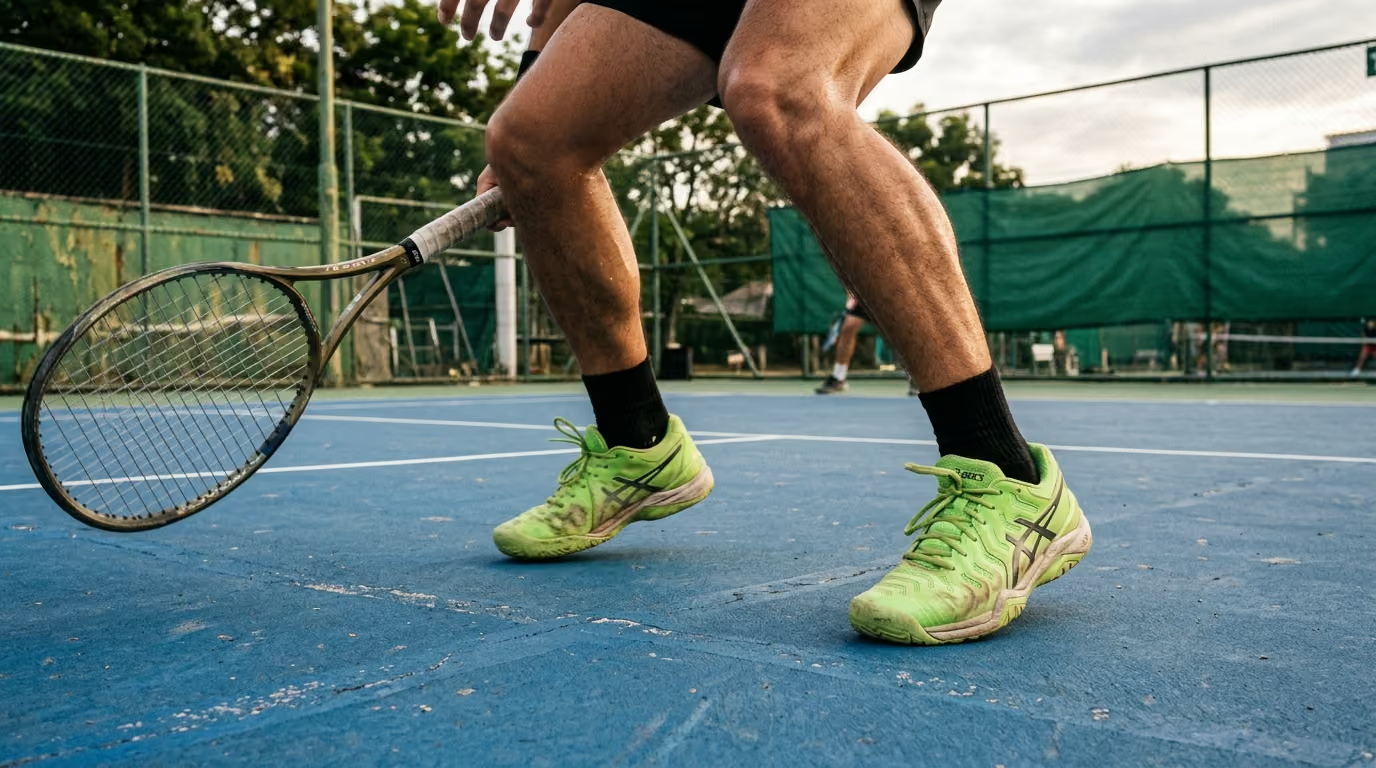

Mental fatigue significantly impacts decision-making in court sports, even when physical strength remains, requiring specific recovery strategies to maintain performance.




Why do your tennis, pickleball, or padel choices fall apart late in a match, even though your legs feel perfectly strong? Many players assume that a sudden string of unforced errors or a missed tactical opportunity is the result of physical exhaustion. However, you may actually be experiencing a drop in cognitive freshness that occurs long before your muscles give out.
Mental fatigue is a state of reduced cognitive freshness where your attention, reaction timing, and decision quality decline before your muscles actually tire. Restoring this cognitive freshness requires a structured combination of sleep extension, planned cognitive unloading, and strategic visual resets. Recognizing this state allows you to adjust your training, protect your decision-making, and maintain your performance for years to come.
One of the most challenging aspects of court sports is that your brain can tire while your body remains highly capable. You may still possess the physical strength to sprint to the kitchen line or hit a high-velocity serve. Your muscles can produce near-maximal force even when your mind is exhausted. This mismatch creates a performance paradox where you feel physically prepared, but your performance on the court begins to decline.
Research shows that maximal force production is rarely reduced by mental fatigue alone. A major systematic review confirmed that while raw muscular strength remains intact, motor skills, endurance, and decision-making suffer significantly under cognitive load. Another comprehensive review concluded that physiological markers like heart rate and lactate levels remain stable during mentally fatiguing tasks. The primary impact of this fatigue occurs in the cognitive, tactical, and perceptual dimensions of play.
This means the early warning signs of fatigue will not appear as heavy legs or burning muscles. Instead, you may notice that you recognize an opponent's shot pattern a fraction of a second later than usual. You might hesitate between hitting a drive or a drop shot, resulting in a weak compromise. The performance cost shows up as poor timing, rushed execution, and a tendency to choose predictable shots under pressure.
In court sports, most critical actions require repeated, moderate-intensity efforts combined with high-level focus. Because mental fatigue increases your perceived level of exertion, it makes sustaining this moderate intensity feel much harder. You are still capable of running, but your brain becomes less willing to pay the attentional price required to move efficiently. Understanding this distinction is essential for managing your energy during long tournaments or dense training weeks.
To protect your performance, it helps to understand what current research says about the fatigued brain. Scientists view mental fatigue as a temporary psychobiological state caused by long periods of demanding cognitive activity. This state is distinct from ordinary sleepiness, though they frequently occur together in active players. In ball sports, this fatigue is typically induced by tasks that require sustained attention, constant tactical adjustments, or prolonged screen use.
Recent quantitative evidence highlights the specific areas where mental fatigue hurts your game. A comprehensive meta-analysis found a strong negative association between mental fatigue and sport-specific decision-making. The study reported a significant effect size of g = 0.671 for decision-making across multiple sports. This indicates that your ability to select the right shot is highly vulnerable when your brain is tired.
The same meta-analysis measured the impact of cognitive fatigue on technical execution and reaction time. Technical performance showed an effect size of g = 0.613, while sport-specific reaction time showed an effect size of g = 0.496. Interestingly, the researchers noted that decision-making results were highly consistent across different studies. In contrast, reaction-time and technical outcomes varied widely based on the specific sport and the level of the athletes. This suggests that while your physical reaction speed might occasionally hold up, your tactical choices are almost guaranteed to suffer.
Scientists use several models to explain why these cognitive changes occur on the court:
Ultimately, these theories show that mental freshness is a performance capacity in its own right. It is not just a feeling or a lack of motivation. When you play a demanding sport, your brain is constantly running calculations, and recovery is the only way to restore its processing speed.
To manage your performance, you must learn to distinguish between different types of fatigue. Active players often confuse mental fatigue with sleep loss, physical exhaustion, or emotional burnout. While these states often overlap during a long tournament, they require different recovery strategies. You can find more detail on these distinctions in our guide to player health articles.
Mental fatigue is an acute state that can develop after just a few hours of intense cognitive work. For example, spending an afternoon analyzing video or managing stressful work tasks can drain your mental freshness. You might experience this even if you slept eight hours the night before and have not exercised all day. In contrast, sleepiness is a biological pressure to sleep, and sleep debt is the accumulation of missed sleep over several days.
Physical fatigue refers to a reduced capacity in your muscles, energy systems, or joints. Emotional exhaustion is a deeper state of psychological depletion, often linked to chronic stress or high competitive pressure. In real-world sports, these states regularly combine to create a complex fatigue profile. A late-night match, stressful travel, and intense tactical focus will drain your physical, mental, and emotional reserves simultaneously.
Fortunately, sleep research offers clear strategies for restoring cognitive function. A review of athletic sleep interventions showed that sleep extension and strategic naps are the most effective ways to restore performance. Research suggests that athletes who normally sleep seven hours a night can benefit significantly by adding 46 to 113 minutes of sleep. This extra rest directly improves reaction speed, decision accuracy, and physical coordination.
Strategic daytime naps are another valuable tool for court athletes. A nap of 20 to 90 minutes can restore cognitive function after a night of poor sleep. Naps can also boost your mental alertness even when you are fully rested. To avoid temporary grogginess before a match, make sure to wake up at least 30 minutes before you need to play.
When mental fatigue sets in, it changes how you interact with the ball, the court, and your opponent. These changes are often subtle at first, but they quickly lead to lost points. Understanding these common behavioral patterns can help you recognize cognitive decline during a match.
Your timing on the court depends on your ability to process visual cues quickly. When your brain is fresh, you scan your opponent's body position, racket angle, and court movement. You detect these cues early, which gives you plenty of time to set up your shot.
Under cognitive fatigue, your visual search behavior becomes less efficient. You start watching the ball exclusively, losing awareness of your opponent's position and court spacing. Because you miss the early cues, you read the trajectory of the ball much later. This delay forces you to rush your stroke, leading to late contact and poor ball control.
Anticipation is the ability to predict where the ball will go before your opponent even hits it. This skill relies heavily on working memory and tactical pattern recognition. When fatigue impairs these cognitive functions, your ability to anticipate decreases.
You find yourself reacting to the ball only after it crosses the net, rather than positioning yourself early. Furthermore, fatigue narrows your decision horizon, making you focus only on the immediate shot. You lose the ability to think two or three shots ahead, which makes your play highly predictable.
Maintaining a disciplined strategy requires a high level of inhibitory control. In long rallies, you must wait patiently for the right opportunity to attack. This patience requires mental effort, which becomes harder to sustain as you tire.
As your cognitive reserves deplete, you are more likely to experience a lapse in impulse control. You might try to hit a high-risk winner from deep in the court just to end the rally. This tactical impatience is a classic sign of a fatigued nervous system trying to avoid further effort.
Matches rarely go exactly according to plan. To win, you must monitor your opponent's adjustments and shift your own strategy accordingly. This cognitive flexibility is highly sensitive to mental fatigue.
A tired player will often stick to a pre-selected plan, even when it is clearly failing. You might continue to drive the ball at a player who excels at rapid volleys, simply because your brain lacks the energy to select a new option. This rigid behavior makes it easy for an intelligent opponent to control the match.
While tennis, pickleball, and padel share many similarities, each sport places unique demands on your nervous system. Recognizing these differences allows you to tailor your cognitive recovery to your specific sport. You can explore more of these tailored tips in our better play articles.
Tennis is characterized by long match durations, a massive court area, and complete psychological isolation. Matches can easily stretch past two hours, requiring sustained focus over a long period. Because there is no partner to share the load, the cognitive demand of self-regulation is incredibly high.
The primary mental strain in tennis comes from managing the transition between active points and rest periods. You have 25 seconds between points to process your mistakes, regulate your emotions, and plan your next serve. If you spend this time over-analyzing your errors, you will quickly accumulate cognitive fatigue. To prevent this, tennis players must learn to use these brief breaks for mental relaxation rather than constant tactical worry.
Pickleball is played on a much smaller court, which dramatically increases the speed of play. Points often feature rapid-fire volleys at the kitchen line, where reaction times must be instantaneous. This rapid pace requires constant visual scanning and immediate hand-eye coordination.
Additionally, pickleball demands immense patience during extended dink rallies. You must execute precise, low-risk soft shots while waiting for a ball that is high enough to attack. A single moment of cognitive fatigue can cause you to speed up the ball prematurely, giving your opponents an easy opportunity to win the point. The mental challenge in pickleball is maintaining this intense, disciplined focus during slow dink sequences while remaining ready for a sudden hand battle.
Padel is a highly dynamic sport played within a glass enclosure. The presence of walls means the ball remains in play much longer, requiring players to track complex, three-dimensional trajectories. You must calculate ball rebounds off the turf, the back glass, and the side grates simultaneously.
This constant calculation places a massive load on your visual processing systems. Padel also requires continuous communication and positioning adjustments with your partner. You must decide who will cover the lob, when to switch sides, and how to close the net together. This social and spatial coordination adds an extra layer of cognitive load that is not present in singles tennis.
To keep your decision-making sharp, you need a structured approach to cognitive recovery. Just as you stretch and hydrate to help your muscles, you must actively restore your nervous system. Active players can find comprehensive guides on this in our library of recovery science resources.
The most powerful tool for cognitive recovery is sleep. If you are preparing for a tournament or recovering from a tough week of training, try to extend your sleep time. Adding just one hour of sleep each night can significantly improve your mental sharpness on the court.
To make sleep extension easier, try to build a consistent bedtime routine. Keep your bedroom cool, dark, and quiet to improve your sleep quality. If you struggle to sleep longer at night, consider using weekend mornings or rest days to accumulate extra sleep hours.
If you have a late-match schedule or experienced a poor night of sleep, a daytime nap can restore your focus. For a quick mental boost, aim for a 20 to 30-minute nap. This short duration provides a quick refresh without letting you enter deep sleep, which can make you feel groggy afterward.
If you have more time, a 90-minute nap allows your brain to complete a full sleep cycle. This longer nap is excellent for physical recovery and deeper cognitive restoration. Always make sure to wake up at least 30 to 45 minutes before stepping onto the court to allow any sleep inertia to pass.
Active recovery is not just about resting your body while scrolling through your phone. Prolonged screen use, social media browsing, and video games require significant visual and mental processing. To truly recover, you must give your brain a break from information consumption.
Try to establish a screen-free window immediately after a competitive match. Avoid the temptation to watch match replays or analyze tournament brackets on your phone. Instead, spend 30 minutes listening to calm music, chatting with friends, or sitting quietly in a low-stimulation environment. This practice helps your nervous system transition out of a high-alert state.
Research shows that spending time in natural environments can help restore fatigued attention systems. A simple 15-minute walk in a park or quiet green space can improve your focus and working memory. If you do not have access to a park, even viewing images or videos of natural landscapes has been shown to offer brief cognitive benefits.
You can also use simple mindfulness practices to reset your attention during a tournament. Take five minutes to sit quietly and focus entirely on the rhythm of your breath. When your mind wanders, gently bring your focus back to your breathing. This simple exercise helps lower your heart rate and restores your ability to direct your attention.
You can protect your decision-making under fatigue by establishing simple "if-then" rules before you start playing. When your brain is fresh, you can create a clear tactical framework for common match situations. This strategy reduces the number of active choices you need to make when you are tired.
By relying on these pre-determined rules, you free up valuable cognitive energy. Your brain does not have to invent a new plan under pressure, which helps keep your execution clean and reliable.
Many dedicated players run into performance issues because they misunderstand how cognitive fatigue works. By identifying these common mistakes, you can adjust your habits to better protect your athletic longevity. You can find more advice on avoiding these training traps in our healthy aging & athletic longevity resources.
The most frequent error is assuming that your mind is fresh just because your muscles feel ready. You might step onto the court after a rest day feeling physically energetic, but if you spent the morning managing high-stress work projects, your brain may already be depleted. Always assess your mental energy, motivation levels, and ability to focus before you begin a match.
Many competitive athletes believe that mental toughness means pushing through every form of fatigue. While this attitude can help in short, critical moments, it is often counterproductive during routine training. Trying to force your way through deep mental fatigue usually leads to poor technique, bad tactical habits, and frustration. If you notice your decision-making starting to fail during practice, it is often wiser to lower the intensity or end the session early.
Analyzing your performance is important for development, but doing it immediately after a tough match can be exhausting. Your brain is already drained from hours of intense focus and competition. Forcing yourself to dissect every mistake right away adds unnecessary cognitive load and delays your recovery. Instead, wait until the next morning to review your match, when your brain is rested and your perspective is clearer.
We often treat our athletic life and our personal life as completely separate. However, your brain does not distinguish between the mental effort of planning a match and the stress of managing daily life. High-pressure work, relationship challenges, and financial decisions all draw from the same cognitive energy reserve. When your off-court life is particularly demanding, consider reducing the complexity of your training sessions to avoid overloading your system.
While mental fatigue is a normal part of athletic training, persistent cognitive exhaustion is a sign that you may need professional guidance. Recognizing when your fatigue requires medical attention is essential for protecting your health.
You should consult a qualified healthcare provider if you experience any of the following symptoms:
These symptoms can point to underlying health issues, such as nutritional deficiencies, hormonal imbalances, chronic fatigue syndrome, or overtraining syndrome. A physician, sports neurologist, or sports psychologist can run diagnostic tests and create a safe recovery plan tailored to your needs. If you are looking for more information on managing your athletic health, please visit our resources for court athletes.
To put these strategies into action, try applying this simple checklist over the next week. You do not need to change your entire routine at once. Focus on making small, consistent adjustments to protect your mental freshness and keep your decision-making sharp.
Follow Evercourts for practical insights on tennis, pickleball and padel performance, movement, recovery and healthy ageing. Stay connected for new articles, research-led guidance and ideas to help you play well and keep playing for years.


Read practical guidance for better movement, smarter preparation and a game that keeps working for you.
explore the Blog