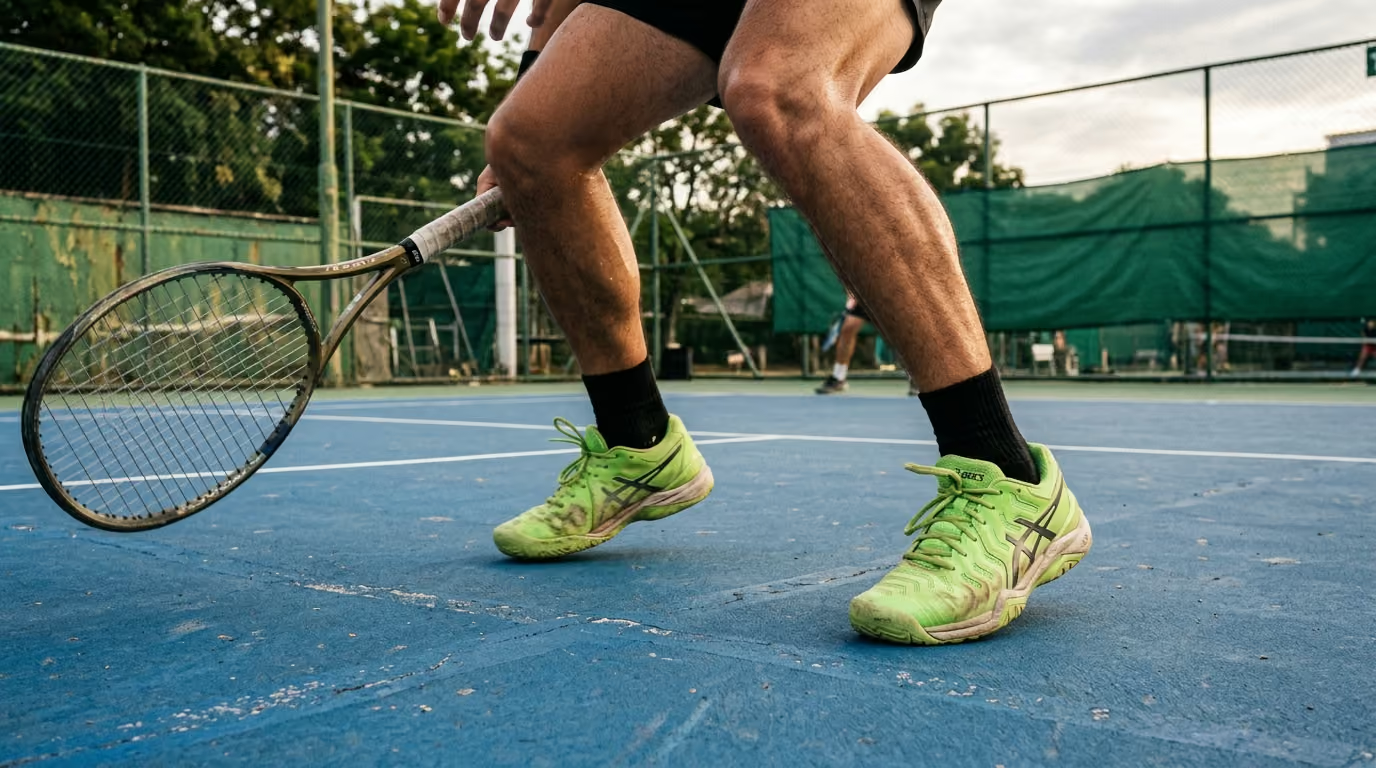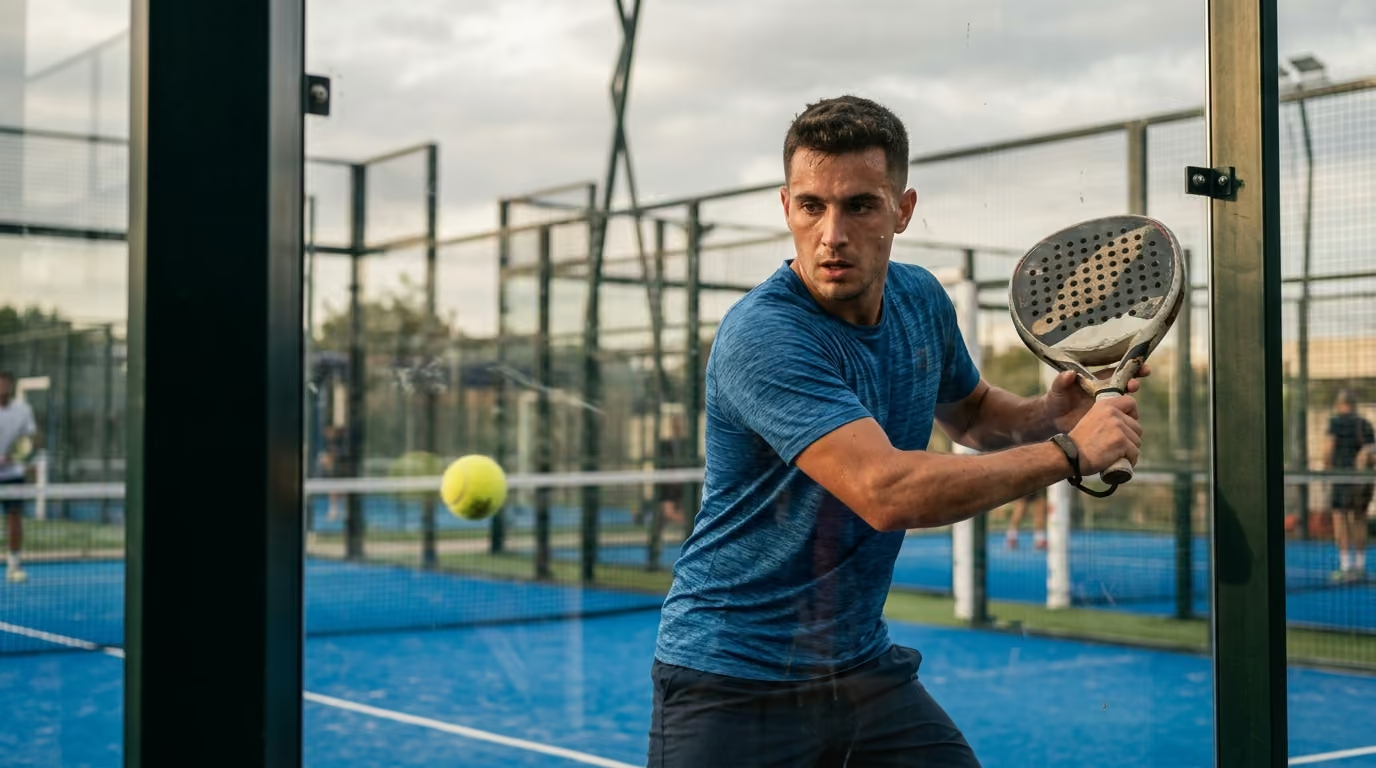

Padel wall play involves understanding how the ball's speed, angle, and spin affect its rebound trajectory from both tempered glass and metal mesh surfaces.




To master padel, you must abandon the instinct to strike every ball before it reaches the back of the court. True mastery of the sport requires you to let the ball pass your body, bounce against the glass, and rise into a comfortable hitting zone. By understanding the physics of rebounds and adjusting your footwork, you turn the walls from defensive hazards into reliable offensive allies.
Many amateur players view the glass walls as a sign of trouble. They panic, rush their strokes, and swing wildly at balls that have already passed their hips. In reality, the back and side walls are designed to slow the game down for you. This comprehensive guide details the mechanics, tactical decisions, and physical movements required to read and use court rebounds like a seasoned professional.
To play effectively off the walls, you must understand how different surfaces interact with the ball. Tempered glass and metal mesh produce vastly different rebounds. This section explains how ball speed, incoming angle, and spin affect the trajectory of the ball after contact with the court boundaries.
Tempered glass is a highly elastic, non-porous surface. According to basic physics, the angle of reflection equals the angle of incidence. If a ball hits the glass at a sharp, shallow angle, it will bounce off at that same shallow angle.
When a ball strikes the glass perpendicularly, it returns along its original path. You can use this consistency to predict where the ball will travel before it even touches the wall. The glass does not absorb much kinetic energy, which means fast balls will rebound deep into the court.
Although glass feels smooth to human touch, it creates significant friction against the felt of a padel ball. This friction interacts with the spin of the ball to alter the rebound trajectory.
Unlike the uniform surface of the glass, the metal mesh is designed to create erratic rebounds. The wire structure presents uneven angles and flexible points of contact.
According to official International Padel Federation rules, a ball that bounces on the ground and then hits the mesh remains in play. However, you cannot easily predict the angle of a mesh rebound. If a ball is heading toward the mesh, your best strategy is to position your racket low and strike the ball immediately before it makes contact with the wire. If you must play it off the mesh, stay highly active on your toes to react to sudden, random directional changes.
The most common error in padel is standing too close to the ball as it travels toward the back wall. If you do not create enough space, the ball will jump back into your torso, jamming your arms and forcing a weak, defensive flick. You must learn the physical art of spacing and body orientation.
To maintain proper spacing, aim to keep yourself approximately one meter away from the path of the ball. This distance gives you the physical clearance needed to swing your racket without hitting your own body.
As the ball passes you, do not watch it by turning your head over your shoulder. Instead, turn your entire body sideways, keeping the ball in your peripheral vision. This lateral alignment keeps your shoulder joint in a strong, stable position to execute a clean stroke.
An excellent way to maintain spatial awareness is to point toward the ball with your non-dominant hand as it passes your body. If you play right-handed, keep your left hand extended slightly toward the ball.
This simple physical cue serves two critical purposes. First, it helps your brain calculate the distance between your torso and the ball. Second, it naturally rotates your shoulders, preparing your body for a balanced, controlled swing as the ball rebounds off the glass.
The speed of the incoming ball dictates where you should stand to receive the rebound. A common mistake is standing in the same defensive position for every shot.
For fast, powerful shots, you must stand further forward, closer to the service line. A fast ball will hit the back wall and rebound a long distance into the court. If you stand too deep, the ball will fly past you a second time.
For slow, looping lobs, you must position yourself very close to the back wall. These balls have low kinetic energy and will drop dead almost immediately after hitting the glass. You must get your body behind the ball and strike it before it bounces a second time on the turf.
Footwork is the foundation of successful wall play. You cannot rely on upper-body strength to rescue a poorly positioned shot. You must train your feet to move in sync with the ball's trajectory, utilizing specialized steps to maintain balance and timing.
When a deep ball travels straight toward your back corner, you must execute a drop step. This movement allows you to retreat quickly while keeping the ball in front of your body.
To perform the drop step, pivot on your front foot and swing your back foot diagonally backward. This opening of your hips creates a clear pathway for the ball to pass you. Slide backward using short, rapid adjustment steps until you are in position behind the path of the rebound.
When the ball bounces near the side wall, you must move laterally to avoid getting trapped in the corner. The lateral shuffle allows you to maintain a sideways stance while adjusting your distance from the side glass.
Keep your knees bent and your center of gravity low during the shuffle. Avoid crossing your feet, as this momentarily locks your hips and prevents quick direction changes. Keep your racket head up and match the speed of your shuffle to the speed of the rebounding ball.
The "paso de pala" is a fundamental padel movement used when the ball rebounds off the back wall and moves toward the side wall. It requires you to step in unison with your swing to generate power.
As the ball rebounds off the glass, step forward with your leading foot toward the target. This step should occur just before or during the stroke. By moving your body weight forward, you transfer energy from the ground up through your legs, core, and shoulder. This technique reduces the physical strain on your elbow and wrist while generating consistent depth on your defensive shots. For more tactical training ideas, you can check out our articles on padel training strategies.
Players transitioning from tennis or pickleball often struggle with padel wall play. In those sports, letting a ball pass you means you have lost the point. This psychological hurdle causes crossover players to make predictable tactical errors.
In tennis and pickleball, players are trained to take the ball early. On a padel court, trying to strike a deep ball before it hits the glass is often a strategic mistake.
Striking a deep ball early forces you to take a difficult, low contact point near your ankles. By letting the ball hit the glass, you allow the wall to lift the ball back up to waist height. This height provides a much more comfortable, offensive hitting zone.
The physical walls of a padel court alter the tactical geometry of your shots. Tennis players are used to hitting wide, angled groundstrokes that land deep in the open corners. In padel, a wide shot that lacks sufficient depth will simply bounce off the side glass and present an easy attack for the opponent.
To succeed in padel, crossover players must learn to target the corners of the court specifically to force difficult wall rebounds. Instead of hitting hard, flat shots, use controlled slice to make the ball die quickly off the back glass. Focus on hitting deep, high lobs that force your opponents to retreat and play difficult overheads off their own back walls.
Even experienced players can fall into bad habits when playing off the walls. Recognizing these mistakes is the first step toward correcting them and improving your consistency.
When the ball speeds toward the back wall, many players panic and execute a fast, erratic swing. This rush usually results in mistimed contact, leading to a hit that strikes the frame or flies directly into the glass on your own side of the net.
To correct this, practice slowing down your mind and your body. The ball will always take longer to reach you after hitting the glass than you think. Keep your backswing incredibly short, almost as if you are preparing for a volley. Use a compact, controlled push rather than a full, looping swing to guide the ball over the net.
Some players get comfortable near the glass but remain too close to it during active play. If you stand right against the back wall, you leave yourself completely vulnerable to short shots, drop shots, and low volleys.
Always return to the active defensive position, which is roughly two steps behind the service line and two steps away from the side wall. This neutral positioning ensures you can move forward for short balls or backward for deep wall rebounds. Staying too deep staticizes your movement and makes you an easy target for tactical opponents. You can read more about positional awareness in our Evercourts blog.
Playing balls off the glass puts unique physical demands on your body. The constant twisting, turning, and bending required to retrieve low rebounds can strain your joints if you do not move efficiently.
To turn sideways and reach for low rebounds, your body must rotate fluidly. If your hips and thoracic spine are stiff, your body will compensate by twisting your lumbar spine and knees. The lumbar spine is not designed for high-rotation movements, and excessive twisting here can lead to lower back strain or disc issues.
Developing hip mobility is essential for court longevity. I remember finishing a tough two hour padel match on a cold Tuesday night and waking up the next morning feeling like my lower back was locked in concrete. For a long time, I just accepted this as the price of playing hard in my forties. But once I started spending just ten minutes on targeted hip mobility before heading to the club, the stiffness almost completely vanished. It taught me that we do not have to accept pain as a default state of aging. Focus on hip flexor stretches, active lunges, and thoracic spine rotations during your weekly training. For specialized exercise routines, check out our mobility and movement resources.
When retrieving a ball that has gone deep into the corner, never bend from your waist with straight legs. This posture places immense shear stress on your lower back muscles and spine.
Instead, always bend from your knees and drop your hips toward the court surface. Keep your chest up and your core muscles engaged as you strike the ball. This athletic posture uses the powerful muscles of your glutes and thighs to support your body weight, protecting your joints from injury. To build the necessary lower-body strength, incorporate squats and lunges into your strength and conditioning routines.
Defending off the wall is only half the battle. To win points, you must understand when to transition from your defensive position at the back of the court to an offensive position at the net.
The key to a successful forward transition is the quality of your defensive shot. You should never run to the net blindly after hitting a weak, low ball that lands short in the opponent's court.
In padel, you must move like a unit with your partner. If you hit a great lob off the wall and run forward, but your partner remains stuck at the back, you leave a massive diagonal gap in your court coverage.
Communicate clearly with your partner before and during the match. Establish a shared understanding of when you will both transition forward. If one player is forced deep into the corner to play a difficult rebound, the other partner should drop slightly backward to cover the center of the court until the defensive crisis is resolved.
While developing your court skills is highly rewarding, you must always listen to your body. Playing through persistent physical pain is a recipe for long-term injury that can keep you off the court for months.
Keep a close eye on any recurring discomfort that does not fade within forty-eight hours of a match. Pay specific attention to the following physical warning signs:
If you experience sudden, sharp pain accompanied by swelling, joint instability, or an inability to bear weight, seek professional care immediately. A qualified physical therapist or sports medicine physician can diagnose the underlying issue and design a targeted recovery plan.
Do not try to self-diagnose or push through significant pain with painkillers. Early intervention is the key to maintaining your physical health and enjoying padel for many years to come. For more information on injury management, explore our injury prevention guides.
By changing how you view and react to the walls, you will transform your defensive game and build a more reliable, enjoyable on-court experience. Practice these movement patterns consistently, protect your joints with smart physical preparation, and enjoy the tactical depth that wall play brings to the sport of padel.
Follow Evercourts for practical insights on tennis, pickleball and padel performance, movement, recovery and healthy ageing. Stay connected for new articles, research-led guidance and ideas to help you play well and keep playing for years.


Read practical guidance for better movement, smarter preparation and a game that keeps working for you.
explore the Blog