
While many court players assume pain is an inevitable part of intense play, distinguishing between normal sensations and warning signs is crucial for long-term health.




You lunged for a low slice, felt a dull ache in your shoulder, and hesitated. On the next point, the discomfort lingered, but you finished the set anyway. Every court player faces this internal debate. Knowing whether to play through a physical sensation or pack your racquet bag is a vital skill for long-term athletic longevity.
Distinguishing court pain requires looking beyond simple numerical intensity. Players must analyze the onset, physical location, behavioral patterns, and functional impact of the sensation. A safe return to play depends on verifying that movement mechanics remain normal and that no systemic or neurological warning signs are present.
I remember finishing a tough two hour padel match on a cold Tuesday night and waking up the next morning feeling like my lower back was locked in concrete. For a long time, I just accepted this as the price of playing hard in my forties. But once I started spending just ten minutes on targeted hip mobility before heading to the club, the stiffness almost completely vanished. It taught me that we do not have to accept pain as a default state of aging. By understanding how our bodies respond to the physical stresses of racquet sports, we can make informed, objective decisions every time we step onto the court.
Physical exertion naturally produces a wide range of bodily feedback. To manage your training safely, you must categorize these sensations accurately. The four primary categories of court feedback are exertional discomfort, delayed-onset muscle soreness, acute injury pain, and persistent or recurrent pain.
Exertional discomfort is a normal, predictable response to hard physical work. When you sprint for a drop shot or engage in a long baseline rally, your muscles experience a deep burn. This sensation is typically bilateral, diffuse, and directly tied to the intensity of the rally.
It does not alter your running, jumping, or hitting mechanics. Once you stop moving and catch your breath, this discomfort rapidly dissipates. It leaves no lasting physical limitations and does not produce swelling, joint instability, or localized tenderness.
Delayed-onset muscle soreness is a common response to unfamiliar exercise or sudden increases in court volume. This soreness typically develops between 24 and 72 hours after your session. It is driven primarily by eccentric muscle actions, which occur when a muscle lengthens under load. Decelerating from a sprint, lunging deeply for a low ball, and landing from an overhead smash all rely heavily on eccentric contractions.
DOMS is generally felt as a broad, dull ache within the muscle bellies rather than in a specific joint or tendon. The affected areas may feel stiff and sensitive to the touch, and your overall force production might temporarily decrease. However, DOMS is temporary. It peaks within three days and gradually improves on its own.
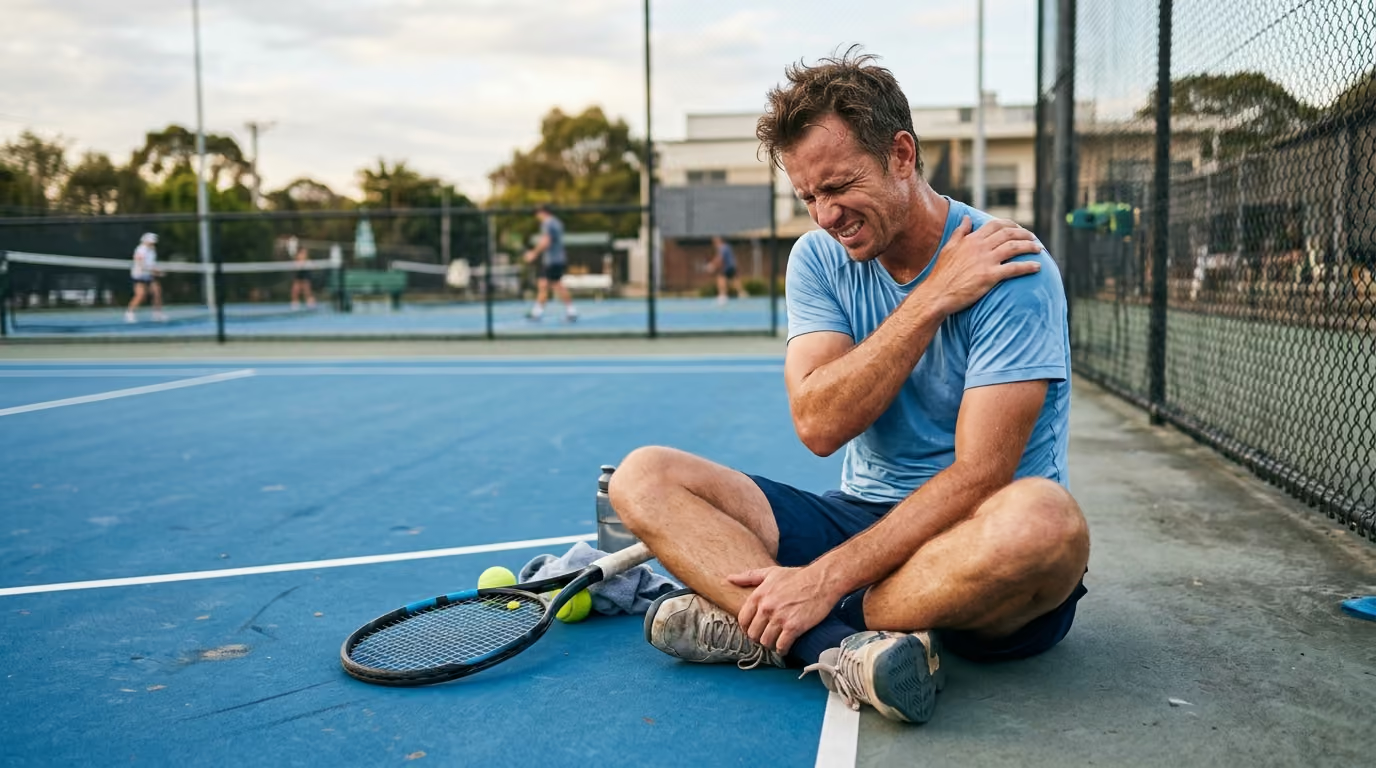
Acute injury pain is characterized by a sudden onset and a clear, recognizable mechanism. This pain occurs in an instant. You might feel a sharp pinch when serving, a sudden tear in your calf while sprinting, or a pop in your ankle during a lateral transition.
This sensation is highly localized and often accompanied by immediate physical signs. These signs include swelling, bruising, joint locking, or an inability to bear weight. Acute injury pain demands immediate attention and a cessation of play.
Persistent or recurrent pain is a chronic pattern that fails to resolve with short-term rest. This type of pain may start as a mild ache that you ignore during play. Over time, however, it begins appearing earlier in your matches.
It may persist for days after you play, wake you up at night, or cause you to alter your baseline movement mechanics. This pattern suggests that the physical demands of your play are consistently outstripping your tissues' ability to recover and adapt.
To help you monitor these sensations, consider how their characteristics differ:
To make smart decisions on court, we must look at how modern sports medicine views physical discomfort. Historically, athletes believed that pain was a direct, reliable measure of tissue damage. If something hurt, they assumed a structure was torn or broken. If nothing hurt, they assumed their tissues were perfectly healthy.
Modern clinical research has updated this simple model. Pain is now understood to be a highly complex, protective output of the central nervous system. According to contemporary sports medicine research, pain is influenced by biological, psychological, behavioral, and environmental factors.
Your brain constantly evaluates sensory input from your nerves alongside contextual information. This context includes your fatigue levels, stress, competitive pressure, and past injury experiences. Consequently, pain can occur without any objectively detectable tissue damage. Conversely, significant structural damage can exist with very little initial pain.
For example, a high-intensity match can trigger a massive release of adrenaline. This chemical response can temporarily mask the pain of a ligament sprain, allowing a player to continue moving on an unstable joint. On the other hand, a highly sensitized nervous system can produce intense pain in a structurally healed tendon. This happens because the brain still perceives the court movement as a threat.
Understanding this science helps us realize that pain intensity alone is a poor tool for self-diagnosis. We must evaluate our physical function, movement quality, and structural stability alongside the sensation of pain. Taking a broader view allows us to avoid unnecessary anxiety while preventing serious structural damage.
When a physical symptom arises during a match or practice, you need a logical, structured way to react. You can use a practical court-side decision system called the STOP, CHECK, CHOOSE method to guide your choices.
You must stop play immediately if you experience any of the following triggers:
Once you have stopped playing, take a few minutes to ask yourself six objective questions about the physical sensation:
Based on your answers, select one of three practical action plans:
While many court symptoms can be managed with rest and activity modification, certain signs represent medical emergencies. You must be able to recognize these red flags immediately.
Any direct blow to the head, face, neck, or body that transmits force to the brain can cause a concussion. If you suspect a concussion, you must remove the player from the court immediately. They must not return to physical activity on the same day.
Watch closely for critical danger signs. These include a worsening headache, repeated vomiting, slurred speech, unequal pupil sizes, and increasing confusion. Dizziness, balance issues, and a general feeling of being dazed or foggy also warrant immediate evaluation.
A player should never use pain medication to mask these symptoms. They must obtain clear clinical clearance from a healthcare professional before returning to the court.
Exertional chest pain, sudden fainting, or unexplained shortness of breath are serious cardiovascular red flags. Fainting during physical exertion, known as exertional syncope, is never a normal sign of fatigue.
According to a 2024 athlete-arrhythmia consensus statement, any athlete who experiences exertional syncope must undergo a comprehensive medical evaluation. This evaluation should include an electrocardiogram, an exercise stress test, and an echocardiogram. Do not dismiss these symptoms as simple dehydration or poor conditioning.
Exertional rhabdomyolysis is a rare but serious condition involving rapid muscle breakdown. It can occur after exceptionally intense, high-volume workouts, especially if a player is unconditioned or dehydrated.
The primary warning signs are extreme muscle pain, marked swelling, profound weakness, and dark, tea-colored urine. If you notice these symptoms, seek prompt medical care. Urinalysis and blood testing are required to assess kidney health. Do not rely on urine color alone to rule out this condition, as myoglobin can clear from the system quickly.
Playing racquet sports in hot, humid conditions puts a significant strain on your thermoregulatory system. It is vital to distinguish between heat exhaustion and heat stroke.
According to guidelines from the Centers for Disease Control and Prevention, heat exhaustion features heavy sweating, clammy skin, a rapid weak pulse, muscle cramps, headache, and dizziness.
Heat stroke is a life-threatening medical emergency. It is characterized by a body temperature above 103 degrees Fahrenheit, red, hot, dry or damp skin, a rapid strong pulse, confusion, and loss of consciousness. Call emergency services immediately if you suspect heat stroke. Cool the victim down using any available means while waiting for professional help.
Many recreational players rely on outdated advice to manage their physical symptoms. To stay healthy, you must challenge these common misconceptions.
A common belief is that if a joint does not swell, it is not seriously injured. This is false. Many significant injuries, including stress fractures, mild concussions, nerve irritations, and chronic tendon issues, rarely produce visible swelling. Relying on swelling as your primary indicator of injury can lead to premature return-to-play decisions. Focus instead on physical function, localized tenderness, and joint stability.
Many players believe that if they can tolerate a symptom, it is safe to keep playing. However, pain tolerance is not a valid medical clearance test.
During competitive play, adrenaline and social pressure can easily mask your perception of pain. Continuing to load an injured structure can turn a minor, easily treatable strain into a severe chronic condition. If a symptom forces you to alter your physical mechanics, you must stop playing, regardless of your pain tolerance.
It is easy to assume that a high pain score always indicates major structural damage. In reality, pain intensity can be heavily influenced by your anxiety, fatigue, and past experiences.
A simple muscle cramp can cause excruciating pain without causing any structural damage. Conversely, a microtear in a tendon may feel like a mild, dull ache, yet still require structured rehabilitation to heal properly. Always evaluate the behavior of the symptom over time, rather than relying solely on how intense it feels in the moment.
Many players believe that routine static stretching can prevent all court injuries. However, comprehensive clinical research shows otherwise.
A systematic review published in the Clinical Journal of Sport Medicine found moderate-to-strong evidence that routine static stretching does not reduce overall exercise-related injury rates. While stretching can temporarily increase your joint range of motion, it does not improve your dynamic balance, tendon stiffness, or muscular strength.
To prepare your body for play, you should prioritize a dynamic neuromuscular warm-up over static stretching. You can find excellent guidelines on preparing your joints by reading our mobility and movement exercises resources.
Taking over-the-counter painkillers before a match to prevent anticipated pain is a dangerous habit. These medications reduce your brain's perception of pain without addressing the underlying physical issue.
By masking your body's natural warning signs, you increase the risk of overworking an irritated joint or tendon. Furthermore, frequent use of these medications can interfere with your body's natural healing response and cause gastrointestinal complications.
Many players demand an MRI or X-ray immediately after experiencing any court pain. However, clinical guidelines advise against early imaging for non-traumatic sports pain.
Imaging scans frequently show age-related structural changes, such as mild meniscus tears or spinal disc degeneration, in asymptomatic individuals. These findings are often normal signs of healthy aging and may not be the actual cause of your current pain. Focusing too heavily on these scans can lead to unnecessary anxiety and inappropriate treatments.
While all racquet sports share common movement patterns, each sport places unique physical demands on your body. Understanding these differences helps you identify the specific warning signs most common to your sport.
Tennis is characterized by high-velocity actions, heavy racquet loads, and repetitive overhead serves. The large dimensions of a tennis court require players to perform long, high-speed lateral runs and deep sliding transitions.
This environment frequently exposes players to specific physical warning signs:
To learn more about managing these tennis-specific stresses, check out our player health articles.
Pickleball is played on a compact court, resulting in rapid, short-duration rallies. The sport requires constant lateral shuffling, quick reflex volleys, and prolonged periods of deep hinging at the kitchen line.
These rapid movements generate distinct warning signs:
For more targeted advice on managing these physical demands, visit our pickleball category page.
Padel is played within an enclosed glass court, combining high-speed lateral movements with unique tactical elements. The presence of the glass walls requires players to execute rapid pivots, unexpected changes of direction, and frequent overhead smashes.
This dynamic environment produces specific physical warning signs:
To learn more about the unique physical demands of this sport, explore our padel category page.
To prevent minor physical sensations from developing into chronic injuries, you must evaluate how your body responds to training over a full 24-hour cycle. The way your joints and tendons feel the morning after a match is often the most reliable indicator of your current physical tolerance.
When you load a tendon or joint during a match, the tissue undergoes temporary structural changes and mild inflammation. This is a normal part of the adaptation process.
Under ideal conditions, the tissue recovers and adapts over the next 24 hours. However, if the physical load was too high, the tissue will feel stiff, painful, or weak the following morning.
If your symptoms are significantly worse the next morning, or if they take more than 24 hours to return to baseline, you have exceeded your current tissue capacity. This is your cue to reduce your playing volume, intensity, or frequency.
To identify these patterns, consider keeping a simple physical log. You do not need a complex tracking app. A simple notebook will do.
For each court session, record the following details:
Tracking these variables helps you identify trends before they become serious issues. You can learn more about managing your body's physical adaptation by reading about current recovery science principles.
To help you apply these concepts, let us look at several common court scenarios and analyze the appropriate response for each.
A tennis player completes an unfamiliar high-volume footwork session. The next day, they develop broad, dull soreness in both thighs. The soreness is most noticeable when descending stairs or sitting down. There was no specific popping sensation during the session, and there is no visible swelling or focal joint tenderness.
During a fast-paced padel match, a player steps awkwardly while chasing a wide ball. They feel an immediate sharp pain on the outside of their ankle, accompanied by an audible popping sound. Within ten minutes, the ankle begins to swell, and the player cannot bear weight without limping.
A volleyball and racquet player notices a mild, dull ache directly below their kneecap during matches. The pain disappears shortly after they finish playing.
Over the next month, however, the ache begins appearing earlier in each session. The player notice that their jump height has decreased, and their knee feels stiff when getting out of a car.
A tennis player feels a sharp pinch in their shoulder during the serve, but only when they hit with maximum power. The pain disappears when they hit groundstrokes. They decide to play through the sensation, but notice that their serving mechanics are changing to avoid the pain.
During a pickleball match, a player collides with their partner and hits the back of their head on the court surface. They get up quickly, say they feel fine, but cannot remember the score of the current set. A few minutes later, they complain of a mild headache and feel slightly nauseous.
A player returns to court play after a three-month break. Eager to catch up, they participate in a grueling, three-hour practice session in hot weather.
The next morning, they experience severe, debilitating muscle pain and profound weakness in their legs. They also notice that their urine is a dark, cola-like color.
During a long, intense rally, a player suddenly collapses and briefly loses consciousness. They regain consciousness within a few seconds, sit up, and insist they are fine, attributing the fall to simple fatigue.
While keeping a court journal and modifying your training are excellent habits, self-monitoring should never replace professional medical care. You should consult a qualified healthcare provider, such as a physical therapist, athletic trainer, or sports physician, if you experience any of the following:
Working with a professional can help you design a structured rehabilitation program. This approach is far more effective than simply resting and hoping the pain goes away on its own.
When to revisit this resource: Review this guide at the start of every season, or whenever you experience a new, persistent physical symptom on court.
Paying attention to physical warning signs is not about playing with fear. It is about building a sustainable, resilient relationship with your body. By replacing outdated myths with modern pain science, you can make smart, objective decisions that keep you moving well and enjoying your sport for years to come.
Follow Evercourts for practical insights on tennis, pickleball and padel performance, movement, recovery and healthy ageing. Stay connected for new articles, research-led guidance and ideas to help you play well and keep playing for years.


Read practical guidance for better movement, smarter preparation and a game that keeps working for you.
explore the Blog